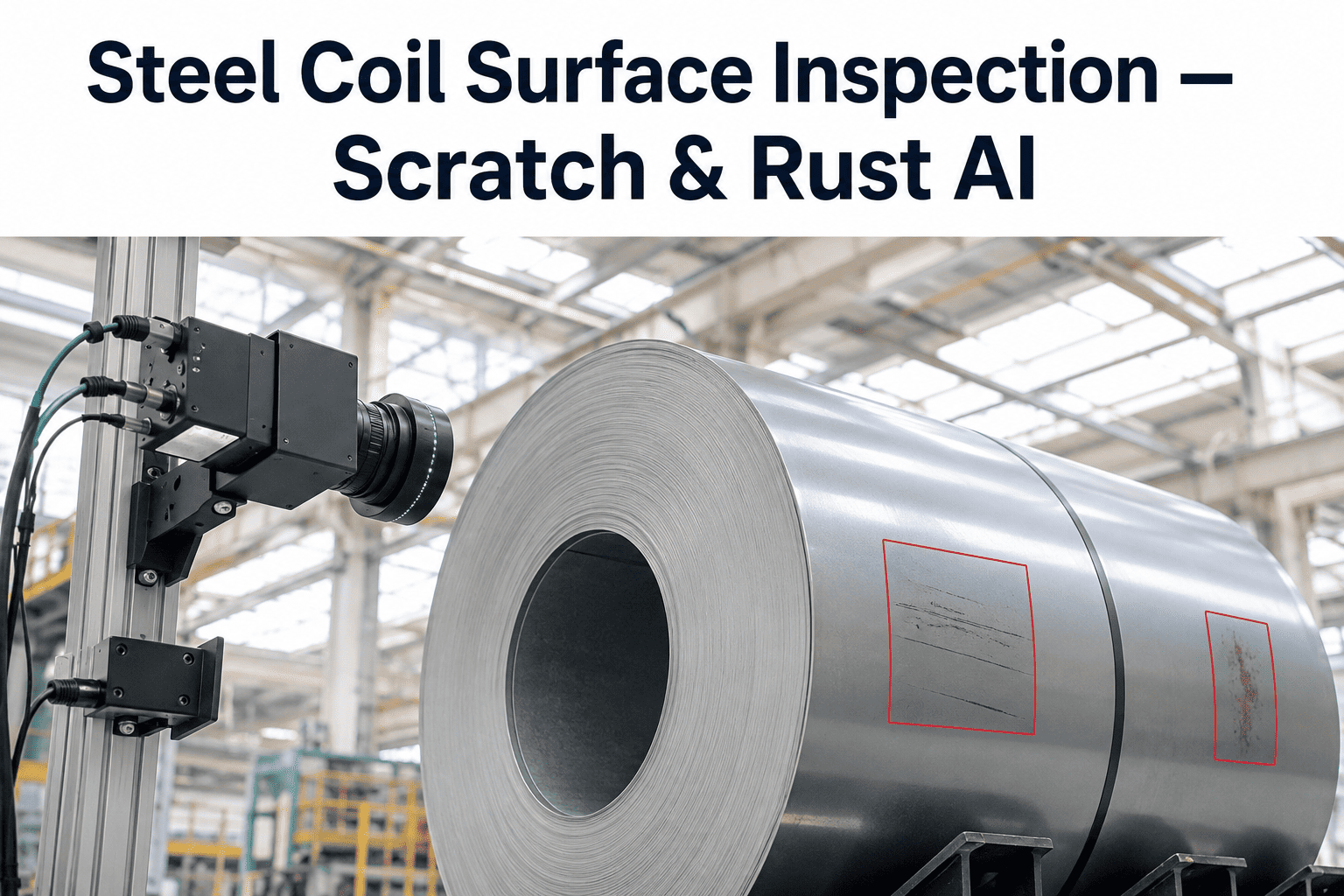
A quality manager on a hot strip mill knows exactly how unforgiving coil surface inspection is at production speed: strip can move past a viewing point at rates exceeding 1500 meters per minute, which makes catching a scratch, a rust spot, or a gauge deviation with the human eye essentially impossible beyond a sampled spot check. A single missed surface defect that reaches a customer, particularly in exposed automotive or appliance applications, can trigger a claim that costs far more than the coil itself. Deep learning AI vision inspection was built specifically for this kind of high-speed, high-consequence defect detection, classifying scratches, rust, dents, and gauge deviation continuously across the full coil rather than a sampled section. iFactory's steel surface inspection system runs at full line speed, and you can book a demo to see it classify defects against your own coil surface footage.
At 1500 Meters a Minute, the Human Eye Isn't Actually Inspecting the Coil. It's Sampling It
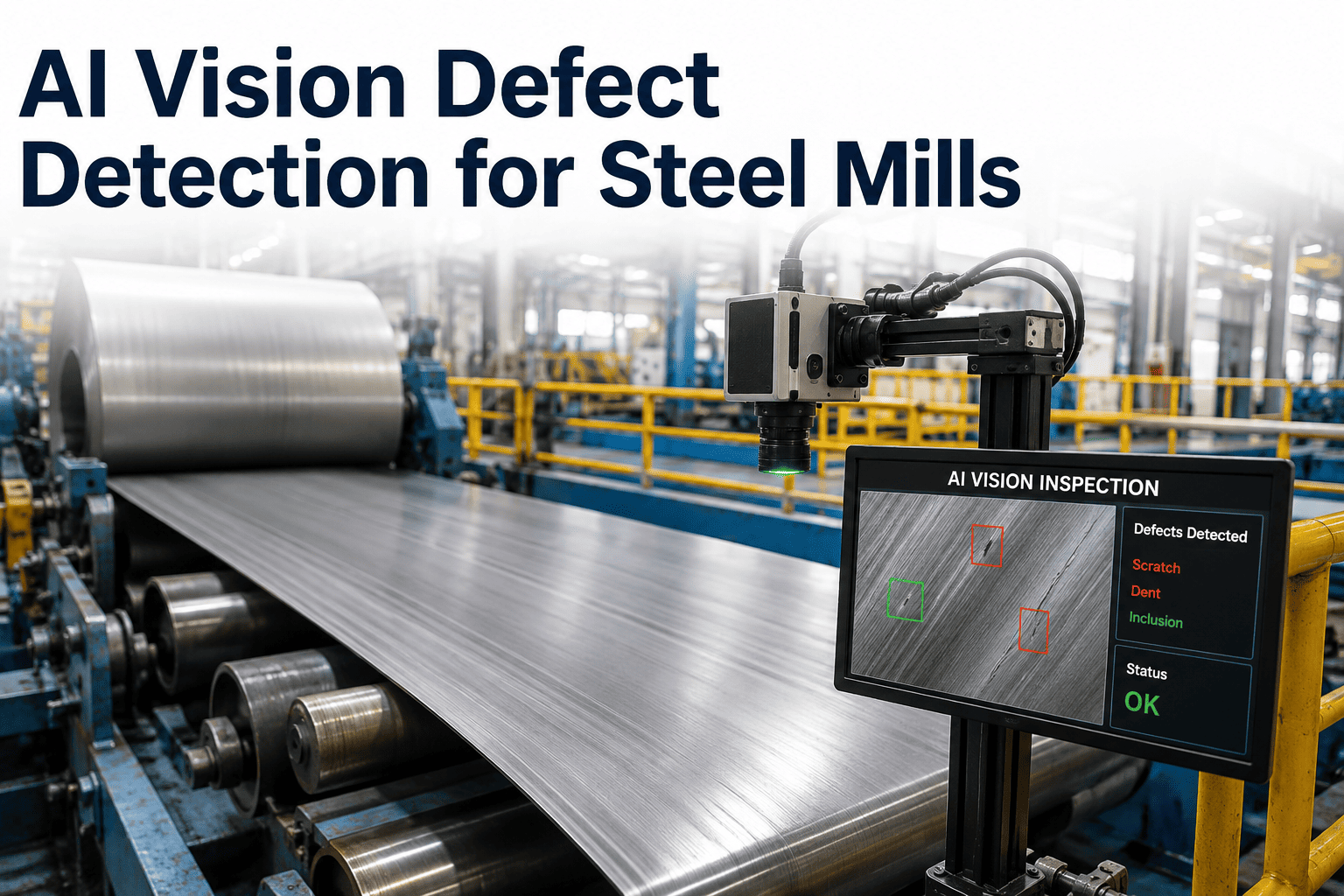
iFactory's deep learning vision system inspects the full coil surface continuously at full line speed, classifying scratches, rust, dents, and gauge deviations and auto-grading coils in real time.
A Full Coil Surface Passes an Inspection Point Faster Than a Human Eye Can Track It
Steel production lines, whether hot rolled, cold rolled, galvanized, or tinplate, run at speeds where the full width and length of strip surface simply moves too fast for continuous human visual inspection to be physically possible. What actually happens on most lines is a sampled inspection, a technician watching a section of strip through a viewing window, or reviewing periodic still images, which means most of the coil's actual surface is never directly observed by a human at all. Surface defects like scratches, rust, and localized gauge deviation can easily occur in a section that was never sampled, and the first time anyone finds out is when a customer complaint traces a coil-related quality issue back to the mill.
The Full Range of Surface Defects, Classified Continuously Across the Whole Coil
Scratches
Linear surface marks classified by depth and length across both hot rolled and cold rolled surfaces.
Rust & Corrosion
Early-stage rust identified on cold rolled and stored coil surfaces before it spreads further.
Dents & Edge Cracks
Localized deformation and edge crack propagation flagged as it develops along the strip.
Gauge Deviation
Thickness variation tracked continuously and correlated against rolling parameters.
Coating Uniformity
Galvanized and tinplate coating consistency checked across the full coil width.
Inspect the Whole Coil, Not Just a Sampled Section
iFactory's deep learning vision system runs continuously at full line speed, so no section of strip goes uninspected.
What Changes When Every Meter of Strip Is Actually Inspected
| Inspection Element | Manual Sampled Check | iFactory Continuous AI Inspection |
|---|---|---|
| Coverage | Sampled sections of the coil | Full coil surface, every meter |
| Defect classification | Judged by technician experience | Consistent deep learning classification |
| Coil grading | Manually assigned after review | Auto-graded in real time as strip passes |
| Speed dependency | Effective coverage drops as speed increases | Maintains full coverage at line speed |
Grading Happens as the Coil Is Produced, Not After It's Already Shipped
Beyond flagging individual defects, the system aggregates defect type, location, and severity across the full coil to assign an automatic quality grade as the coil completes, matching the grading criteria your quality team already uses for customer commitments. This means a coil destined for an exposed automotive application can be automatically flagged and routed for closer review the moment a borderline defect pattern is detected, rather than relying on a technician remembering to apply extra scrutiny to a specific coil hours or days later. Defect location data is also logged precisely enough to support targeted downstream processing decisions, such as identifying exactly where on a coil a defect occurred for slitting or cut-to-length operations.
Measured Outcomes From Full-Coil AI Surface Inspection
Questions Quality Teams Ask About AI Coil Surface Inspection
Inspect Every Meter of Coil at Full Line Speed, Not a Sampled Section
iFactory's deep learning vision system classifies defects and auto-grades coils continuously, in real time.