Steel production is directly responsible for 7–9% of global CO2 emissions — approximately 3.7 billion tonnes annually. With the EU's Carbon Border Adjustment Mechanism (CBAM) now in full financial enforcement since January 2026, and China expanding its Emissions Trading System to cover steel, cement, and aluminum, carbon tracking has shifted from a voluntary ESG exercise to a mandatory operating cost. Steel manufacturers that cannot digitally measure, report, and reduce their emissions face regulatory penalties, lost export markets, and investor skepticism. Book a Demo and turn compliance into competitive advantage.
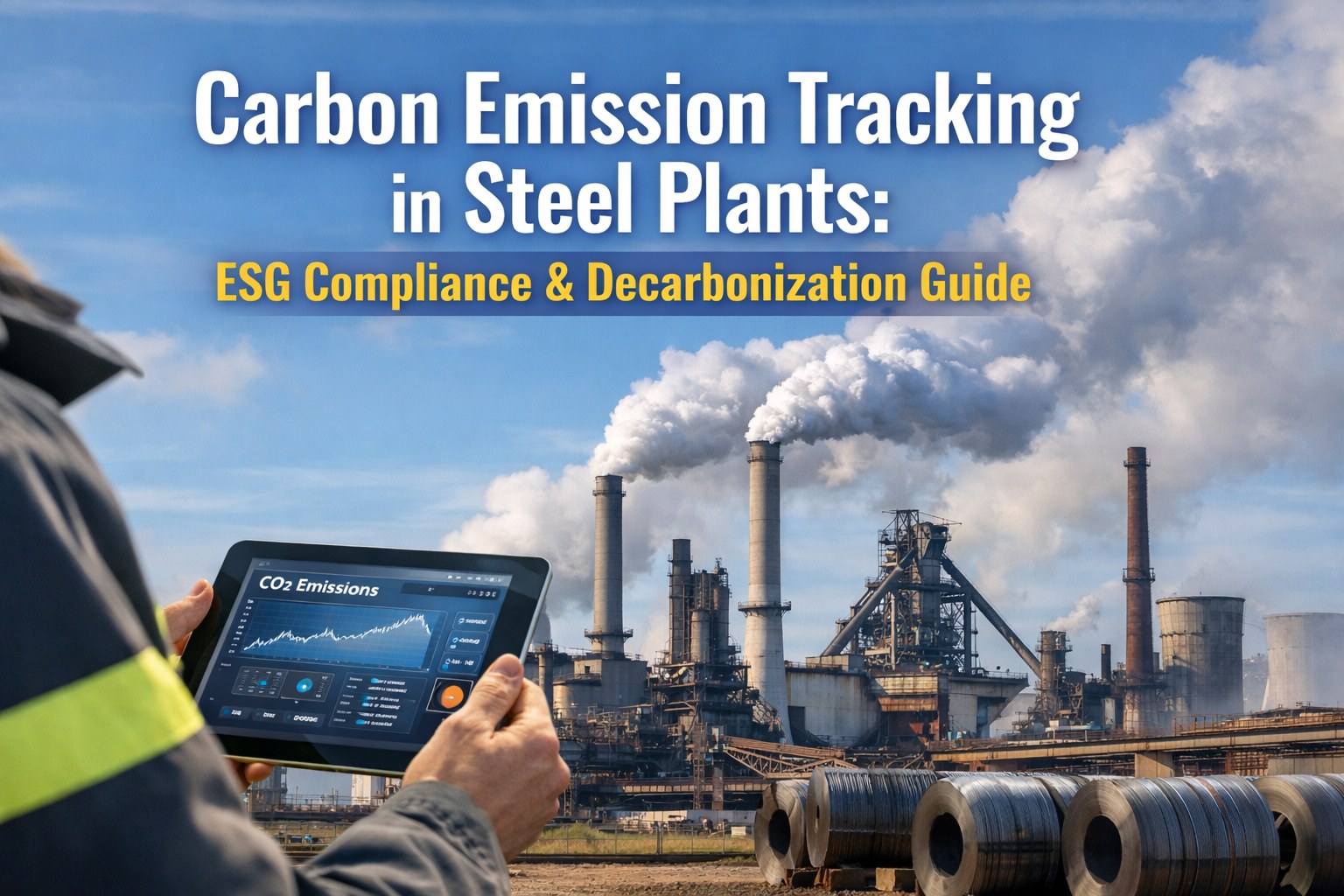
Carbon Emission Tracking in Steel Plants
Real-Time Monitoring, Automated ESG Reporting, and AI-Driven Decarbonization for the World's Most Carbon-Intensive Industry
Why Carbon Tracking is Now Critical for Steel
The regulatory, financial, and market forces converging on steel manufacturers in 2025–2026.
CBAM & ETS Expansion
The EU CBAM requires importers to purchase certificates matching embedded CO2 in steel products since January 2026. China's ETS now covers steel, requiring monthly verified emissions data. California mandates Scope 1, 2, and 3 disclosure for companies over $1B revenue by 2026.
Carbon as an Operating Cost
At €60–80 per tonne CO2, CBAM certificates add €113–151 to every tonne of BF-BOF steel exported to the EU. Credit rating agencies like Moody's now factor carbon disclosure quality into credit scores. 56% of suppliers struggle to provide emissions data to corporate customers.
Green Steel Demand
Automotive giants like Volkswagen are signing offtake agreements for near-zero emission steel. ResponsibleSteel certification requires product-level carbon footprint declarations. Customers increasingly demand Environmental Product Declarations (EPDs) with verified GWP data.
Scope 1, 2 & 3 Emissions in Steel Manufacturing
Understanding what to measure, where emissions come from, and how to monitor each scope.
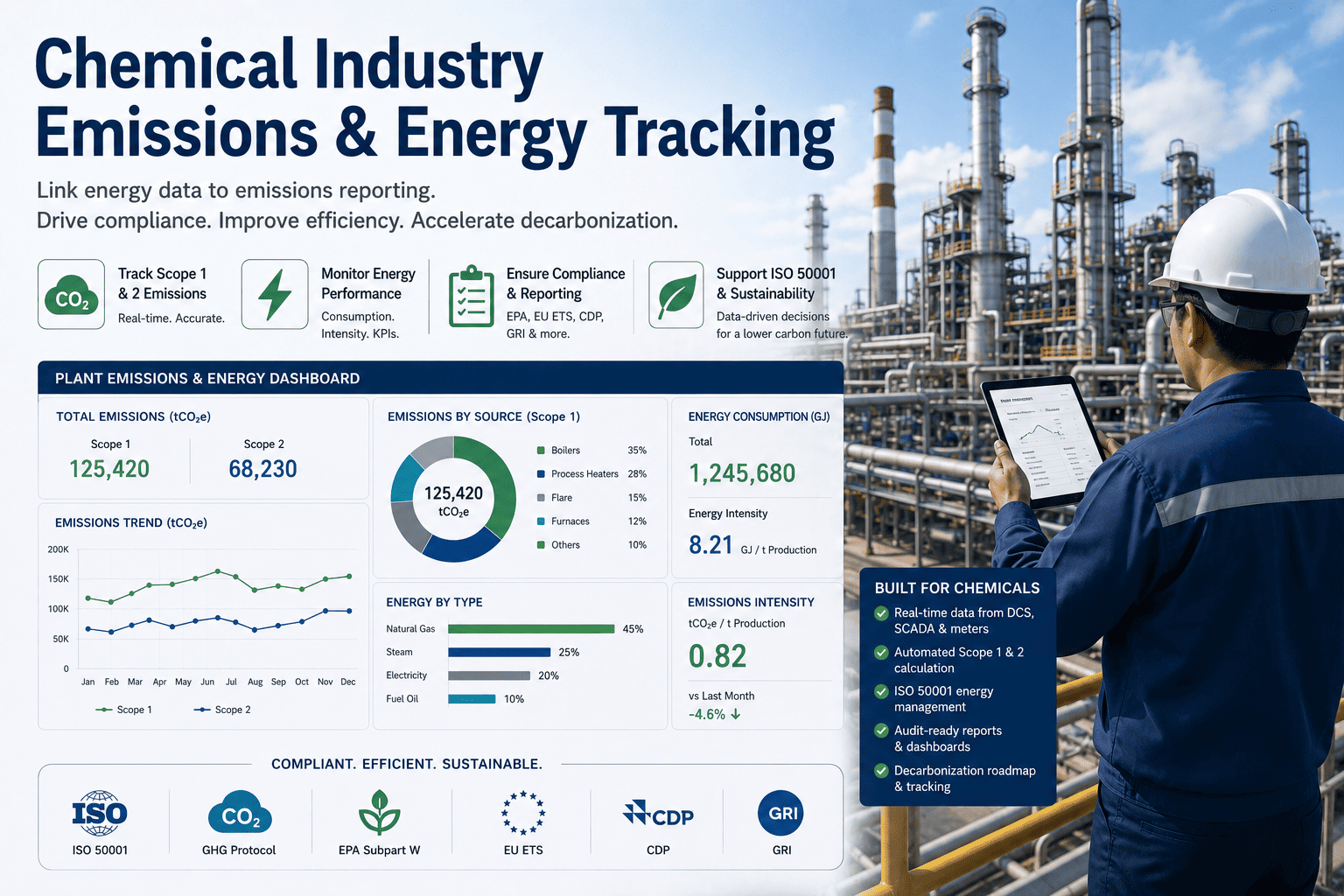
Emissions from on-site combustion and chemical processes that the steel plant directly controls.
Emissions from purchased electricity, steam, heat, or cooling consumed by the steel plant.
All other indirect emissions across the upstream and downstream supply chain.
IoT Sensors & Data Collection Architecture
How real-time emission data flows from the steel plant floor to ESG dashboards and regulatory reports.
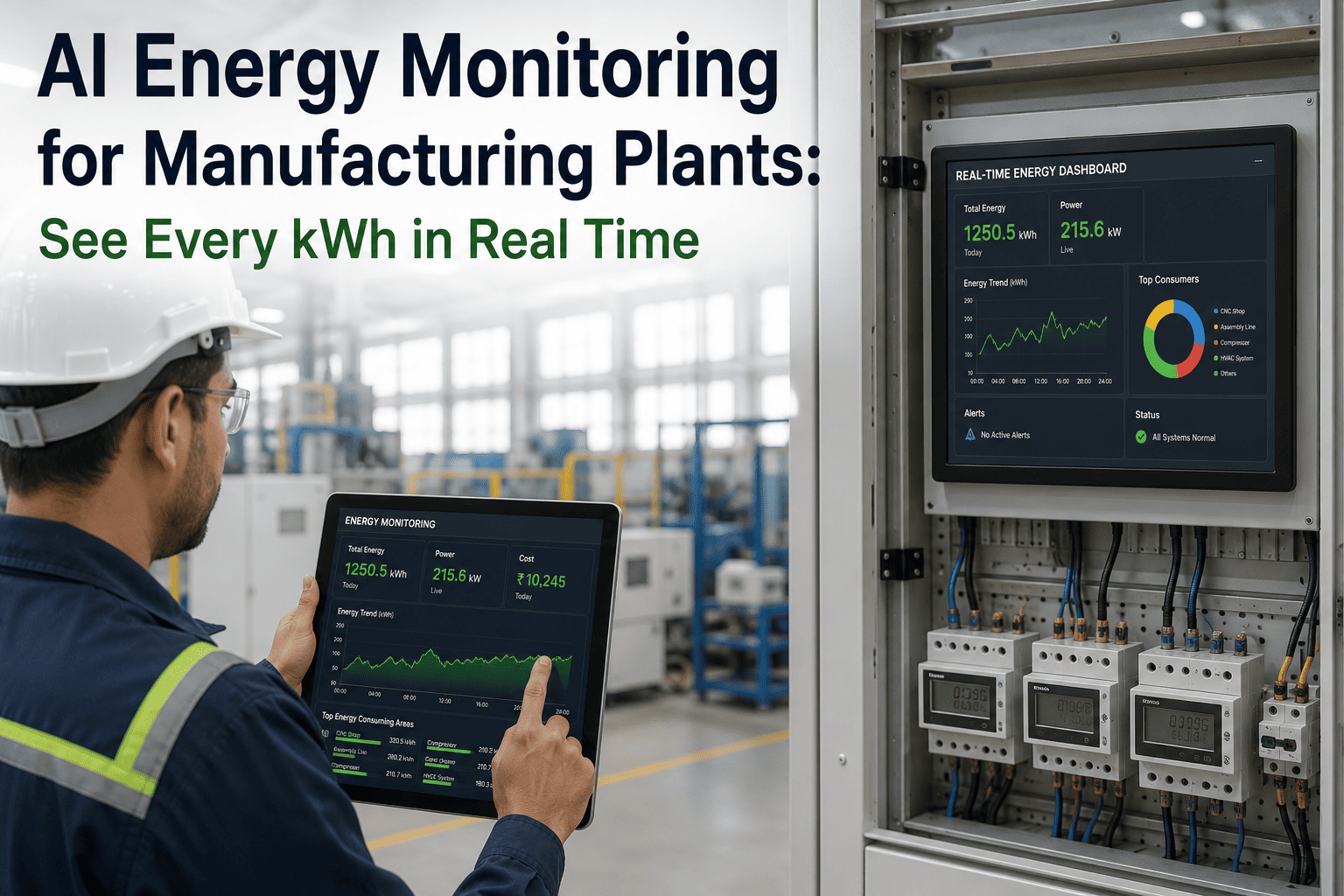
Continuous Emission Monitoring Systems (CEMS) measure CO2, CO, NOx, SO2, and particulate matter directly from stacks, furnaces, and process vents. Smart meters track electricity, gas, and fuel consumption per production unit in real time.
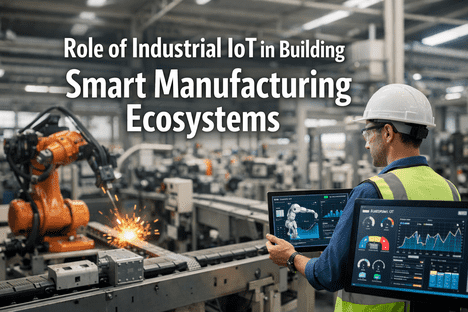
Edge gateways aggregate sensor data from DCS, PLC, and SCADA systems via industrial protocols. Data is timestamped, validated, and stored in historians — creating an auditable emission data trail that regulators can verify.
AI models convert raw sensor data into verified emission quantities using GHG Protocol methodologies. Anomaly detection flags data quality issues, unusual emission spikes, and process deviations that impact carbon intensity per tonne of steel.
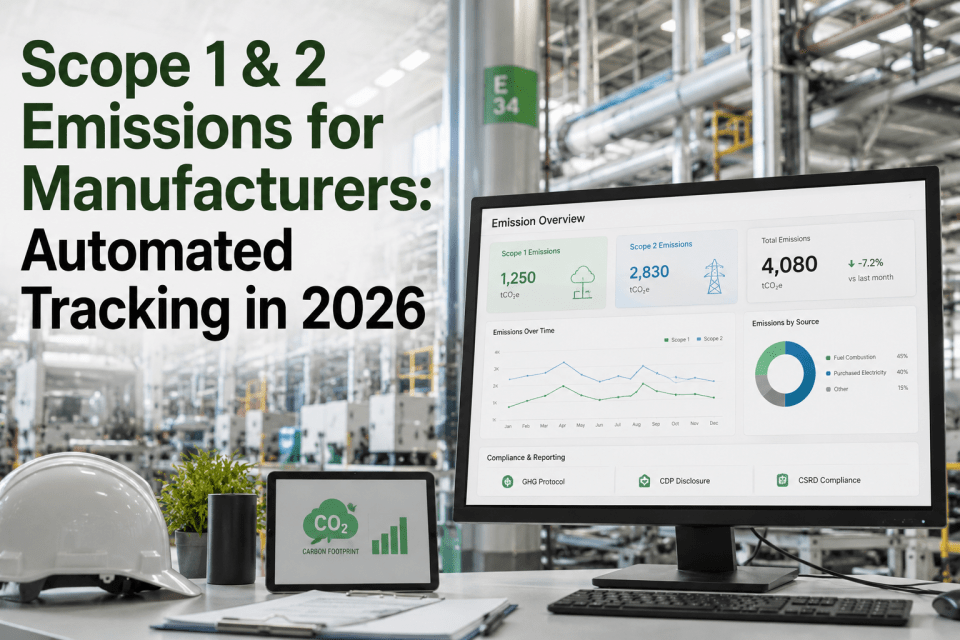
Automated report generation for EU CBAM, CSRD, CDP, GRI, and national ETS submissions. Real-time ESG dashboards show carbon intensity per tonne, Scope 1/2/3 breakdowns, and progress against reduction targets — all audit-ready.
ESG Reporting & Regulatory Compliance
The frameworks your steel plant needs to comply with — and how automated tracking makes it achievable.
CBAM — Carbon Border Adjustment
Since January 2026, importers must purchase certificates matching embedded CO2 in steel products. Requires verified product-level emission data covering Scope 1 and 2. Certificate prices mirror ETS at €60–80/tonne CO2.
CSRD — Sustainability Reporting
Corporate Sustainability Reporting Directive requires detailed Scope 1, 2, and 3 disclosures with limited assurance. Sustainability data must meet the same evidentiary standard as financial reporting.
ETS Expansion — Steel Sector
Since 2025, steel manufacturers must submit monthly verified emission data via the national carbon market platform. Carbon quotas allocated annually with "refund or supplement" settlement.
SBTi & ResponsibleSteel
Science Based Targets initiative requires sector-specific decarbonization pathways. ResponsibleSteel certification demands site-level emissions classification and product carbon footprint (PCF) declarations.
CBAM Certificates Could Add €113–151 Per Tonne to Your Steel Exports.
iFactory connects real-time emission sensors, AI carbon accounting, and automated ESG reporting into one platform — turning regulatory compliance into measurable decarbonization progress.
Energy Optimization & Decarbonization Strategies
Practical, data-driven approaches to reduce carbon intensity per tonne of steel — from quick wins to structural transformation.
Operational Efficiency & AI Optimization
AI-driven process optimization of blast furnace operations, energy recovery systems, and waste heat utilization. Smart sensors identify fuel overconsumption, suboptimal combustion ratios, and thermal energy losses — delivering immediate emission reductions without capital-intensive equipment changes.
EAF Transition & Scrap Maximization
Increasing Electric Arc Furnace production using recycled scrap reduces emissions by 90–95% compared to BF-BOF, with only 8–13% cost premium. AI-optimized scrap sorting, charge mix optimization, and renewable energy procurement accelerate this transition while maintaining product quality.
Hydrogen DRI & CCUS Technologies
Hydrogen-based Direct Reduced Iron (DRI) eliminates coal from ironmaking entirely. Carbon Capture, Utilization, and Storage (CCUS) captures remaining emissions from unavoidable process sources. Commercial-scale hydrogen steel plants expected operational by 2026–2028.
Implementation Roadmap & Business Case
A phased approach that delivers compliance first, optimization second, and competitive advantage third.
Baseline & Sensor Deployment
Establish current Scope 1 and 2 emission baselines. Deploy CEMS on primary emission sources (BF, coke ovens, BOF stacks). Install smart energy meters on all major power consumers. Connect to existing DCS/SCADA via OPC-UA gateways.
Carbon Accounting & ESG Reporting
Configure carbon accounting engine with GHG Protocol emission factors. Integrate with iFactory CMMS and SAP for automated data flows. Set up ESG dashboards showing real-time carbon intensity per tonne. Generate first automated CBAM and CSRD compliance reports.
AI Optimization & Scope 3 Expansion
Deploy AI models for fuel ratio optimization, waste heat recovery, and process scheduling. Expand monitoring to Scope 3 — supplier engagement programs, logistics tracking, and lifecycle assessment integration. Set science-based reduction targets with real-time progress tracking.
Frequently Asked Questions
What is the difference between Scope 1, 2, and 3 emissions for steel plants?
Scope 1 covers direct emissions from your furnaces, coke ovens, and on-site power generation (70–80% of total). Scope 2 covers emissions from purchased electricity and steam (~16%). Scope 3 covers your entire value chain — mining, raw material transport, purchased goods, and product distribution. CBAM currently requires Scope 1 and 2; CSRD and SBTi require all three scopes.
How does CBAM financially impact steel exports to the EU?
CBAM requires importers to purchase certificates at EU ETS prices (€60–80/tonne CO2 in 2025–2026) for the embedded carbon in steel products. For BF-BOF steel averaging 1.89 tonnes CO2 per tonne of steel, this translates to €113–151 added cost per tonne — making emission reduction a direct financial imperative, not just an ESG goal.
What sensors are needed for real-time emission monitoring in steel plants?
Key sensors include CEMS (Continuous Emission Monitoring Systems) for stack gas analysis (CO2, CO, NOx, SO2), fuel flow meters for natural gas and coke consumption, smart electricity meters per process area, temperature probes on furnaces and waste heat recovery systems, and particulate matter monitors. All sensors need IP-rated industrial enclosures and connectivity via OPC-UA or MQTT.
Can we integrate emission tracking with our existing SAP and SCADA systems?
Yes. iFactory CMMS connects to existing DCS, SCADA, and SAP systems via standard protocols (OPC-UA, Modbus, REST APIs). Emission data flows from plant-floor sensors through your existing infrastructure into the carbon accounting engine — no rip-and-replace required. Reports auto-populate SAP environmental modules.
What role does iFactory play in steel plant carbon tracking?
iFactory serves as the intelligent hub connecting real-time emission sensors, AI carbon accounting, and enterprise systems. It automatically calculates carbon intensity per tonne, generates CBAM/CSRD/CDP compliance reports, tracks decarbonization progress against science-based targets, and integrates with SAP for financial carbon cost allocation — all from a single platform.
Turn Carbon Compliance Into Competitive Advantage
See how iFactory connects real-time emission sensors, AI-driven carbon analytics, and automated ESG reporting into one platform — purpose-built for steel manufacturers navigating CBAM, CSRD, and the global decarbonization transition.