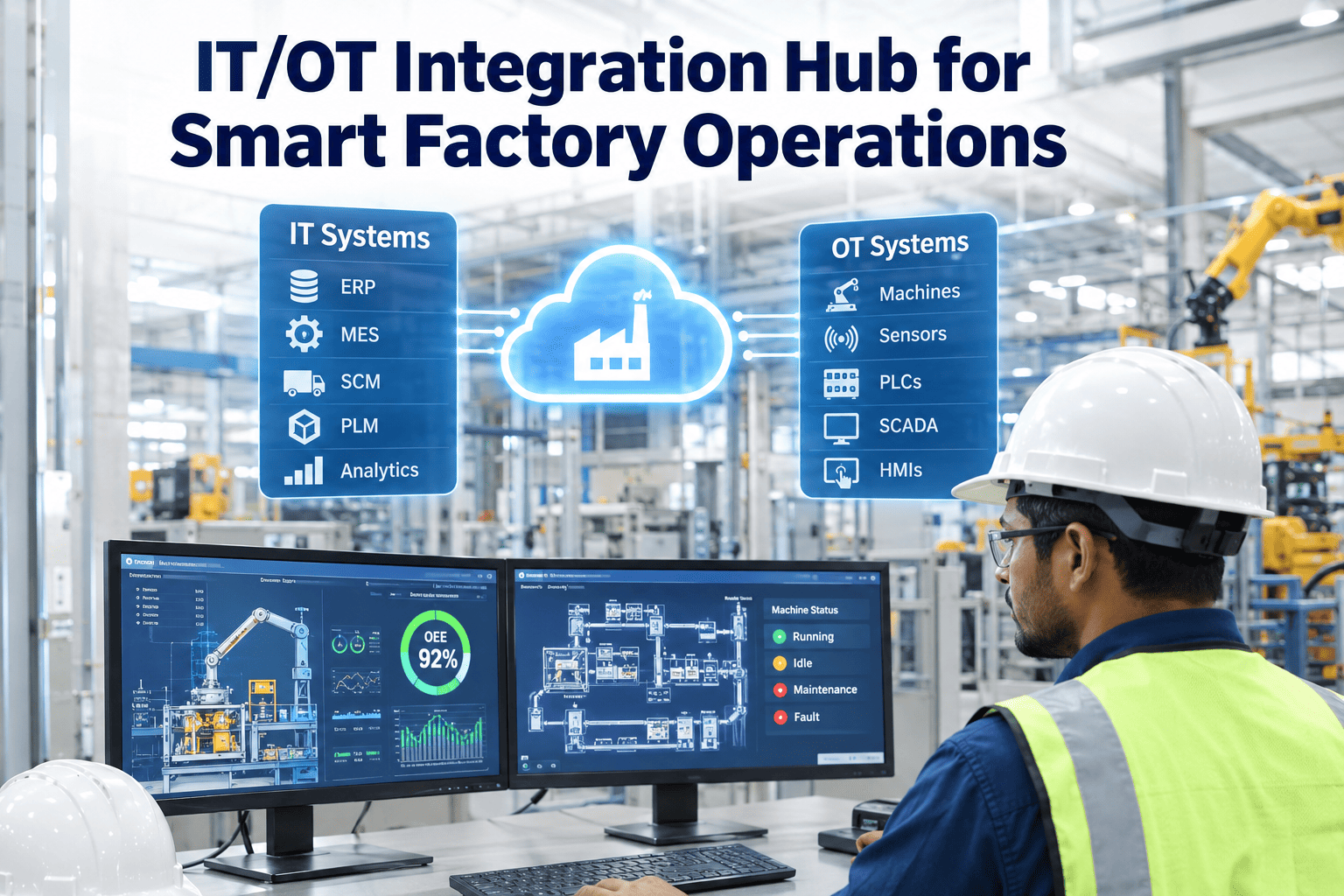
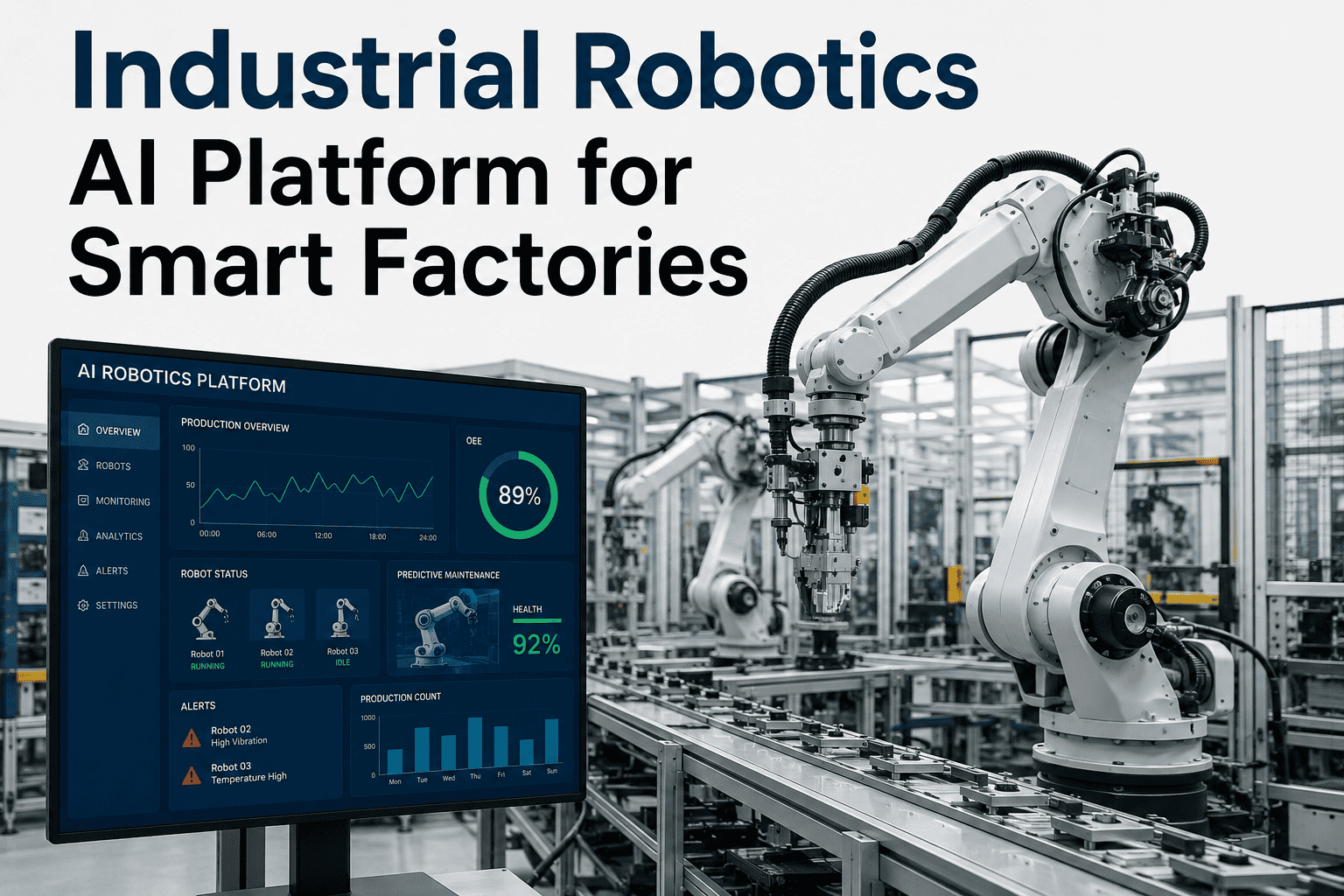
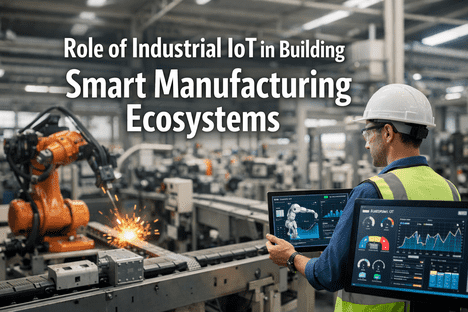
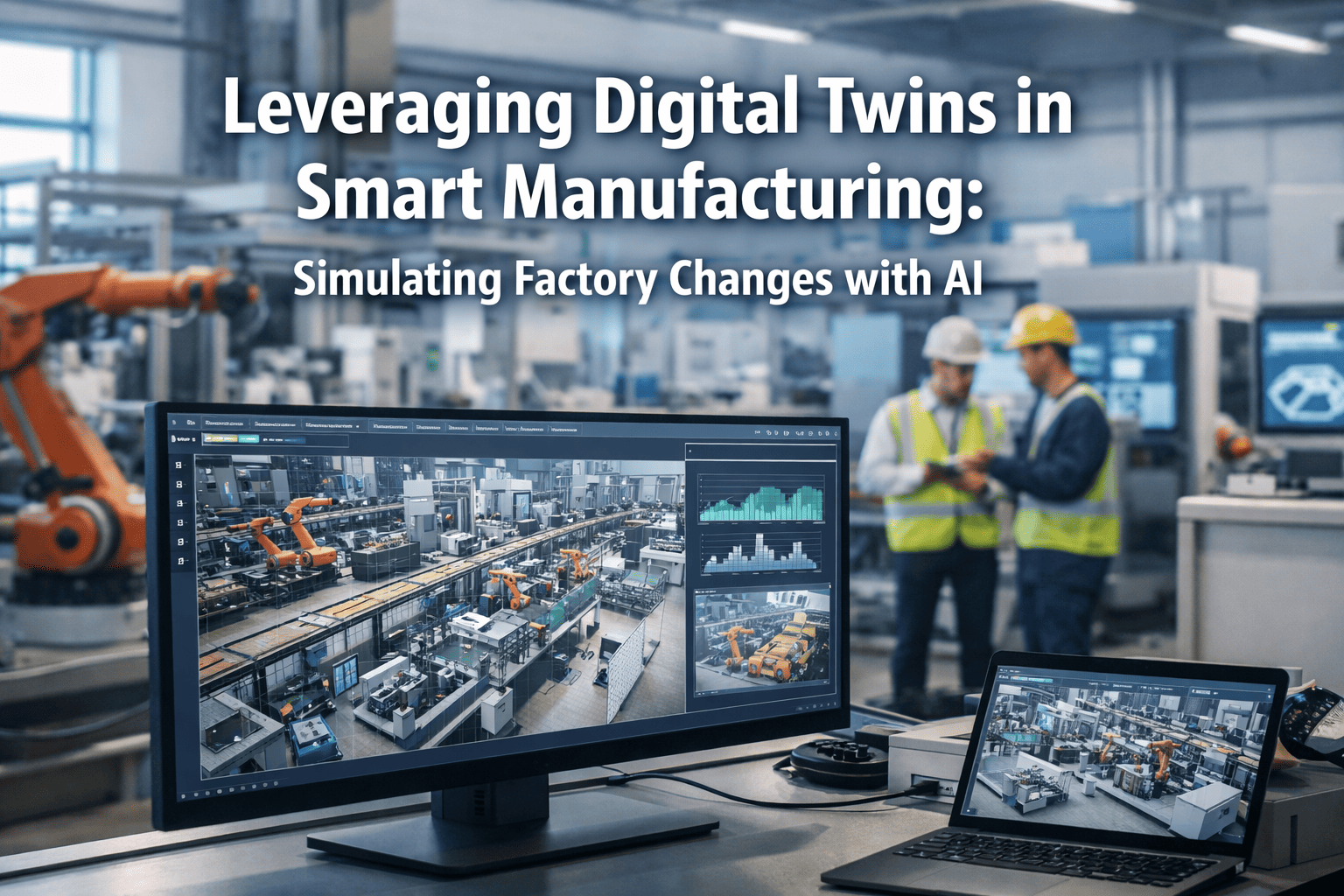
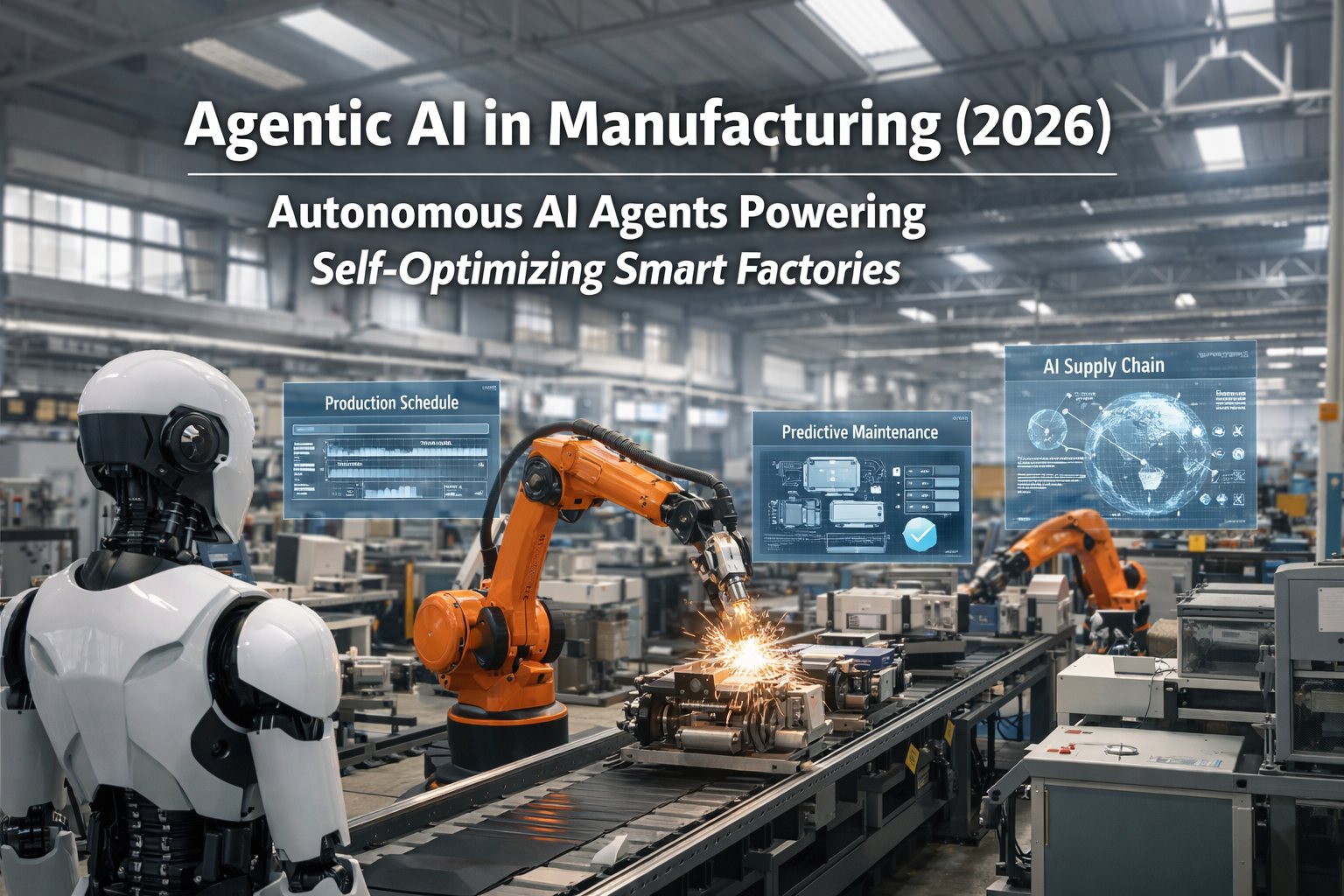
The factory of the future is not a concept — it is already here. Smart factories combine AI, IoT, robotics, digital twins, and real-time analytics into a single connected ecosystem where machines communicate, processes self-optimize, and decisions happen at the speed of data. The results are measurable: manufacturers implementing smart factory technologies report up to 30% productivity gains, 30-50% reduction in unplanned downtime, and 25% energy savings. With the global smart factory market projected to reach $185 billion in 2026 and 92% of manufacturers calling smart manufacturing their primary driver of competitiveness, the question is no longer whether to go smart — it is how fast you can get there. iFactory is the AI-powered smart factory platform that brings real-time OEE monitoring, predictive maintenance, quality intelligence, energy management, and executive AI briefings into a single dashboard — turning any factory into a smart factory.
Traditional Factory vs Smart Factory: The Transformation Gap
A traditional factory reacts to problems. A smart factory anticipates them. The difference is not just technology — it is a fundamentally different operating model where data flows continuously, systems learn from every cycle, and optimization never stops.
Fix it when it breaks. Scheduled maintenance based on calendar, not condition. Unplanned downtime costs $2M+ per hour in automotive.
AI monitors vibration, temperature, and current signatures in real time. Predicts failures 2-8 weeks in advance. Maintenance happens when needed — not too early, not too late.
Sample-based human inspection at end of line. Catches 70-80% of defects. Missed defects become warranty claims and recalls.
AI vision inspects 100% of units at line speed with 99%+ accuracy. Defect patterns are correlated to process variables for root-cause elimination.
Monthly utility bills. No visibility into which machines, lines, or shifts consume the most energy. No way to optimize.
Real-time WAGES monitoring (Water, Air, Gas, Electricity, Steam) at machine level. AI optimizes scheduling around energy costs and renewable availability.
Spreadsheet reports compiled days or weeks after events. Decisions based on lagging indicators and gut instinct.
Real-time dashboards with AI-generated insights. Natural language briefings for executives. Decisions based on live data, not last month's numbers.
The Five Pillars of a Smart Factory
A smart factory is not a single technology purchase — it is an integrated ecosystem built on five foundational pillars. Each pillar delivers independent value, but the real transformation happens when they work together.
Connected Equipment (IIoT)
Sensors on every critical asset — motors, pumps, compressors, conveyors, robots — streaming vibration, temperature, pressure, current, and flow data to a central platform. The nervous system of your smart factory.
Cuts unplanned downtime 20%+ with edge sensors on legacy equipmentAI & Predictive Analytics
Machine learning models that learn normal operating signatures and detect degradation patterns before failure. Predictive maintenance, demand forecasting, process optimization, and anomaly detection — all driven by AI.
Reduces maintenance costs 25-30% vs scheduled approachesDigital Twin Simulation
Virtual replicas of physical assets, production lines, and entire factories. Test changes virtually before deploying physically. Simulate production scenarios, validate throughput, and optimize layouts without risking production.
14.3% CAGR — fastest growing smart factory technologyIntelligent Automation
Industrial robots, cobots, AMRs, and automated guided vehicles coordinated by AI orchestration. Machines that adapt to product variations, optimize paths, and coordinate multi-robot workflows autonomously.
210K+ cobots shipped last year — surpassing traditional by 2028Real-Time Visibility & MES
Manufacturing Execution Systems that track every order, every unit, every process parameter in real time. Full traceability from raw material to finished goods. Live OEE, throughput, and yield dashboards for every level of the organization.
86% of manufacturers see real-time visibility as critical for competitionSmart Factory Maturity: Where Is Your Plant Today?
Every factory sits somewhere on the smart manufacturing maturity curve. Understanding your current level helps you prioritize investments and build a realistic roadmap. Most manufacturers are between Level 1 and Level 2 — the biggest ROI comes from moving to Level 3.
Connected
Sensors installed. Data collected but siloed. Manual dashboards. Reactive problem-solving. Engineers investigate issues after they happen.
Predictive
AI analyzes data patterns. Predictive maintenance prevents unplanned downtime. Proactive alerts replace reactive scrambling. 10-20% output improvement realized.
Prescriptive
AI recommends specific actions — optimal settings, maintenance windows, production schedules. Systems identify the root cause and prescribe the fix. Humans verify and approve.
Autonomous
AI-driven automation executes recommendations without human intervention. Self-optimizing production lines. Closed-loop quality. Lights-out manufacturing for select processes.
iFactory: Your Complete Smart Factory Platform
iFactory brings all five pillars into a single AI-powered platform — designed for manufacturers who want smart factory capabilities without stitching together dozens of point solutions from different vendors.
Real-Time OEE Dashboard
Live Availability, Performance, and Quality metrics for every line, cell, and machine. Drill down from plant-wide OEE to individual asset cycle times. Automatic loss categorization with Pareto analysis.
Predictive Maintenance Console
AI-generated asset health scores for every critical machine. Failure predictions 2-8 weeks in advance with specific failure mode, affected component, and optimal repair window. Auto-generated SAP work orders.
Quality Intelligence Hub
First-pass yield tracking, AI defect classification, root-cause correlation with process variables, and SPC analytics. Catches quality drift before it becomes scrap. Audit-ready compliance reporting.
Energy & Sustainability
WAGES KPI monitoring (Water, Air, Gas, Electricity, Steam) at machine level. ESG reporting dashboards. AI-optimized production scheduling aligned with energy cost windows and carbon reduction targets.
Robot Fleet Health Console
Vendor-agnostic monitoring of your entire robotic fleet — industrial robots, cobots, AMRs. Joint-level health analytics, anomaly logs, predictive maintenance for every robot across every brand.
Executive AI Briefing
Natural language plant summaries generated by AI. Conversational interface for executives — ask questions about production, quality, energy, and maintenance in plain English. CEO audit-ready reports on demand.
Industry Applications
Smart factory principles apply across every manufacturing sector — but the specific use cases, compliance requirements, and ROI drivers differ by industry. iFactory adapts to each vertical.
Body-in-white automation, paint quality AI, assembly verification, battery module line monitoring. OEE optimization across multi-model flexible lines. IATF 16949 compliance automation.
Rolling mill monitoring, furnace temperature optimization, surface defect detection, energy consumption analytics. Predictive maintenance on critical drives and gearboxes. ESG carbon tracking.
Cleanroom environmental monitoring, batch process analytics, equipment qualification tracking. FDA 21 CFR Part 11 compliant audit trails. Bioreactor performance optimization.
Line efficiency monitoring, CIP cycle optimization, fill-level and packaging quality inspection. HACCP/FSMA compliance dashboards. Energy per unit produced tracking for sustainability goals.
Cleanroom yield analytics, AOI integration, wafer-level defect tracking, equipment performance monitoring. Sub-micron precision quality control at production speed.
Kiln optimization, grinding mill predictive maintenance, emissions monitoring, energy-per-ton analytics. Process parameter correlation with product quality. Dust and vibration monitoring.
The ROI of Going Smart
Production Output Increase
Smart factory adopters report 10-20% improvement in production output through real-time optimization and bottleneck elimination
Downtime Reduction
Predictive maintenance and real-time monitoring cut unplanned downtime by up to half — preventing million-dollar stoppages
Energy Savings
Machine-level energy monitoring and AI-optimized scheduling reduce energy consumption — lowering costs and meeting ESG targets
Quality Improvement
AI-powered inspection and real-time SPC improve product quality by 30%, reducing scrap, rework, and warranty claims
Frequently Asked Questions
Your Factory, Made Intelligent
iFactory delivers AI-powered OEE monitoring, predictive maintenance, quality intelligence, energy management, robot fleet health, and executive AI briefings — all from a single platform that connects to your existing equipment and systems.