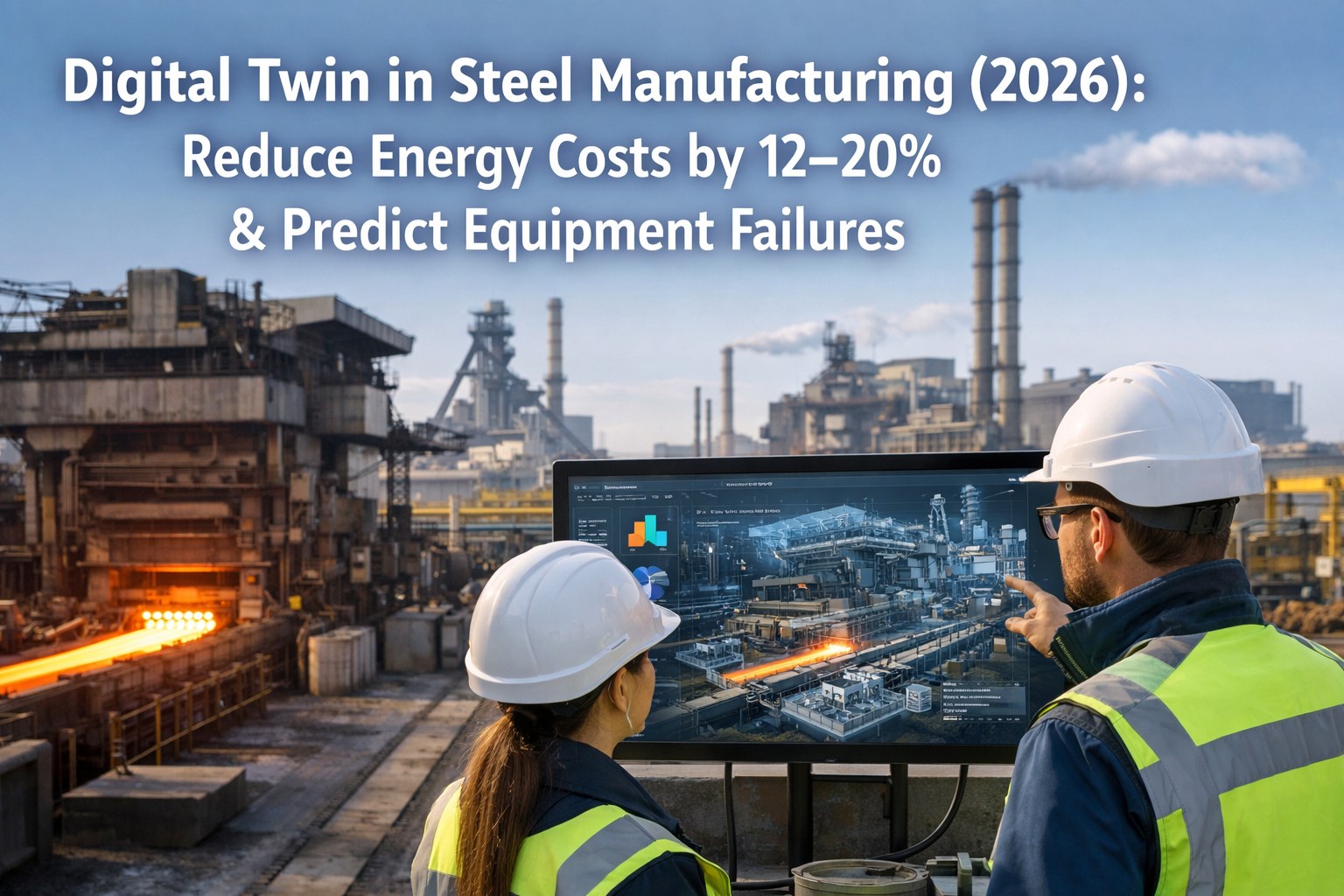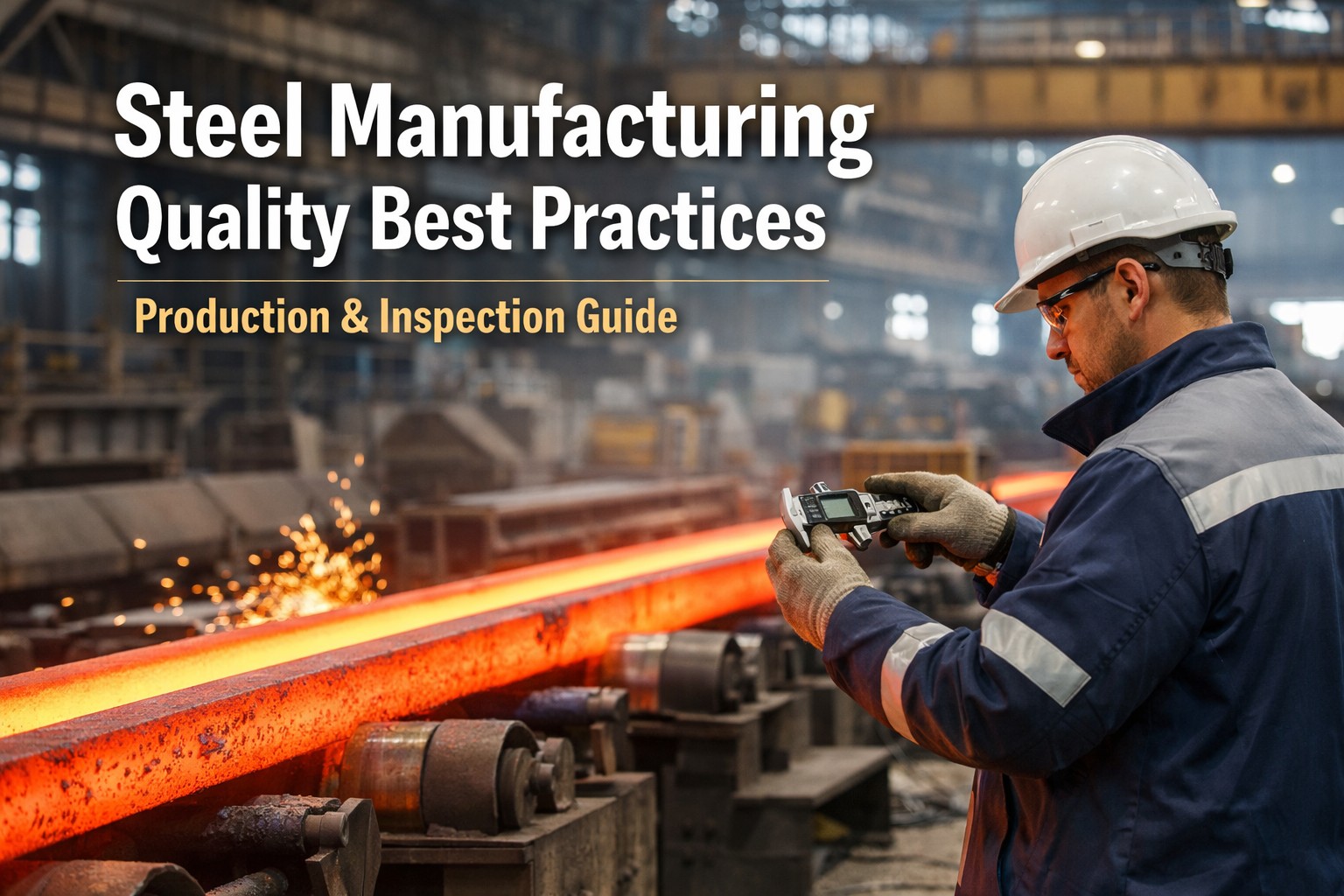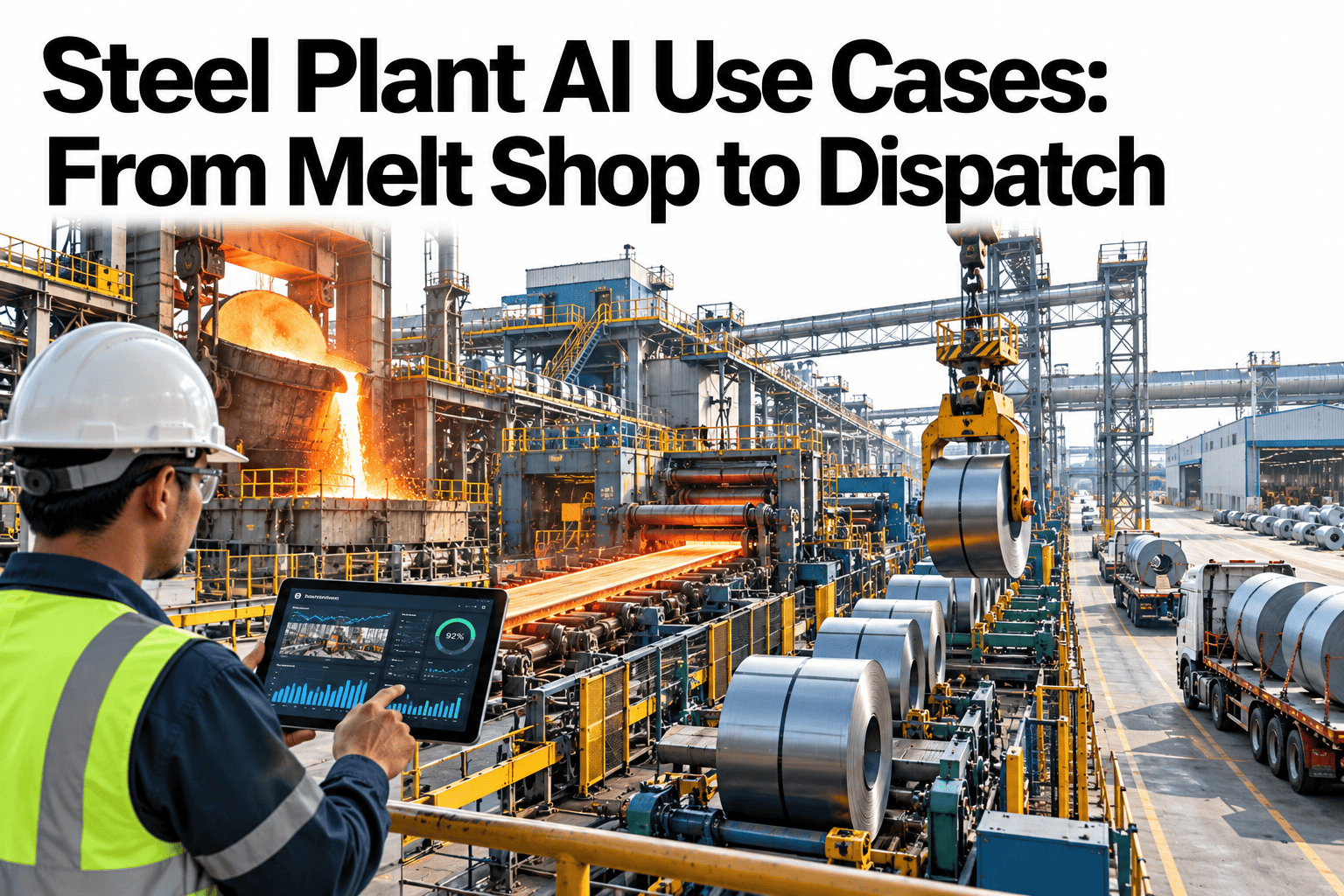
Steel production is a 24-hour, high-temperature, continuous-process environment where a single unplanned failure can stop production for days and cost tens of thousands of dollars per hour. The plants that are pulling ahead competitively are not the ones that bought the newest equipment — they are the ones that deployed AI across the full production chain, from scrap charging in the melt shop to dispatch scheduling at the shipping dock. iFactory AI delivers that end-to-end intelligence on a turnkey platform built specifically for steel plant operating conditions. See how AI use cases map to your specific steel plant configuration.
AI Across the Full Steel Production Chain
From melt shop to dispatch — the AI use cases that integrated and EAF steel mills are deploying now to reduce downtime, improve yield, and cut energy cost.
Why Steel Plants Are the Right Environment for AI
Steel plants generate massive volumes of process data — vibration, temperature, current, pressure, speed, chemistry — across hundreds of sensors per production unit. The challenge has never been data availability. It has been extracting actionable intelligence from it before the window to act closes.
The steel industry spent an estimated $4.2 billion on unplanned downtime in 2024, roughly 5–8% of total operating costs across integrated and EAF mills worldwide. AI-driven predictive maintenance platforms have already demonstrated consistent reductions in unplanned downtime at operating plants. The gap between AI-enabled operations and those still running on calendar-based PM schedules is no longer incremental — it is measured in tonnes per year and margin percentage.
Melt Shop AI Use Cases
The melt shop is where the largest individual asset failures occur and where AI delivers its most concentrated value. EAF operating conditions — extreme temperature, arc instability, refractory wear — make manual monitoring inherently unreliable.
EAF electrical energy consumption is the largest single operating cost in an EAF-based mill. AI models trained on heat cycle data — electrode position, arc stability, scrap melting progress, bath temperature — optimize the power curve in real time, reducing energy consumption per tonne while maintaining consistent tap temperature. Documented deployments show energy cost reductions of 3–7% per heat without compromising metallurgical targets.
Premature tap hole failure is both a safety event and a production loss. Conventional tap holes last 100–150 heats; failed deployments reach 20–50. AI models analyzing approximately 1,000 signal readings per heat across the EAF identify deterioration patterns — cooling water flow anomalies, refractory wear signatures in temperature data, arc behavior changes — and predict remaining useful life with enough advance notice to schedule planned replacement rather than emergency repair.
Rate-of-rise (RoR) alerts on EAF panel temperature detect developing hot spots before they progress to panel failure or furnace stoppage. AI models separate normal thermal variation during arcing from genuine anomalies, reducing false alarms while maintaining sensitivity to real developing failures. Early detection converts expensive emergency furnace shutdowns into planned maintenance interventions scheduled between heats.
Scrap quality and mix directly affect melt shop energy consumption, tap chemistry consistency, and electrode wear rate. AI models correlating historical charge mix data with heat outcomes recommend optimized scrap blends for each heat, balancing chemistry targets against available inventory and energy cost. This reduces heat-to-heat variability in tap temperature and chemistry while managing scrap procurement cost.
Map AI Use Cases to Your Steel Plant
iFactory AI is configured specifically for your plant's equipment and production process. Book a 30-minute session to see which use cases apply first and what the ROI sequencing looks like for your operation.
Rolling Mill AI Use Cases
The rolling mill is the highest-throughput section of a steel plant and the area where bearing and gearbox failures cause the most production loss per event. AI monitoring transforms unplanned failures into planned roll changes.
Bearing Failure Prediction
Vibration monitoring at backup roll chock bearings, work roll bearings, and drive gearboxes detects bearing defect frequencies — BPFO, BPFI, BSF, and FTF — between three and eight weeks before functional failure. This converts an 18-hour emergency strip-down into a 6-hour planned roll change scheduled at the next available maintenance window.
Mill Chatter Detection
Third-octave chatter in rolling mills prints visible gauge variation into the strip, generating customer quality rejections. Accelerometer monitoring in the 100–150 Hz band detects developing chatter and alerts the operator to reduce speed or adjust roll crown before the defect becomes commercially detectable in the product.
Gauge Control AI
Strip gauge deviation from specification is driven by a combination of roll force variation, thermal crown changes, and roll wear. AI models correlating AGC response data with strip measurement identify developing gauge drift earlier than threshold-based control systems, reducing out-of-tolerance strip production and associated rework and downgrade costs.
Strip Breakage Prediction
Strip breakages in hot rolling mills cause significant production loss and can damage mill equipment. AI models correlating tension, vibration, temperature, and previous defect observations predict breakage risk based on developing signatures, enabling operators to take preventive action — speed reduction or strip diversion — before the event occurs.
Casting and Dispatch AI Use Cases
Continuous caster performance and shipping logistics are both amenable to AI optimization, with impact on yield, quality, and customer service levels.
| Production Area | AI Use Case | Primary Benefit | Data Sources |
|---|---|---|---|
| Continuous Caster | Breakout prevention | Avoids catastrophic mold failure events | Thermocouple array, withdrawal speed, mold level |
| Continuous Caster | Strand cooling optimization | Improves slab surface quality, reduces cracks | Spray flow sensors, pyrometers, caster speed |
| Continuous Caster | Segment wear prediction | Plans segment change on condition, not calendar | Segment gap sensors, drive motor current, roll force |
| Reheat Furnace | Slab temperature profile optimization | Reduces energy per tonne, improves rolling consistency | Zone thermocouples, fuel flow, slab tracking |
| Shipping and Dispatch | Order sequencing AI | Maximizes throughput, minimizes hot-charge delay | Order book, production schedule, inventory state |
| Shipping and Dispatch | Finished goods inventory optimization | Reduces holding cost, improves delivery lead time | Inventory system, customer order data, production plan |
How iFactory AI Deploys at a Steel Plant
Steel plant deployment requires hardware and integration approaches specifically designed for the high-temperature, high-noise, connectivity-limited environment of an operating mill.
Frequently Asked Questions
Which steel plant AI use case delivers the fastest ROI?
Rolling mill bearing failure prediction usually leads, since a single prevented emergency failure can cover the system cost outright; EAF energy optimization compounds fast at high volume too. Walk through the ROI sequencing for your specific plant configuration.
Does iFactory AI require replacing existing SCADA or process control systems?
No — it connects to your existing SCADA and PLC systems over standard protocols and adds an intelligence layer on top, without touching process control. Get details on protocol compatibility with your specific control systems.
How does AI perform in the harsh conditions of a steel plant environment?
Ruggedized edge hardware and noise-aware signal processing are built for furnace heat, EMI, and vibration — designed for steel plant conditions rather than adapted from lighter-duty environments. Ask about hardware specs for your plant's conditions.
Can AI use cases be deployed in phases rather than plant-wide at once?
Yes — most plants start with EAF critical components and roll bearings, then expand as ROI is proven; full coverage typically spans 12–18 months. Discuss the phased deployment approach for your plant.
How does iFactory AI handle the load variability typical of rolling mill operations?
Load-normalized baseline models account for speed, strip width, and reduction pass, so alarm thresholds stay calibrated to actual operating conditions instead of a fixed cutoff. Ask how load normalization applies to your mill's operating range.
Deploy AI Across Your Steel Plant Production Chain
iFactory AI maps to your melt shop, rolling mill, caster, and dispatch operations with use cases configured specifically for your equipment and production process. Book a session to start the deployment conversation.