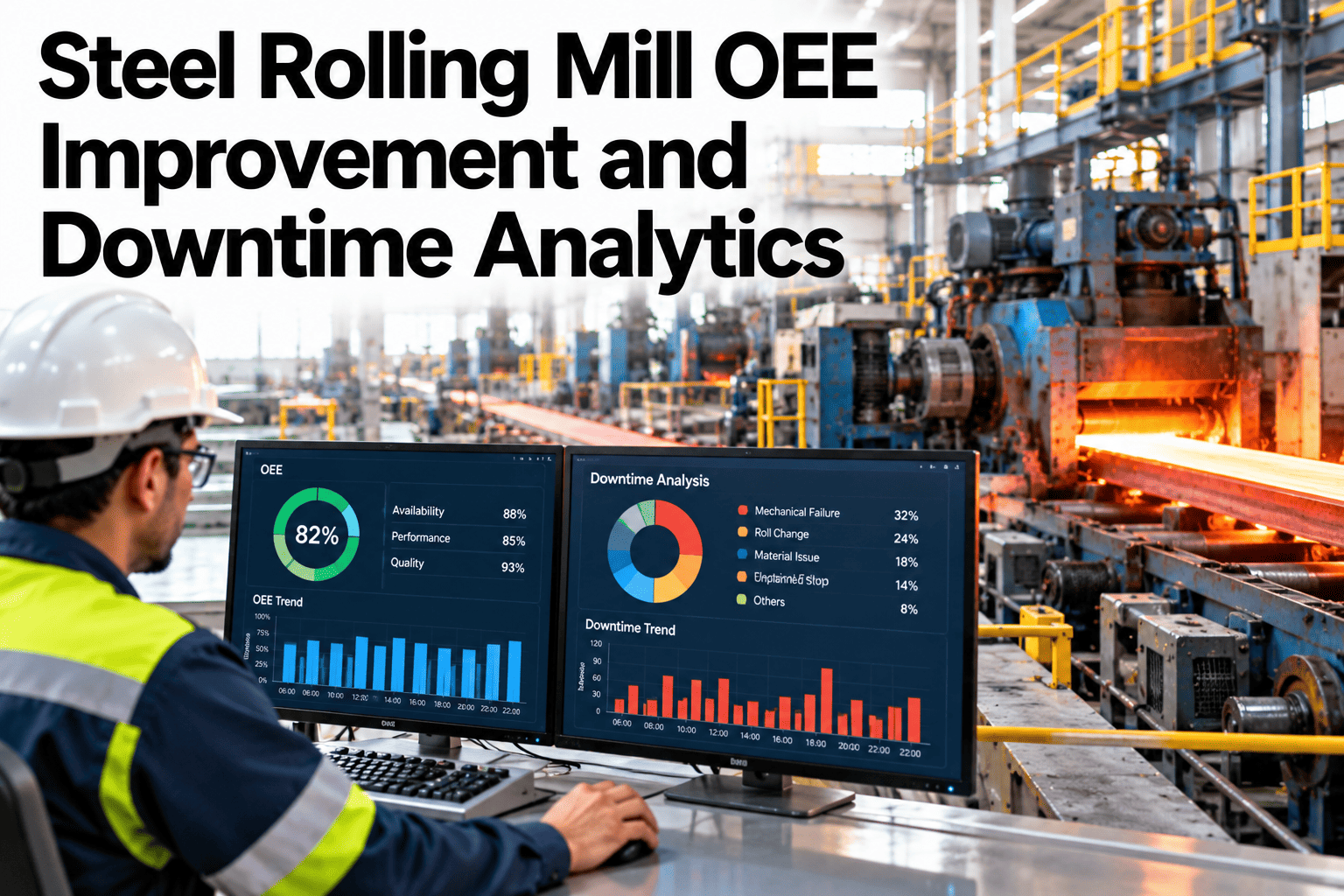
At 2:47 AM on a Saturday, the shift supervisor at a 3 MTPA integrated steel plant watches the continuous caster tundish temperature drift past 1,560°C — three degrees above the window. The strand slows. The slab develops centerline segregation. By morning, 47 tons of semi-finished steel are downgraded to rebar-grade billet, a loss of $18,000 per heat. The data trail exists — thermocouple logs, L2 automation records, ladle tracking — but no system connects them in time. The supervisor's only tool is a phone call to the melt shop, a clipboard, and twenty years of gut feel. This is the reality of steel plant operations without digitalization: reactive, manual, and bleeding margin on every heat.
Stop Making Downgrade Steel: Real-Time Digitalization That Connects Melt Shop to Finishing Mill
iFactory ingests every process signal — from DRI feed rate to coiler temperature — and builds a single, living model of your plant. Downgrade drops below 1.2%. Tundish temperature stays within ±2°C. And you see the next shift's quality drift before it happens.
Your Plant Already Has the Data. It Just Can't Use It.
Every ton of steel you make generates thousands of data points per minute — from BOF oxygen blow profiles to reheat furnace zone temperatures. But in most plants, those signals live in silos: Level 2 automation, LIMS, slab tracking, and the melt shop PLCs never talk to each other in real time. The result is a plant that runs blind, reacting to problems only after the steel is cast, rolled, or downgraded.
Tundish Temperature Drift Costs $18,000 Per Heat
When tundish superheat drifts more than 5°C from target, centerline segregation and surface defects spike. Without a digital model that fuses ladle thermal history with caster speed feedback, operators correct too late — or not at all. At 12 heats per day, that's over $6M in annual downgrade risk from one variable alone.
Chemistry Rejections from Unseen Drift in Ladle Metallurgy
A 10 ppm shift in sulfur or aluminum pickup between the ladle furnace and caster can scrap an entire sequence. Your LIMS shows the result 45 minutes after the pour — too late to adjust. Operators are flying blind between the furnace and the mold, relying on samples that arrive after the steel is already cast.
Reheat Furnace Over-Firing Burns $4/Ton in Fuel
Without real-time slab temperature tracking from caster exit to reheat furnace entry, operators over-fire by 15–25°C to guarantee rolling temperature. That extra 20°C costs $4 per ton in natural gas — $1.2M annually for a 2 MTPA mill. The furnace control system has the data; it just doesn't know what the caster is doing.
Downgrade Detection Only After the Coil Is Stamped
Your ultrasonic and eddy current testers catch defects — but by then the coil is already on the floor. With every downgrade from prime to secondary grade costing $42/ton, a 2% downgrade rate on a 3 MTPA mill is $2.5M in lost margin annually. The root cause happened 90 minutes ago in the caster or ladle furnace; you need to catch it there.
Shift Handoffs Lose the Context That Prevents Downgrade
A ladle furnace operator knows the history of the last eight heats — the refractory condition, the alloy feed drift, the temperature response. That knowledge walks out the door at shift change. The incoming operator gets a clipboard with three numbers and a verbal "it was running hot." Digitalization captures and passes that operational context instantly.
The average integrated steel plant loses $8–12M per year to preventable downgrade. You can cut that by 60% in a single quarter. Book a 30-min walkthrough and we'll show you how on your own data.
From Siloed Signals to a Single, Actionable View of the Mill
iFactory connects to every data source in your plant — PLCs, Level 2 automation, LIMS, slab tracking, downstream testers — and builds a unified digital twin that updates every second. No cloud. No data leaving your network. No months of integration consulting. Here's how it works:
Connect Every Data Source in Under 2 Weeks
Our on-premise NVIDIA appliance plugs into your plant network and auto-discovers OPC-UA, Modbus, MQTT, and REST endpoints from the melt shop through the finishing mill. No changes to existing PLCs or Level 2 systems.
Build a Real-Time Digital Twin of Your Process
iFactory fuses 1,000+ signals per heat — BOF chemistry, ladle temperature profiles, caster speed, reheat furnace zones, rolling mill force — into a single model that tracks every ton from scrap to coil.
Detect Downgrade Risk 45 Minutes Before It Happens
Our AI models learn the signature of every defect type — centerline segregation, surface cracks, dimensional drift — and alert operators with 92% precision before the steel is cast or rolled. You intervene at the ladle furnace, not the inspection line.
Close the Loop: Feed Prescriptions Back to the Control Room
iFactory doesn't just warn — it recommends specific adjustments: tundish superheat target, argon stir rate, reheat furnace zone setpoint. Operators see the recommendation, accept, and the system updates the control setpoint automatically.
Built for the Realities of Integrated and EAF Steelmaking
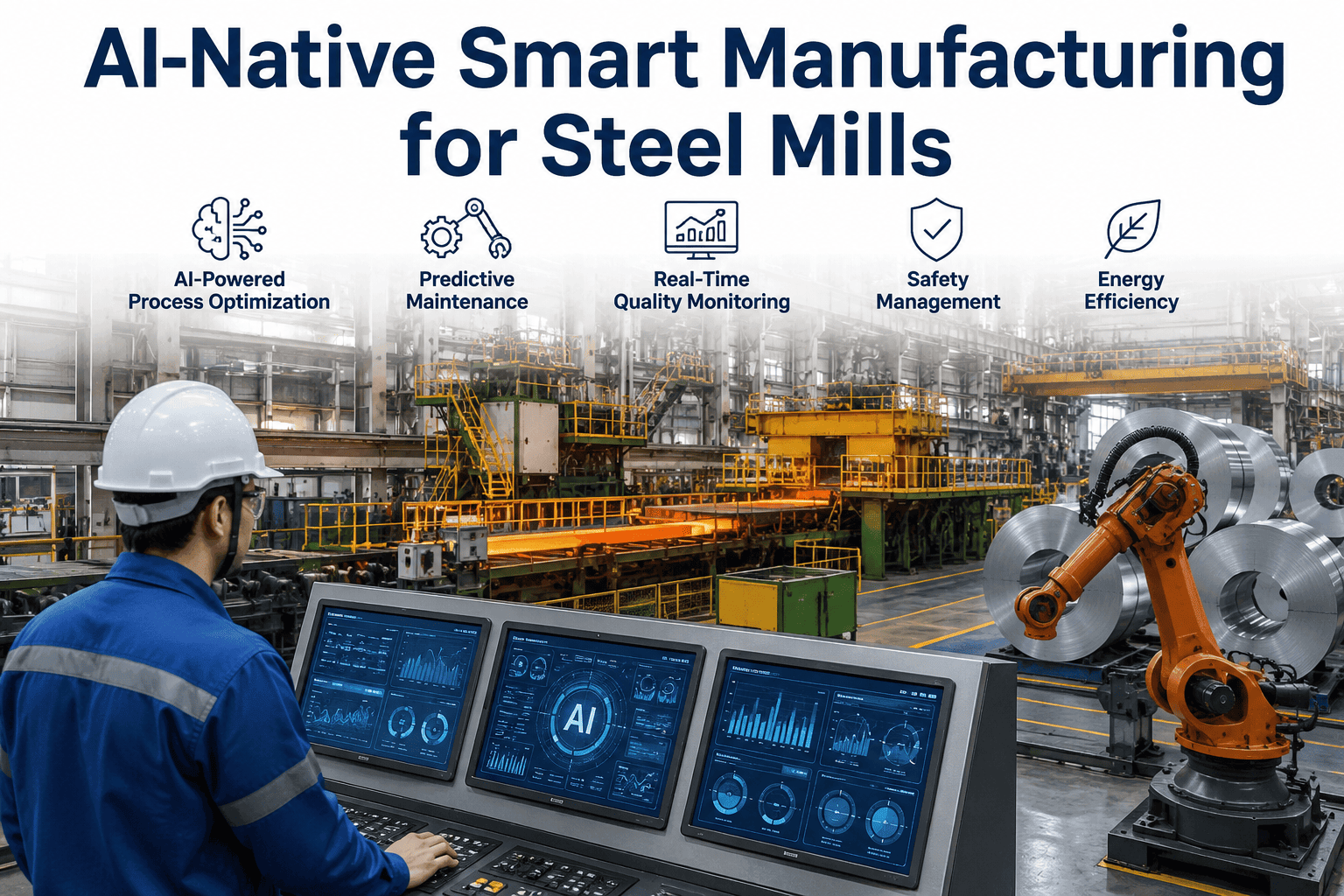
iFactory's AI Analytics Platform is purpose-built for steel's unique process challenges — from continuous casting to hot rolling. Every capability is designed to reduce downgrade, stabilize processes, and increase prime yield.
Tundish Temperature Prediction & Control
Fuses ladle thermal history, tundish preheat status, and caster speed to predict superheat 15 minutes ahead. Alerts operators when drift exceeds ±3°C, with recommended speed adjustments to maintain shell thickness uniformity.
Chemistry Trajectory Model
Ingests every alloy addition, argon stir event, and temperature measurement from the ladle furnace to predict final chemistry before the LIMS result returns. Detects sulfur and aluminum pickup trends 20 minutes before they breach spec.
Slab Thermal Tracking & Fuel Optimization
Tracks every slab from caster exit through reheat furnace with a thermal model that predicts discharge temperature. Recommends zone setpoints to hit target rolling temperature within ±5°C while reducing fuel consumption by 12–18%.
Dimensional Drift Detection
Monitors rolling mill force, torque, and pyrometer readings in real time to detect gauge and crown drift 30 seconds before the coil leaves the mill. Alerts operators to adjust screwdown or roll bend before off-gauge coils accumulate.
Defect Root-Cause Mapping
Correlates every coil defect — from ultrasonic indications to mechanical test failures — back to process conditions at the time of casting, rolling, and cooling. Identifies the specific heat, operator shift, and equipment state that caused the defect.
Equipment Degradation Trend Analysis
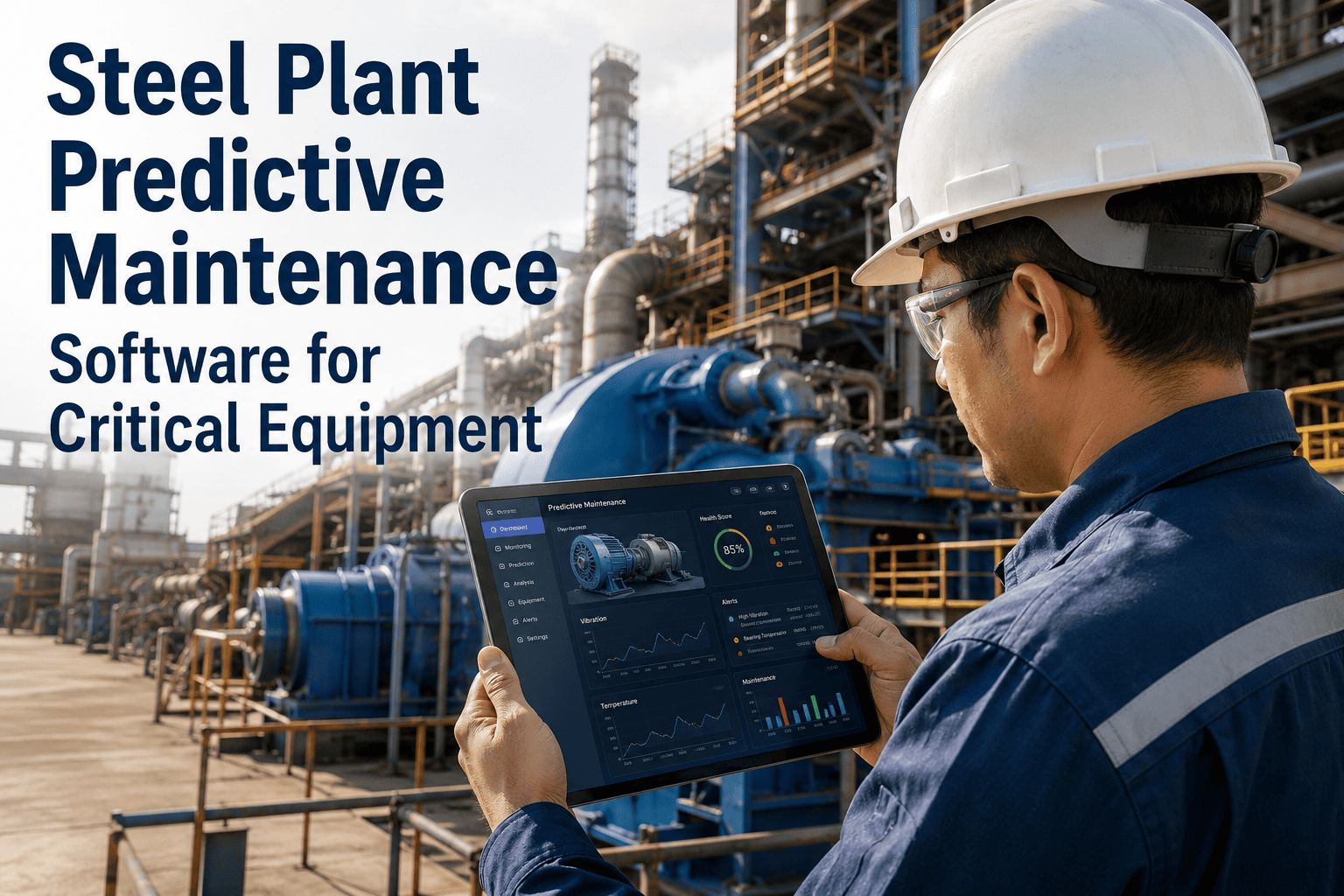
Monitors caster mold level fluctuation, ladle furnace electrode wear, and rolling mill bearing vibration to predict equipment degradation 72 hours before failure. Integrates with your CMMS to schedule maintenance during planned outages.
Measurable Impact on Prime Yield, Energy, and Uptime
Steel plants running iFactory see consistent improvement within the first 90 days. These are real results from integrated and EAF mills across multiple grades and tonnages.
End-to-End Steel Plant Digitalization — No Cloud, No Consulting Overhead
iFactory is delivered as a turnkey, on-premise appliance that connects to your plant network and starts delivering value within weeks. Here's exactly what's included:
On-Premise NVIDIA Appliance
Installed on your plant network. Zero data leaves your facility. No cloud dependency, no bandwidth concerns, no cybersecurity exposure. Compliant with the most stringent IT/OT security policies.
6–12 Week Pilot to First Results
We connect to your existing data sources — no rip and replace of PLCs, Level 2 systems, or LIMS. You see your first real-time dashboards and alerts within 2 weeks of appliance installation.
Pre-Built Steel Process Models
iFactory ships with models trained on 50+ steel plants covering BOF, EAF, ladle furnace, continuous caster, reheat furnace, and hot rolling. Models adapt to your specific grades, equipment, and operating practices within days.
Operator-Facing Alerts & Prescriptions
Real-time notifications on control room screens, mobile devices, and plant-floor HMIs. Every alert includes a specific recommendation — not just a warning. Operators act, not react.
24×7 Managed Service & Model Updates
iFactory's operations team monitors your appliance, updates models as your process changes, and provides monthly performance reviews. You focus on steelmaking; we keep the digital twin accurate.
Pilot-to-ROI in One Quarter
We structure the pilot to target the highest-value downgrade stream in your plant — typically tundish temperature or chemistry drift. You see ROI within the first 90 days, then we expand across the mill.
Common Questions About Steel Plant Digitalization
Stop Losing Margin to Downgrade That Your Data Already Predicted
Your plant generates the data to prevent every downgrade event. iFactory connects it, models it, and acts on it — in real time, on your network, in 6–12 weeks. Book a demo and we'll show you exactly how much prime yield you're leaving on the table.