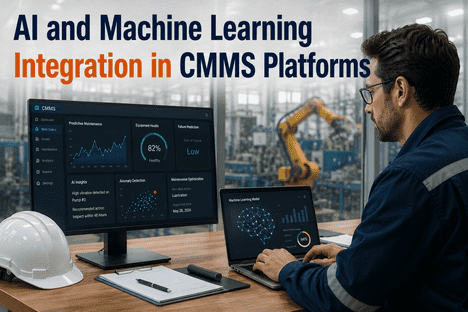
AI and machine learning are fundamentally transforming how modern enterprises manage their assets, maintenance workflows, and operational infrastructure. As industrial environments grow more complex — with interconnected equipment, multi-site operations, and mounting pressure to reduce unplanned downtime — traditional Computerized Maintenance Management Systems (CMMS) are rapidly evolving into intelligent platforms powered by real-time data, predictive algorithms, and automated decision-making. The integration of AI and machine learning into CMMS platforms marks a critical inflection point for maintenance management in 2026 and beyond, enabling organizations to move decisively from reactive repairs to predictive, condition-based maintenance strategies that protect asset reliability and compress operational costs. Book a Demo to see how ifactory's AI-powered platform transforms your maintenance intelligence.
What Is AI Integration in CMMS Platforms?
A traditional CMMS is designed to schedule preventive maintenance, track work orders, manage spare parts inventory, and store asset histories. While effective for structured, rule-based maintenance programs, legacy CMMS platforms are fundamentally limited by the quality and completeness of the data that humans input into them. AI integration changes this dynamic entirely. By embedding machine learning models, computer vision, natural language processing, and IoT-connected sensor analytics directly into the CMMS layer, AI-powered platforms can ingest continuous streams of operational data, identify failure patterns invisible to human observation, and generate maintenance recommendations before equipment degradation reaches critical thresholds.
In practical terms, AI integration means the CMMS evolves from a passive record-keeping system into an active intelligence layer — one that monitors asset health in real time, learns from historical maintenance outcomes, adapts its predictive models as equipment ages, and continuously optimizes maintenance schedules based on actual operating conditions rather than manufacturer-specified intervals alone.
Core Capabilities: How Machine Learning Enhances CMMS Functionality
Machine learning algorithms trained on historical failure data, vibration signatures, thermal readings, and operational load patterns can predict equipment failure with accuracy that far exceeds fixed-interval preventive maintenance schedules. Rather than replacing a component every 500 hours regardless of its actual condition, AI-integrated CMMS platforms recommend intervention precisely when sensor data and learned failure patterns indicate a genuine degradation risk — extending asset life, reducing unnecessary maintenance labor, and eliminating unplanned failures simultaneously.
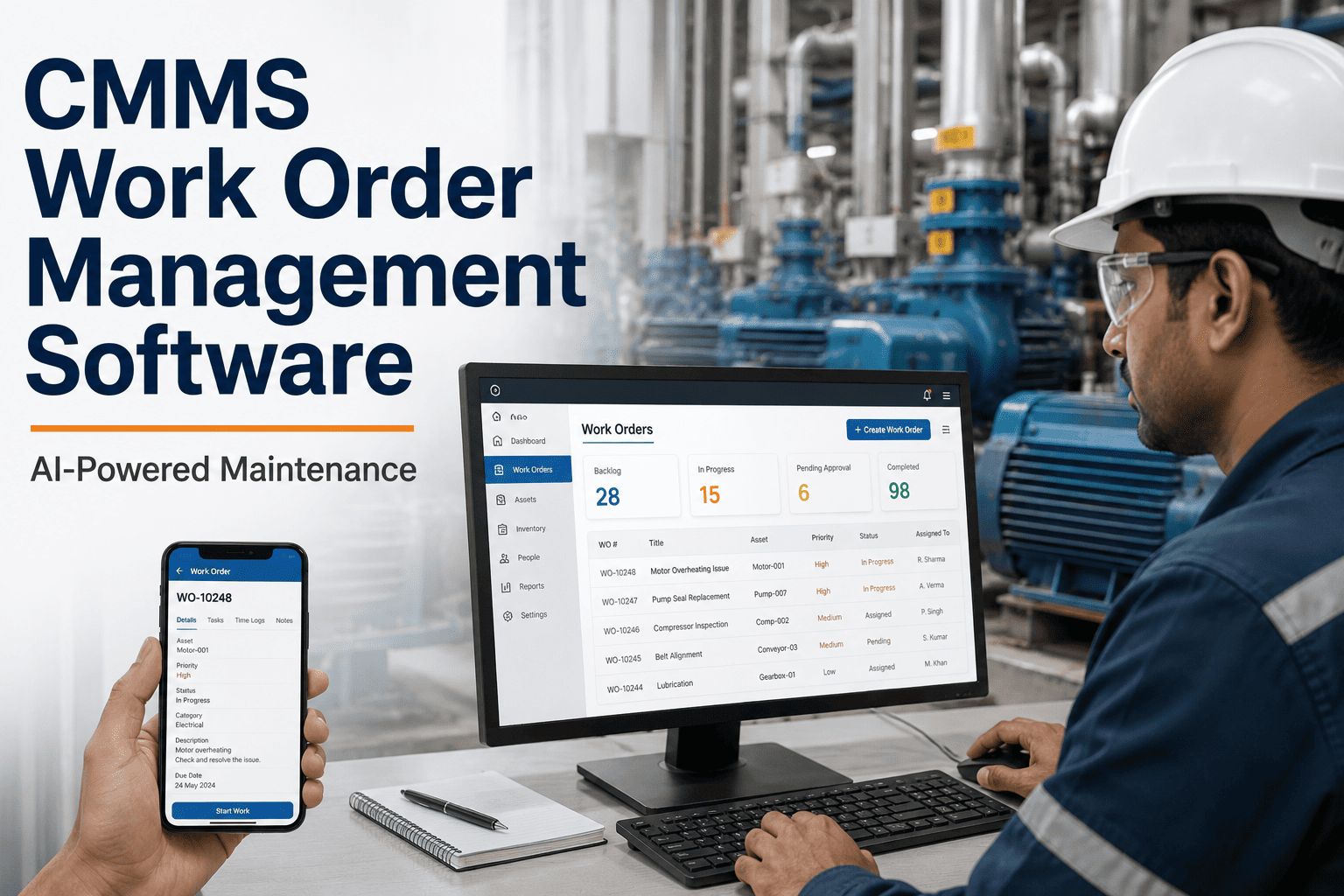
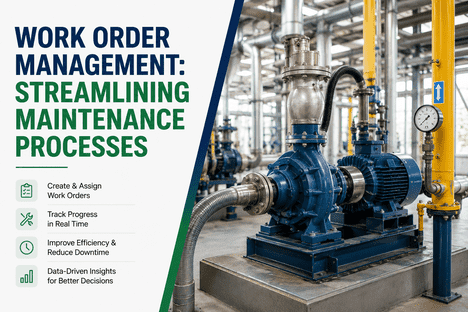
When AI models detect anomalies or predict imminent failures, an integrated CMMS can automatically generate, prioritize, and assign work orders without human intervention. This automation eliminates the lag between anomaly detection and maintenance response — a gap that in traditional systems could span days or weeks as data passed through multiple reporting layers before triggering action. Automated work order logic can also factor in technician availability, spare parts inventory levels, and equipment criticality to ensure the right resources are deployed at the right time.
AI Vision Camera technology brings machine learning directly to the shop floor, enabling continuous visual inspection of equipment, production lines, and facility infrastructure without requiring human observers. Computer vision models trained on failure modes, surface defects, misalignment signatures, and wear patterns can monitor assets around the clock — feeding visual anomaly data directly into the CMMS for immediate work order creation and maintenance scheduling. This capability is particularly transformative in environments where physical inspection is hazardous, infrequent, or impossible to conduct consistently across large facilities.
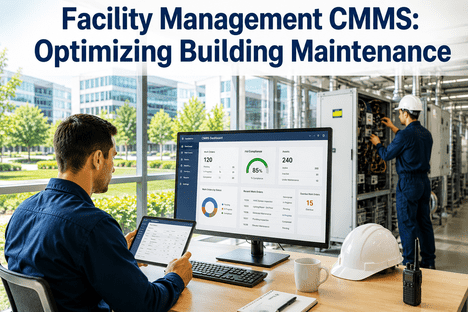
AI-integrated CMMS platforms serve as the intelligence layer above IoT sensor networks — aggregating temperature, vibration, pressure, humidity, current draw, and flow rate data from connected assets and applying machine learning models to detect deviation from normal operating envelopes. Rather than generating raw alert floods that overwhelm maintenance teams, AI analytics layer context and prioritization on top of sensor data, surfacing only the signals that genuinely indicate maintenance risk and ranking them by probability of failure and consequence severity.
Machine learning models integrated with CMMS inventory management can forecast spare parts consumption based on predicted failure rates, maintenance schedules, and seasonal operational patterns. This predictive inventory intelligence eliminates the twin costs of over-stocking low-turnover components and experiencing stockouts for critical parts at the moment of failure — a problem that can extend equipment downtime by days when supply chains are constrained.
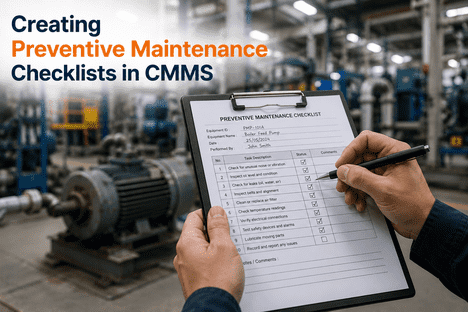
AI algorithms can dynamically optimize preventive maintenance schedules by balancing equipment condition data, production demand patterns, technician capacity, and regulatory compliance windows. Rather than rigid calendar-based scheduling that ignores actual operating conditions, AI-optimized schedules adapt in real time — deferring maintenance when assets are performing within safe parameters during peak production periods and advancing inspections when condition data suggests accelerated degradation.
The Business Case: Why AI-Integrated CMMS Delivers Measurable ROI
The financial case for AI integration in CMMS platforms is grounded in the concrete cost structure of industrial maintenance operations. Unplanned downtime in manufacturing environments costs an estimated $50,000 to $260,000 per hour depending on industry and asset criticality. Preventive maintenance programs based on fixed intervals routinely over-maintain equipment — consuming labor and spare parts budgets on components that have substantial remaining useful life — while simultaneously missing early-stage failures that interval-based inspections never detect. AI-driven predictive maintenance addresses both failure modes simultaneously, optimizing maintenance investment against actual equipment condition rather than statistical averages.
Beyond direct maintenance cost reduction, AI-integrated CMMS platforms deliver ROI through quality and compliance improvements. Real-time asset monitoring with automated documentation creates immutable audit trails for regulatory compliance, reduces the risk of equipment-related quality failures, and provides the data foundation for continuous reliability improvement programs. Organizations deploying AI-powered maintenance management consistently report reductions in maintenance labor costs, extension of mean time between failures across critical assets, and significant reductions in spare parts inventory carrying costs — outcomes that typically deliver full platform ROI within 12 to 18 months of deployment.
| Dimension | Traditional CMMS | AI-Integrated CMMS | Impact |
|---|---|---|---|
| Maintenance Approach | Calendar-based intervals | Condition-based & predictive | 30–40% cost reduction |
| Work Order Trigger | Manual entry / scheduled | Automated from sensor data | 3× faster response |
| Asset Monitoring | Periodic manual inspection | Continuous AI vision + IoT | 24/7 coverage |
| Failure Detection | Reactive post-failure | Predictive pre-failure | Up to 70% fewer surprises |
| Inventory Management | Static reorder points | ML-driven demand forecasting | 20–35% inventory savings |
| Compliance Documentation | Manual compilation | Automated audit-ready records | 85%+ time reduction |
ifactory AI Vision Camera: Bringing Computer Vision to CMMS Integration
ifactory's AI Vision Camera platform represents the convergence of computer vision intelligence and CMMS-integrated asset management — delivering a purpose-built solution for manufacturers who need continuous, automated visual monitoring of production equipment, quality control points, and facility infrastructure. Unlike generic surveillance systems, ifactory's AI Vision Camera is trained on industrial failure modes and quality defect signatures, enabling it to detect surface anomalies, misalignment patterns, seal failures, contamination events, and equipment wear at resolutions and frequencies that human inspection programs cannot match.
The platform integrates directly with maintenance management workflows — when the AI Vision Camera detects an anomaly exceeding configured severity thresholds, it automatically generates a maintenance alert with visual evidence attached, enabling technicians to assess the issue before physically reaching the equipment. This visual documentation capability is equally valuable for compliance purposes, creating time-stamped photographic evidence of equipment condition that satisfies audit requirements across food safety, pharmaceutical GMP, and industrial regulatory frameworks. Book a Demo to see ifactory's AI Vision Camera in action across your asset categories.
Continuous monitoring of equipment surfaces, seals, joints, and moving components with ML models trained on industry-specific failure signatures — detecting degradation before it becomes failure.
Anomaly detections above configurable severity thresholds automatically generate work orders in the CMMS layer — complete with visual evidence, location data, and suggested maintenance action — without human intervention.
Every inspection event generates an immutable, time-stamped visual record satisfying regulatory and certification body documentation requirements across food safety, GMP, and industrial compliance frameworks.
Visual anomaly data is correlated with IoT sensor readings — temperature, vibration, pressure — to produce multi-dimensional asset health assessments that reduce false positives and sharpen failure prediction accuracy.
Implementation Considerations for AI-CMMS Integration
Successful AI integration into existing CMMS platforms requires careful attention to data infrastructure, model training requirements, and change management. Organizations should evaluate the quality and completeness of their historical maintenance data — the foundation on which machine learning models are trained — and prioritize digitization of paper-based records before expecting accurate predictive outputs. Facilities with less than 18 to 24 months of structured digital maintenance history should plan for a model maturation period during which the AI layer refines its predictions against observed outcomes.
Integration architecture decisions — whether to deploy a fully integrated AI-native platform or to layer AI capabilities onto an existing CMMS through API connections — depend on the depth of functionality required and the organization's existing system investments. For manufacturers prioritizing visual inspection automation, computer vision integration via dedicated AI camera hardware offers the fastest path to measurable impact regardless of the underlying CMMS platform. Book a Demo to assess integration pathways for your specific facility environment.
AI and CMMS in Industry 4.0: The 2026 Landscape
The convergence of AI, machine learning, and CMMS platforms is accelerating in 2026, driven by declining sensor hardware costs, maturing edge computing infrastructure, and the growing availability of pre-trained industrial AI models that reduce the time and data required to achieve useful predictive accuracy. Industry 4.0 frameworks position intelligent maintenance management as a foundational capability — not an optional upgrade — for manufacturers competing on operational efficiency, product quality, and regulatory compliance in global markets.
The most significant competitive differentiator emerging in this landscape is not access to AI technology, which is increasingly commoditized, but the ability to integrate AI-generated maintenance intelligence directly into operational workflows in ways that change human behavior and decision-making in real time. Organizations that successfully bridge the gap between AI prediction and maintenance execution — ensuring that predictive insights actually trigger timely, well-documented maintenance actions — are the ones delivering measurable reliability and cost outcomes rather than impressive dashboards with uncertain operational impact.
Key Benefits of AI-Integrated CMMS for Maintenance Teams
Machine learning models that identify failure precursors weeks before equipment breakdown allow maintenance teams to intervene on their schedule — not the equipment's — eliminating the emergency response costs, production losses, and quality consequences associated with unplanned failures.
AI-prioritized work order queues ensure technicians are always working on the highest-consequence maintenance tasks, while automated documentation eliminates the administrative burden that consumes a significant fraction of maintenance labor in traditional CMMS environments.
Real-time IoT and vision-based asset monitoring replaces maintenance strategies built around periodic manual inspections — providing continuous, quantified equipment health data that supports both daily maintenance decisions and long-term asset management planning.
AI-integrated CMMS platforms with vision monitoring capabilities generate complete, time-stamped maintenance records automatically — satisfying regulatory audit requirements, supporting ISO 55001 asset management certification, and eliminating the manual compilation burden that consumes quality team capacity in compliance-intensive industries.
AI-powered CMMS platforms scale without proportional increases in maintenance headcount — monitoring hundreds of assets across multiple facilities from centralized dashboards, applying consistent predictive models, and surfacing cross-site reliability insights that distributed manual programs cannot generate.
Modern AI-CMMS platforms are designed for rapid integration with existing infrastructure — connecting to IoT sensors, ERP systems, and legacy CMMS databases through standard APIs and delivering initial predictive insights within weeks of deployment as models begin learning from facility-specific operational data.