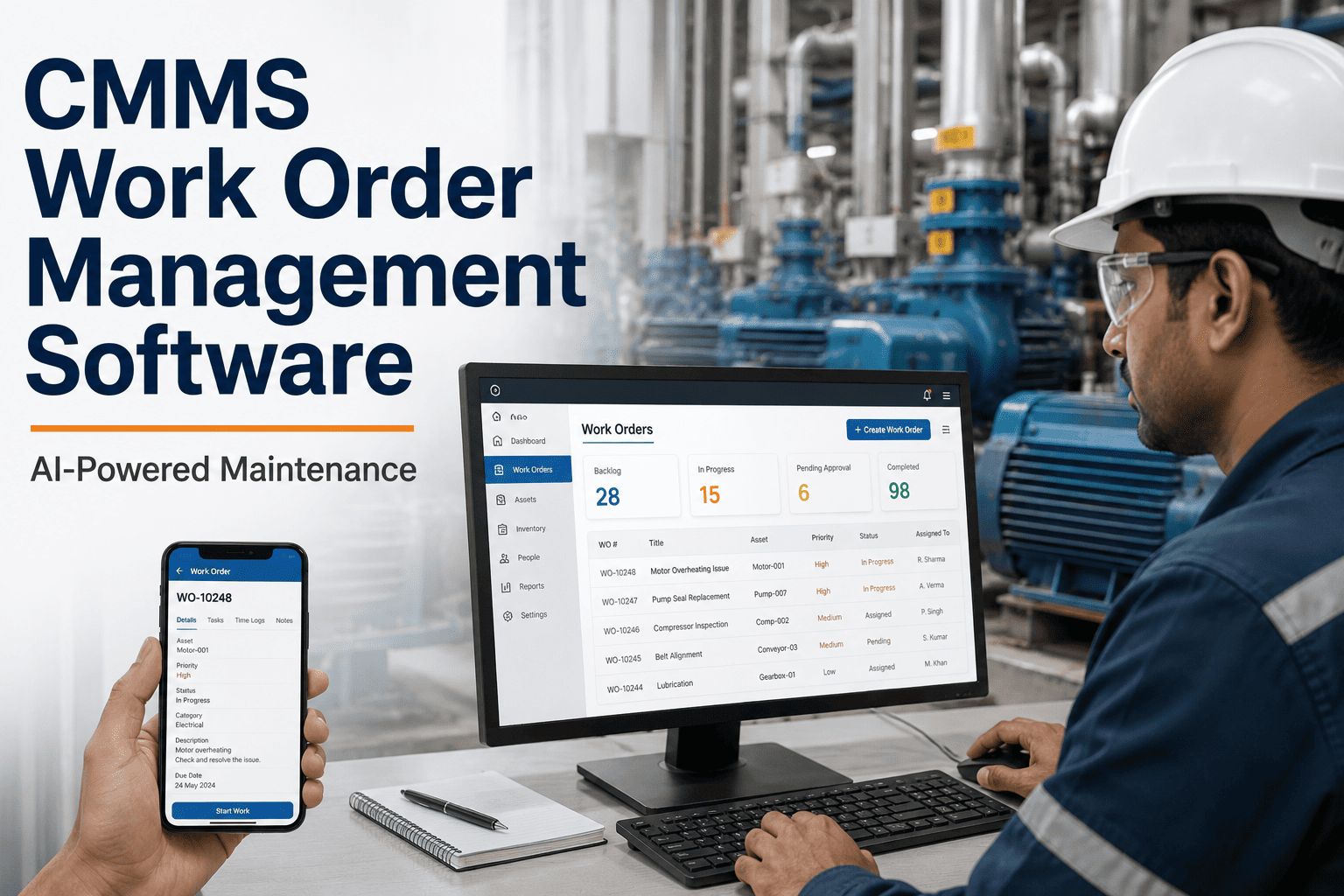
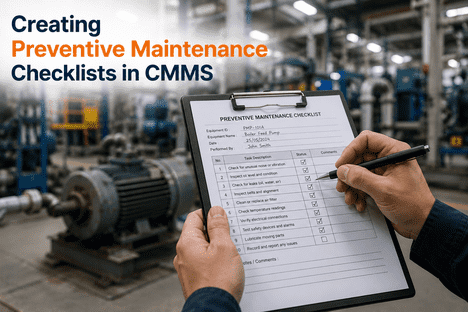
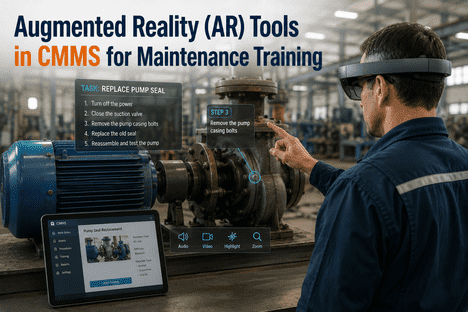
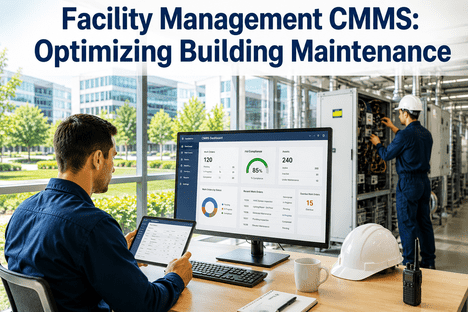
Maintenance teams in 2026 are no longer simply repairing equipment — they are operating sophisticated digital platforms that integrate IoT sensors, AI-driven predictive alerts, automated work order workflows, and real-time asset performance dashboards into every repair and inspection decision they make. A Computerized Maintenance Management System is only as effective as the team using it, and organizations that deploy CMMS software without investing in structured training programs consistently underperform on every reliability metric that matters: mean time between failures, preventive maintenance compliance, spare parts consumption, and unplanned downtime costs. Closing the gap between CMMS capability and team proficiency is not a one-time onboarding exercise — it is an ongoing upskilling program that evolves alongside the technology, the asset base, and the Industry 4.0 tools now integrating directly with maintenance management platforms to deliver the predictive intelligence modern operations require.
AI VISION · CMMS INTEGRATION · MAINTENANCE INTELLIGENCE · 2026
See How AI Vision Integrates With Your CMMS to Automate Maintenance Decisions
iFactory's AI vision camera system connects directly with your CMMS to generate condition-based work orders automatically — giving your trained maintenance team real-time equipment health data at every production line across every site.
Why CMMS Training Programs Fail — and What High-Performing Teams Do Differently
Most CMMS deployments underdeliver not because the software lacks capability, but because training investment stops at basic navigation. Technicians learn how to open and close work orders; they never develop the analytical fluency to use defect trend data, PM compliance reporting, or predictive maintenance alert queues to drive proactive decisions. The result is a CMMS used as a digital paperwork system rather than a reliability intelligence platform. The following comparison captures the measurable gap between organizations with structured upskilling programs and those relying on basic onboarding alone.
1PM Compliance Rate
Below Target
Teams with minimal CMMS training average 55–68% PM compliance. Technicians miss scheduled tasks because they do not understand how to prioritize work order queues or interpret overdue maintenance alerts in context of asset criticality ratings configured in the system.
Consistently Above Target
Structured training programs that include asset criticality interpretation, work queue prioritization, and PM scheduling logic consistently achieve 88–96% PM compliance — directly reducing unplanned failure rates on critical assets by 30–45% within six months of program completion.
2Work Order Data Quality
Incomplete Records
Without training in failure coding standards and labor hour documentation, work order records lack the structured data needed for root cause analysis. Failure mode fields are left blank, repair descriptions are freeform, and parts consumption is unrecorded — making historical asset data worthless for reliability modeling.
Audit-Ready Records
Teams trained in work order documentation standards produce structured records that support MTBF analysis, failure mode trending, and regulatory audit preparation. Every completed work order becomes an asset intelligence data point that improves future maintenance decisions across the fleet.
3Predictive Alert Response
Alerts Ignored
Maintenance technicians who receive AI predictive maintenance alerts without context training dismiss them at high rates — defaulting to familiar schedule-based PM cycles even when condition data signals imminent failure. Alert fatigue from poorly configured thresholds compounds the problem when teams lack the training to recalibrate.
Confident Action
Teams trained in condition monitoring interpretation and predictive alert triage act on AI-generated work orders with confidence, achieving 70–85% reduction in false-positive alert dismissal rates and converting predictive intelligence into actual prevented failures — the core value proposition of any Industry 4.0 maintenance program.
4Spare Parts Management
Stockouts and Overstock
Without training in CMMS inventory management modules, technicians continue to manage parts informally — storing critical components at personal workstations, failing to record consumption against work orders, and generating emergency purchase orders that bypass the procurement controls the CMMS is designed to enforce.
Optimized Inventory Control
Proficient CMMS users who understand inventory module workflows consistently reduce spare parts carrying costs by 20–35% while simultaneously reducing stockout events. Parts consumption recorded against work orders feeds demand forecasting models that optimize reorder points without manual analysis.
Result
Low PM compliance, poor data quality, ignored predictive alerts, unoptimized inventory — CMMS investment underdelivers
90%+ PM compliance, audit-ready records, confident predictive response, optimized parts management — full ROI realized
Training Architecture
6 Core Modules Every CMMS Training Program Must Include in 2026
Effective CMMS upskilling programs are structured around role-specific learning paths that go beyond software navigation to build the maintenance engineering judgment that makes CMMS data actionable. The following six modules represent the current best-practice curriculum for maintenance teams operating CMMS platforms integrated with IoT condition monitoring and AI-driven predictive tools in Industry 4.0 manufacturing environments. Maintenance managers who want to see how iFactory's AI vision system generates the condition data that feeds these CMMS workflows can Book a Demo with iFactory's integration team.
01
Work Order Lifecycle Management and Documentation Standards
The foundation of every CMMS training program is work order proficiency — not just creating and closing tasks, but understanding the full documentation standard that makes work order records useful for reliability analysis. Training covers failure mode coding using ISO 14224 or equivalent taxonomies, labor hour recording accuracy, parts consumption documentation, and root cause description standards that enable machine learning models to identify failure pattern correlations across the asset fleet. Teams that complete this module produce work order records that serve as the raw material for every advanced analytics capability the CMMS provides.
02
Asset Hierarchy, Criticality Classification, and Maintenance Strategy Selection
Maintenance technicians and planners who understand asset criticality frameworks make fundamentally better maintenance decisions than those working from intuition or seniority alone. This module trains teams to navigate and maintain the CMMS asset hierarchy, interpret criticality scores assigned through failure mode and effects analysis, and select maintenance strategies — run-to-failure, time-based PM, condition-based maintenance, or predictive — appropriate to each asset class and production context. Asset hierarchy fluency is the prerequisite for every advanced CMMS capability including spare parts optimization, shutdown planning, and regulatory compliance reporting.
03
Predictive Maintenance Alert Interpretation and Triage Workflows
As IoT sensors and AI vision systems feed condition-based alerts into CMMS work order queues, maintenance teams need training in alert interpretation that goes beyond reading a number. This module covers vibration spectrum analysis fundamentals, thermal anomaly significance thresholds, AI vision defect rate trend interpretation, and the triage workflow that distinguishes high-confidence actionable alerts from low-confidence monitoring holds. Teams that complete this training convert predictive alert data into planned corrective work orders rather than default responses — capturing the failure prevention value that justifies the condition monitoring investment. iFactory's AI vision system is a direct source of the quality-derived equipment health signals this training covers.
04
Preventive Maintenance Planning, Scheduling, and Compliance Reporting
Preventive maintenance planning is the highest-leverage skill most maintenance teams underdevelop. This module trains planners and schedulers in CMMS-driven PM frequency optimization using MTBF data, seasonal production demand calendars, and shutdown window coordination with operations. Compliance reporting training covers how to generate PM compliance dashboards, interpret completion rate trends by asset class and technician, and present performance evidence to quality and operations leadership. Teams with this capability consistently achieve 90%+ PM compliance and can demonstrate continuous improvement to regulatory auditors using CMMS-generated evidence rather than manual records.
05
Spare Parts Inventory Control and Procurement Integration
Inventory module proficiency is consistently the most financially impactful CMMS training investment for manufacturing organizations. This module covers parts master data maintenance, min/max reorder point configuration, consumption recording against work orders, vendor catalog management, and the purchase requisition workflow that connects CMMS inventory signals to ERP procurement systems. Teams trained in inventory module workflows eliminate the informal parts management practices — personal stockpiles, undocumented consumption, reactive emergency purchasing — that inflate maintenance supply costs by 25–40% in facilities without structured CMMS inventory discipline.
06
KPI Dashboards, Reliability Reporting, and Continuous Improvement Analytics
The highest level of CMMS proficiency is analytical — using system-generated data to identify reliability trends, benchmark asset performance against targets, and drive continuous improvement decisions. This module trains maintenance engineers and managers in MTBF and MTTR trend analysis, defect pareto construction, cost-per-asset reporting, and the presentation of maintenance performance evidence to operations leadership. Teams with analytical CMMS proficiency operate maintenance as a data-driven discipline rather than a reactive service function — the organizational transformation that Industry 4.0 maintenance programs are designed to enable.
Performance Data
Measured Outcomes from Structured CMMS Training Programs
The following performance data reflects operational outcomes from manufacturing organizations that implemented structured CMMS upskilling programs across maintenance technician, planner, and manager roles. Results are drawn from solid oral dose pharmaceutical, automotive assembly, food processing, and electronics contract manufacturing environments where CMMS platforms were integrated with IoT condition monitoring and AI vision quality systems.
43%
average reduction in unplanned downtime within 12 months of completing structured CMMS upskilling programs across critical asset classes
91%
average PM compliance rate achieved by teams completing role-specific CMMS training versus 62% in facilities relying on basic onboarding alone
28%
reduction in total maintenance cost per unit produced within 18 months of CMMS proficiency program deployment across multi-site manufacturing networks
3.4×
ROI multiplier on CMMS training investment versus initial software licensing cost, driven by downtime reduction and spare parts optimization outcomes
These outcomes reflect the compounding effect of CMMS proficiency: teams that use the system correctly generate better data, better data enables better decisions, and better decisions produce the reliability and cost outcomes that justify every maintenance improvement investment in the program. Maintenance managers ready to explore how iFactory's AI vision system contributes equipment health data to this improvement cycle can Book a Demo to see the full integration demonstrated on their asset types.
Root Cause Analysis
Why Maintenance Teams Struggle with CMMS Adoption — and How to Fix It
CMMS adoption challenges are rarely technical — maintenance technicians can learn software interfaces quickly. The resistance patterns that undermine CMMS deployments are organizational and cultural, and each requires a specific training program design response to resolve effectively.
01
Perceived Administrative Burden Without Visible Benefit
Technicians who experience CMMS primarily as paperwork — creating work orders, recording labor hours, documenting parts — without ever seeing the reliability intelligence those records enable will resist adoption as rational actors. Training programs that close this feedback loop by showing technicians how their documented failure modes drive the PM schedule optimizations and predictive alerts that reduce their emergency repair burden convert resistant adopters into advocates within months. The training must make the benefit personal and visible, not abstract and organizational.
02
Disconnection Between CMMS Data and Operational Decisions
When operations managers and production planners make shutdown scheduling, capital investment, and staffing decisions without referencing CMMS reliability data, maintenance teams learn quickly that the data they enter has no organizational consequence. Upskilling programs must extend beyond the maintenance department to include operations leadership training in CMMS KPI interpretation — creating the organizational demand for quality maintenance data that sustains technician motivation to produce it. Cross-functional CMMS fluency is the structural condition that makes maintenance data valuable.
03
Training That Does Not Reflect Real Production Conditions
Generic CMMS training using vendor-provided sample data fails to transfer to the production environment because trainees cannot connect the exercises to the assets, failure modes, and work order types they encounter daily. Role-specific training built around the facility's actual asset hierarchy, PM schedule, and historical work order library produces knowledge that transfers immediately to the shop floor. Organizations that customize training content to their specific CMMS configuration and asset portfolio achieve adoption rates 60–70% higher than those using generic vendor training programs alone.
04
No Pathway for Advanced Skill Development After Initial Onboarding
Initial CMMS onboarding programs that cover basic navigation without providing a pathway to advanced analytical skills create a proficiency ceiling that frustrates experienced technicians and limits the organization's ability to fully exploit its CMMS investment. Structured upskilling pathways — from technician-level work order proficiency through planner-level scheduling analytics to engineer-level reliability modeling — retain skilled maintenance professionals who see CMMS competency as a career development asset rather than an administrative obligation imposed by management.
AI VISION · CONDITION-BASED MAINTENANCE · CMMS INTEGRATION
Give Your Trained Maintenance Team the AI Vision Data That Makes CMMS Decisions Predictive
iFactory's AI vision camera system generates real-time equipment health signals from production quality trends and routes them directly into your CMMS as condition-based work orders — so the team skills your training program builds are applied to the most valuable maintenance intelligence available.
Implementation Roadmap
Building a CMMS Upskilling Program: A Phased Deployment Approach
A structured CMMS upskilling program requires the same phased, role-differentiated deployment discipline that effective CMMS software implementations demand. The following roadmap reflects deployment patterns validated across multi-site manufacturing organizations building maintenance proficiency programs alongside or following CMMS software deployment in Industry 4.0 environments.
Phase 1
Proficiency Assessment and Role-Specific Learning Path Design (Weeks 1–3)
Assess current CMMS proficiency across technician, planner, and management roles using structured competency evaluation covering work order documentation quality, PM compliance behavior, inventory module usage, and KPI reporting engagement. Map proficiency gaps to the six core training modules and design role-specific learning paths that prioritize the highest-impact skills for each role type. Technician paths emphasize work order documentation and predictive alert response; planner paths focus on scheduling analytics and inventory control; management paths cover KPI interpretation and continuous improvement reporting. Maintenance leaders who want to see how iFactory's AI vision data feeds the predictive alert workflows these training paths cover can
Book a Demo with our integration specialists.
Outcome: Baseline proficiency map, role-specific curriculum design, training priority sequence
Phase 2
Facility-Specific Curriculum Build and Pilot Cohort Training (Weeks 4–10)
Develop training content built around the facility's actual asset hierarchy, PM library, work order templates, and CMMS configuration — not generic vendor sample data. Conduct pilot cohort training with the highest-priority role group (typically maintenance planners or senior technicians on critical production lines), using facility-specific exercises that simulate real work order documentation, predictive alert triage, and inventory transaction scenarios. Collect structured competency evaluation data from the pilot cohort to refine curriculum content and delivery format before full-team rollout. Pilot cohort completion data consistently reveals the specific proficiency gaps that generic vendor training misses.
Outcome: Validated facility-specific curriculum, pilot cohort certified, curriculum refinements identified
Phase 3
Full Team Rollout and Performance Baseline Measurement (Weeks 11–20)
Deliver the validated curriculum across all maintenance roles using a blended delivery model — classroom or virtual sessions for conceptual modules, on-the-floor coaching for work order documentation and alert triage workflows, and self-paced digital modules for KPI reporting and analytics skills. Establish training completion tracking within the CMMS or LMS to maintain certification records. Measure post-training performance against the baseline established in Phase 1 at 30, 60, and 90 days using CMMS-generated KPIs: PM compliance rate, work order documentation completeness score, alert response rate, and spare parts consumption recording accuracy.
Outcome: Full team certified, post-training KPI baseline established, performance improvement documented
Phase 4
Advanced Analytics Pathway and Continuous Improvement Integration (Weeks 21–Ongoing)
Activate the advanced analytics training pathway for maintenance engineers and managers who have completed foundational modules — covering MTBF trend modeling, failure mode pareto analysis, cost-per-asset benchmarking, and continuous process verification reporting using CMMS-generated data. Integrate CMMS proficiency metrics into the facility's performance review cycle to sustain training investment motivation. Establish a quarterly curriculum review process that updates training content as new CMMS modules are activated, new IoT or AI vision integrations go live, and new regulatory requirements affect maintenance documentation standards. The training program should evolve at the same pace as the technology it supports.
Outcome: Advanced analytics cohort active, continuous improvement reporting live, training program sustained long-term
Regulatory Context
CMMS Training and Regulatory Compliance Requirements in 2026
Regulatory frameworks governing manufacturing quality and maintenance documentation are increasingly explicit about the competency requirements for personnel operating automated quality and maintenance management systems. CMMS training programs must address these regulatory obligations as a design requirement, not an afterthought.
FDA 21 CFR Part 11 — Electronic Record Competency
FDA 21 CFR Part 11 requires that personnel using electronic systems to generate GMP-required records are trained in the system's operation and the data integrity requirements those records must satisfy. CMMS training programs in regulated pharmaceutical and medical device manufacturing environments must include documentation of training completion, competency assessment results, and periodic requalification records — all of which are themselves subject to audit scrutiny as part of the facility's training program quality system.
ISO 55001 — Asset Management Competency Requirements
ISO 55001 asset management systems standard requires organizations to determine the competency necessary for personnel whose work affects asset management performance, and to ensure those persons are competent through education, training, or experience. CMMS proficiency is an explicit competency requirement under ISO 55001 for maintenance organizations operating digital asset management platforms — making structured upskilling programs an audit evidence requirement, not an optional investment.
EU GMP Annex 11 — Computerized Systems Training
EU GMP Annex 11 specifies that all personnel using computerized systems must receive appropriate training covering both the system itself and the GMP principles applicable to its use. For CMMS platforms used in pharmaceutical manufacturing to generate maintenance records that form part of the batch history or equipment qualification evidence, training documentation must demonstrate both system operation competency and understanding of the data integrity principles that make those records valid regulatory evidence.
OSHA and Industry Safety Standards
CMMS training programs in heavy manufacturing, chemical processing, and food production environments must incorporate safety management integration — specifically, how lockout/tagout records, equipment isolation confirmations, and safety inspection completions are documented within the CMMS work order system. Personnel who do not understand how to create, complete, and close safety-sensitive work orders in compliance with site safety procedures present both operational risk and regulatory exposure that structured CMMS training specifically addresses.
Frequently Asked Questions
CMMS Training Programs — Frequently Asked Questions
How long does a comprehensive CMMS upskilling program typically take to complete?
Role-specific CMMS upskilling programs typically require 16–40 hours of structured training per role tier, delivered over 4–10 weeks using blended classroom, on-floor coaching, and self-paced digital formats. Technician-level programs focusing on work order documentation and alert response are typically completed in 16–20 hours. Planner and engineer programs covering scheduling analytics, inventory control, and reliability reporting require 30–40 hours. Management programs focused on KPI interpretation and continuous improvement governance are typically 12–16 hours. The phased deployment approach recommended for multi-site organizations allows the full program to run across four months from assessment to full-team certification, with performance improvements measurable within 30 days of training completion at each role level.
What is the most important skill gap to address first in a CMMS upskilling program?
Work order documentation quality is consistently the highest-priority first module in CMMS upskilling programs because every advanced CMMS capability — MTBF analysis, failure mode trending, predictive model training, PM optimization — depends on structured, standardized work order data as its foundational input. Organizations that address work order documentation standards first see compounding improvements across all subsequent training modules because analytical training has real facility data to work with rather than sparse or inconsistently coded records. The second-highest priority, particularly in organizations that have deployed IoT condition monitoring or AI vision systems, is predictive alert interpretation training — converting the condition data these systems generate into planned maintenance actions rather than dismissed notifications.
How does AI vision camera data integrate with CMMS training content in Industry 4.0 environments?
AI vision systems like iFactory's generate real-time equipment health signals from production quality trend data — detecting tooling wear, alignment drift, and mechanical degradation through defect rate analysis before these conditions produce traditional sensor alerts. CMMS training programs in Industry 4.0 environments must include a module covering AI vision alert interpretation: how quality-derived maintenance signals appear in the CMMS work order queue, how to triage their urgency based on defect rate trend severity, and how to document corrective actions in ways that feed the AI model's continuous learning pipeline. Maintenance teams trained in AI vision data interpretation respond to condition-based alerts significantly faster and with higher confidence than teams who receive the same alerts without contextual training on their origin and significance.
What metrics should a CMMS training program track to demonstrate ROI to leadership?
The four most credible post-training KPIs for demonstrating CMMS upskilling ROI are: PM compliance rate improvement (measured as the percentage of scheduled PMs completed on time before and after training), work order documentation completeness score (percentage of work orders with all required fields — failure mode, labor hours, parts used — populated on first submission), unplanned downtime frequency on trained asset classes, and spare parts emergency purchase order volume. These metrics are generated directly by the CMMS without additional data collection effort, making them objective and audit-credible. Organizations with mature CMMS training programs also track MTBF trend by asset class, which demonstrates long-term reliability improvement attributable to sustained PM compliance — the ultimate evidence of training program value to operations and finance leadership.
How often should CMMS training programs be refreshed or updated?
CMMS training programs should undergo formal curriculum review at minimum annually, with trigger-based updates required whenever: new CMMS modules or integrations are activated (IoT feeds, AI vision connections, ERP linkages), regulatory requirements affecting maintenance documentation change, significant new asset classes are added to the CMMS asset hierarchy, or post-training KPI analysis reveals persistent proficiency gaps in specific skill areas. The training program documentation itself — completion records, competency assessments, curriculum version history — should be maintained within the quality management system and made available for regulatory audit as evidence of the organization's commitment to computerized system training compliance under applicable standards including FDA CSA guidance, ISO 55001, and EU GMP Annex 11.
Can smaller maintenance teams with limited training budgets achieve meaningful CMMS upskilling results?
Yes — and the ROI case is proportionally stronger for smaller teams because every proficiency improvement translates directly to measurable output without the diffusion effects that reduce individual impact in larger organizations. Smaller maintenance teams with 5–15 technicians typically achieve full curriculum delivery within 6–8 weeks using a train-the-trainer model where one or two internal CMMS champions receive deep-dive training and then deliver role-specific modules to the broader team. The facility-specific curriculum approach is particularly valuable for small teams because generic vendor training wastes time on irrelevant modules — customizing content to the actual asset base and CMMS configuration maximizes every training hour invested regardless of budget scale.
AI VISION CAMERAS · CMMS INTEGRATION · INDUSTRY 4.0 · 2026
Connect AI Vision Equipment Health Data to Your CMMS-Trained Maintenance Team
iFactory's AI vision camera platform routes real-time equipment health signals from production quality trends directly into your CMMS work order queue — giving the maintenance team your upskilling program builds the most actionable condition data available, at every production line, across every facility.