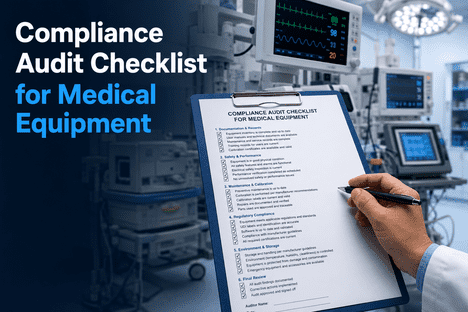
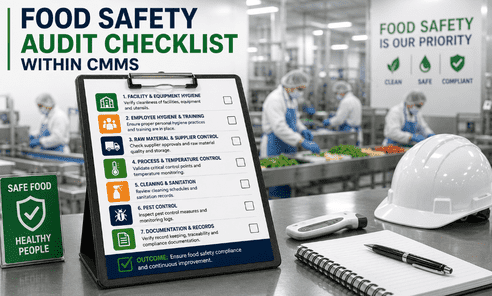
Medical equipment compliance audits are among the most consequential quality assurance activities in healthcare manufacturing and device management — yet they remain one of the most documentation-intensive and error-prone processes when managed through manual checklists and spreadsheet-based maintenance records. A missed calibration cycle on a diagnostic imaging device, an overdue preventive maintenance record on a ventilator, an incomplete sterilisation validation on a surgical instrument set, or a defibrillator with an unresolved corrective action all represent regulatory non-conformances that FDA, ISO 13485, and Joint Commission audit programs will identify and cite — creating corrective action obligations, facility warnings, or device withdrawal events that carry significant operational and commercial cost. AI-powered CMMS platforms eliminate these compliance gaps structurally by tracking every asset, every maintenance event, every calibration record, and every work order to closure across every shift — providing the complete, audit-ready documentation that medical equipment compliance programs require. This checklist provides a zone-by-zone compliance audit framework covering every critical check that medical equipment programs must perform, structured to the sequence that iFactory's deployment engineers use when commissioning and validating compliance management programs across healthcare manufacturing and medical device environments. Use it to audit your current equipment compliance program, identify documentation gaps before a regulatory inspection, or validate that your existing CMMS covers every requirement category your quality specification demands. Book a Demo to see how iFactory's AI Vision Camera and CMMS platform performs every check in this list automatically across your medical equipment portfolio.
MEDICAL EQUIPMENT COMPLIANCEAUDIT READINESSCMMS AUTOMATION
Eliminate Compliance Gaps Across Every Medical Device, Every Shift — With AI-Powered CMMS and Automated Audit Documentation
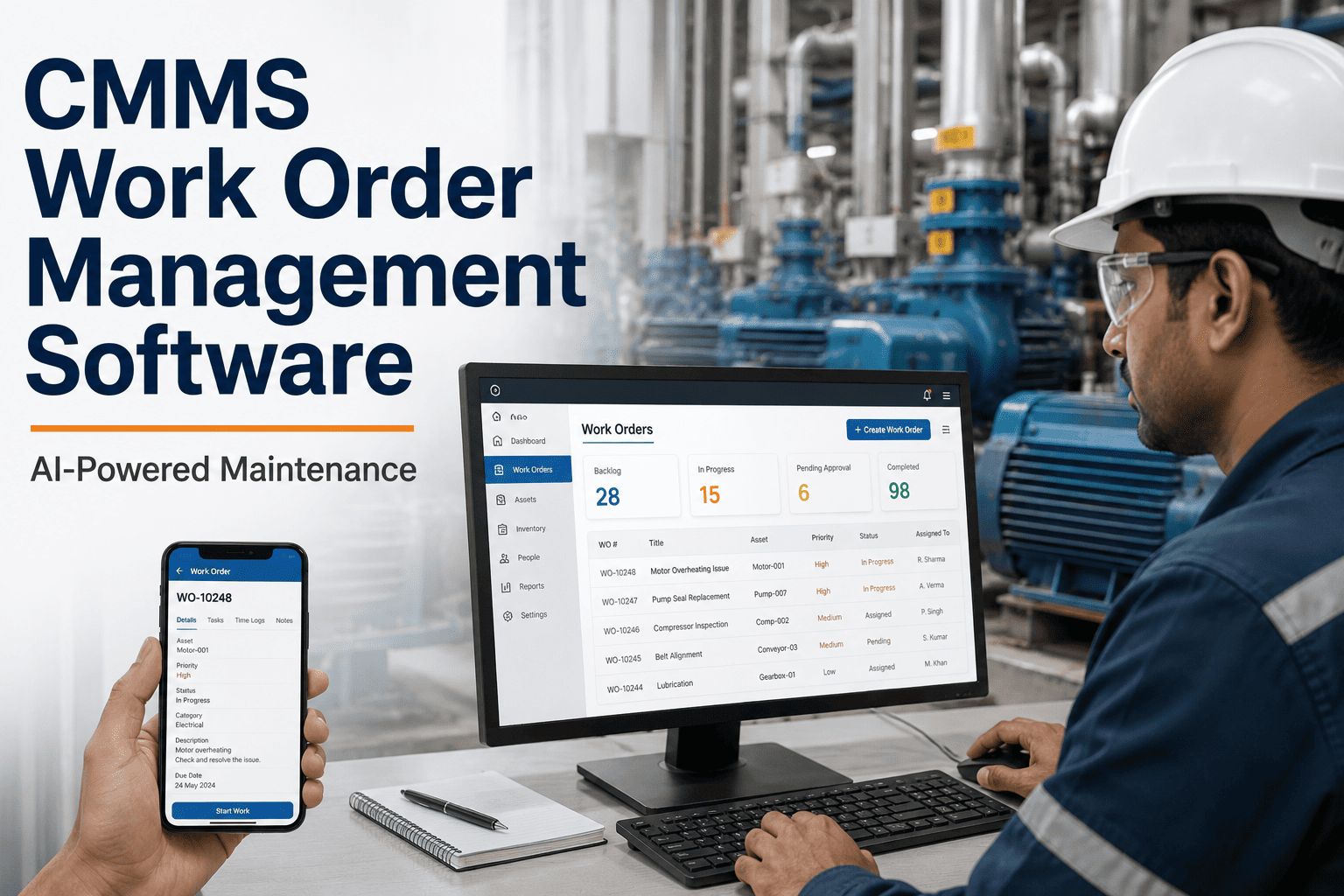
iFactory's AI-powered CMMS platform tracks calibration schedules, preventive maintenance records, work order closures, and regulatory documentation across every asset — replacing manual spreadsheet compliance management with 100% automated coverage that never misses a cycle.
Why Medical Equipment Compliance Requires a Structured CMMS Checklist
Equipment Non-Conformances Are the Leading Cause of FDA Warning Letters in Medical Device Manufacturing
Inadequate equipment maintenance records, missed calibration validation cycles, and incomplete corrective action documentation collectively account for a significant proportion of FDA 483 observations and warning letter citations in medical device and pharmaceutical manufacturing facilities. Each of these failures is preventable by a properly configured CMMS that tracks every maintenance obligation to completion and generates the timestamped, auditor-accessible records that regulatory inspections require. A structured compliance checklist ensures that every requirement category with regulatory consequence is covered by a specific, validated CMMS workflow. Book a Demo to see how iFactory's CMMS platform covers every regulatory-critical check category for medical equipment programs.
The compliance failures that generate the most significant regulatory consequences in medical equipment programs are precisely the ones that manual tracking misses most reliably: calibration drift that accumulates gradually across equipment operating life, preventive maintenance schedules that slip by days and then weeks as competing priorities consume technician time, and corrective action records that are verbally resolved but never formally closed in the documentation system. These are structural manual program failures — not individual operator errors — and they are eliminated structurally by CMMS platforms configured to the checks in this framework.
60%Of FDA 483 observations in medical device facilities relate to equipment maintenance and calibration record deficiencies
8 zonesCompliance audit zones covered in this checklist from asset registration through audit documentation readiness
100%Work order closure tracking achieved by AI-powered CMMS — replacing manual follow-up at every maintenance checkpoint
ISO 13485Quality management standard addressed by iFactory's CMMS documentation framework for medical device manufacturers
Medical Equipment Compliance Audit Checklist — Zone by Zone
1. Asset Registration & Equipment Master Record
2. Calibration Management & Schedule Compliance
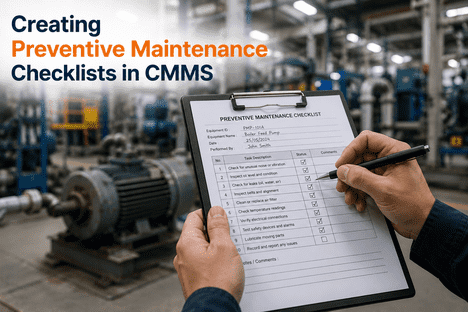
3. Preventive Maintenance Schedule & Execution
4. Corrective Maintenance & Work Order Management
5. Technician Qualification & Training Records
6. Spare Parts, Consumables & Supply Chain Control
100% AUDIT COVERAGEISO 13485 READYFDA COMPLIANT RECORDS
Deploy AI-Powered CMMS Compliance Management Across All Eight Zones — Complete Audit Documentation From Day One
iFactory's AI-powered CMMS platform executes every check category in this framework automatically — generating calibration records, PM work order histories, corrective action trails, technician qualification links, and lot-level compliance certificates that satisfy FDA, ISO 13485, and GFSI audit requirements without additional quality team overhead.
Benefits of AI-Powered CMMS vs. Manual Compliance Tracking for Medical Equipment
100% Maintenance Schedule Coverage at Full Asset Portfolio Scale
Manual maintenance scheduling in spreadsheet systems requires human follow-up to catch approaching due dates across large asset portfolios — creating systematic gaps as portfolio size exceeds practical manual oversight capacity. iFactory's AI-powered CMMS monitors every asset's maintenance schedule simultaneously, generates advance notifications before due dates, and escalates overdue events automatically — providing 100% schedule coverage regardless of portfolio size or staffing levels.
Consistent Documentation Quality Across All Shifts and Technicians
Manual work order documentation quality varies significantly between technicians and shifts — creating inconsistent record completeness that auditors interpret as a systemic programme quality problem rather than individual variation. iFactory's CMMS enforces mandatory field completion at work order close, preventing under-documented records from being created regardless of which technician closes the work order or when it is closed.
Predictive Maintenance Intervention Before Failure Events
Calendar-based preventive maintenance schedules perform maintenance at fixed intervals regardless of actual equipment condition — performing unnecessary maintenance on healthy equipment while potentially missing emerging failures that develop between scheduled intervals. iFactory's IoT integration and AI analytics enable condition-based maintenance intervention triggered by equipment performance data, reducing unplanned failure events by identifying deterioration signatures before they reach failure threshold.
Audit-Ready Documentation Without Manual Assembly Labour
FDA inspections, ISO 13485 surveillance audits, and internal quality assessments all require comprehensive equipment maintenance documentation that manual systems can only assemble from paper records, email chains, and spreadsheet histories at significant quality team labour cost — often requiring days of preparation for a single audit event. iFactory's CMMS generates complete audit-ready reports in minutes with configurable scope, date range, asset class, and regulatory standard filters.
CAPA and Non-Conformance Integration With Maintenance Records
Isolated maintenance records that are not connected to the facility's CAPA and non-conformance management system create a documentation silo that prevents auditors and quality managers from seeing the full picture of how equipment-related findings are managed through to resolution. iFactory's CMMS integrates maintenance records with CAPA workflows — enabling end-to-end traceability from equipment finding identification through root cause investigation to corrective action effectiveness verification in a single connected audit trail.
Mobile-First Field Documentation for Real-Time Record Accuracy
Paper-based field documentation and batch data entry into CMMS systems at shift end create time-stamp inaccuracies, transcription errors, and documentation backlogs that reduce the reliability of maintenance records for regulatory purposes. iFactory's mobile CMMS access enables technicians to complete and close work orders at the equipment location in real time — generating accurate, point-of-activity records that meet the contemporaneous documentation standards required by FDA and ISO quality system regulations.
AI-Powered CMMS for Medical Equipment Compliance — Frequently Asked Questions
1. Which regulatory standards does iFactory's CMMS support for medical equipment compliance documentation?
iFactory's CMMS documentation framework supports the equipment maintenance and calibration record requirements of FDA 21 CFR Part 820 (Quality System Regulation), FDA 21 CFR Part 11 (Electronic Records), ISO 13485:2016, ISO 9001:2015, Joint Commission equipment management standards, and IEC 62353 for medical electrical equipment maintenance. The platform generates reports formatted for each standard's audit requirements and stores records in compliant electronic format with full audit trail capability.
2. How does iFactory's CMMS handle medical equipment asset portfolios with hundreds or thousands of assets?
iFactory's cloud-based CMMS architecture scales to asset portfolios of any size — from single-site facilities with hundreds of assets to multi-site healthcare manufacturing organisations with thousands of assets across multiple locations. The platform provides centralised asset management with site-level visibility, enabling corporate quality teams to monitor compliance performance across all sites while giving site maintenance teams access to their specific asset registers and work queues. Asset import tools support bulk onboarding from existing spreadsheet or legacy CMMS exports.
3. Can iFactory's CMMS integrate with existing calibration management and laboratory information systems?
Yes. iFactory's CMMS provides standard API integration with major calibration management systems and LIMS platforms — enabling calibration records generated in external calibration systems to populate automatically in the CMMS equipment history, eliminating manual re-entry and the transcription errors it introduces. Integration configurations are validated as part of the system commissioning process, with test cases demonstrating complete and accurate data transfer between connected systems before go-live.
4. How does iFactory's predictive maintenance AI handle medical equipment with limited historical failure data?
For equipment with limited facility-specific failure history, iFactory's AI analytics module uses manufacturer-provided degradation models and cross-facility anonymised performance benchmarks to establish initial condition monitoring baselines — refining the predictive model as facility-specific performance data accumulates. The transition from manufacturer baseline to facility-specific predictive model is documented in the maintenance programme record, enabling auditors to understand the basis for condition-based maintenance decisions throughout the programme lifecycle.
5. What is the typical implementation timeline for iFactory's CMMS in a medical device manufacturing facility?
A single-site CMMS deployment covering all eight compliance zones in this checklist typically reaches validated production operation in 8 to 14 weeks from system configuration start — including asset data migration, PM schedule setup, calibration programme configuration, user access provisioning, validation protocol execution, and staff training. The validation phase — executing IQ, OQ, and PQ protocols to document system performance against defined requirements — is the critical commissioning step for regulated environments and is included as a standard deliverable in iFactory's medical device facility implementation package.
6. How does iFactory support allergen management and safety-critical equipment segregation in medical device manufacturing?
iFactory's CMMS supports equipment criticality classification with configurable safety-critical flags that apply enhanced documentation and approval requirements to maintenance events on safety-critical assets — requiring dual sign-off for work order closure, mandatory post-maintenance verification protocol completion before return-to-service authorisation, and automatic CAPA initiation for any safety-critical equipment failure event. These controls are configurable per equipment class and documented in the system validation records for audit purposes.
7. Can iFactory's CMMS generate the electronic batch records required for pharmaceutical and medical device manufacturing audits?
Yes. iFactory's CMMS generates equipment-specific maintenance batch records in electronic format — documenting all maintenance activities performed on equipment used in a specific production batch, enabling complete equipment qualification status traceability for each batch record. These equipment maintenance records integrate with the facility's electronic batch record system through standard API connections, providing auditors with a complete view of equipment maintenance status at the time of each production event without manual record assembly.
8. How long are maintenance records retained in iFactory's CMMS, and can historical records be accessed during regulatory inspections?
iFactory's CMMS retains all maintenance records for a configurable retention period — defaulting to a minimum of the product's shelf life plus one year for medical device manufacturing environments in alignment with FDA and ISO 13485 record retention requirements. All historical records remain searchable and reportable regardless of age, enabling immediate retrieval of records from any historical period during regulatory inspections. Records are stored in immutable format with audit trail documentation that confirms record integrity since creation.
START TODAYREGULATORY COMPLIANCE ASSURED
Deploy AI-Powered CMMS Compliance Tracking Across All Eight Zones — Covering Every Asset, Every Audit
iFactory's AI-powered CMMS platform executes calibration management, preventive maintenance scheduling, corrective work order tracking, technician qualification verification, spare parts control, IoT predictive maintenance, and complete audit documentation simultaneously across every medical equipment asset — eliminating the compliance gaps that generate FDA findings, ISO audit non-conformances, and Joint Commission citations in facilities relying on manual maintenance management programs.