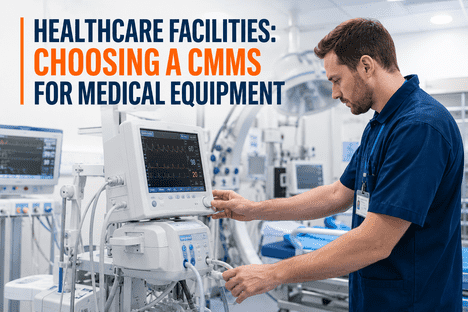
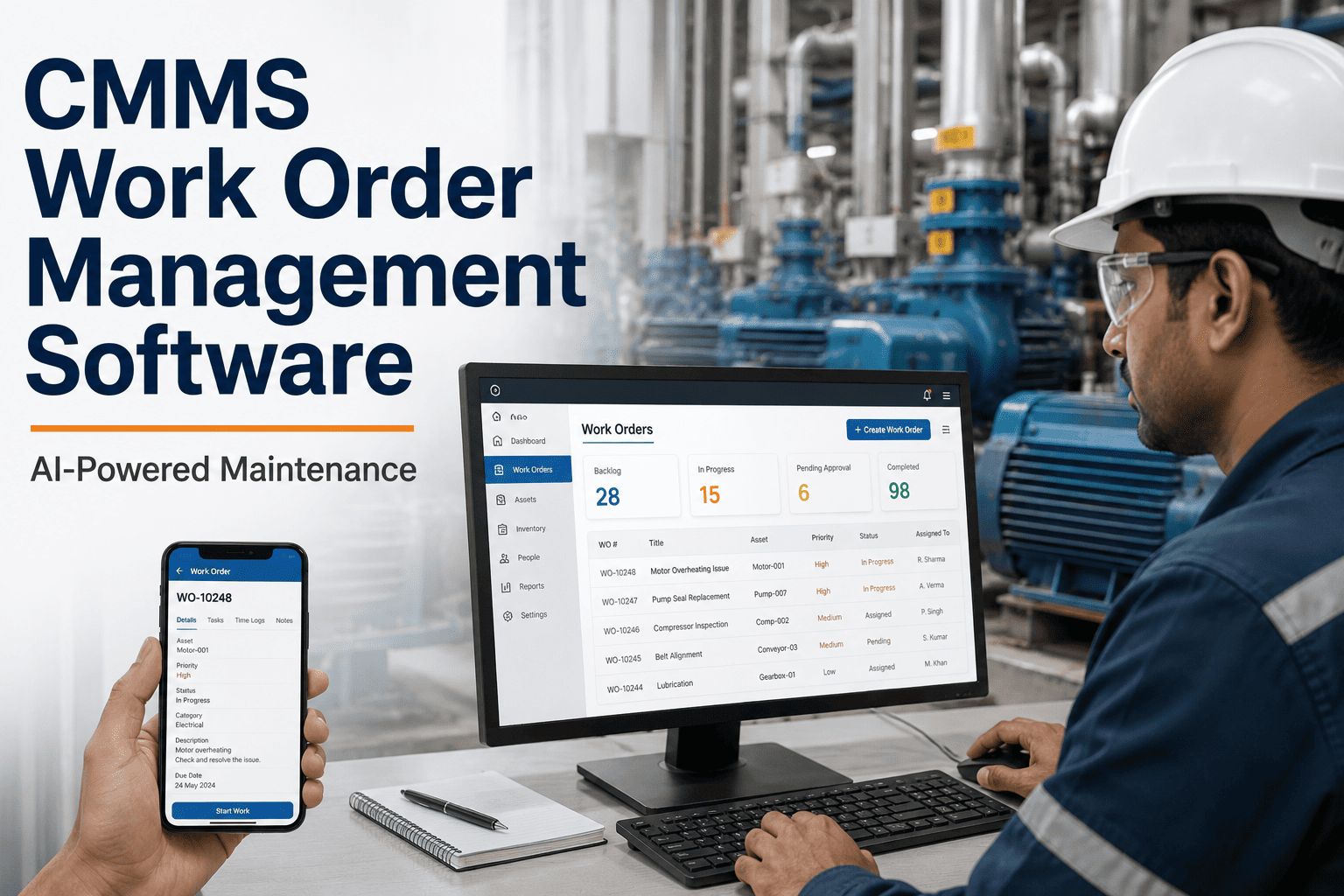
A 340-bed regional hospital managing over 18,000 medical devices across surgical suites, intensive care units, diagnostic imaging, and central sterile processing was absorbing more than $2.1 million annually in biomedical equipment maintenance costs — driven by reactive failure cycles, calendar-based preventive maintenance that bore no relationship to actual device condition, and compliance documentation gaps that exposed the facility to Joint Commission survey risk on every unannounced inspection. Forty-three unplanned medical equipment failures in a single operating year disrupted clinical scheduling, triggered device-related incident reporting under 21 CFR Part 803, and generated corrective action plans that consumed biomedical engineering capacity for weeks after each event. After deploying ifactory's AI-driven CMMS platform — integrating predictive condition monitoring, automated compliance documentation, AI vision inspection, and real-time asset health dashboards across all critical equipment categories — the facility reduced equipment failures by 61%, eliminated Joint Commission documentation deficiencies entirely, and delivered $1.4 million in documented first-year operational and compliance impact. Book a Demo to see how this outcome maps to your healthcare facility's medical equipment management challenges.
AI-DRIVEN CMMS
MEDICAL EQUIPMENT
JOINT COMMISSION COMPLIANCE
61% Fewer Equipment Failures. Zero Joint Commission Deficiencies.
See how a 340-bed regional hospital transformed reactive biomedical maintenance into a predictive, audit-ready operation — eliminating unplanned device failures, automated compliance documentation, and AI vision inspection across 18,000+ medical assets.
61%Equipment Failure Reduction
ZeroJC Documentation Deficiencies
$1.4MFirst-Year Financial Impact
90 DaysFull Deployment Timeline
Client Background
The facility is a 340-bed regional hospital operating surgical, ICU, emergency, diagnostic imaging, laboratory, and central sterile processing departments across a single campus with two satellite outpatient clinics. The biomedical engineering team of 11 technicians manages over 18,000 medical devices spanning ventilators, defibrillators, cardiac monitors, infusion pumps, imaging systems, anaesthesia machines, and sterilization equipment — each requiring documented preventive maintenance to satisfy Joint Commission accreditation standards and CMS Conditions of Participation. Prior to the ifactory deployment, the facility maintained medical device records in a legacy CMMS that had no sensor integration, no predictive analytics, and no automated compliance documentation capability. PM schedules were calendar-based, calibration records were stored as paper certificates, and audit preparation for unannounced Joint Commission surveys required two to three weeks of manual record compilation per survey cycle. Book a Demo to see how the platform maps to your facility's biomedical equipment portfolio and compliance requirements.
Organization Type340-bed regional hospital with two satellite outpatient clinics
Asset Portfolio18,000+ medical devices — ventilators, defibrillators, cardiac monitors, imaging systems, infusion pumps, sterilization equipment
Biomedical Team11 biomedical engineering technicians managing multi-campus device portfolio
Regulatory ObligationsJoint Commission Accreditation 360 (Physical Environment), CMS Conditions of Participation, 21 CFR Part 803 MDR reporting, QMSR (ISO 13485 effective Feb 2026)
Prior Maintenance ModelCalendar-based PM, reactive failure response, paper calibration records, no condition monitoring or predictive analytics
Platform Deployedifactory AI-driven CMMS — predictive condition monitoring, automated compliance documentation, AI vision inspection, real-time asset health dashboards
The Compliance and Reliability Challenge
In healthcare, medical equipment maintenance is not an operational function with compliance implications — it is a patient safety function with direct clinical consequences. Every unplanned ventilator failure in an ICU is a life-safety event. Every missed PM cycle on a defibrillator is a potential Joint Commission deficiency. Every maintenance activity completed without verifiable documentation is an MDR reporting exposure waiting to surface during a CMS survey or an FDA enforcement review. The Joint Commission's 2026 Accreditation 360 initiative consolidated the Environment of Care and Life Safety chapters into a unified Physical Environment standard — raising documentation requirements and changing how facilities must organize and present compliance records during unannounced survey visits. A 400-bed hospital in a comparable situation recently incurred over $340,000 in corrective action, legal review, and emergency CMMS implementation costs after failing to produce ICU ventilator PM records within the window surveyors required. That structural risk existed in identical form at this facility before the ifactory deployment.
43 events
Unplanned medical equipment failures in the 12 months prior to deployment. Forty-three failure events across surgical, ICU, and imaging departments produced an average of 3.6 events per month — with failure concentration during high-utilization periods. Each event averaged 6.2 hours of disrupted clinical scheduling, consuming emergency biomedical labor, expedited parts procurement, and in 11 instances triggering mandatory MDR incident reporting under 21 CFR Part 803.
11 events
Device-related incidents requiring FDA Medical Device Report filings in a single year. Eleven failure events met the MDR reporting threshold — device failures requiring medical intervention or presenting risk of serious patient injury. Each MDR filing required retrospective maintenance record compilation, corrective action documentation, and regulatory liaison work that consumed an average of 34 biomedical engineering hours per event beyond the repair itself.
$2.1M
Annual biomedical maintenance expenditure driven by reactive repair cycles and over-scheduled PM. Total maintenance spend combined emergency repair labor at overtime rates, expedited parts procurement at spot pricing, calendar-based PM performed regardless of actual device condition, and the administrative burden of retrospective compliance record reconstruction that consumed an estimated 1,200 biomedical engineering hours annually.
Manual
Calibration records maintained as paper certificates with no automated expiry tracking. Calibration due dates for checkweighers, infusion pump accuracy testing, imaging system performance verification, and anaesthesia machine calibration cycles were tracked on spreadsheets with no automated expiry alerts. No mechanism existed to block clinical use of equipment with lapsed calibration — creating systematic patient safety and regulatory exposure.
2–3 weeks
Required to compile audit-ready documentation before each Joint Commission survey cycle. Preparing PM completion records, inspection histories, calibration certificates, and corrective action logs for Joint Commission survey review consumed two to three weeks of biomedical engineering and facilities management capacity — documentation that the ifactory platform now generates automatically from daily work order execution.
Zero
Real-time visibility into medical device condition, failure risk, or asset health trends. The legacy CMMS recorded what maintenance had been performed but provided no forward-looking intelligence. Device degradation signatures, wear patterns, and developing fault conditions were invisible until equipment failed — at which point the clinical and regulatory consequences had already materialized.
In healthcare, a Joint Commission citation for documentation deficiency does not just trigger a corrective action plan — it initiates extended monitoring, increased survey frequency, and reputational consequences that far exceed any CMMS implementation cost. The facilities that avoid these outcomes are not the ones with the most technicians; they are the ones with the most intelligent, automated, and continuously auditable maintenance systems.
The Solution: ifactory AI-Driven CMMS for Healthcare Medical Equipment
The facility deployed ifactory's AI-driven CMMS platform across all critical medical device categories — establishing continuous condition monitoring on high-value and life-safety-critical assets through a sensor network integrated with existing clinical infrastructure. The platform activated automated compliance documentation workflows aligned to the 2026 Joint Commission Physical Environment standard, real-time calibration expiry tracking with clinical-use blocking, AI vision camera inspection across sterile processing and equipment storage areas, and risk-based PM scheduling that replaced calendar-based fixed intervals with condition-triggered, AAMI-aligned maintenance prioritization. To see the platform operating in a clinical equipment management context, Book a Demo with ifactory's healthcare operations team.
01
Predictive Condition Monitoring
- Vibration, thermal, and motor current sensors deployed on imaging systems, ventilators, sterilizers, and surgical equipment
- AI baseline models detecting equipment degradation signatures 14–21 days before failure threshold
- Condition-based work order generation replacing calendar PM cycles — prioritized by device criticality and patient safety impact
02
Joint Commission Compliance Automation
- PM completion records, inspection sign-offs, and corrective action logs auto-generated at point of work order execution
- Documentation structured to the 2026 Accreditation 360 Physical Environment standard — survey-ready on demand
- Audit export producing complete device histories, PM compliance rates, and incident response records within minutes of any surveyor request
03
Calibration Tracking and Clinical-Use Enforcement
- Calibration expiry tracking for all measurement and testing equipment — infusion pumps, imaging systems, anaesthesia machines, monitoring devices
- Automated alerts at configurable lead times ahead of calibration expiry for procurement and scheduling
- Clinical-use authorization blocked when device calibration has lapsed — preventing patient safety and GFSI-equivalent non-conformance
04
AI Vision Camera Inspection
- Continuous automated visual inspection across central sterile processing, equipment storage zones, and high-traffic device staging areas
- Surface defect, damage, and contamination detection with 99%+ accuracy — findings routed directly to the CMMS work order queue
- PPE compliance monitoring in sterile and restricted-access clinical zones generating real-time safety alerts
05
Risk-Based PM Scheduling
- Device maintenance priority ranked by patient safety impact, clinical criticality, and regulatory category — not elapsed calendar time
- AAMI and ECRI guideline-aligned maintenance intervals replacing manufacturer-only calendar schedules
- Manufacturer recall integration flagging affected devices for immediate inspection and documentation within the work order system
06
MDR and Incident Documentation
- Pre-failure alert history automatically preserved in device record — demonstrating proactive monitoring in FDA MDR and liability reviews
- Incident work orders linked directly to device maintenance history, inspection records, and corrective action logs for complete traceability
- 21 CFR Part 803 reporting workflows supported with timestamped documentation chains from initial alert through corrective action completion
Implementation Approach
Deployment followed a structured 90-day sequence designed to maintain full clinical operations across all departments throughout sensor installation and platform activation. ifactory biomedical engineers completed sensor installation on priority life-safety equipment during scheduled device downtime windows — requiring zero disruption to active patient care. Compliance documentation workflows were configured against the facility's existing Joint Commission accreditation scope and CMS Conditions of Participation documentation requirements during weeks three through six, enabling audit-ready record generation from the first day of full platform activation.
Phase 1 — Weeks 1–3
Asset Inventory, Risk Stratification, and Priority Sensor Deployment
All 18,000+ devices inventoried and stratified by patient safety criticality, failure frequency, and Joint Commission documentation category. Sensors installed on highest-criticality assets — ICU ventilators, imaging systems, surgical equipment, and anaesthesia machines — during scheduled maintenance windows with zero patient care interruption. Historical maintenance records, calibration certificates, and prior work order data migrated to establish device history context and replacement cycle baseline for each monitored asset.
Phase 2 — Weeks 4–6
Compliance Workflow Configuration and AI Baseline Training
Joint Commission Physical Environment documentation requirements mapped to corresponding device categories — linking PM completion, inspection sign-off, and corrective action records to automated generation at point of work order execution. Calibration tracking configured for all measurement-critical devices with clinical-use blocking activated on expiry. AI condition models trained against three weeks of continuous sensor data, establishing facility-specific operating envelopes and failure signature baselines across all monitored device types.
Phase 3 — Weeks 7–10
AI Vision Commissioning, Full Alert Activation, and Remaining Device Coverage
AI vision cameras commissioned across central sterile processing, equipment storage zones, and restricted clinical areas. Predictive alert thresholds activated across all monitored assets with alert routing to biomedical engineering mobile devices and the CMMS work order queue. Sensor deployment extended to secondary device categories. Six devices identified during baseline calibration as showing early-stage degradation were addressed through planned interventions — with zero unplanned failures occurring among monitored equipment from week eight onward.
Month 4 Onward
Full Predictive and Compliance-Integrated Operation
By month four, the facility operated entirely on condition-based and risk-stratified maintenance scheduling with automated Joint Commission documentation generation across all device categories. The first unannounced Joint Commission survey following full deployment produced zero documentation deficiencies — and survey preparation time dropped from three weeks of manual compilation to a single-day platform export, achieved during active clinical operations without diverting biomedical engineering capacity from device management.
Results After Full Deployment
The transition from reactive, calendar-based biomedical maintenance and manual compliance documentation to AI-driven condition monitoring and automated regulatory record generation delivered measurable improvements across device reliability, clinical uptime, Joint Commission audit readiness, and maintenance cost structure — totaling $1.4 million in documented first-year financial and operational impact.
Medical Equipment Failure Events
Before
43 unplanned failures annually — averaging 3.6 events per month across clinical departments
After
17 events in year one — 61% reduction across all monitored device categories
The 61% reduction was achieved through early detection of developing fault conditions on imaging systems, ventilator drive components, sterilizer sealing assemblies, and surgical equipment — converting 26 failure events from reactive clinical disruptions into planned maintenance interventions scheduled during non-peak clinical windows.
Joint Commission Documentation Deficiencies
Before
Systematic documentation gaps requiring 2–3 weeks of manual compilation before each survey cycle
After
Zero deficiencies in first post-deployment survey — complete documentation exported in one day
Automated Physical Environment documentation generation eliminated the manual record reconstruction that had created persistent JC survey risk. The first unannounced survey following deployment produced zero findings — and audit preparation time was reduced from three weeks to a single-day platform export during active clinical operations.
Annual Biomedical Maintenance Expenditure
Before
$2.1M — reactive repairs, emergency parts procurement, over-scheduled calendar PM, compliance documentation labor
After
$1.26M — 40% reduction driven by condition-based scheduling and elimination of emergency repair cycles
Eliminating emergency repair labor at overtime premium rates, reducing over-scheduled component replacements, procuring parts on planned timelines, and recovering 1,200 annual engineering hours from manual compliance documentation reduced total biomedical maintenance spend by $840,000 — the primary financial driver of first-year platform ROI.
MDR-Reportable Device Incidents
Before
11 incidents requiring FDA Medical Device Reports — 34 engineering hours per event in retrospective documentation
After
3 events in year one — 73% reduction, with pre-failure alert history automatically preserved for each incident
Predictive alerts with 14–21 day lead times enabled planned intervention on devices approaching failure thresholds — dramatically reducing the incident rate. For the three events that did occur, pre-failure monitoring records were available instantly in the device history, demonstrating proactive oversight in FDA review and reducing retrospective documentation time by over 80%.
$840K
Maintenance Cost Savings
$412K
Clinical Uptime Recovery Value
$148K
Compliance Cost Avoidance
$1.4M+
Total Year-One Impact
Performance Summary
| Metric |
Before |
After |
Improvement |
| Annual Equipment Failures |
43 events |
17 events |
−61% Reduction |
| JC Documentation Deficiencies |
Systematic gaps |
Zero deficiencies |
100% Auto-Generated |
| Annual Biomedical Maintenance Cost |
$2.1M |
$1.26M |
−40% ($840K Saved) |
| MDR-Reportable Incidents |
11 events |
3 events |
−73% Reduction |
| Survey Audit Preparation Time |
2–3 weeks manual |
1-day export |
−95% Preparation Time |
| Predictive Alert Lead Time |
None — reactive |
14–21 days avg. |
From 0 to 21 Days |
| Calibration Expiry Incidents |
Untracked / manual |
Zero lapsed instruments |
Automated Enforcement |
| Total First-Year Financial Impact |
Baseline |
$1.4M+ |
Across 3 Value Streams |
Ready to Eliminate Equipment Failures and Joint Commission Audit Risk Simultaneously?
ifactory's AI-driven CMMS connects to your existing medical device infrastructure — delivering real-time condition monitoring, automated Physical Environment compliance documentation, calibration hard-stop enforcement, and AI vision inspection without replacing any existing clinical systems or interrupting patient care operations.
Key Benefits and Business Impact
The deployment delivered value extending far beyond direct maintenance cost reduction — transforming how the facility manages device failure risk, regulatory compliance, patient safety exposure, and biomedical engineering capacity across its full 18,000-device portfolio simultaneously.
01
61% reduction in device failures protecting clinical scheduling and patient safety.
Continuous vibration, thermal, and motor current monitoring across life-safety-critical devices converted 26 annual failure events from reactive clinical disruptions into planned maintenance interventions — eliminating emergency repair costs, clinical scheduling cancellations, and the patient safety exposure created when high-utilization medical equipment fails during active care delivery.
02
Zero Joint Commission deficiencies — full Physical Environment compliance generated automatically.
Automated PM completion records, inspection sign-offs, and corrective action logs aligned to the 2026 Accreditation 360 Physical Environment standard eliminated the documentation gaps that had created persistent JC survey risk. Survey preparation dropped from three weeks of manual compilation to a one-day platform export — produced during active clinical operations without diverting biomedical engineering capacity.
03
Calibration hard-stop enforcement eliminating patient safety and regulatory exposure.
Automated calibration expiry tracking and clinical-use blocking across all measurement-critical devices — infusion pumps, imaging systems, anaesthesia machines, and monitoring equipment — eliminated the systematic gap between calibration lapse and detection that had created undetected patient safety exposure and GFSI-equivalent non-conformance risk under the prior manual tracking model.
04
AI vision inspection delivering continuous sterile processing and equipment storage monitoring.
AI vision cameras deployed across central sterile processing, equipment storage zones, and restricted clinical areas detect surface defects, damage, contamination indicators, and PPE compliance violations with 99%+ accuracy — reducing manual inspection labor by up to 80% while providing continuous coverage that scheduled visual inspection rounds cannot match in high-throughput clinical environments.
05
73% reduction in MDR-reportable incidents with automatic pre-failure documentation preservation.
Predictive alerts with 14–21 day lead times dramatically reduced device failure events that meet the FDA MDR reporting threshold. For incidents that did occur, the platform's automatic preservation of pre-failure monitoring history demonstrated proactive oversight in FDA reviews — replacing weeks of retrospective record compilation with an instantly available documentation chain from initial anomaly detection through corrective action completion.
06
$1.4M in first-year impact across maintenance, clinical uptime, and compliance cost streams.
Maintenance cost reduction ($840K), clinical scheduling recovery value ($412K), and compliance cost avoidance ($148K) combined to deliver $1.4 million in documented first-year financial impact — without modifying any existing clinical systems, replacing any biomedical infrastructure, or adding engineering headcount to the maintenance or quality teams.
A single Joint Commission citation for documentation deficiency does not just cost the time to respond to the finding — it initiates extended monitoring periods, increases unannounced survey frequency, and creates reputational consequences that compound across every subsequent survey cycle. The CMMS that prevents that outcome is not an operational tool. It is a strategic patient safety and institutional risk management investment.
Key Considerations When Choosing a CMMS for Medical Equipment
Healthcare facilities evaluating CMMS platforms for medical equipment management face a selection decision that no other industry matches in complexity. A CMMS that performs adequately in general manufacturing will fail in a clinical environment where equipment failure is a patient safety event, documentation gaps are regulatory violations, and the asset portfolio spans 18,000 devices across dozens of clinical categories with fundamentally different maintenance, calibration, and compliance requirements. The following considerations reflect what actually determines whether a healthcare CMMS delivers clinical value after deployment.
01
Joint Commission Physical Environment alignment built into platform architecture. A CMMS that treats compliance documentation as a reporting module bolted onto a generic work order system will consistently fail to provide survey-ready records when surveyors arrive unannounced. Compliance logic must be embedded in daily work order workflows — so that documentation is generated automatically at point of execution, not reconstructed after the fact.
02
Risk-based PM scheduling per AAMI and ECRI guidelines — not manufacturer-only calendar intervals. Applying uniform calendar maintenance intervals across thousands of devices with different criticality profiles, utilization rates, and failure mode distributions is structurally inefficient and clinically dangerous. A healthcare CMMS must support risk-stratified maintenance prioritization that routes biomedical engineering capacity to the devices where failure risk and patient impact are highest.
03
Calibration tracking with clinical-use hard-stop enforcement, not passive expiry alerts. An alert that a calibration has expired is insufficient in a clinical environment. The platform must block clinical authorization of equipment with lapsed calibration — preventing the patient safety and regulatory exposure that results from operating measurement-critical devices outside their validated calibration windows, regardless of whether the lapse was detected by a technician.
04
Predictive condition monitoring for high-value and life-safety-critical assets. Calendar-based PM protects against average degradation rates, not actual rates shaped by real clinical utilization loads. A healthcare CMMS in 2026 must ingest sensor data, build device-specific health baselines, and generate predictive intervention alerts before failure thresholds are reached — particularly for imaging systems, ventilators, surgical equipment, and other assets where unplanned failure carries direct patient safety consequence.
05
MDR and incident documentation support that preserves pre-failure monitoring history automatically. When device failures require FDA Medical Device Report filings, the difference between a platform that preserves the full pre-failure monitoring record automatically and one that requires retrospective documentation assembly is the difference between a defensible regulatory response and weeks of biomedical engineering capacity consumed by record reconstruction. Pre-failure alert history must be part of every device record from day one of monitoring.
06
AI vision inspection for sterile processing, equipment storage, and restricted clinical zones. Manual visual inspection of sterile processing areas, equipment storage zones, and high-traffic device staging areas cannot achieve the inspection frequency or consistency that clinical environments require. AI vision cameras providing continuous automated anomaly detection — with findings routed directly to the work order queue — convert inspection from a scheduled labor-intensive activity into a continuous patient safety layer.
Frequently Asked Questions
How does ifactory support Joint Commission Accreditation 360 Physical Environment documentation requirements?
The platform automatically generates PM completion records, inspection sign-offs, and corrective action logs at point of work order execution — structured to the 2026 Physical Environment standard. All documentation is instantly exportable in survey-compatible formats, eliminating the weeks of manual compilation that create JC audit risk under paper-based models. Survey preparation time at this facility dropped from three weeks to a single-day export.
Can ifactory's AI vision camera platform support sterile processing inspection and PPE compliance monitoring in clinical environments?
Yes. ifactory's AI vision cameras provide continuous automated inspection across central sterile processing, equipment storage zones, and restricted clinical areas — detecting surface defects, damage, contamination indicators, and PPE compliance violations with 99%+ accuracy. All findings are routed directly to the CMMS work order queue, and manual inspection time is reduced by up to 80% while providing continuous coverage that scheduled inspection rounds cannot replicate.
How does ifactory handle calibration tracking and expiry enforcement for clinical measurement equipment?
The platform tracks calibration due dates for all measurement-critical devices — infusion pumps, imaging systems, anaesthesia machines, monitoring equipment, and surgical instruments — with automated expiry alerts at configurable lead times for procurement and scheduling. Clinical-use authorization is blocked when calibration has lapsed, preventing patient safety and regulatory exposure from operating devices outside their validated calibration windows without relying on technician detection.
How does ifactory support FDA Medical Device Report documentation when incidents occur?
The platform automatically preserves pre-failure monitoring history — sensor alert records, condition trend data, and maintenance response timelines — in the device record from the moment monitoring begins. When device failures require MDR filings, this complete pre-failure documentation chain is instantly available, demonstrating proactive oversight in FDA reviews and reducing retrospective documentation assembly time by over 80%.
How quickly does ifactory's predictive monitoring generate reliable alerts for medical equipment?
Device-specific condition baselines are established within two to three weeks of continuous sensor data collection, with actionable predictive alerts generating from week four onward. Most healthcare deployments achieve consistent 14–21 day advance warning windows on mechanical degradation within 60–90 days as AI models accumulate facility-specific device health and failure progression data.
Book a Demo to walk through a deployment timeline specific to your device portfolio and compliance requirements.
What is the typical deployment timeline for ifactory's CMMS in a healthcare facility?
The facility profiled in this case study achieved full platform deployment — including device inventory migration, sensor installation on priority assets, compliance workflow configuration, calibration tracking activation, AI vision camera commissioning, and full predictive alert generation — within 90 days. All sensor installation was completed during scheduled device maintenance windows with zero patient care disruption across any clinical department.
Audit-Ready Compliance. Predictive Device Reliability. Zero Documentation Gaps. Live in 90 Days.
ifactory's AI-driven CMMS delivers real-time condition monitoring, automated Joint Commission Physical Environment documentation, calibration hard-stop enforcement, MDR incident traceability, and AI vision inspection for healthcare facilities managing complex medical device portfolios — all in a platform that deploys without clinical disruption and generates compliance records automatically from day one of full operation.