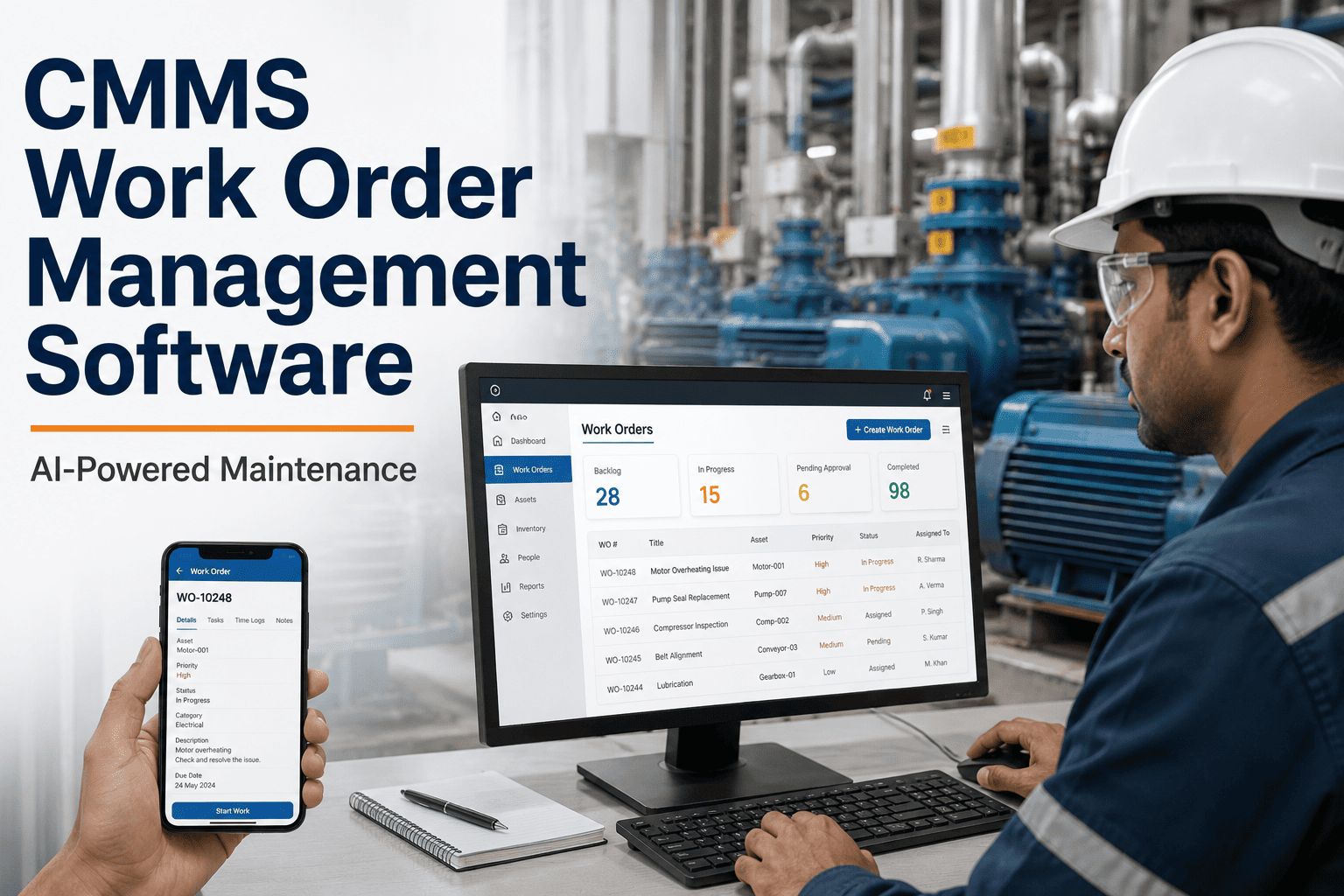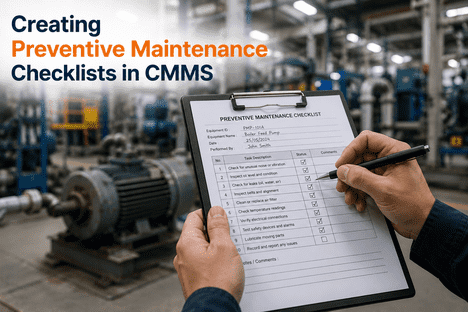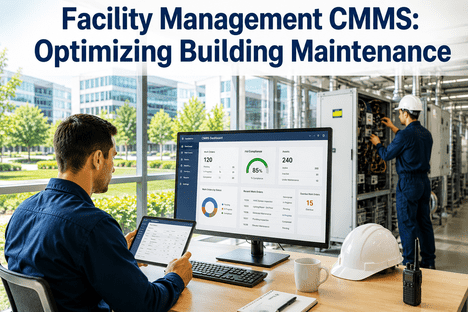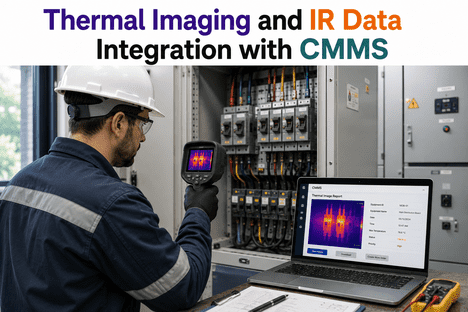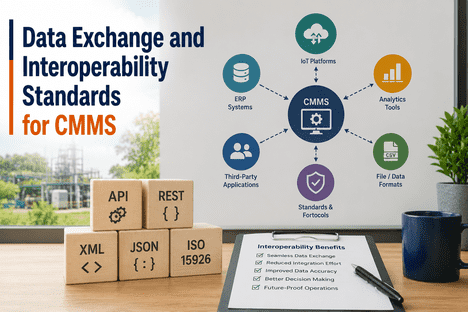
Computerized Maintenance Management Systems (CMMS) have evolved from standalone work order databases into the central data hub of modern industrial operations. In 2026, the ability of a CMMS to exchange data with ERP platforms, IoT sensor networks, SCADA systems, PLCs, and AI-powered analytics engines is no longer a premium feature — it is the baseline requirement for any facility pursuing Industry 4.0 reliability. Data exchange and interoperability standards are the technical foundation that makes this connectivity possible, and understanding them is essential for maintenance engineers, operations directors, and IT teams selecting or upgrading their CMMS infrastructure.
See How iFactory's AI Vision Camera Feeds Real-Time Defect Data Directly Into Your CMMS
iFactory's AI Vision Camera platform connects to your CMMS via OPC UA, MQTT, and REST API — delivering automated inspection records, defect alerts, and work order triggers without manual data entry or integration middleware.
The Core Problem: Isolated Systems in Connected Facilities
Most manufacturing and industrial facilities operate with a patchwork of systems that were never designed to communicate with each other. PLCs record machine fault codes. SCADA systems log process variables. ERP platforms track procurement and cost. Quality systems capture inspection records. And the CMMS holds maintenance history — often completely disconnected from the real-time machine data that would make preventive and predictive maintenance strategies actionable. This IT/OT gap — the barrier between operational technology generating data on the plant floor and information technology platforms that need to use it — is the core problem that interoperability standards exist to solve. When a CMMS cannot receive machine condition data automatically, maintenance teams rely on manual observation, shift handover notes, and periodic inspection rounds to determine what needs attention. The consequence is systematic latency between machine signal and maintenance response, which allows developing faults to progress further than necessary before intervention.
The 2026 manufacturing environment makes this gap increasingly costly. With predictive maintenance strategies now demonstrating 25 to 40 percent reductions in unplanned downtime across benchmark deployments, the value of real-time data connectivity between machine sensors and the CMMS is measurable in both avoided downtime costs and extended asset life. The technical mechanism that makes this connectivity reliable and scalable is standardized data exchange — and the selection of the right standards for a facility's technology environment determines whether integration is a one-time engineering project or a persistent operational capability.
Eliminated Manual Data Entry
Standardized data exchange removes the manual relay step between machine alert and work order creation — reducing response latency from hours to seconds across connected maintenance workflows.
System-Wide Data Consistency
Interoperability standards ensure that asset identifiers, work order status, and maintenance history are synchronized across CMMS, ERP, and MES platforms — eliminating data conflicts between systems.
Vendor-Independent Connectivity
Open standards prevent vendor lock-in by enabling any compliant device or platform to connect to the CMMS — protecting integration investments across equipment refresh cycles and platform upgrades.
AI and Analytics Readiness
Standardized data structures make CMMS records consumable by AI predictive maintenance engines and business intelligence platforms — without bespoke transformation pipelines for every analytics use case.
The Core Data Exchange Standards Every CMMS Integration Depends On
The landscape of industrial data exchange standards is wide, but for CMMS interoperability in 2026, four standards account for the majority of production deployments. Understanding what each standard does, where it excels, and where its limitations lie is necessary for designing a CMMS integration architecture that will perform reliably at scale rather than requiring continuous maintenance.
OPC Unified Architecture (OPC UA)
OPC UA is the dominant industrial connectivity standard for machine-to-CMMS data exchange in 2026. Developed by the OPC Foundation and supported natively by Siemens, Rockwell Automation, ABB, Schneider Electric, and all major PLC manufacturers, OPC UA delivers platform-independent, semantically rich communication that transmits not just sensor values but the contextual meaning of those values. This semantic layer is what allows a CMMS to receive a vibration reading from a pump and understand that it represents bearing health at a specific asset location — rather than receiving a raw number that requires manual interpretation. OPC UA adoption for industrial connectivity grew by 40 percent between 2023 and 2025, and it is now the standard integration pathway for CMMS platforms connecting to modern PLCs and SCADA systems. For AI vision systems like iFactory's platform, OPC UA connectivity means that inspection results, defect classifications, and quality alerts can be delivered to the CMMS with full asset context — enabling automatic work order creation without middleware or manual data translation.
MQTT (Message Queuing Telemetry Transport)
MQTT is the lightweight publish-subscribe protocol used by IIoT gateways and modern SCADA systems for high-frequency sensor data and alarm event streaming. Where OPC UA is optimized for rich, structured data exchange, MQTT excels at transmitting large volumes of condition monitoring data at sub-second latency with minimal bandwidth overhead. MQTT brokers relay PLC telemetry and sensor streams to cloud or on-premise CMMS platforms continuously — making it the preferred protocol for condition-based maintenance triggers where the volume of incoming data points is high and the latency requirement is tight. In a practical CMMS integration architecture, MQTT handles the high-frequency data stream layer while OPC UA manages the structured asset and work order data exchange — the two protocols complement rather than compete with each other.
REST API and JSON Data Exchange
REST API integration is the standard mechanism for CMMS connectivity with enterprise platforms — ERP systems, asset management platforms, procurement systems, and cloud-based analytics services. JSON-formatted REST API calls handle work order creation and status updates between CMMS and ERP, asset record synchronization across platforms, maintenance cost posting to financial systems, and inspection record exchange between quality systems and maintenance databases. REST API connectivity is also the primary integration pathway for AI-powered analytics platforms consuming CMMS historical data for predictive maintenance model training. The combination of RESTful API architecture and standardized JSON data schemas is what allows modern CMMS platforms to connect to dozens of enterprise systems without bespoke integration development for each connection.
Modbus TCP and EtherNet/IP for Legacy Equipment
Modbus TCP and EtherNet/IP remain essential for brownfield integration — connecting legacy PLCs that predate OPC UA capability to modern CMMS platforms via industrial gateways. These protocols allow register-level reading of PLC data from equipment that may be 15 to 25 years old, extending the useful life of CMMS integration investments to cover the full asset population of a facility rather than only newly installed equipment. Industrial gateway devices translate Modbus and EtherNet/IP register data into OPC UA or MQTT streams, enabling legacy machine data to enter the same standardized data pipeline as modern equipment — without PLC replacement.
ISO 55000 and Asset Management Data Standards in 2026
Technical connectivity standards define how data moves between systems. Asset management standards define what data must be captured, structured, and retained to satisfy regulatory, compliance, and audit requirements. ISO 55000 — the internationally recognized asset management standard adopted across more than 50 countries — specifies that maintenance organizations must maintain documented evidence of asset condition monitoring, maintenance history, lifecycle cost tracking, and risk-based maintenance decision frameworks. For CMMS platforms, ISO 55000 alignment means the data structures used to record work orders, asset condition events, preventive maintenance completions, and failure history must be organized to produce audit-ready documentation as a natural output of daily operations — not as a retrospective assembly task before each audit cycle.
The practical implication for CMMS data exchange is significant. When inspection data from AI vision systems, sensor data from IoT condition monitoring devices, and work order records from the CMMS are all captured in ISO 55001-aligned data structures, the organization can demonstrate a complete, traceable chain of evidence from asset condition observation through maintenance decision through outcome — the evidentiary chain that regulators, insurers, and customers require. CMMS-integrated asset management linked to ISO 55000 frameworks has been verified to achieve an average 15 percent reduction in energy costs and a measurable reduction in insurance premiums for certified facilities, according to Technavio FM market data from 2026.
RAMI 4.0 and Semantic Interoperability
The Reference Architecture Model for Industry 4.0 (RAMI 4.0) provides a structured framework for understanding how data must flow from physical assets through digital representation layers to business systems — the full stack that a CMMS must participate in for a facility to achieve true Industry 4.0 integration. Semantic interoperability — the ability for systems to exchange data with unambiguous, machine-readable meaning rather than just raw values — is the highest and most challenging level of RAMI 4.0 compliance. It requires not just that data flows between systems, but that the receiving system understands what the data represents without human interpretation. For CMMS integration, semantic interoperability means that an asset identifier in the CMMS maps precisely to the same asset in the ERP, the IoT monitoring platform, and the quality inspection system — enabling automated cross-system workflows without manual data reconciliation.
| Standard / Protocol | Primary Use Case | CMMS Integration Layer | 2026 Adoption Status |
|---|---|---|---|
| OPC UA | PLC, SCADA, sensor-to-CMMS structured data exchange | Real-time condition data, work order triggers | Dominant — all major PLC vendors |
| MQTT | High-frequency IIoT sensor streaming and alarm relay | Condition monitoring feeds, alert broadcasting | Widespread — IIoT gateway standard |
| REST API / JSON | Enterprise platform connectivity — ERP, MES, analytics | Work order sync, asset records, cost posting | Universal — cloud and on-premise |
| Modbus TCP / EtherNet/IP | Legacy PLC register-level data retrieval via gateway | Brownfield equipment condition data | Established — brownfield integration |
| ISO 55001 | Asset management documentation and audit compliance | CMMS data structure and record retention | 50+ countries — global certification |
| RAMI 4.0 | Semantic interoperability and Industry 4.0 architecture | Full-stack data meaning and cross-system context | Framework — digital transformation programs |
How AI Vision Camera Data Integrates with CMMS via Interoperability Standards
Quality inspection data has historically been one of the most significant gaps in CMMS information architecture. Manual inspection results existed on paper records or in separate quality management systems, disconnected from the maintenance platform that needed them to make informed decisions about asset condition and maintenance scheduling. AI vision camera systems change this by generating structured, machine-readable inspection records at production line speed — and when those systems are built on open interoperability standards, the inspection data flows directly into the CMMS without manual transcription or middleware translation.
iFactory's AI Vision Camera platform connects to CMMS platforms via OPC UA for structured asset-linked inspection records, MQTT for real-time defect alert streaming, and REST API for inspection report delivery to ERP and quality management systems. When the AI vision system detects a defect pattern that indicates equipment condition deterioration — seal wear causing packaging failures, blade degradation causing cut quality decline, fill nozzle fouling causing fill weight variance — it can automatically generate a maintenance alert in the CMMS with the specific asset identifier, defect classification, severity level, and timestamped inspection evidence attached. The maintenance team receives a work order with full context rather than a manual report that requires interpretation. This closed-loop data exchange between inspection output and maintenance action is precisely what interoperability standards make possible — and it is the mechanism by which AI vision deployment generates measurable improvements in both quality outcomes and equipment reliability simultaneously. Explore how iFactory's platform delivers this connectivity at ifactoryapp.com/ai-vision-camera.
AI Vision Camera Detects Defect or Condition Signal
The AI vision system inspects 100 percent of production units in real time, classifying defects by type, severity, and location. When a pattern indicates equipment condition deterioration rather than a random defect event, it generates a structured condition alert with full inspection context attached.
Structured Alert Published via OPC UA or MQTT
The condition alert is published to the facility's industrial data network using OPC UA for structured, asset-linked data or MQTT for real-time streaming — with the asset identifier, defect classification, severity score, and inspection timestamp embedded in the message payload according to the configured data schema.
CMMS Receives Alert and Auto-Creates Work Order
The CMMS subscribes to the relevant OPC UA node or MQTT topic and receives the alert automatically. Based on configured rules, it creates a work order with the asset pre-populated, defect evidence attached, priority classification applied, and the assigned maintenance technician notified — eliminating the manual reporting step entirely.
Inspection Records Synchronized to ERP and Compliance Systems
Via REST API, the AI vision inspection records are simultaneously delivered to the ERP system for quality cost posting, to the compliance system for audit record retention, and to the analytics platform for predictive maintenance model updating — all from the same inspection event, without manual data re-entry at any stage.
Building a CMMS Interoperability Architecture That Scales in 2026
Selecting the right interoperability standards for a CMMS integration program requires understanding not just which protocols are technically capable, but which ones are supported by the specific equipment, platforms, and IT infrastructure already in place at the facility. The most common architecture failure in CMMS integration programs is selecting a technically sophisticated standard without confirming that the existing OT infrastructure can support it — resulting in integration gaps that require expensive middleware or manual workarounds to close.
A practical starting point is a protocol inventory of the facility's existing PLCs, sensors, SCADA systems, and industrial network infrastructure — establishing which native protocols are already available and which require gateway translation. Modern facilities predominantly support OPC UA natively on their newer equipment while requiring Modbus TCP or EtherNet/IP gateways for older assets. Cloud-connected CMMS platforms typically connect via REST API to enterprise systems and MQTT to IIoT data streams, making these the two most important enterprise-layer standards to confirm compatibility with before platform selection. The key architectural principle for 2026 CMMS interoperability programs is designing for protocol diversity from the outset — accepting that a facility's asset population will always include a mix of modern and legacy equipment, and that a resilient integration architecture must accommodate both without requiring separate maintenance pipelines for each technology generation.
Facilities deploying AI vision inspection alongside CMMS integration benefit from the unified data pipeline that standardized protocols enable. When the AI vision platform, the condition monitoring sensors, and the CMMS all use OPC UA for structured data exchange, the maintenance team gains a single, consistent view of both equipment condition and product quality — connected by the same asset identifiers, the same work order workflow, and the same audit-ready data records. This integration depth is what converts AI vision from a quality inspection tool into a full maintenance intelligence input — and it is the architecture that iFactory's AI Vision Camera platform is built to deliver from day one of deployment. To understand how this connectivity maps to your facility's specific PLC, SCADA, and CMMS environment, Book a Demo with iFactory's engineering team for a system architecture review.
Data Exchange and Interoperability Standards for CMMS — Frequently Asked Questions
What is the difference between OPC UA and MQTT for CMMS integration?
OPC UA is optimized for structured, semantically rich data exchange — transmitting asset context along with values, making it ideal for work order triggers and maintenance record exchange. MQTT is optimized for high-frequency, lightweight streaming of sensor data and alarm events with minimal latency. In practice, most production CMMS integration architectures use both: MQTT for the continuous sensor data stream and OPC UA for the structured maintenance workflow data exchange.
Does our CMMS need to support OPC UA natively, or can we use a gateway?
Many CMMS platforms support OPC UA client connectivity natively, but industrial gateways are a common and reliable alternative for platforms that do not. Gateways translate OPC UA, MQTT, Modbus, and EtherNet/IP data into REST API calls or database writes that the CMMS can receive — enabling interoperability even when the CMMS itself does not have a native industrial protocol stack. The gateway approach also adds a data normalization layer that can clean and structure incoming sensor data before it reaches the CMMS.
How does ISO 55001 certification affect CMMS data structure requirements?
ISO 55001 requires documented evidence of asset condition monitoring, maintenance decision rationale, and lifecycle performance tracking — all of which must be retrievable and auditable. For CMMS platforms, this means work order records must include condition-trigger context, preventive maintenance records must link to the risk assessment that justified the maintenance strategy, and asset history must be retained in a structured format that an auditor can review without data transformation. CMMS platforms designed with ISO 55001 compliance in mind generate this documentation as a natural output of daily maintenance operations rather than requiring retrospective assembly.
Can legacy equipment with Modbus PLCs be connected to a modern CMMS via interoperability standards?
Yes — Modbus TCP and EtherNet/IP gateways are specifically designed for this purpose. Industrial gateway devices read register-level data from legacy PLCs and translate it into OPC UA or MQTT streams that modern CMMS platforms can receive. This approach allows facilities to extend CMMS data connectivity across their full asset population, including equipment that is 15 to 25 years old, without requiring PLC replacement or significant capital investment in equipment upgrades.
How does iFactory's AI Vision Camera connect to CMMS platforms?
iFactory's AI Vision Camera platform supports OPC UA for structured, asset-linked inspection data exchange, MQTT for real-time defect alert streaming, and REST API for inspection report delivery to ERP, quality management, and CMMS platforms. The platform is designed to connect to the CMMS work order system directly — enabling automatic work order creation from defect pattern alerts without middleware or manual data entry. Book a Demo to see the integration architecture mapped to your specific CMMS environment.
What is semantic interoperability and why does it matter for CMMS?
Semantic interoperability means that systems exchange data with unambiguous, machine-readable meaning — not just raw values. For CMMS, it means that an asset identifier received from an IoT sensor or AI vision system maps precisely to the correct asset record in the CMMS without manual lookup or interpretation. Semantic interoperability is what enables automated cross-system workflows — where a quality defect detected by an AI vision camera automatically creates a work order for the correct asset in the CMMS, with no human data translation required at any point in the process.
Connect iFactory's AI Vision Platform to Your CMMS Using Open Interoperability Standards
iFactory's AI Vision Camera platform is built on OPC UA, MQTT, and REST API — delivering automated inspection records, defect-triggered work orders, and ISO 55001-aligned audit documentation directly into your existing CMMS and ERP infrastructure from day one of deployment.