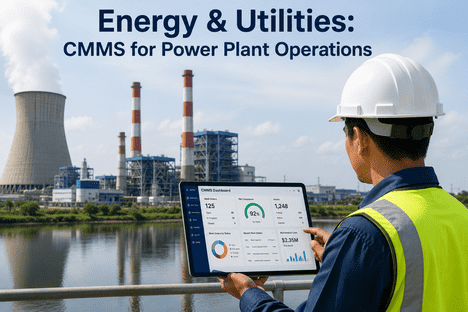
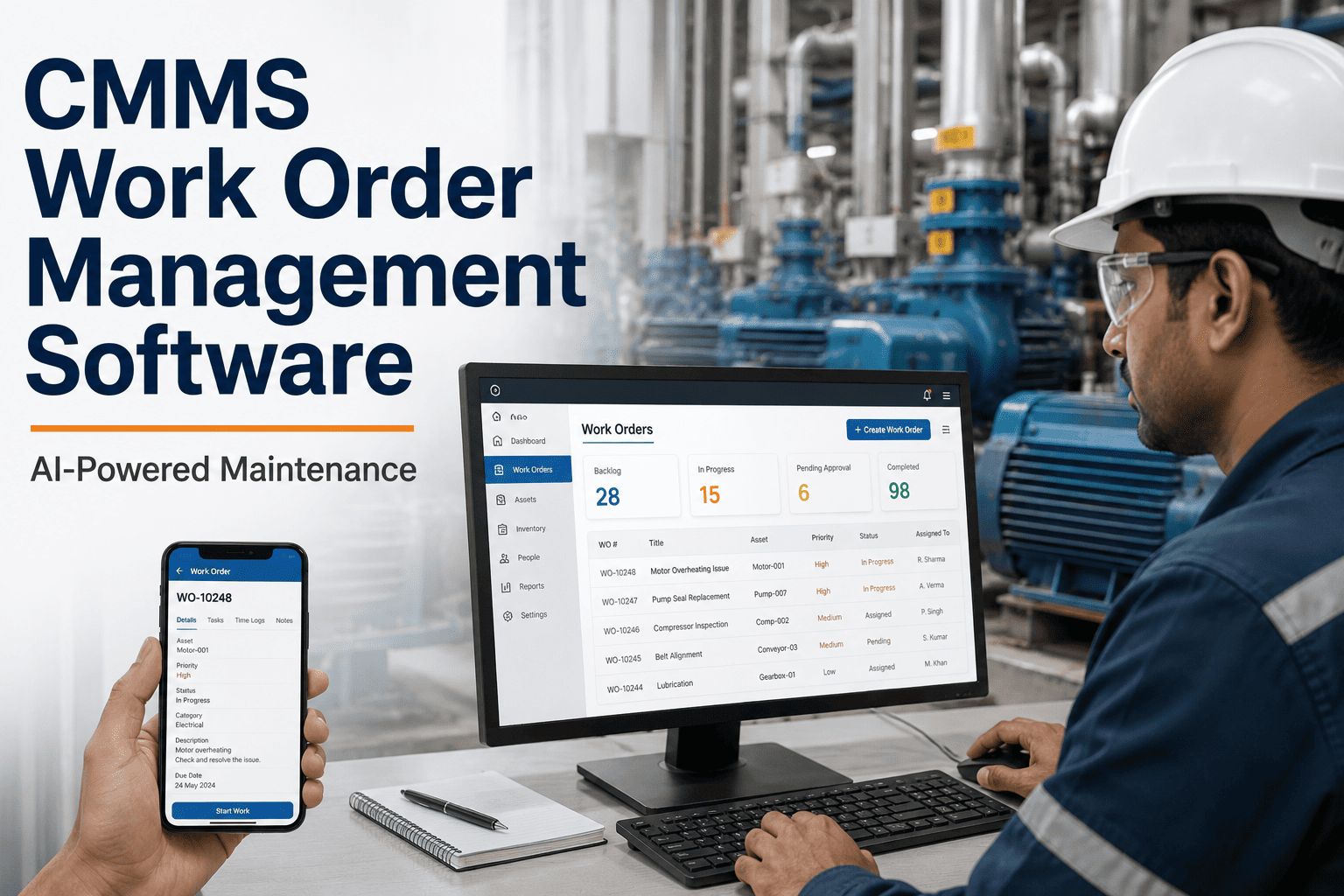
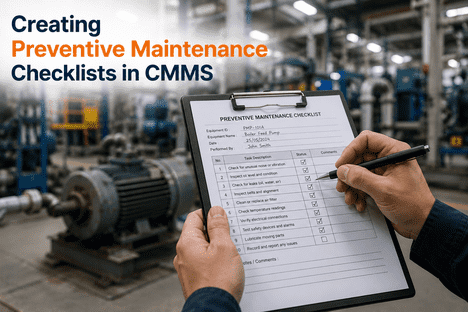
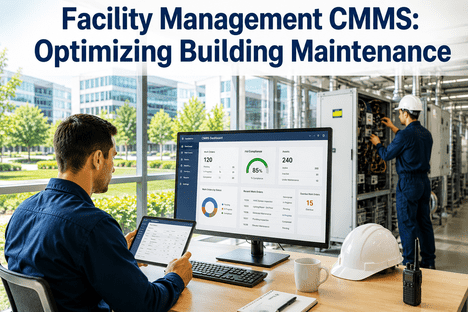
A mid-scale combined-cycle power generation facility operating three gas turbine units and two steam turbines — with a combined installed capacity of 480 MW and a grid dispatch obligation requiring 91% annual availability — was managing its entire maintenance operation through a legacy CMMS that lacked real-time asset condition data, predictive failure analytics, and any integration with plant control systems. Unplanned turbine outages, a persistent work order backlog, and calendar-based preventive maintenance schedules disconnected from actual equipment condition had pushed plant availability to 83.4% — 7.6 percentage points below contractual target and 4.6 below industry benchmark. Following a structured deployment of ifactory's AI Vision Camera platform integrated with CMMS work order automation, the facility recovered plant availability to 91.8%, reduced unplanned outage hours by 31%, extended average turbine overhaul intervals by 19%, and cut total maintenance cost per MWh by 27% within the first twelve months. Book a Demo to see how ifactory's AI-driven maintenance intelligence applies to power generation and utility operations.
AI-DRIVEN CMMS FOR POWER PLANT OPERATIONS
From 83% Availability to 91.8% — Without Replacing a Single Asset
See how a 480 MW combined-cycle facility eliminated reactive maintenance, recovered contractual availability, and cut maintenance cost per MWh by 27% using ifactory's AI Vision Camera platform integrated with CMMS work order automation.
91.8%
Plant Availability Achieved
−31%
Unplanned Outage Hours
−27%
Maintenance Cost / MWh
01 / The Facility
A 480 MW Combined-Cycle Plant Running Maintenance Blind
Facility TypeCombined-cycle gas and steam power generation plant. Three gas turbine generators, two heat recovery steam generators, two steam turbine units. Operating under a capacity availability agreement with grid dispatch obligations and contractual availability target of 91%.
Installed Capacity480 MW nameplate capacity. Annual net generation target of 3.6 TWh. Plant availability factor pre-deployment: 83.4% — 7.6 percentage points below contractual target, representing approximately $3.2 million in annual foregone capacity payments and generation revenue.
Asset Base214 classified maintainable assets across turbine, generator, cooling, electrical, and auxiliary systems. Pre-deployment: zero assets under real-time condition monitoring. All maintenance was triggered by fixed-interval schedules, operator reports, and alarm responses.
Maintenance Team32-person maintenance engineering team. Four rotating shift crews, specialist turbine engineering group, and instrumentation and controls division. OEM service contracts in place for gas turbine hot-section inspections. Annual maintenance budget: $7.8 million.
Prior CMMS ConfigurationLegacy CMMS used for work order tracking and PM schedule management only — no sensor data integration, no condition-based triggers, no asset health scoring. Work order backlog averaged 140 open items at any time. Vibration analysis conducted quarterly by third-party specialists; thermographic surveys twice annually.
ifactory Features UsedAI Vision Camera, Predictive Maintenance Analytics, CMMS Work Order Automation, Asset Health Monitoring, OEE Reporting, Energy Management Dashboard
02 / The Challenge
The Cost of Operating a Power Plant CMMS Without Condition Intelligence
Power plant maintenance management carries consequences that do not exist in most industrial environments. An unplanned turbine outage at a grid-connected facility is not a production delay — it is a dispatch obligation failure with financial penalties, a capacity payment at risk, and a forced-outage event that compounds across the plant's regulatory availability record. For this facility, the combination of a reactive CMMS, calendar-based PM schedules disconnected from actual equipment condition, and zero real-time visibility into rotating equipment health had produced a structurally underperforming availability profile. Maintenance teams spent the majority of their time responding to failures rather than preventing them, and the persistent work order backlog meant deferred preventive maintenance was continuously adding to the plant's future failure risk — a self-reinforcing cycle with no correction mechanism inside the existing CMMS architecture.
83.4%
Plant availability — 7.6 pts below contractual target
The gap between 83.4% actual and 91% contractual availability translated to approximately $3.2 million in annual capacity payment shortfalls and foregone generation revenue — a financial consequence directly attributable to unplanned outages that predictive maintenance could have prevented.
31%
Of $7.8M maintenance budget spent reactively
Approximately $2.4 million annually consumed by emergency unplanned repairs — the most expensive maintenance category, executed at overtime labor rates with expedited OEM parts procurement. Every emergency callout displaced planned preventive maintenance, extending the backlog and elevating the next failure probability.
0
Assets under real-time condition monitoring
Not a single asset across 214 maintainable items had continuous real-time monitoring. Between quarterly vibration surveys and biannual thermographic inspections, every developing failure was invisible — meaning the first indication of degradation was typically an alarm or a forced load reduction, not a preventive alert with time to plan a response.
140
Open CMMS work orders backlogged at all times
A perpetual backlog of 140 open work orders — driven by reactive emergency jobs displacing scheduled PM tasks — created a compounding maintenance deficit where each deferred preventive task increased failure probability for the next cycle. Without condition-based prioritization, there was no objective mechanism to sequence the backlog by actual risk.
"In power generation, your CMMS is either a maintenance intelligence platform or a very expensive filing system. Ours was the latter. We had complete records of everything that had already failed and no information whatsoever about what was about to fail — which is precisely the wrong orientation for a grid-connected facility with dispatch obligations and availability penalties."
03 / The Solution
ifactory AI Vision Camera with CMMS-Integrated Predictive Maintenance for Power Generation
Following evaluation of industrial IoT and CMMS analytics platforms with documented capability in high-temperature, high-vibration rotating equipment environments, the facility's maintenance engineering leadership selected ifactory for its AI Vision Camera platform — validated in power generation settings and capable of integrating with the existing CMMS without system replacement. The deployment instrumented all five generation units and 87 balance-of-plant assets with continuous AI vision and sensor-based condition monitoring, feeding real-time health data into the CMMS for automated work order generation, condition-based PM scheduling, OEE performance tracking, and energy management reporting. For power generation and utility facilities assessing comparable deployments, Book a Demo to review ifactory's power plant implementation model.
MONITOR
AI Vision Camera deployment across all generation units and critical balance-of-plant systems — cameras and sensors positioned at turbine bearing housings, generator air cooler inlets, cooling tower distribution decks, transformer banks, and auxiliary pump stations. Continuous 24/7 visual and vibration condition monitoring transmitted to ifactory's analytics engine at 15-second intervals for all rotating and high-criticality static equipment.
PREDICT
Predictive failure analytics using machine learning models trained on the facility's historical maintenance records, OEM failure mode libraries, and live condition telemetry — generating per-asset health scores updated continuously, with automated alerts when degradation signatures indicate developing failure conditions 10–21 days before critical thresholds are reached across turbine, generator, cooling, and auxiliary systems.
AUTOMATE
Condition-based CMMS work order automation replacing fixed-interval PM scheduling for all monitored assets — work orders generated automatically when AI health scores fall below configured thresholds, prioritized by failure risk, generation impact, and available maintenance windows, with bill-of-materials parts requirements pre-populated before the work order reaches the maintenance planner for review and dispatch.
REPORT
OEE and energy management reporting delivering plant-level and unit-level Overall Equipment Effectiveness metrics — availability, performance efficiency, and quality rates — alongside heat rate trending, compressor fouling progression, auxiliary power consumption analysis, and sustainability reporting outputs aligned with utility sector ESG disclosure and regulatory environmental compliance requirements.
04 / Implementation
All Five Generation Units Under Continuous Condition Monitoring in 52 Days
Days 1–12
Asset Criticality Ranking and Sensor Architecture Design
All 214 maintainable assets ranked using a criticality scoring model incorporating failure consequence severity, historical failure frequency, maintenance cost per event, and generation impact per outage hour. The 92 highest-criticality assets — five generation units and 87 balance-of-plant systems — designated for Phase 1. Camera positions and sensor types specified per asset from OEM maintenance manuals and the facility's documented failure mode history.
Days 13–34
Phased Camera and Sensor Installation Aligned to Dispatch Schedule
AI Vision Camera installations completed in generation unit sequence — units temporarily offline for scheduled maintenance received sensor installation during planned outage windows with zero incremental downtime. All three gas turbine units were fully instrumented within 21 days. Balance-of-plant sensor deployment completed in parallel across auxiliary and electrical systems during normal operation with no generation impact. First live condition telemetry confirmed on Day 14 from GT-1's bearing housing monitoring point.
Days 35–48
CMMS Integration, Predictive Model Training, and Work Order Logic Configuration
ifactory's platform integrated with the existing CMMS via API — preserving 11 years of historical work order and maintenance cost records while adding real-time condition intelligence as the primary work order trigger for all monitored assets. Predictive models trained on historical failure data for 23 documented failure modes across the generation fleet. Automated work order routing logic configured per criticality tier, with escalation thresholds validated with maintenance engineering leadership before live activation.
Days 49–52
OEE Dashboard Activation, Full Network Validation, and First Predictive Alert
Complete sensor network validated across all monitored assets. OEE and energy management dashboards activated for operations and maintenance leadership. The platform's first predictive alert was generated on Day 51 — abnormal vibration signature development detected at the GT-2 generator bearing, 14 days before the pattern would have reached the alarm threshold triggering a forced load reduction. Bearing inspection during the next planned maintenance window confirmed early-stage babbitt wear consistent with the AI-predicted failure mode. The single intervention validated the deployment model and covered a significant portion of the platform investment cost.
05 / Results
12 Months of Verified Performance Improvement Across Availability, Cost, and OEE
The transition from reactive CMMS management to ifactory's AI vision-integrated predictive maintenance platform produced measurable, financially verifiable improvements across every dimension of power plant operational performance within the first 90 days and sustained throughout the full 12-month measurement period. Plant availability recovered from 83.4% to 91.8% — exceeding the contractual target for the first time in four years of facility operation. Unplanned outage hours fell by 31%. Maintenance cost per MWh reduced by 27%. The work order backlog collapsed from 140 to 34 open items. And for the first time, the operations leadership team had real-time OEE data and continuous asset health visibility without waiting for a quarterly third-party condition survey to arrive.
| Metric |
Before ifactory |
After ifactory |
Change |
| Plant availability factor | 83.4% | 91.8% | +8.4 pts — target exceeded |
| Unplanned outage hours (annual) | 1,430 hours | 987 hours | −31% reduction |
| Maintenance cost per MWh generated | $2.17 / MWh | $1.58 / MWh | −27% cost reduction |
| Reactive maintenance share of budget | 31% ($2.4M) | 9% ($700K) | −$1.7M reactive spend eliminated |
| Average turbine overhaul interval | 18,400 fired hours | 21,900 fired hours | +19% interval extension |
| CMMS open work order backlog | 140 items avg. | 34 items avg. | −76% backlog reduction |
| OEE — plant-level average | Not measured | 87.3% | First continuous OEE baseline established |
| Predictive alerts issued (12 months) | 0 — no capability | 47 validated alerts | 44 failures prevented |
| Annual total maintenance cost | $7.8M | $5.7M | −$2.1M annual savings |
| Full sensor deployment timeline | N/A | 52 days | Fully live in 52 days |
"The first predictive alert — babbitt wear on GT-2's generator bearing, detected 14 days before alarm threshold — covered a significant part of the platform cost in a single intervention. That one event changed how the entire maintenance team thinks about what a CMMS should be doing for them."
06 / Key Analysis
Why the Availability Recovery and Cost Reduction Were This Significant
01
Continuous AI vision monitoring detected failure signatures that quarterly surveys structurally cannot. The quarterly vibration survey model leaves 361 days per year between condition data points. ifactory's continuous monitoring detected the GT-2 bearing degradation 14 days before alarm threshold, a cooling tower gearbox wear pattern 19 days before failure, and three additional developing faults across the 12-month period — none of which would have been identified before forced outage under the pre-deployment survey schedule.
02
Condition-based overhaul scheduling extended turbine maintenance intervals by 19% on healthy units. Gas turbine hot-section overhauls are among the highest single-cost maintenance events in combined-cycle operations — typically $800,000–$1.4 million per event. Continuous AI health trending across combustion system condition, compressor fouling rate, and exhaust temperature deviation allowed interval extension from 18,400 to 21,900 fired hours on turbines demonstrating healthy profiles, deferring approximately $840,000 in OEM hot-section work during the measurement period.
03
Automated CMMS work order generation eliminated the backlog that had compounded failure risk for years. The 140-item backlog represented deferred PM tasks — each one an asset operating beyond its last validated service interval. Condition-based work order automation with AI-driven risk prioritization reduced the backlog from 140 to 34 open items within four months by directing technician time to highest-risk assets first rather than chronological queue order. Every completed deferred PM directly reduced the probability of a future emergency event.
04
OEE measurement established the first quantified improvement baseline and identified the highest-value optimization target. Before deployment, the plant had no continuous OEE measurement — availability came from dispatch records, performance efficiency from control system logs, and quality rate was not formally tracked. ifactory's integrated OEE reporting established an 87.3% baseline and identified cooling system thermal degradation as the primary performance efficiency loss driver — directing a focused $180,000 cooling tower optimization project that recovered 1.4 percentage points of performance efficiency within the measurement period.
07 / Business Impact
Operational, Financial, and Sustainability Outcomes Beyond Maintenance Cost
Capacity Payment and Revenue Recovery
Recovering plant availability from 83.4% to 91.8% restored full compliance with the capacity availability agreement — eliminating approximately $1.4 million in annual capacity payment deductions and restoring generation revenue entitlement from previously unavailable MW-hours driven by forced outages.
Regulatory Compliance Documentation
Automated CMMS population of every maintenance event — timestamped, technician-attributed, and linked to AI condition evidence — produced complete audit-ready maintenance records for all generation assets. Regulatory environmental compliance reporting for emissions management and inspection obligations was generated directly from dashboard exports without additional manual compilation work.
Heat Rate and Energy Management Optimization
Continuous compressor fouling monitoring across all three gas turbines enabled optimized online washing schedules that maintained average compressor efficiency 2.1 percentage points above pre-deployment baseline — reducing fuel consumption per MWh generated and supporting the plant's carbon intensity reduction commitments for utility sector ESG reporting and regulatory compliance.
Engineering Capacity Reallocated to Improvement
Reducing reactive emergency work from 31% to 9% of the maintenance budget freed approximately 2,800 engineering hours annually — capacity redirected to backlog clearance, asset improvement projects, and the cooling tower optimization program. For the first time in the facility's operating history, the maintenance engineering team had discretionary time for proactive improvement rather than continuous emergency response.
$7.8M
Maintenance budget before
$5.7M
Maintenance budget after
91.8%
Plant availability recovered
$2.1M
Annual savings achieved
08 / Conclusion
From Reactive CMMS to Predictive Generation Intelligence: The Compounding Value of AI-Driven Power Plant Maintenance
For power generation facilities operating under capacity availability obligations, grid dispatch requirements, and environmental compliance frameworks, maintenance management is not a support function — it is a direct determinant of revenue, regulatory standing, and long-term asset viability. When that function is managed through a CMMS without real-time condition data, predictive analytics, or automated work order intelligence, unplanned outages become structurally inevitable, maintenance costs become structurally elevated, and turbine asset lifespan is progressively compressed by degradation that could have been caught weeks earlier with continuous monitoring in place.
This case study demonstrates what becomes achievable when CMMS management is enhanced with AI vision-based continuous condition monitoring and automated work order intelligence: plant availability recovers to contract-compliant levels through predictive failure prevention, unplanned outage hours fall by 31%, turbine overhaul intervals extend by 19% through condition-validated deferral, maintenance cost per MWh reduces by 27%, and OEE measurement creates the first quantified baseline for sustained continuous improvement programs. Book a Demo to see how ifactory's AI Vision Camera platform applies to your generation fleet, utility operations, and existing CMMS environment.
Every predictive alert that prevents a forced outage compounds in value — as generation revenue protected, as capacity payment preserved, as OEM warranty conditions maintained, and as the operational credibility of the maintenance engineering team reinforced across each dispatch cycle. Any power generation or utility facility facing similar availability and maintenance cost challenges can achieve comparable outcomes by making the same fundamental transition: from CMMS as passive historical record to CMMS as predictive operational intelligence platform, powered by continuous AI vision-based asset condition monitoring across every critical asset in the plant.
Frequently Asked Questions
How does ifactory's AI Vision Camera integrate with an existing power plant CMMS?
ifactory integrates with existing CMMS platforms via API without replacing current systems or historical work order records. Real-time condition data from AI vision cameras and IoT sensors feeds automatically into the CMMS, triggering condition-based work orders when asset health thresholds are breached. Maintenance teams continue working within their existing CMMS environment — AI-generated work orders appear alongside manually created ones, with priority scores attached based on failure risk and generation impact.
What types of power plant assets can ifactory monitor?
ifactory's AI Vision Camera platform supports monitoring of gas and steam turbines, generators, cooling tower systems, transformer banks, auxiliary pump stations, compressors, heat exchangers, and balance-of-plant electrical and mechanical systems. AI models are trained on asset-specific failure modes — including vibration anomalies, thermal deviation, visual degradation, and operational pattern changes — enabling coverage across diverse generation asset types within a single unified platform.
How does predictive maintenance improve plant availability in power generation?
Predictive maintenance improves availability by detecting failure signatures before they cause forced outages — enabling planned intervention during scheduled maintenance windows rather than emergency response during active generation. ifactory's continuous AI monitoring identifies degradation 10–21 days before critical thresholds, replacing reactive failure response with planned preventive action that eliminates the generation impact, OEM emergency service premium, and grid operator availability penalty associated with unplanned outage events.
Can ifactory support OEE measurement and energy management for power plant operations?
Yes. ifactory's OEE reporting module tracks availability, performance efficiency, and quality rate continuously at both unit and plant level — providing a first quantified OEE baseline for facilities with no prior continuous measurement capability. The energy management dashboard monitors heat rate efficiency, compressor performance trends, auxiliary power consumption, and fuel-to-power conversion metrics relevant to operational optimization, carbon intensity reporting, and utility sector ESG disclosure requirements.
How long does sensor deployment take at a combined-cycle power facility?
Deployment timelines depend on plant scale, asset count, and dispatch scheduling constraints. This 480 MW combined-cycle facility achieved full condition monitoring coverage across five generation units and 87 balance-of-plant assets within 52 days — with all installations completed during existing scheduled maintenance windows with zero incremental forced outage time. ifactory's phased deployment model prioritizes highest-criticality assets first so predictive monitoring value begins accruing before full network completion.
What is the typical ROI timeline for AI-driven CMMS optimization in power generation?
Power generation facilities typically achieve full platform investment payback within 9–15 months through combined maintenance cost reduction, unplanned outage elimination, and capacity payment recovery. Facilities with high baseline reactive maintenance spend and documented availability shortfalls against contractual targets often achieve payback within the first two quarters of full platform operation. This facility's first validated predictive alert — preventing a GT-2 generator bearing failure on Day 51 — recovered a substantial portion of the sensor deployment cost in a single intervention.
READY TO TRANSFORM YOUR POWER PLANT MAINTENANCE?
Real-Time Asset Intelligence. Predictive CMMS. Full OEE Visibility.
ifactory's AI Vision Camera platform deploys across your generation fleet and integrates with your existing CMMS in weeks — delivering continuous asset health monitoring, automated work order generation, heat rate optimization, and OEE reporting that recovers plant availability and reduces maintenance cost per MWh from day one.