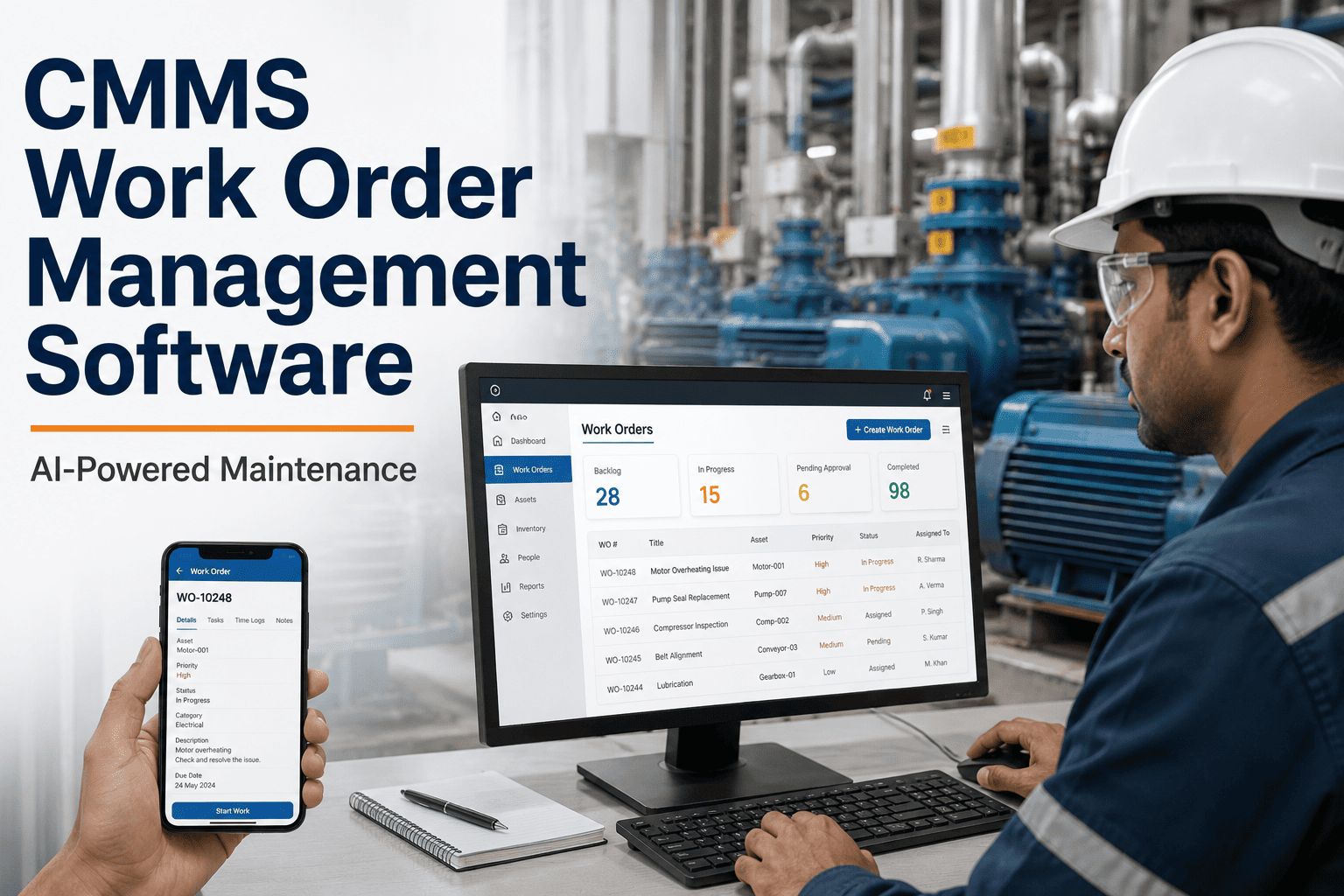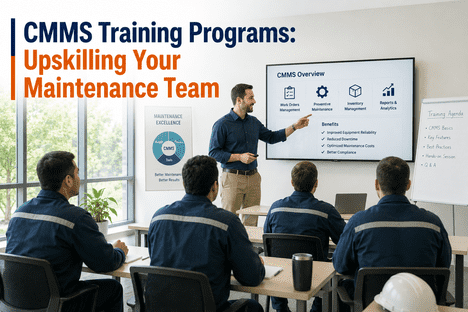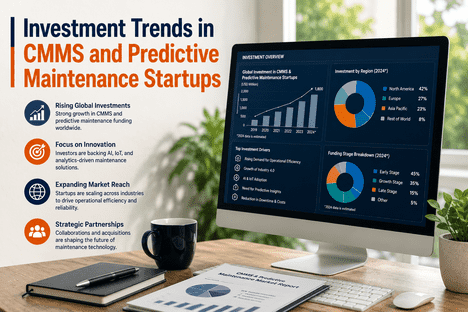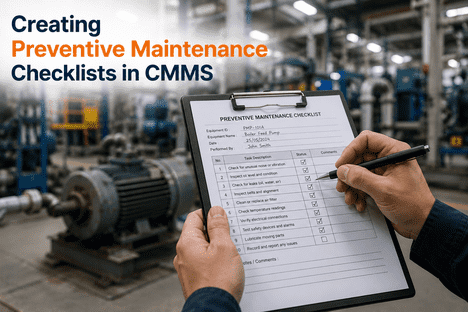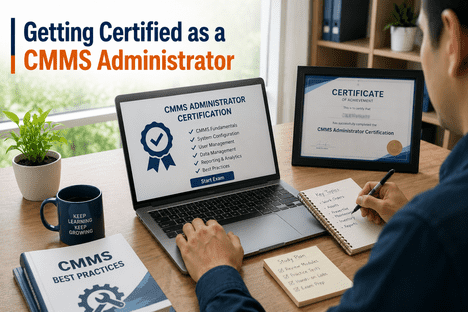
The role of CMMS Administrator has evolved into one of the most strategically critical technical positions in modern manufacturing and industrial operations. In 2026, a certified CMMS Administrator is no longer simply managing software — they are architecting the data infrastructure that powers predictive maintenance decisions, IoT sensor integrations, AI-generated work order automation, and the real-time asset reliability intelligence that operations leadership depends on to minimize downtime and control maintenance costs. Organizations that invest in formal CMMS Administrator certification programs consistently outperform those relying on self-taught system managers across every maintenance KPI that matters: preventive maintenance compliance, mean time between failures, spare parts carrying cost, and unplanned downtime frequency. The path to CMMS Administrator certification in 2026 requires fluency across six capability domains — system configuration, data governance, predictive maintenance program design, IoT and AI tool integration, regulatory compliance documentation, and continuous improvement analytics — that collectively define the administrative competency standard separating high-performing maintenance operations from those perpetually reacting to equipment failures their CMMS data predicted and their teams missed. If you want to see how AI vision camera integration with your CMMS transforms the condition data your certified administrator manages into automatic predictive work orders, you can Book a Demo of iFactory's AI Vision Camera platform today.
What CMMS Administrator Certification Means in 2026 — and Why It Matters More Than Ever
The CMMS Administrator certification landscape has been reshaped by Industry 4.0 integration demands. Three years ago, a capable CMMS administrator primarily needed system configuration skills and work order workflow management proficiency. Today, certification programs that prepare administrators for the actual demands of the role must cover IoT sensor data routing, AI predictive alert configuration, API-based integration with ERP and MES systems, and the regulatory documentation frameworks that FDA, ISO 55001, and AS9100-regulated manufacturers require as evidence of systematic maintenance program execution. The organizations driving the highest ROI from their CMMS investments are those whose administrators hold credentials that reflect this expanded scope — not legacy certifications built around software navigation that has since been surpassed by the systems' own analytical capabilities.
Six Core Competency Domains in CMMS Administrator Certification Programs
Contemporary CMMS Administrator certification programs are structured around competency domains that reflect the full scope of what modern maintenance management system administration demands — from foundational data governance through advanced AI and IoT integration. Candidates pursuing certification in 2026 should evaluate programs against these six domains to ensure the credential they earn prepares them for the actual administrative responsibilities they will carry in Industry 4.0 manufacturing environments. Administrators who want to understand how iFactory's AI vision camera data feeds the predictive maintenance workflows covered in Domain 3 can Book a Demo to see the full integration demonstrated on their asset types.
System Configuration, Asset Hierarchy Design, and Data Governance
The foundational certification domain covers the CMMS configuration decisions that determine the quality of every data output the system produces. Asset hierarchy design — the taxonomy that organizes assets by site, system, equipment class, and component level — is the structural framework all downstream analytics depend on. Poor hierarchy design produces asset data that cannot be aggregated for fleet-wide benchmarking or used to train AI predictive models. Certification programs in this domain cover functional location structures using ISO 14224 or SAP PM conventions, equipment master data standards, failure mode catalogues, and the data governance policies that ensure technicians in every role populate the right fields consistently. Candidates completing this domain can design and maintain asset hierarchies that support the full analytical ambition of the organization's maintenance program — not just the immediate scheduling function.
Work Order Lifecycle Management and Documentation Standards
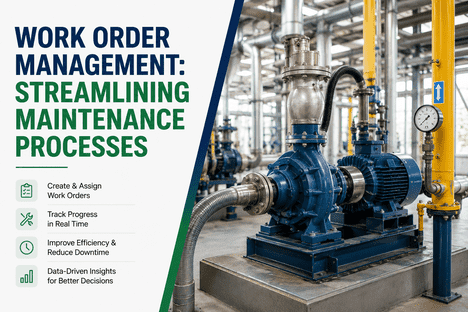
Work order management certification covers the administrative design of the work order system — not individual work order execution. This domain trains administrators in work order template design for different maintenance categories (corrective, preventive, predictive, project), approval workflow configuration, failure mode coding schema implementation using ISO 14224 taxonomy, labor hour and parts consumption recording requirements, and the quality audit standards that make completed work orders useful for MTBF analysis, failure mode trending, and regulatory audit evidence. Administrators certified in this domain configure work order systems that produce structured reliability data as a natural byproduct of maintenance execution — rather than requiring separate data entry or analytical effort to transform work records into usable intelligence.
Predictive Maintenance Program Design and AI Alert Integration
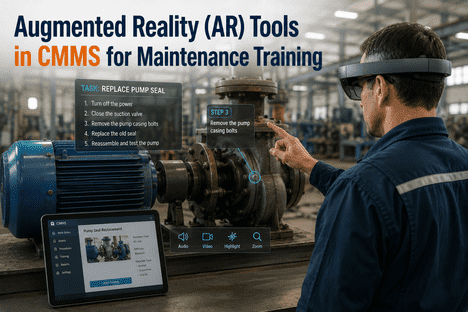
This domain addresses the highest-value CMMS administrator capability in 2026: designing and managing the predictive maintenance program architecture that converts condition data — from IoT sensors, AI vision systems, vibration analysis, and oil sampling — into structured CMMS work orders. Certification covers condition monitoring data source integration, alert threshold configuration for different asset criticality levels, the triage workflow that routes high-confidence alerts directly to work order queues while flagging low-confidence alerts for engineer review, and the model performance monitoring that ensures predictive alert reliability over time. AI vision camera systems like iFactory's generate equipment health signals from production quality trend data that represent some of the earliest detectable degradation indicators available — certified administrators learn how to configure CMMS integration with these systems to capture work order triggers that sensor-only programs miss entirely.
ERP, MES, and Enterprise System Integration Administration
CMMS administrators in organizations with mature maintenance programs manage the integration layer connecting their CMMS to ERP procurement systems, MES production scheduling platforms, LIMS quality management systems, and financial reporting infrastructure. Certification in this domain covers API integration administration, data mapping maintenance between connected systems, integration monitoring and error resolution, and the change management process for integration updates triggered by system upgrades on either side of a connection. Administrators certified in this domain eliminate the manual data re-entry workflows between systems that introduce transcription errors, create audit trail gaps, and consume quality engineering time that should be directed toward reliability improvement rather than administrative reconciliation.
Regulatory Compliance Documentation and Audit Trail Management
Regulated manufacturers operating under FDA 21 CFR Part 11, ISO 13485, ISO 55001, AS9100, or EU GMP Annex 11 require CMMS administrators who understand the documentation and audit trail requirements these standards impose on computerized maintenance management systems. Certification in this domain covers electronic record integrity requirements, audit trail configuration and monitoring, user access control administration for GMP compliance, system validation documentation maintenance under GAMP 5 principles, and the inspection record retrieval workflows that satisfy customer and regulatory audit evidence requests within contractual timeframes. Administrators certified in this domain convert the CMMS from a maintenance scheduling tool into the regulated documentation system that quality-intensive manufacturing environments require it to be.
KPI Analytics, Reliability Reporting, and Continuous Improvement Governance
The advanced certification domain covers analytical CMMS administration — designing the KPI dashboard architecture, reliability reporting cadence, and continuous improvement governance structure that makes maintenance performance data visible and actionable across the organization. This domain trains administrators in MTBF and MTTR trend configuration, defect pareto and failure mode analysis report design, cost-per-asset and maintenance-spend-to-replacement-asset-value ratio reporting, and the presentation formats that communicate maintenance performance evidence to operations leadership and quality auditors. Certified administrators in this domain operate maintenance management as a data-driven discipline — building the organizational intelligence infrastructure that compounds in value as asset history accumulates and predictive model accuracy improves with each additional failure event recorded.
Leading CMMS Administrator Certification Programs in 2026
The CMMS administrator certification market has matured significantly since 2023, with several programs achieving broad employer recognition across manufacturing sectors. The following programs represent the current certification landscape for administrators seeking credentials that will be recognized by regulated manufacturers, ISO-certified facilities, and organizations building Industry 4.0 maintenance programs.
Certified Maintenance and Reliability Professional (CMRP)
The SMRP CMRP credential is the most widely recognized maintenance and reliability certification in North American manufacturing. The examination covers five knowledge domains: business and management, manufacturing process reliability, equipment reliability, organization and leadership, and work management — with increasing CMMS and digital technology content added in the 2024 body of knowledge revision to reflect Industry 4.0 integration requirements. The CMRP is the benchmark credential for senior CMMS administrators seeking recognition across multiple manufacturing sectors and is explicitly referenced in job requirements by Tier 1 aerospace, pharmaceutical, and automotive manufacturers. Maintenance professionals with 3+ years of relevant experience are eligible to sit the examination without additional prerequisite coursework.
Certified Facility Manager (CFM) with CMMS Specialization
The IFMA CFM credential with CMMS specialization track addresses the facility management and asset lifecycle dimensions of CMMS administration that are relevant to administrators managing building systems, critical infrastructure, and campus maintenance operations alongside production equipment. The specialization covers computerized maintenance system configuration, preventive maintenance program design, asset lifecycle cost analysis, and the sustainability reporting integration that facility CMMS programs increasingly support. The CFM is particularly relevant for CMMS administrators operating in healthcare, pharmaceutical campus, data center, and multi-site facility management environments where building systems and production assets share a common CMMS instance and administrative responsibility.
Maintenance Management Professional (MMP)
The PEMAC MMP program is structured specifically for maintenance managers and CMMS administrators pursuing a comprehensive management credential that covers the full scope of maintenance program governance — from strategic asset management through operational execution and continuous improvement. The MMP curriculum dedicates substantial content to CMMS system design, data governance, KPI architecture, and the predictive maintenance program design skills that distinguish high-performing maintenance administrators from those managing scheduling systems alone. The program's project-based assessment model requires candidates to demonstrate applied competency on a real maintenance management challenge from their own facility — making the credential a direct evidence of practical administrative capability rather than examination performance alone.
Platform-Specific Administrator Certifications (IBM Maximo, SAP PM, Infor EAM)
IBM Maximo, SAP Plant Maintenance, and Infor EAM each offer tiered administrator certification programs that validate platform-specific configuration, administration, and integration skills at a depth that vendor-neutral credentials cannot match. For CMMS administrators managing enterprise deployments of these platforms at large manufacturing organizations, vendor certification demonstrates the technical depth that system complexity demands. Platform certifications are most valuable when combined with a vendor-neutral credential like the CMRP — the combination signals both broad maintenance management competency and the platform-specific technical depth to administer complex enterprise CMMS deployments effectively.
IoT and Predictive Maintenance Integration Credentials
A growing category of specialist credentials from organizations including the Industry 4.0 Institute, IIoT Analytics Certification Board, and platform-specific programs from condition monitoring technology providers addresses the IoT integration and AI alert management skills that CMMS administrators need to configure and maintain predictive maintenance programs. These credentials validate the ability to configure condition monitoring data pipelines into CMMS work order queues, administer AI model performance monitoring workflows, and design the alert triage processes that separate actionable predictive intelligence from background noise. For CMMS administrators at facilities deploying AI vision cameras or vibration analysis programs alongside their CMMS, a specialist IoT integration credential demonstrates exactly the capability their role requires in 2026 and beyond.
GMP and ISO Computerized Systems Administration Credentials
Regulated manufacturers operating under FDA 21 CFR Part 11, EU GMP Annex 11, or ISO 13485 require CMMS administrators whose credentials demonstrate specific competency in computerized system compliance — validation documentation, audit trail configuration, electronic record integrity, and change control procedures. The ISPE and GAMP community offers training and credentials addressing these requirements directly, with content aligned to current FDA Computer Software Assurance guidance and EU GMP Annex 11 expectations. For CMMS administrators at pharmaceutical, medical device, or clinical research manufacturers in the Northeast, Mid-Atlantic, or EU-facing manufacturing environments, a GMP-aligned computerized systems credential is as professionally necessary as the CMRP in their sector context.
The CMMS Administrator Certification Preparation Roadmap
Candidates preparing for CMMS administrator certification in 2026 should follow a structured preparation pathway that builds the six competency domains progressively — establishing foundational system administration skills before advancing to the predictive maintenance, IoT integration, and regulatory compliance domains that differentiate high-performing administrators in the current manufacturing environment.
Assess current proficiency across the six certification domains using a structured self-evaluation against the target credential's body of knowledge. Map proficiency gaps to study priorities and select the certification program whose scope most closely matches both your current role requirements and the direction your organization's maintenance program is heading. Candidates at regulated manufacturers should weight GMP-aligned computerized systems content heavily; those at multi-site industrial operations should prioritize ERP integration and analytics credentials; those preparing for leadership roles at large-enterprise CMMS deployments should add platform-specific certification to a vendor-neutral credential baseline.
Build foundational competency in asset hierarchy design using ISO 14224 taxonomy principles, work order template and approval workflow configuration, failure mode coding schema implementation, and inventory module governance. Study resources should combine credential body of knowledge materials with facility-specific exercises that apply learning directly to the candidate's own CMMS configuration — reinforcing conceptual content with practical application that accelerates both examination performance and on-the-job capability development simultaneously. This phase typically requires 30–40 study hours spread across six weeks for candidates with 2+ years of CMMS user experience.
Advance to the predictive maintenance program design and IoT integration domains — the highest-value and most examination-relevant skills for 2026 certification candidates. Study content covers condition monitoring data pipeline configuration, AI alert threshold design and triage workflow implementation, and the integration architecture connecting IoT sensor platforms and AI vision systems to CMMS work order automation. Candidates should pursue hands-on exposure to IoT and AI tools alongside credential study materials — whether through facility pilot programs, vendor demonstration environments, or structured lab exercises. Candidates preparing for integration with AI vision systems like iFactory's can Book a Demo to see real CMMS integration workflows demonstrated on actual production data.
Complete advanced domain study covering regulatory compliance documentation frameworks, audit trail administration, KPI dashboard design, and reliability reporting structure. Transition to integrated examination preparation — timed practice examinations, weakness domain review, and applied scenario exercises that simulate the judgement-based questions that distinguish CMRP and MMP examinations from factual recall tests. Allow three to four weeks of dedicated examination preparation time following domain study completion before scheduling the examination — the investment in structured preparation consistently produces higher first-attempt pass rates and stronger post-certification performance than rushing to examination before preparation is complete.
How AI Vision Camera Integration Expands the CMMS Administrator's Strategic Value
The most significant capability expansion for CMMS administrators in 2026 is the integration of AI vision camera data as a source of equipment health signals that feed directly into predictive maintenance work order automation. Understanding this integration is increasingly a differentiating competency for certified administrators — and a direct determinant of the maintenance program's ability to prevent failures that traditional condition monitoring consistently misses.
Traditional condition monitoring approaches — vibration analysis, thermography, ultrasonic testing — detect mechanical degradation symptoms after the physical failure process has advanced to a detectable amplitude. AI vision cameras deployed on production lines detect equipment degradation through a different signal: the characteristic defect rate increase that emerges as tooling wears, alignment drifts, or mechanical components fatigue — often 20–40 hours before any vibration or thermal sensor crosses an alert threshold. A CMMS administrator who has configured iFactory's AI vision integration routes these quality-derived health signals into the predictive work order queue alongside traditional condition monitoring alerts — giving the maintenance team the earliest possible warning of developing equipment problems across every production line in the facility. This integration capability is exactly the kind of practical skill that advanced CMMS administrator certification programs in 2026 are building into their predictive maintenance domain content.
| CMMS Administrator Capability | Without AI Vision Integration | With iFactory AI Vision Integration | Certification Domain |
|---|---|---|---|
| Predictive Alert Sources | Vibration, thermal, ultrasonic sensors only | Sensor data + quality-derived degradation signals from AI vision | Domain 3 — Predictive Maintenance |
| Earliest Failure Warning | 4–8 hours before failure on fast-moving degradation | 20–40 hours earlier via quality trend detection | Domain 3 — Alert Integration |
| Work Order Data Quality | Manually triggered corrective work orders | Auto-generated condition-based work orders with defect context | Domain 2 — Work Order Governance |
| Regulatory Documentation | Separate quality and maintenance records | Unified inspection + maintenance audit trail per asset | Domain 5 — Compliance Documentation |
| KPI Reporting Depth | Maintenance KPIs only | Maintenance + quality trend correlation reporting | Domain 6 — Analytics Governance |
| Defect Escape Prevention | Dependent on manual inspection coverage | 100% AI vision inspection with CMMS-triggered maintenance response | Domain 4 — System Integration |
Frequently Asked Questions: Getting Certified as a CMMS Administrator
What is the most recognized CMMS administrator certification for manufacturing environments in 2026?
The SMRP Certified Maintenance and Reliability Professional (CMRP) remains the most broadly recognized credential across North American manufacturing sectors, with explicit reference in job requirements from Tier 1 pharmaceutical, aerospace, and automotive manufacturers. For administrators at regulated facilities, supplementing the CMRP with a GMP-aligned computerized systems credential from ISPE or GAMP addresses the regulatory compliance documentation domain that FDA and EU GMP auditors specifically examine. For those managing enterprise CMMS deployments on IBM Maximo, SAP PM, or Infor EAM platforms, the combination of CMRP plus platform-specific certification provides the strongest credential profile for senior administrator roles.
How long does CMMS administrator certification preparation typically take?
Candidates with 2–3 years of active CMMS administration experience typically complete structured preparation for the CMRP examination in 18–24 weeks of study alongside full-time work — assuming 6–8 hours of structured study per week. Candidates with less direct maintenance management experience may require 28–36 weeks to build both the conceptual foundation and the practical fluency that examination questions assume. Preparation timelines for vendor-specific platform certifications (Maximo, SAP PM) are typically shorter — 8–14 weeks — because the content is more narrowly scoped and candidates are often already proficient with the platform from daily administration work. All preparation paths benefit from applying study content to real facility data and configurations rather than generic textbook exercises alone.
Does CMMS administrator certification include IoT and AI integration content relevant to Industry 4.0?
The degree to which established certification programs cover IoT and AI integration varies significantly. The SMRP CMRP body of knowledge was updated in 2024 to increase content on digital maintenance technologies, condition monitoring data integration, and predictive maintenance program design — but the depth is still developing relative to what the role demands in advanced manufacturing environments. Administrators pursuing comprehensive IoT and AI integration competency should supplement their primary credential with a specialist IoT-CMMS integration credential from an Industry 4.0 training organization or participate in vendor-hosted training programs covering specific integration architectures like iFactory's AI vision-to-CMMS connection. The field is evolving faster than credential bodies can update examination content — practical integration experience and specialist training are currently more valuable than examination content alone for this domain. Book a Demo with iFactory to see the specific CMMS integration workflows your facility would use.
What is the career progression for a certified CMMS administrator in manufacturing?
Certified CMMS administrators typically progress through three career stages: system administrator (CMMS configuration, user support, data governance), maintenance program manager (predictive program design, KPI reporting, continuous improvement leadership), and reliability or asset management director (organizational maintenance strategy, capital investment prioritization, multi-site CMMS governance). The CMRP credential is recognized at all three stages, with senior roles increasingly requiring demonstrated results from AI and IoT program deployment alongside the credential itself. In regulated manufacturing environments — pharmaceutical, medical device, aerospace — CMMS administrator career paths intersect with quality management functions, with certified administrators increasingly holding dual roles that bridge maintenance execution and regulatory compliance documentation responsibilities.
How does CMMS administrator certification affect the ROI of a facility's CMMS investment?
The measurable ROI impact of certified CMMS administration is well-documented across manufacturing environments. Facilities with certified administrators consistently show 2.5–3.5× higher ROI on CMMS software investment than comparable facilities with uncertified system managers — driven by higher PM compliance rates, better predictive alert utilization, cleaner inventory data that enables optimization, and the analytics capability that identifies high-cost failure patterns before they recur. The certification ROI case is strongest at facilities deploying advanced CMMS capabilities — predictive maintenance programs, IoT integrations, ERP connectivity — where uncertified administration creates a bottleneck between the platform's analytical capability and the organization's ability to act on the intelligence it generates. Investing in administrator certification before advanced capability deployment, rather than after, consistently produces faster time-to-value on both the CMMS investment and the technologies integrated with it.
What maintenance and reliability experience is required before pursuing CMMS administrator certification?
Most vendor-neutral CMMS administrator credentials require 2–5 years of documented maintenance, reliability, or asset management experience before examination eligibility — with the CMRP requiring 3 years for candidates with a bachelor's degree and 5 years for those without a relevant degree. Vendor-specific platform certifications (Maximo, SAP PM) typically require demonstrated platform usage rather than maintenance experience minimums, making them accessible to IT professionals and implementation consultants alongside maintenance practitioners. Candidates who meet experience requirements but lack exposure to predictive maintenance programs, IoT data integration, or regulatory documentation frameworks should prioritize gaining practical experience in these areas — through facility pilot programs, cross-functional project involvement, or vendor demonstration participation — before examination, as examination content increasingly reflects these advanced capability domains at a depth that requires practical context to answer correctly.