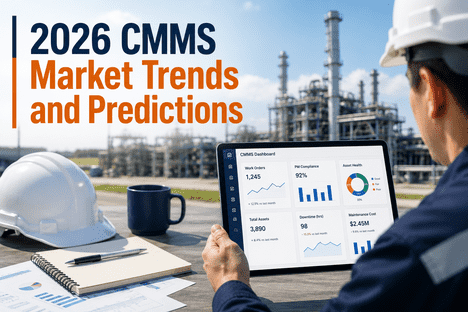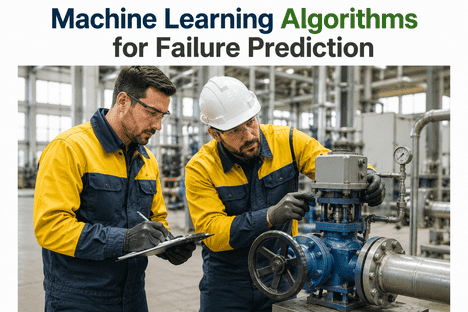
Machine learning algorithms for failure prediction represent the most consequential advancement in industrial maintenance since the adoption of computerized maintenance management systems. These algorithms ingest sensor data, work order histories, and operational parameters to identify patterns that precede equipment failure—often days or weeks before any conventional threshold-based alarm would trigger. Common algorithm families used include Random Forest and Gradient Boosting for classification of failure types, Long Short-Term Memory networks for time-series anomaly detection on vibration and temperature signals, and convolutional neural networks applied to visual inspection data captured through industrial cameras. The effectiveness of any machine learning model depends entirely on the quality and breadth of its training data. Facilities that deploy iFactory's AI vision camera system gain a continuous stream of labeled visual defect data that directly feeds these models—surface crack progression, corrosion growth rates, belt wear patterns, and thermal anomaly trends—enabling failure prediction models to achieve accuracy levels that are impossible with manual inspection logs alone. The difference between a facility that applies generic alarm thresholds and one that trains machine learning models on its own equipment-specific failure signatures is the difference between reactive maintenance and true predictive reliability.
Core Machine Learning Algorithm Families for Failure Prediction
Supervised Learning for Classification and Regression of Failure Events
Supervised learning algorithms require labeled historical data where failure events have been documented alongside the sensor readings and operating conditions that preceded them. Random Forest and XGBoost classifiers are widely deployed for failure-type classification because they handle high-dimensional sensor data well and provide feature importance rankings that help reliability engineers understand which parameters are most predictive of each failure mode. Support Vector Machines with radial basis function kernels are effective for binary failure detection problems where the decision boundary between normal operation and pre-failure conditions is non-linear. For regression tasks such as Remaining Useful Life estimation, Gradient Boosting regressors and ensemble methods consistently outperform single-model approaches. These algorithms are most effective when trained on datasets that include both time-series sensor data and high-resolution visual evidence captured by AI vision cameras—where surface-level degradation patterns visible only to computer vision models provide early indicators that vibration or temperature sensors have not yet registered.
Deep Learning for Time-Series Anomaly Detection
Long Short-Term Memory networks and Transformer-based architectures have become the standard for failure prediction from time-series sensor data. These models capture temporal dependencies that conventional algorithms miss. An LSTM trained on motor current signature data can detect rotor bar cracking patterns that develop over thousands of operational cycles. A Transformer model analyzing furnace temperature profiles can identify refractory degradation trajectories that span multiple heats. Convolutional Neural Networks applied to spectrograms of vibration data translate time-series signals into image-like representations that vision-trained architectures can classify with high precision. iFactory's AI vision camera system complements these approaches by providing direct visual confirmation of physical degradation—thermal images of overheating bearings, high-resolution frames of crack propagation, and time-lapse imagery of corrosion spread—that validates and enriches the time-series predictions. To see how these algorithms perform in your facility with real visual training data, Book a Demo of iFactory's integrated predictive maintenance platform.
Unsupervised and Semi-Supervised Learning for Emerging Failure Modes
The limitation of supervised learning is that it can only predict failure modes it has seen before. Unsupervised methods such as autoencoders, Isolation Forests, and One-Class SVMs detect statistical anomalies in sensor streams without requiring labeled failure examples. These algorithms establish a baseline of normal behavior and flag any deviation that exceeds learned thresholds. Semi-supervised approaches combine a small set of confirmed failure signatures with a large corpus of unlabeled operational data, leveraging techniques like pseudo-labeling and consistency regularization to build predictive models for rare or emerging failure modes. When an autoencoder flags an anomaly, operators can use iFactory's AI vision inspection to visually inspect the flagged asset, confirm or reject the anomaly, and feed that confirmation back into the model—creating a continuous active learning loop that improves detection accuracy over time.
Data Requirements and Model Training Pipeline
What Your Machine Learning Pipeline Needs From Day One
Every machine learning algorithm for failure prediction depends on three data dimensions: breadth across asset types, depth of temporal history, and labeling quality. The pipeline begins with data ingestion from multiple source types—PLC historians at one-second intervals, CMMS databases for work order and failure event records, and AI vision camera streams that capture continuous visual condition data at the asset level. The raw data passes through a feature engineering stage where domain expertise transforms raw sensor voltages and pixel values into meaningful predictors: rolling averages, rate-of-change metrics, frequency-domain features from vibration spectra, and geometric measurements from visual defect annotations. A model selection and hyperparameter tuning phase evaluates algorithm candidates against a held-out validation set, with metrics weighted toward recall for high-consequence failure modes. The winning model is deployed in a staged rollout—shadow mode for baseline comparison, advisory mode for operator recommendations, and finally automated alerting. iFactory's AI vision platform integrates at every stage of this pipeline, from providing the labeled visual training data that improves model accuracy to delivering the real-time defect detection outputs that trigger automated work orders when failure precursors are identified.
From Algorithm Output to Maintenance Action
Closing the Loop Between Prediction and Intervention
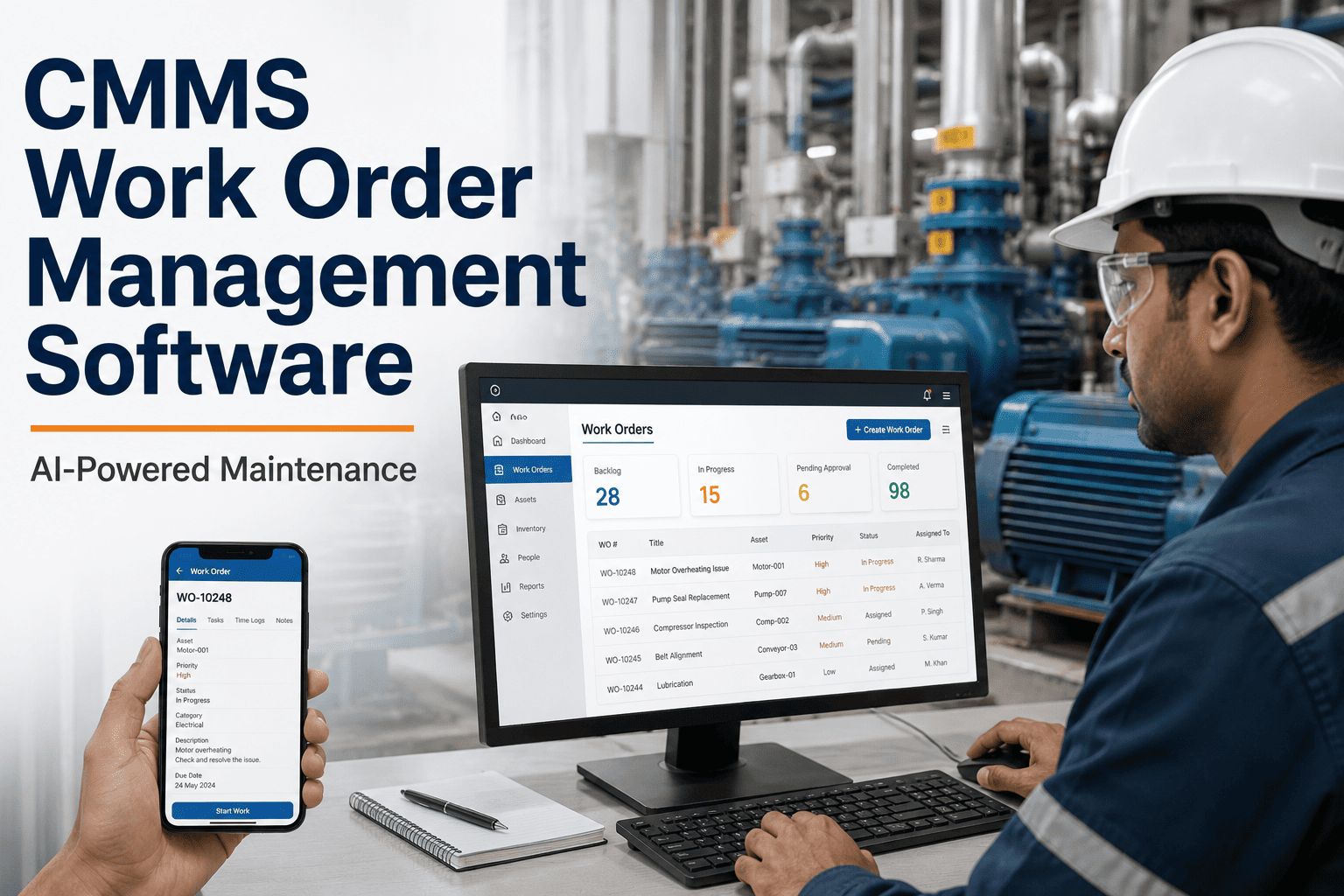
A machine learning model that predicts a bearing failure in 14 days has no value unless that prediction triggers a maintenance action within the actionable window. The final layer of any failure prediction architecture is the decision support system that translates algorithm outputs into prioritized work orders, resource assignments, and schedule adjustments. Modern predictive maintenance platforms pair model inference engines with automated workflow systems. When a failure probability score exceeds the configured threshold, the platform generates a work order in the connected CMMS, assigns the nearest available technician with the required skill set, attaches the evidence package—including annotated AI vision camera frames showing the detected defect—and updates the maintenance schedule. This closed-loop architecture is what separates theoretical predictive models from operational reliability programs that actually reduce unplanned downtime and maintenance cost per tonne. Book a Demo to see how iFactory's closed-loop architecture connects failure predictions directly to automated maintenance actions.