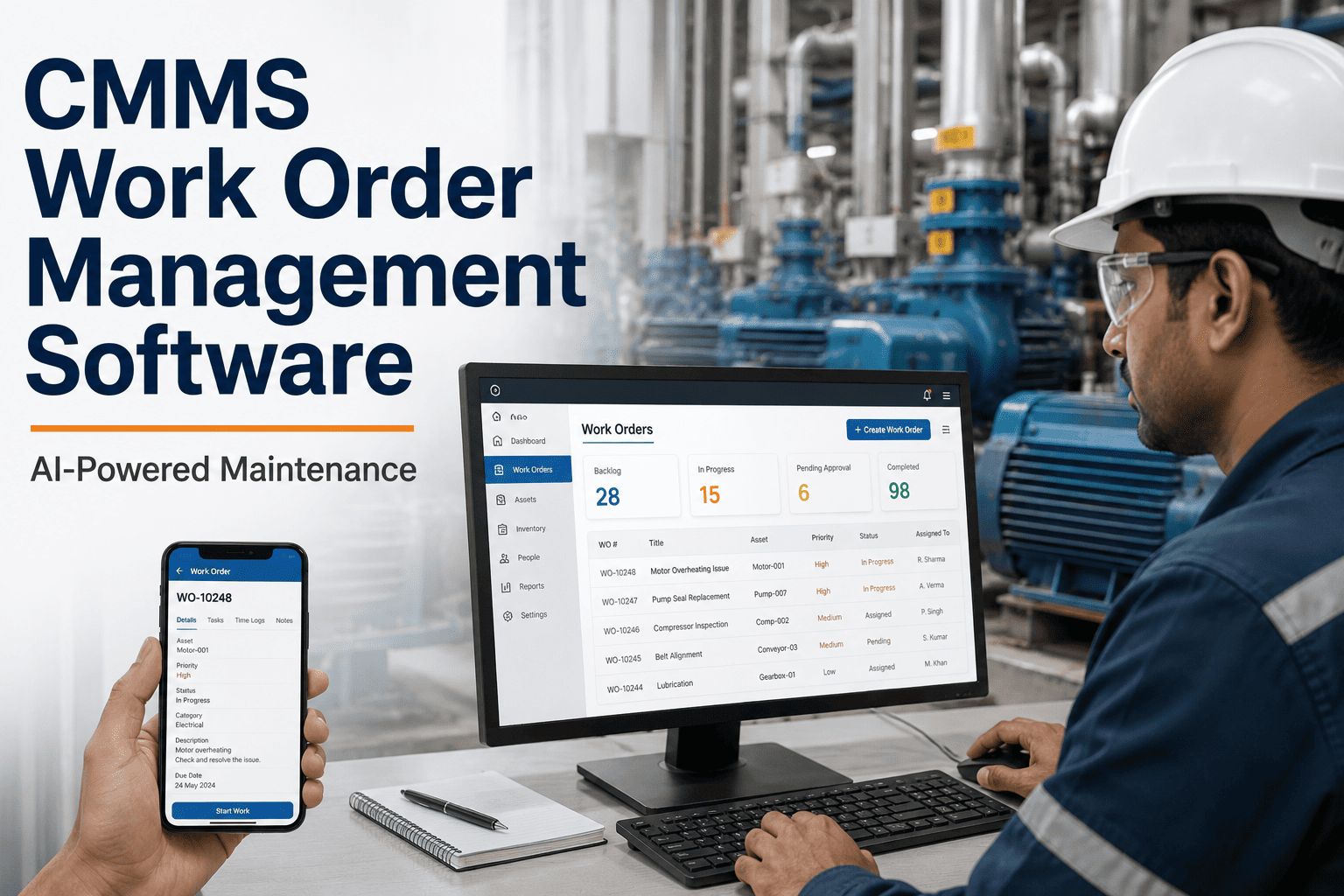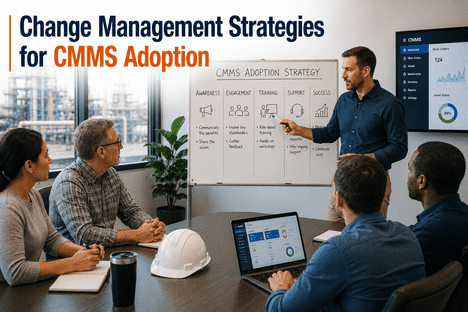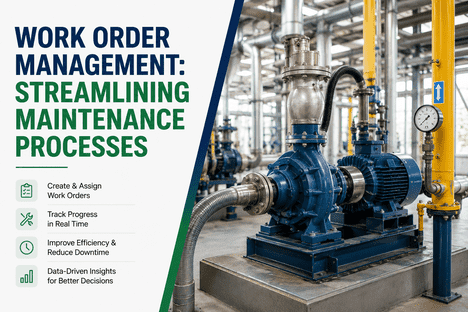
Getting a CMMS live is a technical achievement. Getting your entire maintenance team to use it consistently — entering accurate work orders, completing preventive maintenance tasks on schedule, and trusting the AI-generated alerts — is the operational achievement that determines whether the investment pays off. In 2026, the CMMS market has crossed $2.4 billion in value, yet the majority of implementations still underperform not because the software fails, but because user adoption does. iFactory is purpose-built to close that gap: an AI-powered CMMS with mobile-first interfaces, IoT-connected predictive maintenance, and digital twin simulation that maintenance teams actively want to use because it makes every shift easier. Book a Demo to see how iFactory's design-for-adoption architecture drives consistent team engagement from day one.
Turn Your Team into CMMS Champions
iFactory's AI-powered CMMS is built for the way maintenance teams actually work — mobile-first, IoT-connected, and designed to make every work order faster and smarter than the one before.
User Adoption: Encouraging Your Team to Use the CMMS
A practical guide to driving consistent CMMS adoption across maintenance technicians, supervisors, and operations managers — covering training strategies, IoT integration, AI-powered work orders, and the team engagement practices that separate 90% adoption from 30%.
The Real Reason CMMS Teams Stop Using the System After Launch
Seventy percent of digital transformation initiatives underperform, and poor user adoption is the dominant cause. Most CMMS implementations launch with enthusiasm and stall within 90 days — not because the platform lacks capability, but because adoption was treated as a training event rather than an ongoing operational strategy. When maintenance technicians perceive the CMMS as an administrative burden that adds data entry to an already demanding shift, resistance is rational. When supervisors cannot connect work order completion quality to measurable outcomes like reduced downtime or lower emergency repair costs, accountability disappears. The organizations that reach 90% active usage rates share a common characteristic: they designed the adoption strategy before they configured the software. iFactory accelerates this trajectory by building adoption incentives directly into the platform architecture — AI that auto-populates work orders, mobile interfaces that technicians can operate in under three minutes without training, and IoT-connected alerts that make the platform the most valuable tool on the shop floor. Book a Demo to see how iFactory's design reduces adoption friction while delivering predictive maintenance accuracy exceeding 94%.
Platform Feels Like Extra Work
When a CMMS requires manual sensor readings, duplicate data entry, and paper-to-digital transcription, technicians see it as workload, not support. Platforms that auto-ingest IoT data and pre-populate work orders eliminate this friction entirely.
Inadequate Role-Specific Training
Generic classroom training achieves only 15% knowledge retention. Technicians, supervisors, and managers have fundamentally different CMMS workflows — and each group needs training built around their specific daily tasks, not a single all-roles session before go-live.
No Visible Value in the First 30 Days
If a CMMS requires 6–12 months of data accumulation before delivering predictive insights, early adopters lose confidence before the system proves itself. Pre-trained AI models that detect equipment anomalies from day one create immediate, visible value that sustains engagement.
Missing Peer Champions
Management directives drive compliance but rarely drive adoption. Identifying two to three maintenance team champions who receive early platform access, deep training, and visible recognition creates a peer influence network that multiplies adoption faster than any top-down initiative.
Adoption Measured by Logins, Not Outcomes
Login frequency is a proxy metric that measures compliance, not value. Organizations that measure work order completion quality, mean time to repair, and preventive maintenance schedule adherence give teams a clear connection between CMMS behavior and operational outcomes they care about.
No Feedback Loop After Go-Live
Adoption is not a launch event — it is a continuous process. Organizations that create open feedback loops through surveys, floor-level conversations, and regular system enhancement cycles keep teams engaged long after the initial rollout energy fades.
CMMS Adoption: Traditional Approach vs. iFactory AI-Powered Platform
The gap between average adoption rates and best-in-class adoption rates comes down to platform design decisions that affect how maintenance teams experience the CMMS every single shift.
| Adoption Factor | Traditional CMMS | iFactory AI Platform | Impact |
|---|---|---|---|
| Work Order Creation | Manual data entry required each time | AI pre-populates from IoT sensor alerts | 80% less manual input |
| Time to First Value | 6–12 months of data needed | Pre-trained models active from day one | Immediate technician buy-in |
| Mobile Usability | Desktop-first, mobile as afterthought | Mobile-first, 3-minute task completion | Higher floor-level adoption |
| Training Requirement | Multi-day classroom sessions | Role-based microlearning modules | 70–90% knowledge retention |
| Active Usage Rate | ~30% industry average | 70–90% with structured adoption program | 3× improvement |
| Preventive Maintenance Compliance | 60–70% schedule adherence typical | AI-triggered PM scheduling drives 90%+ | +30 percentage points |
Seven Proven Strategies to Drive CMMS Adoption Across Your Maintenance Team
These strategies are drawn from CMMS adoption programs across manufacturing, energy, and asset-intensive industries in 2026. Each addresses a specific adoption barrier — and together they create a compounding effect where every month of high-quality CMMS use makes the next month's adoption easier. Operators who combine platform design with organizational strategy are the ones who reach and sustain 90% active usage rates. Book a Demo to see how iFactory's built-in adoption architecture accelerates each of these strategies.
Frame the CMMS Around Technician Benefits, Not Management Needs
Maintenance technicians do not care about asset management dashboards or ESG reporting. They care about whether the CMMS makes their shift easier. The adoption conversation with frontline teams should focus on automating administrative tasks to eliminate repetitive data entry, replacing paper logs and manual inspection forms with mobile digital records, and giving technicians instant access to equipment history when they arrive at a job — not on the system's reporting capabilities or leadership visibility features.
Deploy Role-Based Training with Mobile Microlearning
Technicians, maintenance supervisors, and operations managers interact with a CMMS in fundamentally different ways. A technician's primary workflow is work order intake, task completion, and parts logging. A supervisor's workflow centers on PM schedule management, team assignment, and exception handling. A manager's workflow lives in KPI dashboards and compliance reports. Each group deserves training built around their specific tasks, delivered through mobile microlearning modules that achieve 70–90% knowledge retention — compared to the 15% retention rate of traditional classroom sessions.
Identify and Empower Two to Three Team Champions
Peer influence drives CMMS adoption more effectively than management directives. Identifying two to three maintenance team members who are respected on the floor, giving them early platform access, deeper training, and a recognized role as system advocates creates a credibility network that answers floor-level questions, models correct work order behavior, and reduces help desk burden during the critical first 90 days. Champions should receive visible recognition — not just additional responsibility — to signal that CMMS expertise is valued by the organization.
Connect IoT Sensors and AI Alerts Directly to Work Orders
The single most powerful adoption driver in Industry 4.0 environments is a CMMS that automatically generates work orders from IoT sensor anomalies — eliminating manual data entry at the point where technician resistance is highest. When a vibration sensor detects bearing wear on a critical pump, iFactory generates a prioritized work order with full asset health context, recommended maintenance actions, and parts requirements pre-populated, before the technician arrives. This architecture makes the CMMS indispensable to technicians — not because they are required to use it, but because it gives them information they cannot get anywhere else.
Run a Phased Rollout — Start with Quick Wins on Priority Assets
Phased rollouts improve adoption rates by 33% compared to big-bang implementations that overwhelm teams with simultaneous complexity across all workflows and all asset classes. Starting with the highest-criticality assets — compressors, pumps, production-critical machinery — generates early failure detection events and measurable downtime avoidance within the first 30 days. These documented early wins become internal case studies that build organizational credibility and create momentum for broader deployment across the full asset portfolio.
Measure Adoption Quality Through Outcome KPIs, Not Login Counts
Login frequency tells you whether the CMMS was opened — it tells you nothing about whether it is being used well. Organizations that track work order completion quality, asset history data accuracy, preventive maintenance schedule adherence, and mean time to repair trends create accountability structures that surface coaching opportunities before poor data habits become entrenched. Sharing these KPIs with the full maintenance team — not just management — closes the feedback loop and demonstrates that CMMS data quality directly influences operational outcomes they experience every shift.
Build Continuous Feedback Loops and Recognize Adoption Wins
Adoption is not a launch event — it is an ongoing operational commitment. Organizations that run regular feedback surveys, create open forums where technicians can request feature improvements, and actively communicate system enhancements based on user input build trust that the CMMS is a living tool rather than a fixed mandate. Recognizing team members who achieve measurable maintenance improvements through CMMS use — improved asset uptime, reduced emergency call-outs, higher PM compliance — reinforces that CMMS expertise is a valued professional skill, not an administrative obligation.
How iFactory Makes CMMS Adoption Self-Reinforcing
iFactory's platform architecture is designed to reduce adoption friction at every interaction point — from the first work order a technician opens to the compliance report a manager exports at quarter-end. The following capabilities directly address the adoption barriers that derail most CMMS implementations.
| iFactory Capability | Adoption Barrier Addressed | Team Benefit |
|---|---|---|
| IoT-Triggered Work Orders | Manual data entry resistance | Technicians arrive at jobs with AI-generated context already loaded |
| Predictive Maintenance Alerts | No visible early value | Failure predictions active from day one — immediate proof of system value |
| Mobile-First Interface | Desktop-only friction on the floor | Full work order management from any mobile device in under 3 minutes |
| Digital Twin Simulation | Disconnect from equipment outcomes | Technicians see how their maintenance decisions affect real asset performance |
| Role-Based Dashboards | Information overload for frontline users | Every team member sees only what is relevant to their specific role and workflow |
| AI Vision Monitoring | Manual inspection workload | Computer vision detects anomalies automatically, reducing routine inspection burden |
| SCADA/DCS Integration | Parallel systems creating confusion | One unified platform replaces the need to check multiple systems each shift |
From Go-Live to Full Team Adoption: iFactory's 4-Week Engagement Program
iFactory's structured deployment methodology treats user adoption as a parallel workstream alongside technical integration — not an afterthought that starts after go-live. The four-week program delivers both a technically live CMMS and a maintenance team that is confident, engaged, and generating high-quality work order data from the first shift.
OT Integration and Champion Identification
iFactory connects to existing SCADA, DCS, PLC, and historian systems via OPC-UA, MQTT, and REST APIs. In parallel, two to three maintenance team champions are identified and given early platform access. Pre-trained AI models activate on priority assets and begin generating the first anomaly detections that will serve as early adoption proof points.
Role-Based Training Across All Team Levels
Mobile microlearning modules are deployed for technicians, supervisors, and operations managers — each focused on their specific CMMS workflows. Champions co-facilitate floor-level training sessions alongside iFactory specialists. First IoT-triggered work orders are reviewed with the operations team, demonstrating the AI-to-work-order pipeline that eliminates manual data entry.
Live Operations and First Early Win Documentation
The full maintenance team operates independently on iFactory for daily work orders and preventive maintenance scheduling. The first predictive alerts generate documented early win data — an avoided failure, a deferred emergency repair, a maintenance cost comparison. This evidence is shared with the full team to reinforce that the CMMS is delivering the value promised during the adoption case-building phase.
KPI Baseline, Feedback Loop, and Continuous Improvement Launch
Adoption quality KPIs are established — work order completion quality, PM schedule adherence, mean time to repair, and OEE baseline. The first formal feedback session collects technician and supervisor input on workflow improvements. Digital twin simulation and automated ESG compliance dashboards are commissioned, completing the transition from CMMS adoption program to autonomous intelligent maintenance operation.
"We had failed two CMMS implementations in five years before iFactory. Both times, the platform was technically capable — the problem was that our technicians stopped using it after 60 days because it added work instead of removing it. iFactory's IoT-connected work orders changed that completely. Within three weeks, our team was asking for more assets to be connected because the predictive alerts were catching failures before they knew to look for them. Twelve months in, our PM compliance is at 93%, our emergency repair rate dropped by 41%, and the platform has become the first thing every technician checks at the start of a shift."
What High CMMS Adoption Delivers Across Maintenance Operations
These outcomes are documented results from iFactory deployments where adoption strategy and technical implementation were executed together — not facilities where the platform was deployed and adoption was left to chance.
30–50% Downtime Reduction
Unplanned downtime eliminated through condition-based predictive maintenance on compressors, pumps, and turbines — possible only when maintenance teams actively engage with AI-generated alerts and complete recommended work orders promptly.
93%+ PM Schedule Adherence
AI-triggered preventive maintenance scheduling combined with mobile work order management drives PM completion rates from the 60–70% industry average to 90%+ — the threshold where asset lifecycle extension becomes measurable.
40–60% Less Time Gathering Data
Engineers in unified iFactory deployments recover 40–60% of the time previously spent consolidating data across disconnected SCADA, DCS, and maintenance systems — time redirected to analysis, decisions, and planned interventions.
94%+ Failure Prediction Accuracy
Pre-trained models detect compressor, pump, and turbine degradation 3–4 weeks before mechanical failure — giving maintenance teams early warning they can act on, which builds trust in the platform and sustains adoption engagement.
25% Maintenance Cost Reduction
Digital twin optimization and shift from reactive to planned maintenance interventions reduces overall maintenance spend — a financial outcome that leadership can point to as evidence the CMMS investment is delivering returns, sustaining organizational commitment to adoption.
+12–18 OEE Percentage Points
Real-time availability, performance, and quality tracking across all processing units — enabled by consistent team engagement with work order data — drives OEE improvements that translate directly to production throughput and asset utilization.
CMMS Adoption Is an Operational Strategy — and iFactory Is Built to Win It
The difference between a CMMS that transforms maintenance operations and one that becomes shelfware within six months is not technology — it is adoption. Organizations that frame adoption as a continuous operational commitment rather than a one-time training event, that measure work order quality rather than login frequency, and that choose a platform designed to make maintenance team life easier rather than more complex are the ones that reach and sustain 90% active usage. iFactory's AI-powered CMMS compresses this journey by removing the friction points that derail adoption at every stage: IoT-connected work orders that eliminate manual data entry, pre-trained predictive models that deliver value from day one, and mobile-first interfaces that technicians can master in minutes. The result is a maintenance operation where every team member — from floor technician to operations director — has both the capability and the motivation to use the CMMS as the primary intelligence layer for every maintenance decision. Book a Demo with an iFactory specialist and walk away with a clear adoption roadmap tailored to your team, your assets, and your operational priorities.
Frequently Asked Questions
Q: What is the most effective way to get maintenance technicians to use a CMMS consistently?
The most effective approach is to make the CMMS personally beneficial to technicians — not just management. This means choosing a platform that automates work order creation from IoT alerts, eliminates manual data entry, and provides mobile access that reduces paperwork. When technicians see the CMMS making their shift easier and giving them information they could not get elsewhere, adoption becomes self-reinforcing rather than mandated.
Q: How long does it take to achieve high CMMS adoption rates across a full maintenance team?
With structured change management and a purpose-built platform, most organizations reach 70–90% active usage within 90 days of go-live. The critical window is the first 30 days — if early adopters see genuine value through quick wins like avoided failures or reduced manual work, adoption momentum builds naturally. Platforms that require months of data accumulation before delivering insights lose the team before value is demonstrated.
Q: Does iFactory's CMMS integrate with existing SCADA and DCS systems without disrupting operations?
Yes — iFactory connects directly to existing SCADA, DCS, PLC, and historian systems via OPC-UA, MQTT, and REST APIs without requiring replacement of current control infrastructure. Most facilities complete integration within one to two weeks with zero operational shutdown required, and first IoT-triggered work orders begin generating within the first month of deployment.
Q: How should CMMS adoption be measured beyond simple login frequency?
True adoption quality is measured by work order completion quality, asset history data accuracy, preventive maintenance schedule adherence, mean time to repair trends, and reduction in reactive maintenance events. These outcome-based metrics directly connect CMMS behavior to operational performance that both management and maintenance teams can see and understand — creating accountability structures that sustain engagement long after go-live.
Q: What role does predictive maintenance play in driving CMMS user adoption?
Predictive maintenance is one of the most powerful adoption drivers available. When IoT sensor data automatically generates work orders with AI-recommended maintenance actions, technicians receive immediate, visible evidence that the CMMS is more capable than any manual system. iFactory's pre-trained models detect equipment degradation 3–4 weeks before failure with 94%+ accuracy — giving maintenance teams predictive intelligence that creates both urgency and confidence in the platform from the very first weeks of deployment.
Q: Can iFactory support multi-site CMMS deployments with consistent adoption across locations?
Yes — iFactory's eight AI-powered modules cover upstream, midstream, and downstream operations across multiple sites in a single unified platform. Role-based dashboards ensure each site team sees the information relevant to their specific assets and workflows, while centralized performance benchmarking lets operations leaders compare adoption quality and maintenance outcomes across facilities and identify where additional coaching or training is needed.
500+ Facilities. One Platform. Full Team Adoption in 4 Weeks.
See how iFactory's AI-powered CMMS drives technician engagement, IoT-connected predictive maintenance, and measurable downtime reduction — with a structured adoption program that gets your entire maintenance team confident and productive from the first shift.