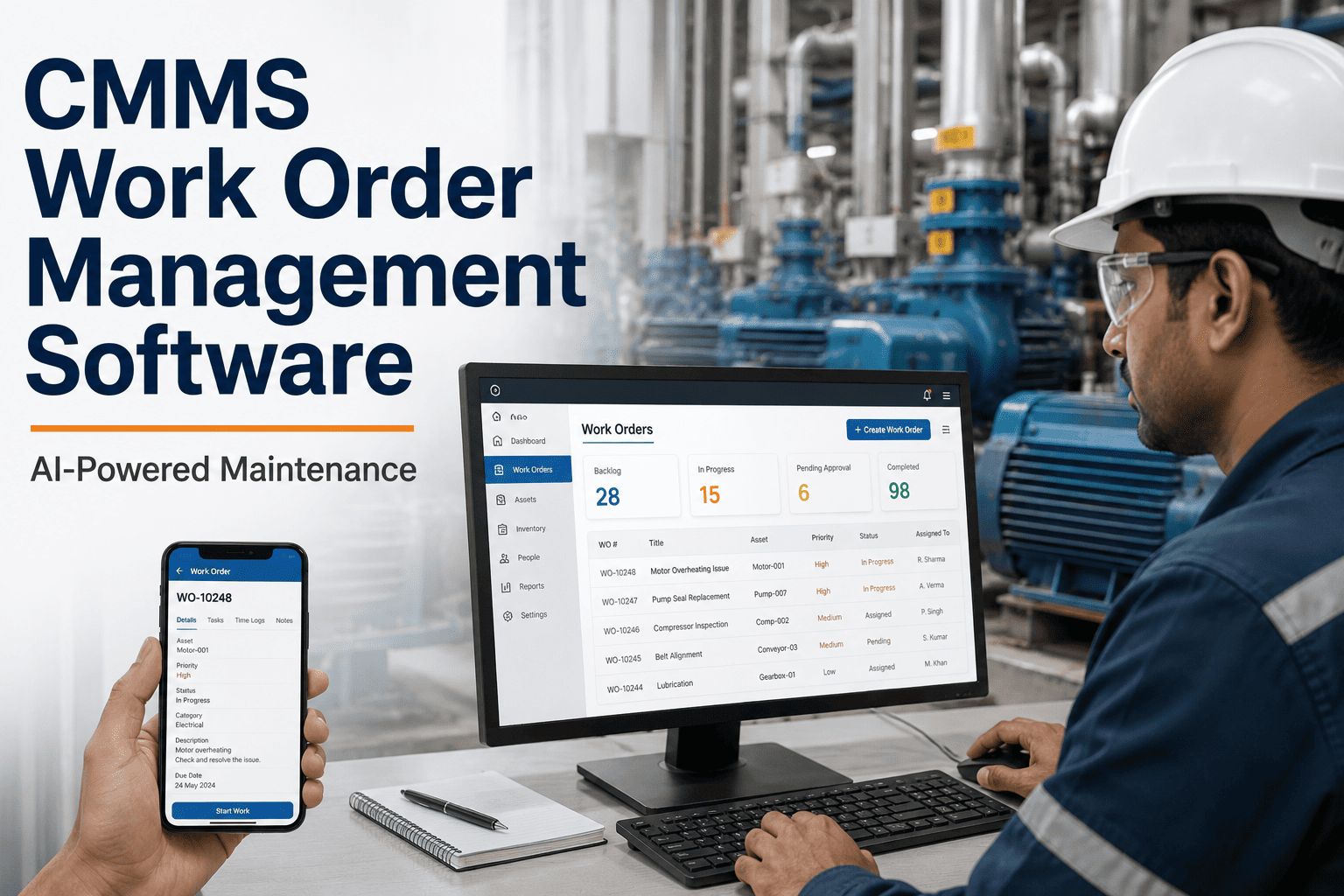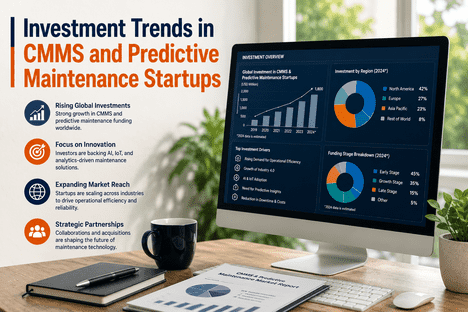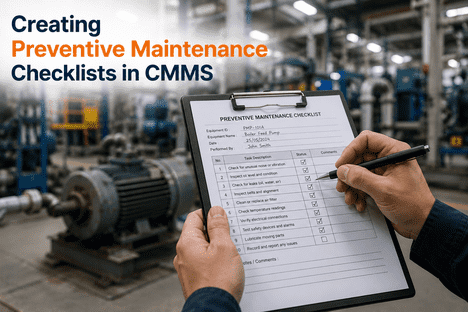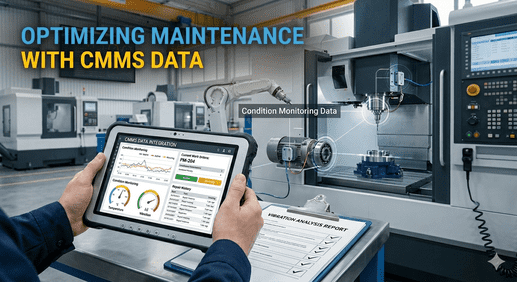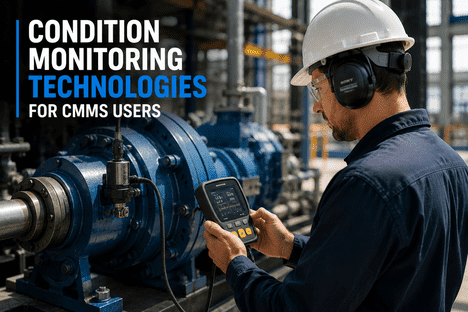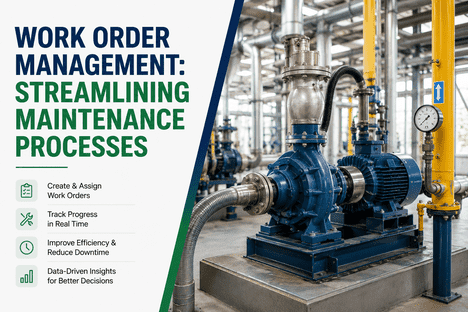
Most maintenance teams sit on a goldmine of vibration data but lack the bridge to turn it into action. Without a structured link between vibration analysis and your CMMS, critical alerts get buried in spreadsheets, work orders get created too late, and asset health degrades silently until failure. The gap between "data collected" and "action taken" is where unplanned downtime lives. iFactory bridges this gap by feeding vibration analysis insights directly into your CMMS workflow, transforming raw FFT spectra and trend data into prioritized, actionable work orders. When your condition monitoring speaks directly to your maintenance execution system, you stop chasing alarms and start managing asset reliability by exception. See how iFactory connects vibration data to your CMMS in real-time — Book a Demo.
Why Vibration Data Stays Stuck in the Silo
The Disconnect Between Condition Monitoring and Maintenance Execution
Vibration analysis is one of the most mature predictive maintenance techniques available, yet most plants still rely on manual export cycles to move data from analyzers into their CMMS. A route-based walkdown generates gigabytes of FFT data, but unless a technician manually reviews each spectrum and creates a work order, that data has zero operational value. The average time between a vibration anomaly and a corresponding work order in traditional workflows is 3 to 7 days — more than enough time for a bearing to progress from "alert" to "critical." iFactory's platform automates this pipeline by applying AI-based severity classification at the edge and pushing structured work order proposals directly into your CMMS via API, reducing the detection-to-action window to minutes.
The 5 Root Causes of CMMS-Vibration Data Disconnects
Why Your Condition Monitoring Program Isn't Closing the Loop
How Vibration-Driven CMMS Integration Reduces Operational Risk
The Financial Impact of Closing the Detection-to-Action Gap
The financial exposure of a disconnected vibration program goes far beyond repair costs. A missed bearing degradation signal on a primary cooling pump can cascade into motor rewinds, shaft repairs, and production losses that dwarf the original maintenance line item. When vibration data flows directly into your CMMS with automated priority scoring, maintenance shifts from reactive firefighting to planned interventions during scheduled windows. This reduces overtime labor, eliminates emergency shipping costs for parts, and maximizes planned downtime utilization. The table below quantifies the annualized risk reduction achievable by automating the vibration-to-work-order pipeline with iFactory's AI-powered AI Vision Camera platform.
| Failure Mode | Primary Asset Impact | Detection-to-WO Window | Annualized Cost Avoidance |
|---|---|---|---|
| Bearing Degradation | Motor or Pump Failure | 7 days → 30 minutes | $120K – $280K |
| Misalignment Drift | Coupling & Seal Wear | 5 days → 15 minutes | $60K – $150K |
| Gear Mesh Wear | Gearbox Rebuild | 10 days → 2 hours | $180K – $420K |
| Imbalance Progression | Fan / Rotor Damage | 6 days → 1 hour | $40K – $110K |
| Resonance Events | Structural Fatigue Cracking | N/A (manual detection) | $200K – $500K |
The 5-Step Framework for CMMS-Vibration Data Integration
Sustainability, Energy Management & OEE Gains
How Vibration-Driven CMMS Data Supports Broader Plant Objectives
Integrating vibration analysis data with your CMMS does more than prevent failures — it directly supports sustainability and energy efficiency goals. Equipment operating outside alignment or balance tolerances consumes 8-15% more energy than a healthy machine. By flagging these efficiency-robbing conditions as work orders, iFactory enables maintenance teams to tune equipment back to optimal efficiency before energy waste accumulates. Furthermore, planned maintenance reduces spare parts consumption and waste generation, supporting zero-waste manufacturing initiatives. Overall Equipment Effectiveness (OEE) improves as unplanned downtime drops and repair quality increases. The link between vibration data and your CMMS becomes the backbone of a measurable, auditable asset management program that aligns maintenance strategy with corporate sustainability targets.
Regulatory & Compliance Implications
Auditable Maintenance Records for Critical Assets
In regulated industries, the ability to prove that vibration data was reviewed and acted upon within a defined timeframe is increasingly required for compliance audits. Manual processes leave gaps in the audit trail — missed readings, untracked work orders, and undocumented repair rationales. iFactory's platform creates an unbroken digital thread from raw vibration measurement through AI classification to completed work order in your CMMS. Every alert, every decision threshold, and every repair action is timestamped and immutable, providing the audit-ready documentation required for ISO 55001, OSHA mechanical integrity programs, and insurance compliance reviews. This turns your condition monitoring program from a reliability tool into a compliance asset.
Frequently Asked Questions
How does vibration analysis data integrate with a CMMS?
iFactory uses API-based integration to push structured work order proposals directly into your CMMS. Each proposal includes asset ID, vibration severity score, fault type classification, and a recommended repair action. The integration supports major CMMS platforms including SAP, Maximo, UpKeep, Fiix, and Maintenance Connection.
What vibration data should be sent to the CMMS?
Only classified, actionable alerts should trigger work orders. Raw FFT spectra and time-waveform data belong in the condition monitoring platform. iFactory's AI abstracts the technical complexity and sends only severity scores, fault categories, and recommended actions — the data your maintenance team needs to execute.
Can the system work with existing vibration sensors?
Yes. iFactory is sensor-agnostic and can ingest data from any standard vibration sensor — wired or wireless, ICP or MEMS — via OPC-UA, MQTT, Modbus, or direct API. It sits as an intelligence layer above your existing sensing infrastructure.
How do you prevent false positives from flooding the CMMS?
iFactory's AI uses asset-specific baseline learning and multi-dimensional correlation (vibration + temperature + speed + load) to filter out transient events and operational noise. Only anomalies that exceed a confidence threshold and persist across multiple measurement cycles generate work order proposals.
How does the feedback loop work?
When a work order is completed, your CMMS sends the post-repair vibration baseline and the actual fault found back to iFactory. The AI model uses this data to adjust its fault classification algorithms, progressively improving detection accuracy and lead time for that specific asset type.
What is the typical ROI timeline?
Most plants achieve full payback within 6 to 9 months. ROI is driven by reduced unplanned downtime (55-70% reduction), lower emergency repair costs (30-50%), extended bearing and motor life (2-3x), and energy savings from efficiency optimization (8-15% per corrected asset).
Does iFactory replace my existing vibration analyst?
No. iFactory augments your analyst by automating data triage, priority classification, and work order creation. This frees your analyst to focus on complex fault diagnosis and system optimization rather than routine data review and administrative tasks.
Can the platform support sustainability reporting?
Yes. iFactory tracks energy waste reduction, spare parts consumption, and maintenance carbon footprint generated by each vibration-driven work order. This data feeds directly into sustainability dashboards and ESG reporting frameworks.