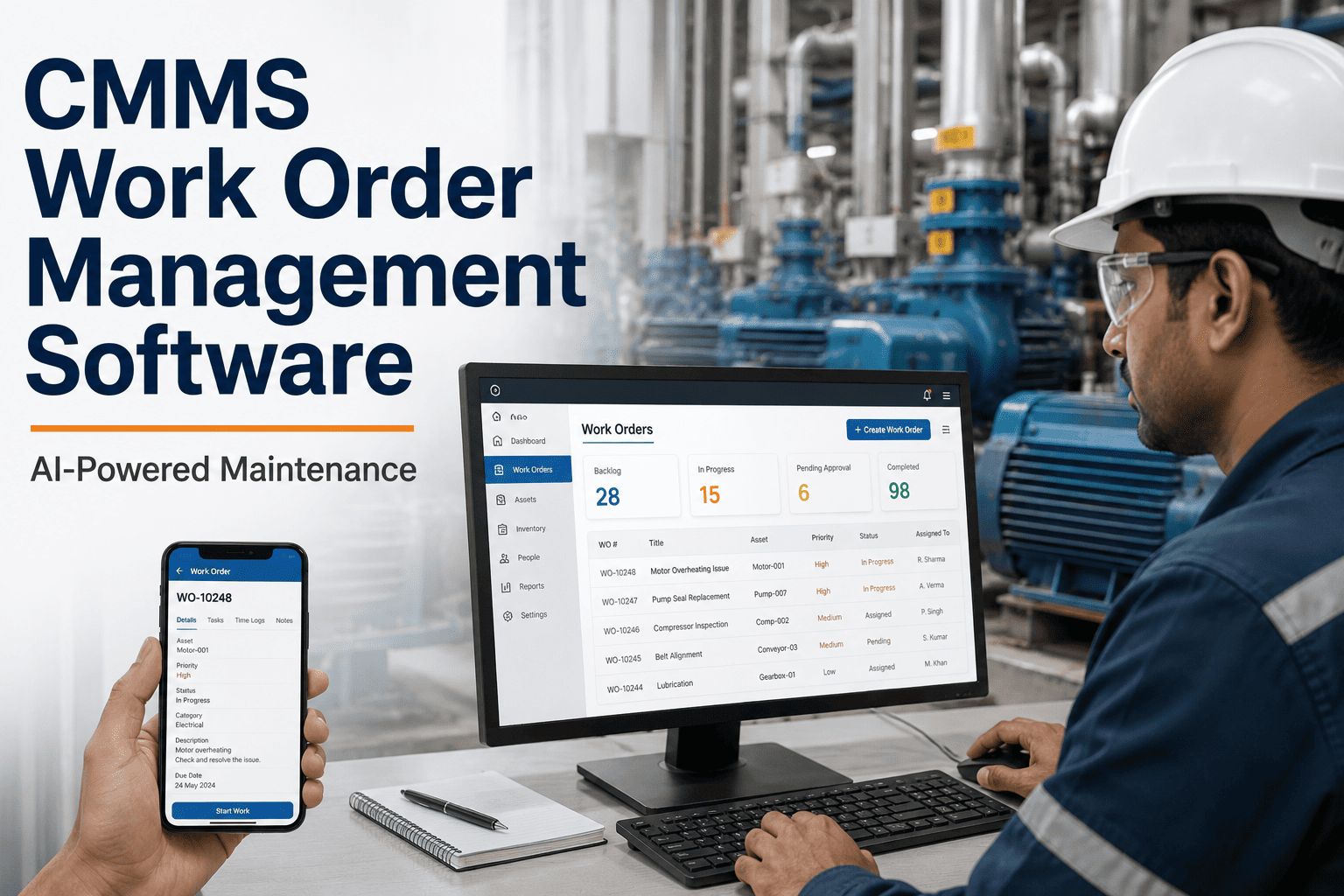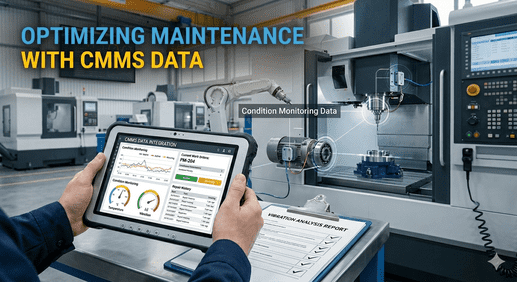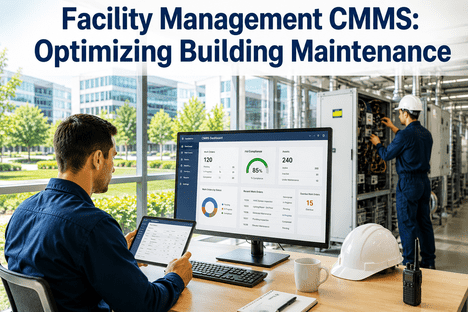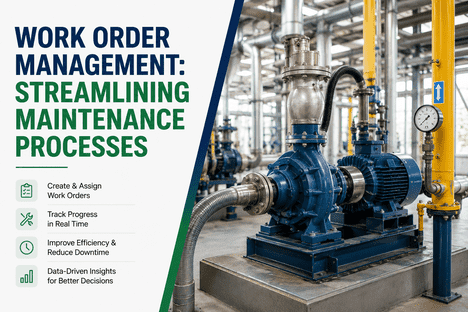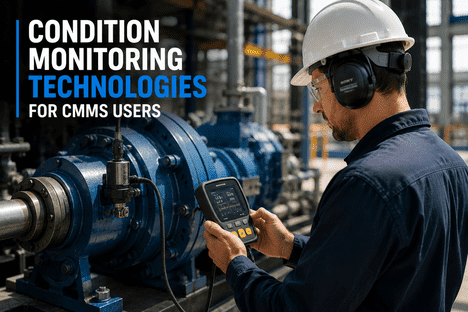
For CMMS users managing hundreds of assets across a facility, condition monitoring technologies represent the critical bridge between scheduled maintenance and true predictive intelligence. Most computerized maintenance management systems are built to manage work orders and track asset history—but without live condition data feeding into them, they remain reactive tools dressed in proactive language. In 2026, the convergence of IoT sensors, AI inference engines, and edge computing has made real-time condition monitoring not just accessible, but essential for any industrial operation serious about extending asset lifespan and eliminating unplanned downtime. If your CMMS is not receiving continuous health signals from your critical assets, you are scheduling maintenance based on assumptions—not evidence. Discover how iFactory's AI Vision Camera platform bridges this gap and transforms your CMMS into a genuinely predictive system. Book a Demo to see real-time condition intelligence in action.
What Condition Monitoring Technologies Actually Mean for CMMS Users
Beyond Scheduled PMs: The Case for Live Asset Intelligence
Condition monitoring is the practice of continuously observing the physical and operational state of machinery to detect anomalies before they cause failure. For CMMS users, this means connecting the data generated by vibration sensors, thermal cameras, ultrasonic detectors, oil analysis systems, and AI vision platforms directly into the work order and asset management workflows they already rely on. The core principle of Industry 4.0 predictive maintenance is simple: a machine tells you when it needs attention, and your CMMS acts on it automatically. Without condition monitoring, even the most sophisticated CMMS is still operating on a calendar—not a condition. The assets do not care about your PM schedule; they degrade according to load, environment, and operational stress.
The Core Condition Monitoring Technologies Integrated with Modern CMMS
A Technology-by-Technology Breakdown for Maintenance Professionals
How Condition Monitoring Data Integrates with Your CMMS Workflow
From Sensor Signal to Work Order: The Integration Architecture
The value of condition monitoring is only fully realized when the data flows seamlessly into the CMMS workflows that maintenance teams already use. The integration architecture typically operates across four layers: first, sensors and AI vision cameras capture continuous asset health signals at the edge. Second, an AI inference engine analyzes the data streams for fault patterns, anomalies, and degradation trends. Third, condition alerts are translated into structured maintenance events—with asset ID, fault description, severity level, and recommended action—that are pushed directly into the CMMS via API. Fourth, the CMMS auto-generates work orders, assigns technicians, reserves spare parts from inventory, and logs the event against the asset's maintenance history. This closed-loop process transforms the CMMS from a passive record-keeper into an active maintenance orchestration platform.
| Condition Monitoring Technology | Primary Fault Detected | CMMS Integration Trigger | Typical Lead Time Before Failure |
|---|---|---|---|
| AI Vision Camera | Surface Cracks, Leaks, Misalignment | Auto Work Order via API | Days to Weeks |
| Vibration Analysis | Bearing Wear, Imbalance, Looseness | Threshold Alert → WO Generation | 2–8 Weeks |
| Infrared Thermography | Electrical Faults, Overheating | Thermal Threshold Breach | 1–4 Weeks |
| IoT Pressure/Flow Sensors | Blockages, Leaks, Pump Degradation | Process Deviation Alert | Hours to Days |
| Oil Analysis Sensors | Internal Wear, Contamination | Particle Count Threshold | Weeks to Months |
The Business Case: Condition Monitoring ROI for CMMS-Driven Operations
Quantifying the Value of Predictive Intelligence
The financial justification for condition monitoring integration with CMMS is well-established across manufacturing, process, and heavy industries. Facilities that transition from time-based preventive maintenance to condition-based and predictive strategies consistently report reductions of 20–30% in total maintenance costs, driven primarily by the elimination of unnecessary PMs, reduction in emergency repair labor, and extended component replacement intervals. The largest ROI driver, however, is the prevention of unplanned production stoppages. In high-output manufacturing environments, a single unplanned outage on a critical asset can cost more than the entire annual budget of a condition monitoring program. iFactory's AI Vision Camera platform has demonstrated measurable reductions in mean time to detect (MTTD) asset anomalies from multi-hour manual inspection cycles to under 60 seconds of automated detection—fundamentally changing the economics of asset reliability.
5 Signs Your CMMS Needs Condition Monitoring Integration in 2026
Diagnosing the Predictive Maintenance Readiness Gap
iFactory AI Vision Camera: Condition Monitoring Built for CMMS Integration
Real-Time Visual Intelligence That Speaks Your CMMS Language
iFactory's AI Vision Camera platform is purpose-built to close the condition monitoring gap for CMMS users across manufacturing, steel, cement, automotive, and process industries. Unlike point-solution sensors that capture single parameters, the AI Vision Camera provides a comprehensive visual intelligence layer—detecting surface anomalies, thermal patterns, motion deviations, leaks, and structural changes simultaneously across an entire asset zone. The platform integrates natively with leading CMMS and EAM systems, pushing structured condition alerts as work orders with full context: asset ID, fault classification, severity score, photographic evidence, and recommended action. This eliminates the manual bridge between condition data and maintenance execution that costs most facilities 2–4 hours of engineer time per incident. Explore the full capabilities at the iFactory AI Vision Camera product page and discover what genuinely connected condition monitoring looks like.
Frequently Asked Questions
What is condition monitoring in the context of CMMS?
Condition monitoring refers to the continuous or periodic measurement of asset health parameters—vibration, temperature, visual state, pressure, and fluid quality—that feed directly into a CMMS to trigger condition-based work orders rather than relying solely on scheduled time-based PMs. It transforms the CMMS from a maintenance record system into an active predictive maintenance platform.
How does an AI Vision Camera differ from traditional vibration or temperature sensors?
Traditional sensors capture single parameters at defined points. An AI Vision Camera provides a comprehensive visual intelligence layer across an entire asset zone simultaneously—detecting surface cracks, thermal anomalies, leaks, misalignments, and positional deviations in a single deployment. It also generates photographic evidence with every alert, giving maintenance technicians immediate visual context for the work order.
Which CMMS platforms does iFactory integrate with?
iFactory integrates with all major CMMS and EAM platforms including SAP Plant Maintenance, IBM Maximo, Infor EAM, Fiix, UpKeep, and custom systems via OPC-UA, MQTT, and REST API. The integration layer is configurable to match your existing work order structure and asset register taxonomy.
What is the difference between preventive, predictive, and condition-based maintenance?
Preventive maintenance is time-based, performed at fixed intervals regardless of actual asset condition. Predictive maintenance uses data models to forecast remaining useful life and schedule intervention before failure. Condition-based maintenance triggers work orders when a specific monitored parameter crosses a defined threshold. Modern condition monitoring platforms like iFactory combine condition-based alerts with predictive AI models to give CMMS users both immediate fault detection and forward-looking failure forecasting.
How quickly can iFactory be deployed alongside an existing CMMS?
iFactory's AI Vision Camera platform is designed for rapid deployment without major infrastructure changes. Camera installation, AI model configuration, and CMMS API integration can typically be completed within days for initial asset coverage. The system begins generating condition intelligence immediately, with AI model accuracy improving continuously as it learns the specific operating signatures of your assets.
How is ROI measured for condition monitoring integrated with CMMS?
ROI is measured across four primary domains: reduction in unplanned downtime events and associated production losses (typically the largest component), reduction in total maintenance labor through elimination of unnecessary PMs, extended spare parts and component replacement intervals, and reduction in manual inspection labor. iFactory provides a structured 30-day audit that benchmarks current maintenance costs against projected savings from condition-based optimization.
Can condition monitoring work on legacy equipment without existing sensors?
Yes. iFactory's AI Vision Camera is specifically designed to deliver condition monitoring value on legacy assets without requiring sensor retrofitting. By analyzing the visual and thermal signatures of equipment externally, the platform provides meaningful fault detection on assets that would otherwise require expensive internal sensor installation or remain entirely unmonitored.
What industries benefit most from CMMS-integrated condition monitoring?
Any industry operating capital-intensive assets with high downtime costs benefits significantly. The highest-value deployments are in steel and metals manufacturing, automotive assembly, cement and mining, food and beverage processing, power generation, and petrochemical facilities. In each case, the combination of AI Vision Camera condition monitoring with CMMS work order automation produces measurable improvements in asset availability and maintenance cost efficiency.