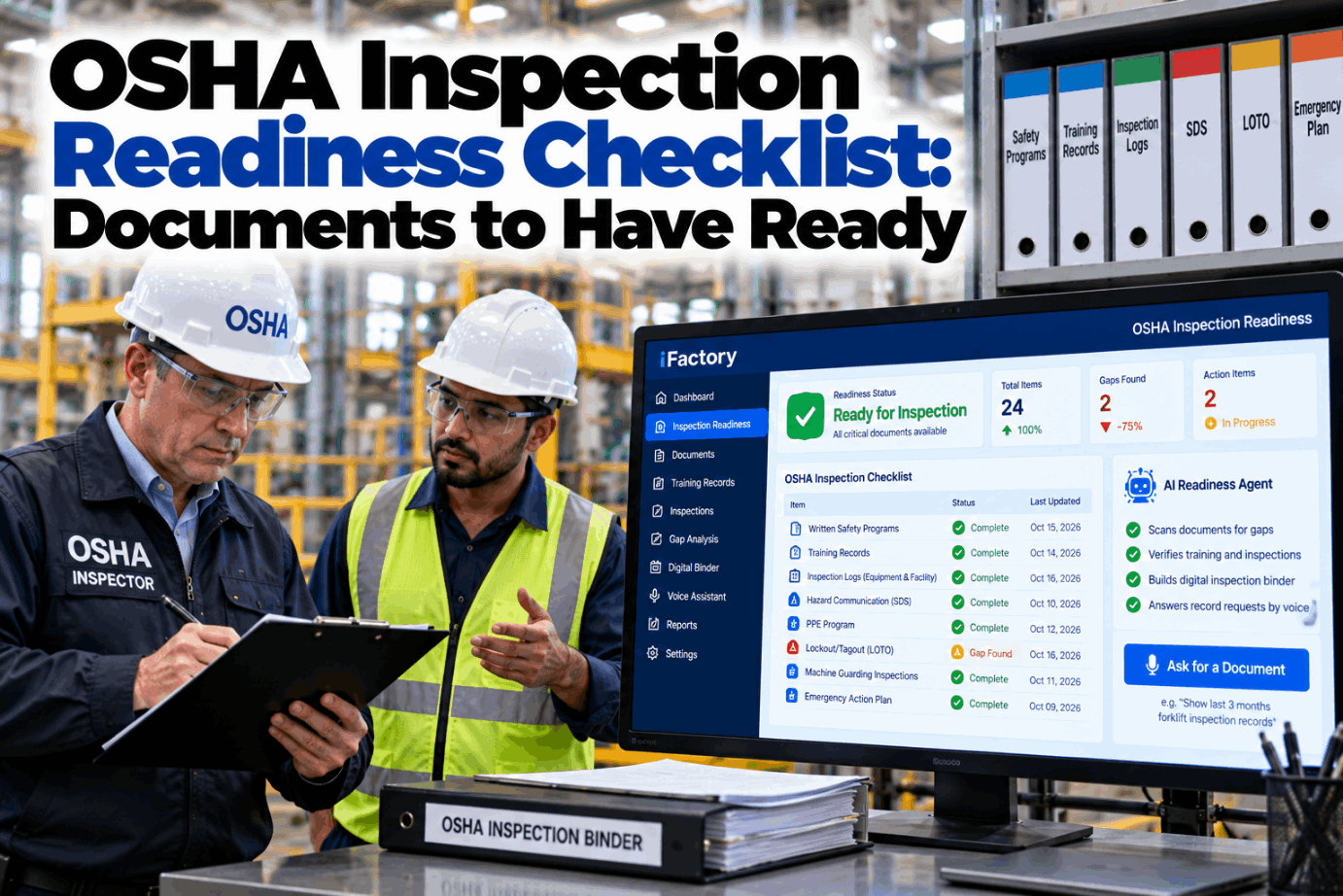
Most OSHA inspections are unannounced, and the first hour often decides how the rest of the visit goes. If the injury logs, written programs and training records come out quickly and match what the inspector sees on the floor, the visit stays focused. If people are hunting through cabinets, small gaps start to look like big ones. This checklist covers the documents to have ready, what OSHA requires in writing and how a readiness scan finds gaps first. See a digital inspection binder in a short readiness demo.
Have Every Record Ready Before the Inspector Asks
iFactory Readiness Agent scans your written programs, training and inspection records for gaps and builds a digital inspection binder. On the day, it answers record requests by voice, so nobody leaves the opening conference to search for a file.
What Happens When an Inspector Arrives
OSHA sets its inspection priorities in a fixed order: imminent danger first, then reported fatalities and severe injuries, worker complaints, referrals, targeted inspections of high-hazard industries and follow-ups. Whatever the reason, the visit follows the same pattern. Records come up early, because the compliance officer reviews injury and illness records and checks the OSHA poster. Our support team can help you write a simple arrival procedure.
Documents to Have Ready, Group by Group
Tick each item when you can put your hand on it in under five minutes. Only include programs that apply to your site, and add state plan rules where they apply. For a version loaded with your own programs, machines and people, ask for a checklist walkthrough.
Which Programs OSHA Requires in Writing
Not every OSHA program needs a written document, and inspectors know the difference. Some standards demand a written program, while others require training and records but no formal write-up. Knowing which is which keeps your binder lean. Our support team can check your programs against this list.
More than 20 states run their own OSHA-approved State Plans, and some add requirements. California, for example, requires every employer to keep a written Injury and Illness Prevention Program. Check your state plan's list before you finalise the binder.
The Recordkeeping Calendar and Who Must Submit
Most employers with more than 10 employees keep OSHA 300, 300A and 301 records, unless their industry is partially exempt. Each recordable case goes on the log within seven calendar days, and records are kept for five years after the year they cover. Some sites must also send the data to OSHA each year by March 2. See how the dates are tracked in a recordkeeping demo.
Answer Record Requests Without Leaving the Room
When an inspector asks for a record, the EHS manager asks iFactory out loud. The Readiness Agent finds the file, reads back what it found and logs exactly what was handed over.
Find the Gaps Before the Inspector Does
A compliance gap analysis compares what your programs say should exist with what the records show. Most gaps are not missing programs but missed dates: an overdue evaluation, an annual inspection nobody signed or a plan that wasn't revised after a layout change. The scan below is an illustration of the output. Our support team can run a first scan with you.
What a Citation Can Cost in 2026
OSHA did not raise its civil penalties for inflation in 2026, so the 2025 maximums still apply. These are ceilings per violation. OSHA can reduce penalties for size, good faith and history, but repeat and willful items carry minimums too. The arithmetic below uses the maximums to show how fast items add up. Talk through your exposure in a readiness session.
A Digital Inspection Binder With Eight Tabs
A binder only helps if it matches how inspectors ask. Group records the way the checklist does, keep the current year at the front and link every certificate to the person or machine it covers. The Readiness Agent rebuilds the binder each night from live records. Ask our support team for the tab list.
Four Roles for the Walkaround Inspection
Decide roles before the visit, not in the lobby. A small, calm team keeps the walkaround factual and makes sure you leave with the same record the inspector does. This is practical guidance, not legal advice. Practise an arrival drill in a readiness walkthrough.
An authorised employee representative may join the walkaround, and the inspector may interview employees in private. Tell crews in advance that they can speak freely, and never discourage it.
Sizing the Time Spent Pulling Records
Readiness work is mostly hidden time: people pulling records for inspections, customer audits, insurer visits and certification audits. The worksheet uses assumed inputs to show the arithmetic only. It leaves out penalties avoided, because nobody can predict those honestly. Build your own version with our support team.
Readiness Agent and AI Server in One Delivery
Safety records stay on your site. A pre-configured NVIDIA AI server ships racked and ready with the Readiness Agent and voice models loaded, linked to your training, maintenance and EHS records. You rack it, plug in power and Ethernet, and the AI is live. Scope it for your plant in a deployment call.
- Pre-configured NVIDIA AI server, racked and ready
- Readiness Agent with OSHA program rules loaded
- Gap scan across programs, training and inspections
- Digital inspection binder, rebuilt nightly
- Voice answers to record requests
- Recordkeeping dates and reminders
- Remote monitoring and support
Server installed, record sources linked, your programs mapped to the checklist.
Gaps listed with owners, binder built, voice requests tested with EHS.
Mock inspection drill, nightly binder refresh and reminders switched on.
Inspection-Ready Every Day, Not Just the Week Before
iFactory keeps readiness as a daily state rather than a scramble. Our support team can show it on your own records.
What Plant Managers Ask About OSHA Inspection Readiness
Know Your Gaps Before Anyone Else Does
Scan programs, training and inspection records every night, keep a digital binder ready and answer record requests by voice. iFactory is delivered turnkey and goes live in 6 to 12 weeks.