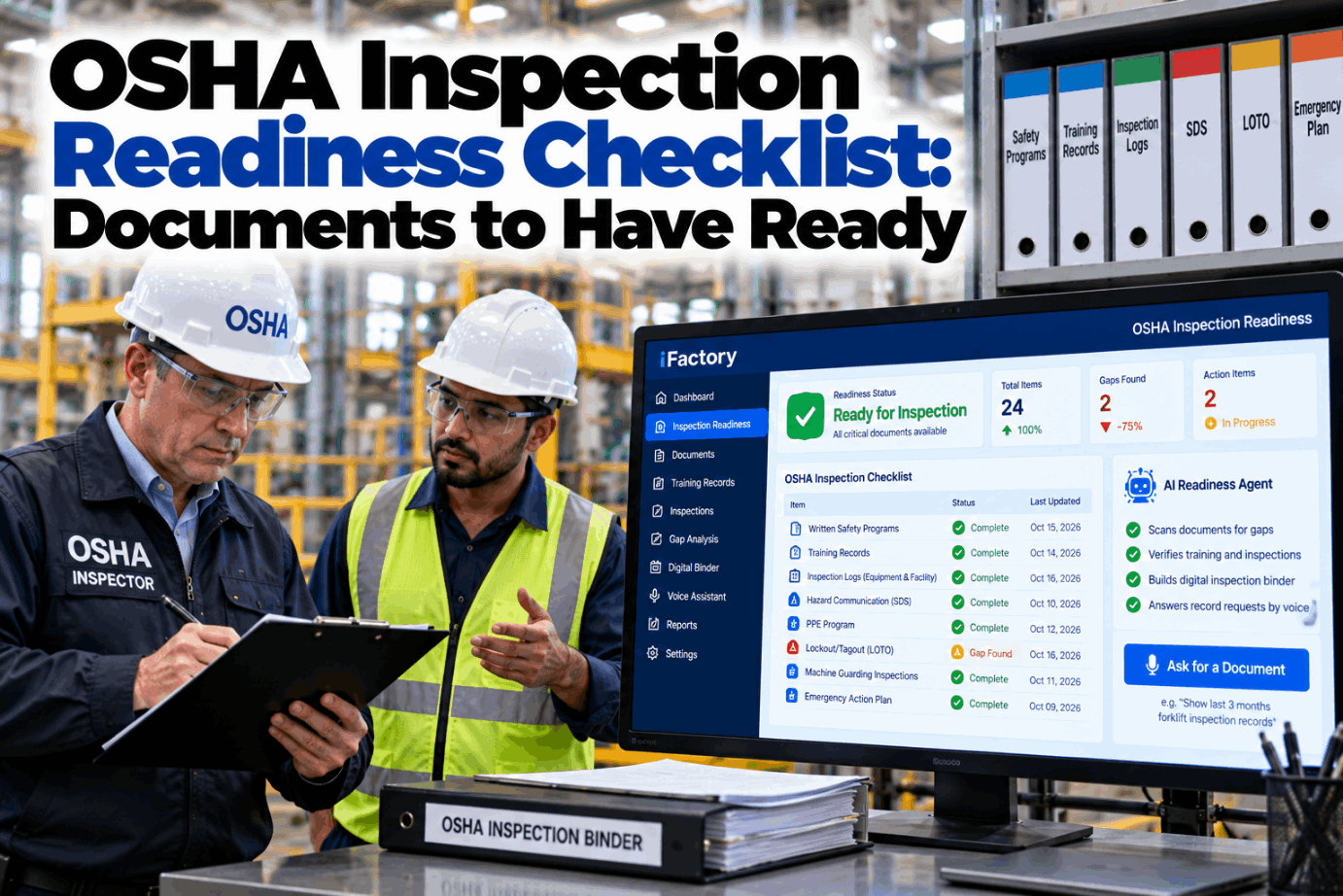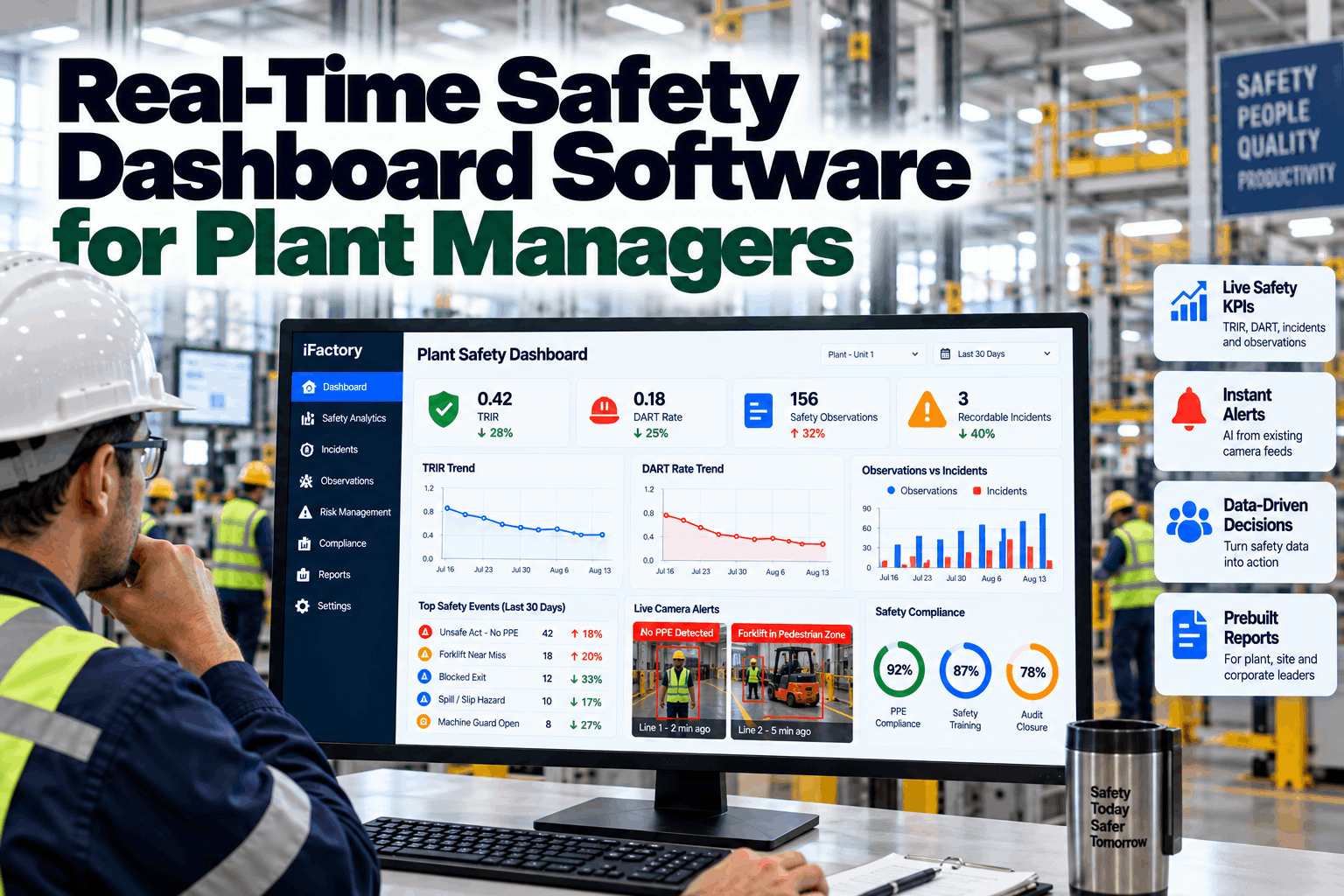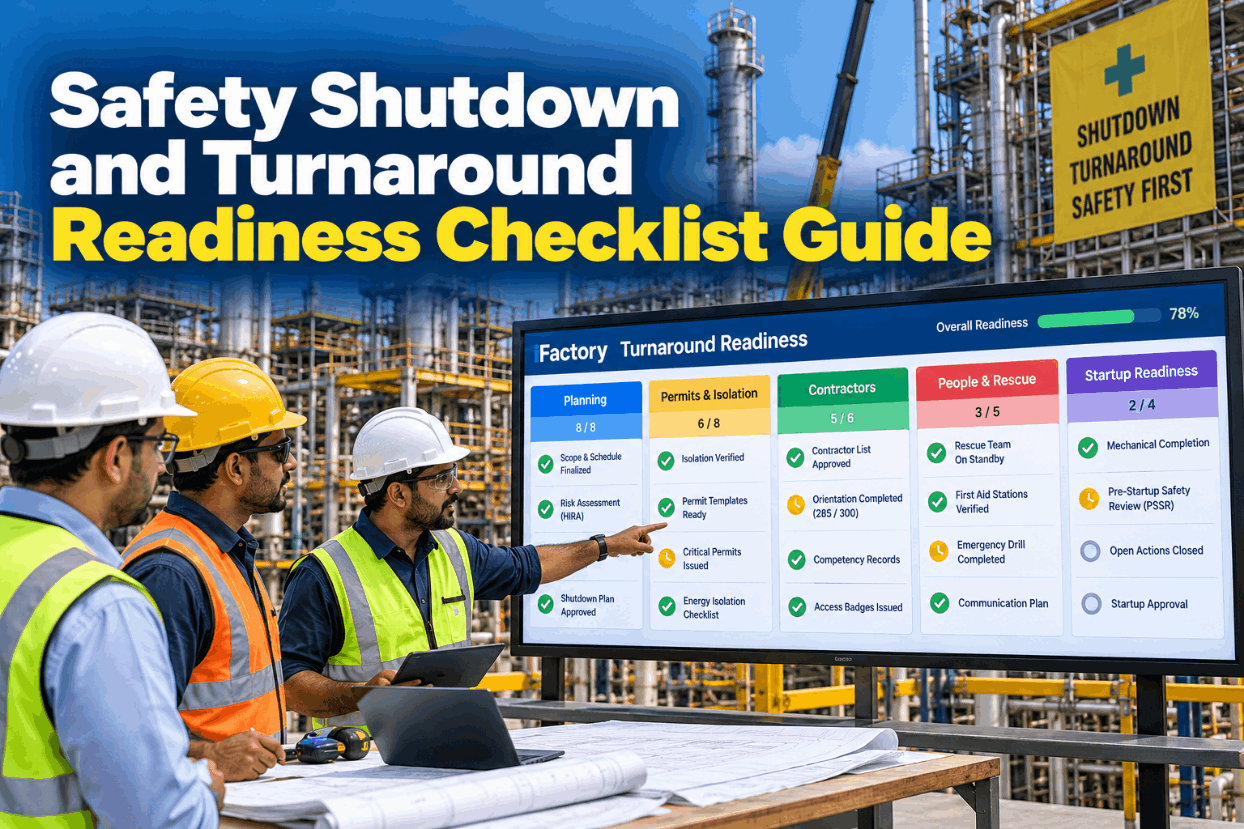
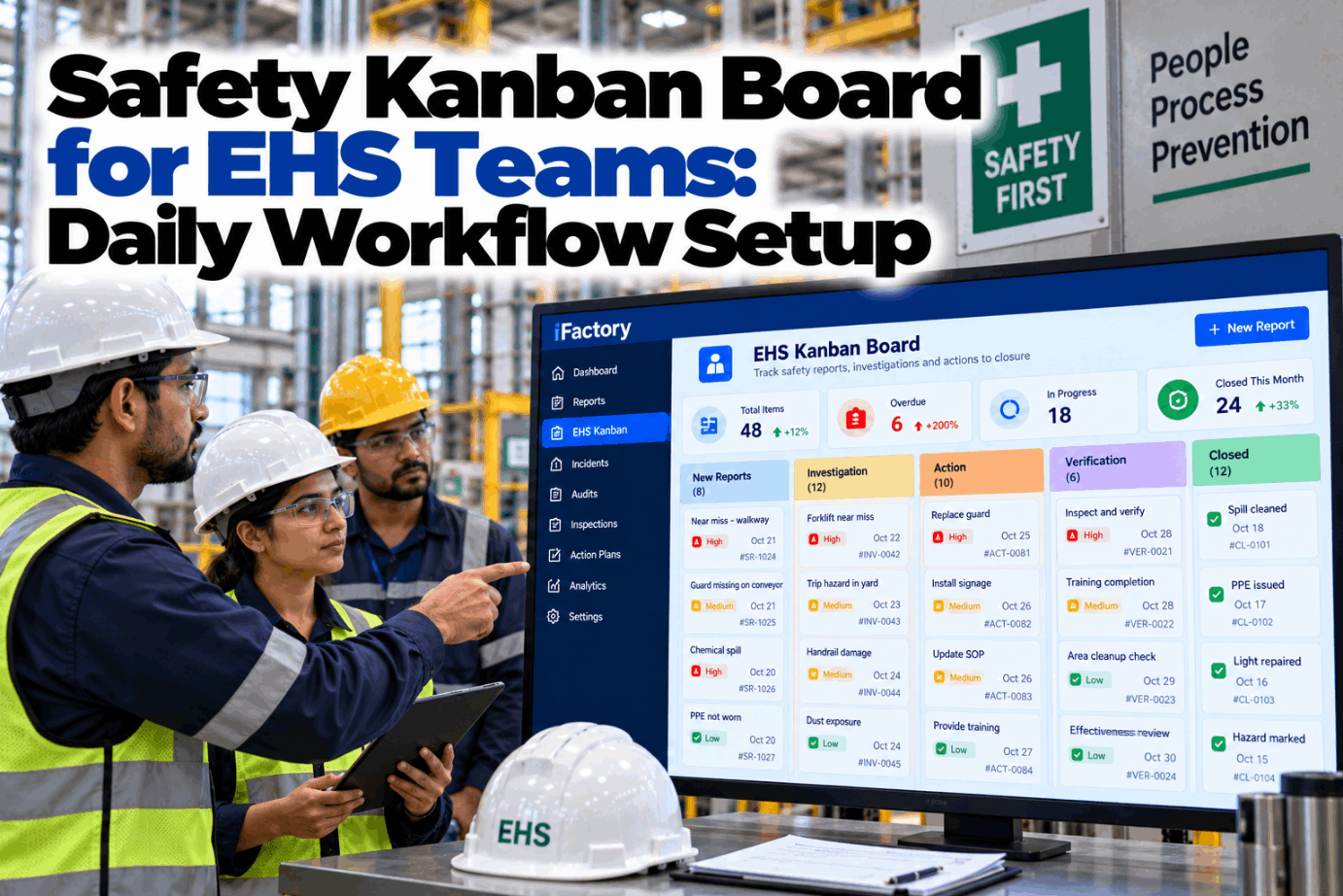
Safety Shutdown and Turnaround Readiness Checklist Guide

By James C on October 27, 2026

safety-shutdown-turnaround-readiness-checklist-guide

A turnaround packs months of maintenance into a few weeks and changes almost everything that keeps people safe: unfamiliar contract crews, permits by the dozen, isolations at points nobody touches in normal running, and crews working on top of each other. Then the unit has to restart, which is when process safety incidents are most likely. A safety turnaround readiness checklist turns all of that into items with owners, tracked until the startup gate clears. See a readiness board in a short turnaround demo.

TURNAROUND BOARD · SAFETY READINESS

Track Every Readiness Item Until Startup Is Approved

iFactory Turnaround Board puts readiness items on cards, counts contractor orientations, assigns rescue standby and holds startup behind a gate that clears only when every safety item is signed. Nobody restarts on a guess.

Unit 3 restart · safety lanesDay 18
Not ready2
Rescue drill · V‑301
PSSR walkdown · H‑2
In progress3
Contractor orientation
Isolation register
SIMOPS review
Ready4
Hot work permits
Gas monitors
Fire watch roster
Emergency drill
Startup gate9 of 14
Startup blocked5 safety items still open
SHUTDOWN SAFETY PLANNING

Four Things a Turnaround Changes Overnight

The US Chemical Safety Board, citing Center for Chemical Process Safety research, reports that process safety incidents are five times more likely during startups than in normal operation. Readiness planning starts by naming what changes, so each change gets an owner. Review your own turnaround exposure with our support team.

PeopleContract crews who don't know the site, its alarms or its muster points
PermitsHot work, entry and isolation permits issued in days instead of weeks
EnergyIsolations on equipment that has run untouched for years
ProximitySeveral crews in one area, above, below or beside each other
CONTRACTOR SURGE

PSM Contractor Duties, Split Between Host and Contractor

At PSM sites, OSHA 1910.119(h) applies to contractors doing maintenance, repair, turnaround, major renovation or specialty work on or next to a covered process. The rule splits the work. The host vets contractors, briefs them on hazards and controls who enters, while each contract employer trains its own people and documents it. At turnaround volume, the gaps hide in the hand-off. Plan your surge in a contractor readiness session.

HOST EMPLOYER · 1910.119(h)(2)
  • Weigh safety performance and programs when choosing contractors
  • Inform them of known fire, explosion and toxic release hazards
  • Explain the applicable parts of the emergency action plan
  • Control the entrance, presence and exit of contract workers
  • Evaluate contractor performance and keep an injury and illness log
CONTRACT EMPLOYER · 1910.119(h)(3)
  • Train each worker in the safe work practices for the job
  • Instruct workers on process hazards and the emergency plan
  • Record each worker's identity, training date and how understanding was checked
  • Make sure workers follow site safety rules
  • Tell the host about hazards the contract work brings or finds
Badges as the control point

A badge that only activates once orientation is logged gives the host a practical way to control entrance, presence and exit, and an accurate headcount at muster.

OUTAGE PERMITS

Permits at Turnaround Volume, Rule by Rule

A turnaround can issue a normal week's permits before the first break, and the rules don't relax with volume. The matrix sums up the OSHA basics, and your site procedure may ask for more. Line up your permit rules with our permit specialists.

Permit
OSHA basis
Must show
Closes when
Hot work
1910.252(a), and 1910.119(k) at PSM sites
Fire prevention steps in place, dates authorised, object of the work
Work ends and the fire watch, kept at least 30 minutes, signs off
Permit space entry
1910.146(f)
Space, purpose, entrants, attendant, hazards, test results, rescue service
Entry ends. Cancelled permits are kept at least one year
Energy isolation
1910.147
Equipment, energy sources, isolation points, locks applied
Each lock is removed by the person who applied it
Opening process lines
Safe work practice under 1910.119(f)(4)
Line contents, isolation, draining and venting
Line made safe, checked and handed back
RESCUE TEAM STANDBY

Confined Space Rescue Checked Before the First Entry

During a turnaround, vessels, columns and tanks are opened one after another, and each permit space needs a rescue plan that works for that space. OSHA 1910.146(k) asks the employer to evaluate and choose rescuers before anyone enters, not after a call goes out. The five steps below follow the rule. Plan standby across your entry schedule in a rescue planning call.

1
Evaluate timelinessCan the rescuer respond in time for the hazards of this space?
2
Evaluate proficiencyIs the team skilled with the rescue tasks and equipment this space needs?
3
Choose the teamOne that can reach the entrant in time and is equipped for this rescue
4
Brief on hazardsTell the team what it may face at this site
5
Give accessLet the team reach every permit space it may enter, to plan and practise
Practice and retrieval

In-house teams must practise a rescue at least once every 12 months, with at least one member current in first aid and CPR. Retrieval systems are needed for non-entry rescue unless they add risk, with a mechanical device for vertical spaces deeper than 5 feet.

Know Who Is on Rescue Standby Before the Hatch Opens

iFactory links each entry permit to its assigned rescue team, counts oriented contractors against the badge list and keeps every readiness item on one board, so the turnaround lead sees what is still open.

Unit 3 turnaround · Turnaround lead and iFactory
Turnaround leadCan we start the V-301 entry at 07:00?
iFactoryNot yet. The entry permit is drafted, but no rescue team is assigned for that shift and the gas test isn't logged.
Turnaround leadWhich team is free?
iFactoryTeam B finishes the column entry at 06:30. Assigning them needs your sign-off and a briefing on V-301 hazards.
SIMOPS

When Two Crews Share One Area

Simultaneous operations, or SIMOPS, are activities by several groups, such as operations, maintenance and contractors, in the same area at the same time. Each job may be safe alone and unsafe next to another, like draining flammables near welding. The AIChE Process Safety Beacon on SIMOPS suggests the practices below. Review overlaps on your plot plan with our support team.

Avoid by schedulingSequence work so crews don't share an area when they don't need to
Group permits by areaKeep every active permit for one area in one place, so overlaps are visible
Review interactionsWhere overlap can't be avoided, look at how the jobs and crews could affect each other
Pause during startupConsider pausing work permits as the unit restarts, until it runs smoothly
ENERGY ISOLATION REGISTER

One Register for Every Lock on the Unit

A turnaround holds many isolations at once, across shifts and crews, and OSHA 1910.147 covers each case: outside employers and the host must share lockout procedures, group work needs protection equal to a personal lock, and shift changes need an orderly transfer. One register keeps all of it in view. Get a register layout in a register walkthrough.

Isolation IDISO-U3-118
EquipmentCharge pump P-12A
Energy sourcesElectrical, process pressure, residual heat
Points and methodBreaker locked, suction and discharge valves locked, bleed open
Group lock boxBox 7, Contractor A and maintenance
Personal locks onCounted at every shift change
Shift transferOff-going and oncoming leads both sign
RemovalEach lock off by the person who applied it
SAFETY TURNAROUND READINESS CHECKLIST SOFTWARE

Turnaround Kanban: Four Columns, Clear Rules Between Them

A readiness list in a spreadsheet hides what is stuck. A turnaround kanban shows it. Each readiness item becomes a card, and it moves only when its rule is met, so "ready" means proven rather than hoped. The four columns below are a simple starting point. Set your own column rules with our board specialists.

Not ready
Owner named, work not started or blocked by something
In progress
Work under way, with a due date before the gate
Ready
Done, with evidence attached: a log, sign-off or photo
Verified
Checked by a second person, and counted toward the startup gate
PSSR BEFORE STARTUP

Four Confirmations Before Hazardous Chemicals Return

Under OSHA 1910.119(i), a pre-startup safety review is required for new facilities and for modified facilities when the change touches process safety information, before highly hazardous chemicals go back in. Process safety guidance also lists skipping a PSSR after a prolonged equipment outage as a common error, which is why it belongs on a turnaround readiness list. Plan your PSSR scope in a PSSR planning call.

Built to designConstruction and equipment match design specifications
Procedures readySafety, operating, maintenance and emergency procedures in place and adequate
Hazards reviewedPHA done for new facilities with findings resolved, MOC met for modified ones
People trainedTraining complete for every employee involved in operating the process
SAFETY TURNAROUND READINESS CHECKLIST TEMPLATE

Twenty-Four Checks Before the Startup Gate

Tick each item as it is verified. The list draws on the OSHA rules above and common practice, so add the checks your own procedures require. Ask for an editable copy from our support team.

01People and contractors6 checks
02Permits and isolation6 checks
03Rescue and emergency6 checks
04Startup and PSSR6 checks
SAFETY TURNAROUND READINESS CHECKLIST FOR PLANT MANAGERS

The Startup Gate: Blocked Until Every Safety Item Clears

The CSB's startup guidance calls for a thorough PSSR and warns against bypassing critical safety devices while troubleshooting. A startup gate turns that into a rule the board enforces. The gate stays blocked while any safety item is open, and only named people can sign it. See a gate setup in a startup gate demo.

BLOCKED IFAny one of these is still open
×A lock still on with no owner on shift
×An entry permit still open in the unit
×A PSSR item without sign-off
×A safety device left bypassed
×Operators not trained on a change
×Muster headcount not reconciled
SAFETY TURNAROUND READINESS CHECKLIST EXAMPLES

Three Readiness Calls a Board Makes Easier

These are illustrations of how a readiness board is typically used, not case studies. Your procedures and people make the call. Walk through your last turnaround with our turnaround team.

Entry with no rescue team
Card stays in not readyThe entry permit is drafted, but the rescue card for that shift is empty, so the entry waits until a team is assigned and briefed.
Crew arrives a day early
Badges wait for orientationBadges stay inactive until orientation is logged, so nobody enters a covered area unbriefed.
Lock found at restart
The gate holdsA walkdown finds a lock that is not on the register. The gate stays blocked until the owner is found and the isolation is resolved.
SAFETY TURNAROUND READINESS CHECKLIST COST AND ROI

Count the Hours Spent Chasing Status

A readiness board does not make a turnaround safe on its own, and nobody should claim it prevents a given number of incidents. What you can size is the time spent checking records and chasing status by hand. Every input below is assumed, to show the arithmetic only. Build your own case in a value review.

Contract workers in the surge300, assumed
Minutes to check one worker's training and badge by hand4, assumed
Record checks300 × 4 = 1,200 min, or 20 hours
Permits per day, and minutes chasing status on each60 and 3, assumed
Turnaround length20 days, assumed
Permit status effort60 × 3 × 20 = 3,600 min, or 60 hours

Add the value of a gate nobody can skip and a cleaner record for the next turnaround. Leave incident cost estimates out unless your own data supports them.

TURNKEY AI DEPLOYMENT

Turnaround Board, Readiness AI and NVIDIA Server in One Package

iFactory delivers the Turnaround Board as a turnkey bundle. A pre-configured NVIDIA AI server ships racked and ready with the board, readiness templates and gate logic pre-loaded, so permit and contractor data stays on site. You rack it, plug in power and Ethernet, and the AI is live. To scope it before your next turnaround, request a turnkey quote.

What's Included
  • Pre-configured NVIDIA AI server, racked and ready
  • Turnaround Board with readiness cards and owners
  • Contractor orientation and badge counts
  • Rescue standby assignments linked to entry permits
  • Isolation register with shift transfer sign-offs
  • Gated startup approval with named signers
  • 24×7 remote monitoring of the AI and hardware
Live in 6–12 weeks
Wk 1–4
Configure

Readiness templates, permit types and gate rules agreed, server racked.

Wk 5–8
Load and Rehearse

Contractor lists and permit types loaded, a past turnaround replayed on the board.

Wk 9–12
Go-Live and Training

Board live for the next outage window, leads and permit issuers trained.

HOW iFACTORY FITS

People, Permits and the Restart on One Board

iFactory keeps turnaround safety items, contractors and permits in one view, with a gate at the end that nobody can skip. Our support team can walk you through a pilot plan.

1
Readiness items as cards. Every safety item has an owner, a column and evidence.
2
Contractor orientation counts. Oriented, badged and on site, counted against the plan.
3
Rescue standby assignments. Each entry permit shows its assigned rescue team.
4
Gated startup approval. Startup stays blocked until every safety card is verified and signed.
1000+
Industrial clients running iFactory
99.9%
Platform uptime through turnaround peaks
6-12 wks
From racked server to a live readiness board
FREQUENTLY ASKED QUESTIONS

Turnaround Readiness Questions From Plant Managers

What goes on a safety turnaround readiness checklist?
People, permits and the restart. That means contractor vetting and orientation, permit rules and issuers, energy isolation, confined space rescue, SIMOPS reviews and a pre-startup safety review. Each item needs an owner, a due date before the startup gate and evidence that it is done.
Is a PSSR required after every turnaround?
OSHA 1910.119(i) requires one for new facilities and for modified facilities when the change touches process safety information. A like-for-like turnaround may fall outside that, but process safety guidance treats skipping a PSSR after a long outage as a common error, so it belongs on the list either way. We can walk through your PSSR scope.
Who is responsible for contractor training at a PSM site?
Both sides. The host informs contract employers of process hazards, explains the emergency plan and controls site access. Each contract employer trains its own workers and documents identity, date and how understanding was checked.
How early should rescue teams be confirmed?
Before the first permit space entry, and for every space on the schedule. OSHA 1910.146(k) asks for rescuers to be evaluated and chosen ahead of time, briefed on hazards and given access to plan and practise. Our support team can help map teams to your entry plan.
Does a kanban board replace our turnaround schedule?
No. The schedule plans the work. The readiness board tracks the safety conditions around it, from orientation to the startup gate, and works alongside the planning tool you already use. You can see the board on a live demo.
How do we start before our next turnaround?
Load the readiness checklist for one unit, name owners and set the gate rules. Run it through the next outage window, then review which cards stayed stuck. Book a 30-minute walkthrough to plan it with our team.

Restart When the Board Says Ready, Not Before

Put readiness items on cards, count contractor orientations, assign rescue standby and hold startup behind a gate only named people can clear. Delivered turnkey, live in 6 to 12 weeks.

Example gate review · Unit 3
ContractorsOriented and badged before entry
RescueTeam named on every entry permit
IsolationsRegister matched to field locks
PSSRSigned by the review lead
Startup approved only with every card verified

Share This Story, Choose Your Platform!