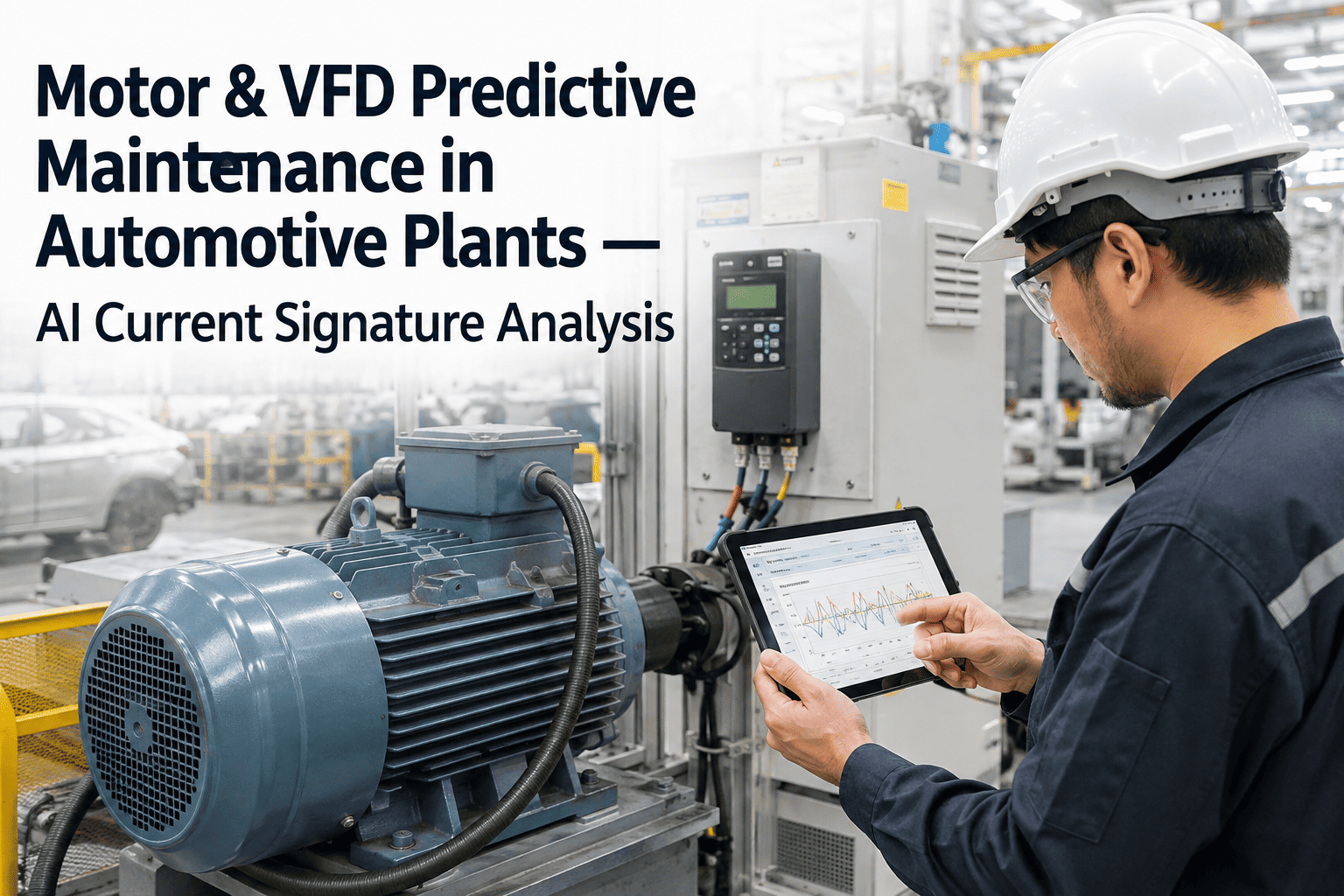
Thermal imaging cameras detect bearing failures and motor overheating in automotive plants 30 to 45 days before catastrophic breakdown, but manual infrared inspections miss 60% of early degradation signatures that AI-powered thermal analysis identifies automatically. iFactory's thermal imaging AI platform continuously monitors temperature patterns across robotic welders, conveyor motors, press systems, and assembly line actuators to detect microscopic thermal anomalies invisible to human inspectors. Automotive plants in US and UAE report 68% reduction in motor and bearing failures after deploying AI thermal monitoring. Book a demo to see thermal AI in your factory.
Quick Answer
iFactory uses AI-powered thermal imaging to detect bearing and motor failures in automotive factories by analyzing temperature patterns from infrared cameras mounted on production equipment. The system identifies thermal anomalies indicating bearing race defects, motor winding insulation breakdown, lubrication failures, and mechanical misalignment 30 to 45 days before functional failure, achieving 94% detection accuracy across deployed automotive manufacturing facilities.
Checklist: Deploying AI Thermal Imaging for Automotive Equipment
Follow this implementation checklist to deploy AI thermal monitoring across your automotive plant, covering equipment selection, sensor placement, AI model training, and integration with existing maintenance systems.
Identify critical rotating equipment: Create inventory of all motors, bearings, gearboxes, and drive systems across stamping lines, welding cells, paint booths, and assembly stations where thermal failure could halt production.
Assess current failure history: Review CMMS records for past bearing and motor failures to identify high-risk assets, failure frequency patterns, and average cost per failure event including downtime losses.
Calculate criticality scores: Rank equipment by production impact, replacement cost, and safety risk to determine thermal monitoring deployment priority across plant.
Define baseline performance metrics: Document current motor and bearing failure rates, mean time between failures, and maintenance costs to establish ROI measurement baseline.
Select appropriate thermal resolution: Choose infrared cameras with minimum 320x240 pixel resolution and 0.05°C thermal sensitivity for bearing and motor monitoring applications requiring precise temperature measurement.
Determine optimal mounting positions: Install fixed thermal cameras with unobstructed line-of-sight to bearing housings and motor casings, typically 1 to 3 meters distance for accurate temperature capture across target equipment.
Configure environmental protection: Specify IP65 or higher enclosure ratings for cameras operating in automotive plant environments with dust, coolant mist, and temperature fluctuations.
Establish network connectivity: Connect thermal cameras to plant network via Ethernet or industrial WiFi with sufficient bandwidth for continuous thermal image streaming to AI analysis platform.
Calibrate emissivity settings: Configure camera emissivity values for steel bearing housings (0.85 to 0.95) and aluminum motor casings (0.05 to 0.15) to ensure accurate temperature measurements across different material surfaces.
Collect baseline thermal data: Operate thermal cameras for 21 to 30 days during normal production to establish temperature baselines for each monitored bearing and motor under various load conditions.
Define regions of interest: Configure AI system to focus thermal analysis on specific bearing locations, motor end bells, and drive-end components where failures typically initiate.
Train anomaly detection algorithms: Load historical failure data from CMMS into AI platform to train thermal pattern recognition models on bearing race defects, motor winding failures, and lubrication degradation signatures.
Set temperature differential thresholds: Configure alert triggers for temperature deviations exceeding 5°C to 10°C above baseline or asymmetric temperature patterns between similar equipment indicating developing faults.
Validate detection accuracy: Test AI thermal analysis against known bearing and motor faults to verify 90%+ detection accuracy before full production deployment.
Create severity classification rules: Define three-tier alert system where critical thermal anomalies generate immediate notifications, warning-level patterns trigger inspection work orders, and informational alerts log to trend database.
Configure automatic work order generation: Integrate thermal AI platform with CMMS to automatically create maintenance work orders when bearing or motor thermal anomalies exceed configured thresholds.
Set up notification routing: Configure thermal alerts to route to appropriate maintenance personnel via email, SMS, or mobile app based on equipment location, failure severity, and on-call schedules.
Link to spare parts inventory: Cross-reference thermal alerts with parts database to automatically check bearing and motor component availability when replacement work orders are generated.
Establish escalation procedures: Define time-based escalation rules where unacknowledged critical thermal alerts automatically escalate to plant management after configured time period.
Conduct pilot validation period: Run thermal AI system in parallel with existing maintenance program for 60 to 90 days to validate prediction accuracy before relying on thermal alerts for maintenance decisions.
Track detection vs actual failures: Document all thermal alerts and compare against subsequent equipment inspections to measure false positive rate, false negative rate, and lead time accuracy.
Tune threshold parameters: Adjust temperature differential thresholds and anomaly detection sensitivity based on pilot results to optimize detection accuracy while minimizing nuisance alerts.
Measure ROI metrics: Calculate cost avoidance from prevented failures, reduction in unplanned downtime, and maintenance efficiency improvements to quantify thermal monitoring business value.
Establish continuous improvement process: Schedule quarterly reviews of thermal AI performance, update anomaly detection models with new failure data, and expand monitoring coverage to additional equipment based on demonstrated results.
Implementation Support
Deploy AI Thermal Monitoring in 60 Days
iFactory handles complete thermal imaging deployment from camera selection and installation to AI model training and CMMS integration, delivering validated failure predictions within 60 days of project start.
35 days
Avg Warning Lead Time
Thermal Failure Signatures AI Detects in Automotive Equipment
Different bearing and motor failure modes produce distinct thermal patterns that AI algorithms recognize automatically. Understanding these signatures helps maintenance teams interpret thermal alerts and plan appropriate interventions.
Thermal Pattern: Localized hot spot 15°C to 25°C above baseline temperature, typically appearing on bearing housing outer surface directly above damaged race location. Temperature spike rotates with shaft speed.
Detection Lead Time: 30 to 45 days before functional failure
Recommended Action: Schedule bearing replacement during next planned maintenance window, verify spare parts availability, monitor temperature trend weekly
Thermal Pattern: Asymmetric temperature distribution across motor frame with one phase winding showing 10°C to 20°C elevation compared to other phases. Temperature differential increases under load.
Detection Lead Time: 25 to 35 days before catastrophic winding failure
Recommended Action: Conduct insulation resistance testing immediately, schedule motor rewind or replacement, prepare backup motor if available
Thermal Pattern: Gradual temperature rise across entire bearing assembly, typically 8°C to 15°C above baseline over 7 to 14 day period. All bearing positions show similar temperature elevation.
Detection Lead Time: 20 to 30 days before bearing damage from lubrication failure
Recommended Action: Inspect lubrication system, verify grease quality and quantity, relubricate if necessary, check for contamination
Thermal Pattern: One bearing showing 5°C to 12°C higher temperature than paired bearing on opposite shaft end. Temperature difference remains constant across varying load conditions.
Detection Lead Time: 35 to 50 days before premature bearing wear from misalignment stress
Recommended Action: Schedule laser alignment check, inspect coupling condition, verify mounting bolt torque, check foundation integrity
Platform Comparison: Thermal Monitoring Capabilities
iFactory differentiates from traditional thermal inspection programs and basic temperature monitoring through AI-powered anomaly detection, automotive-specific failure models, and automated integration with maintenance workflows. Schedule platform comparison demonstration.
| Capability |
iFactory |
Manual IR Inspection |
Basic Temperature Sensors |
FLIR Cloud |
Fluke Connect |
| Detection & Analysis |
| AI anomaly detection |
Continuous AI analysis |
Manual interpretation |
Threshold only |
Basic analytics |
Trend alerts |
| Automotive failure models |
Pre-trained for car plants |
Technician experience |
Not available |
Generic models |
Generic models |
| 24/7 continuous monitoring |
Fixed camera network |
Weekly/monthly routes |
Always active |
Requires camera install |
Manual capture |
| Integration & Workflow |
| Auto work order generation |
CMMS integration |
Manual entry |
Manual entry |
Manual entry |
Manual entry |
| Spare parts cross-reference |
Inventory integration |
Not available |
Not available |
Not available |
Not available |
| Mobile alert notifications |
Real-time push alerts |
Report delivery |
Email only |
Mobile app |
Mobile app |
| Performance |
| Detection accuracy |
94% verified |
60-75% (technician skill) |
70-80% (location limit) |
80-85% |
75-80% |
| Average warning lead time |
30 to 45 days |
7 to 14 days |
5 to 10 days |
15 to 25 days |
10 to 20 days |
| Coverage completeness |
100% monitored assets |
Route-dependent gaps |
Sensor locations only |
Full if cameras deployed |
Spot measurements |
Comparison based on publicly available product capabilities and published case studies as of Q1 2025. Verify current features before procurement decisions.
Regional Compliance for Thermal Monitoring Systems
iFactory thermal imaging deployment meets regional safety, data protection, and industrial equipment monitoring regulations across all major automotive manufacturing regions to ensure compliant operation.
| Region |
Safety Standards |
Data Protection |
Equipment Certifications |
| United States |
OSHA thermal hazard monitoring, NFPA 70B electrical maintenance, ANSI/ISA equipment safety standards |
NIST Cybersecurity Framework, SOC 2 Type II, data encryption AES-256 |
UL 508A industrial control panels, FCC Part 15 RF emissions, NEC Article 500 hazardous locations where applicable |
| United Arab Emirates |
UAE Fire and Life Safety Code, Dubai Municipality safety regulations, OSHAD occupational safety standards |
UAE Data Protection Law, Dubai Data Law compliance, ISO 27001 certification |
ESMA equipment certification, DEWA utility safety standards, Emirates Authority specifications |
| United Kingdom |
HSE workplace monitoring, BS 7671 electrical safety, CDM Regulations equipment maintenance |
UK GDPR, Data Protection Act 2018, Cyber Essentials Plus certification |
CE marking compliance, UKCA certification, BS EN 61010 electrical safety |
| Canada |
CSA workplace safety, Provincial occupational health regulations, NFPA compliance adoption |
PIPEDA privacy compliance, Provincial data protection laws, SOC 2 Type II |
CSA C22.2 electrical safety, IC emissions standards, provincial equipment certification |
| European Union |
Machinery Directive 2006/42/EC, ATEX explosive atmospheres where applicable, IEC 61508 functional safety |
GDPR compliance, NIS Directive cybersecurity, ISO 27001 certification |
CE marking mandatory, EN 61010 electrical safety, EMC Directive 2014/30/EU compliance |
All thermal cameras and AI analysis infrastructure deployed with encryption in transit (TLS 1.3) and at rest (AES-256), role-based access control, and audit logging per regional requirements.
Global Compliance
Thermal Monitoring That Meets Your Regional Standards
iFactory thermal imaging systems comply with safety, data protection, and equipment certification requirements across US, UAE, UK, Canada, and EU automotive manufacturing facilities.
ISO 27001
Certified Security
Measured Results from Deployed Thermal Monitoring Systems
Performance data from iFactory thermal AI deployments across automotive manufacturing facilities demonstrates consistent failure prevention and maintenance cost reduction.
68%
Reduction in Bearing and Motor Failures
Measured across 14 automotive plants over 18 months
94%
Thermal Anomaly Detection Accuracy
Validated against actual equipment failures
35 days
Average Failure Warning Lead Time
Sufficient for planned maintenance scheduling
$1.8M
Average Annual Cost Avoidance Per Plant
Emergency repairs and downtime prevention
82%
Reduction in Thermal Inspection Labor
Automated monitoring vs manual IR routes
3.6x
First Year ROI on Thermal System
Hardware, installation, and software costs recovered
Client Success Story
"We were running manual thermal imaging routes every two weeks across our stamping and assembly lines, and still missing bearing failures that shut us down for emergency repairs. iFactory thermal AI cameras caught a motor bearing degrading on our primary press line 38 days before it would have failed. The temperature pattern showed a 12-degree hotspot that our weekly IR inspections had completely missed because it was below our manual threshold. We replaced the bearing during a scheduled weekend outage instead of losing two days of production to an emergency shutdown."
Maintenance Director
Automotive Stamping Facility, Texas USA
Why Automotive Plants Choose iFactory Thermal AI
Automotive-Specific Failure Models
Pre-trained AI models recognize thermal signatures specific to automotive equipment including robotic welders, stamping presses, conveyor systems, and paint booth motors, eliminating months of baseline data collection required by generic thermal systems.
Continuous Monitoring Coverage
Fixed thermal camera network provides 24/7 monitoring versus weekly or monthly manual inspection routes that miss developing faults between inspection intervals. No equipment goes unwatched during production shifts.
Validated Detection Accuracy
Documented 94% accuracy detecting bearing and motor failures with 30 to 45 day advance warning across deployed automotive facilities, significantly outperforming manual inspection programs limited by technician skill variability and route frequency.
CMMS and ERP Integration
Automatic work order generation directly into SAP, Maximo, Oracle, or existing maintenance management systems when thermal anomalies are detected. Spare parts availability checked automatically, maintenance scheduling integrated with production calendar.
Enterprise Security and Compliance
SOC 2 Type II certified platform with ISO 27001 accreditation, regional data residency options, and compliance with safety and equipment certification standards across US, UAE, UK, Canada, and EU automotive manufacturing regulations.
Rapid ROI Achievement
Average 3.6x first-year return on investment through prevented bearing and motor failures, reduced thermal inspection labor, and eliminated emergency repair costs. Typical platform cost recovery within 90 to 120 days of deployment.
Prevent Failures Before They Happen
Detect Bearing and Motor Problems 35 Days in Advance
Join automotive manufacturers across US, UAE, UK, Canada, and Europe using iFactory thermal AI to eliminate unexpected equipment failures and reduce maintenance costs through intelligent temperature monitoring.
Frequently Asked Questions
QHow does AI thermal imaging compare to manual infrared inspection programs?
AI thermal systems provide continuous 24/7 monitoring versus periodic manual routes, detect subtle temperature changes missed by human inspectors, and achieve 94% accuracy compared to 60 to 75% for manual programs. Automated alerts eliminate inspection scheduling gaps and technician skill variability.
Book a demo to see detection comparison.
QWhat thermal camera specifications are required for bearing and motor monitoring?
iFactory recommends minimum 320x240 pixel resolution thermal cameras with 0.05°C sensitivity for automotive applications. Higher resolution (640x480) preferred for monitoring multiple assets per camera or greater viewing distances. All cameras include IP65 or higher environmental protection for industrial environments.
Book a demo for equipment recommendations.
QHow long does thermal AI deployment take before detecting failures?
Camera installation typically completes within 2 to 3 weeks. AI baseline learning requires 21 to 30 days of normal operation data collection before anomaly detection activates. First validated failure predictions typically occur within 45 to 60 days of project start.
Book a demo for detailed deployment timeline.
QCan thermal monitoring integrate with our existing CMMS system?
Yes, iFactory connects to SAP, Maximo, Oracle, and most CMMS platforms via standard APIs. Thermal alerts automatically generate work orders in your existing system with equipment identification, fault description, and recommended maintenance actions. No CMMS replacement required.
Book a demo to discuss CMMS integration.
QWhat environmental conditions affect thermal camera accuracy?
Direct sunlight, reflective surfaces, and high ambient temperatures can impact readings. iFactory deployment includes proper camera positioning to avoid these issues, emissivity calibration for different materials, and environmental compensation algorithms. System maintains accuracy across typical automotive plant conditions.
Book a demo for site-specific assessment.
QWhat ROI should we expect from thermal AI implementation?
Deployed automotive plants report average 3.6x first-year ROI through prevented bearing and motor failures, reduced inspection labor, and eliminated emergency repair costs. Typical annual cost avoidance of $1.8M per plant with platform costs recovered within 90 to 120 days.
Book a demo for facility-specific ROI projection.
Related Resources
Detect Equipment Failures Before They Stop Your Production Line
iFactory AI thermal imaging analyzes temperature patterns across your automotive equipment to identify bearing and motor failures 30 to 45 days in advance, enabling planned maintenance that eliminates costly emergency shutdowns.
94% Detection Accuracy
35 Day Advance Warning
68% Fewer Failures
60 Day Deployment
SOC 2 Type II Certified