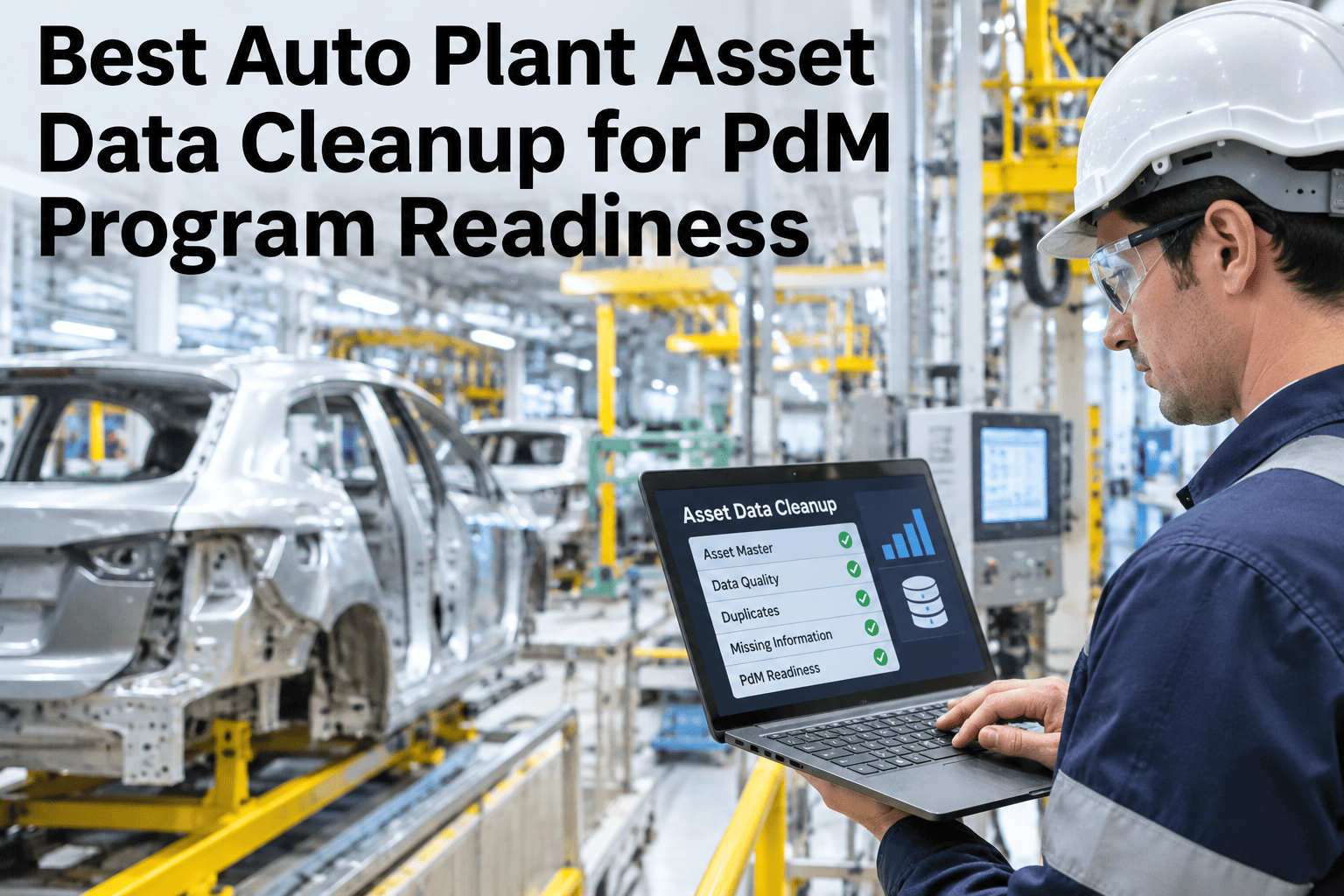
A predictive maintenance model is only as trustworthy as the data feeding it, and in most plants that data passes through several hands — OT engineers, maintenance technicians, IT, and sometimes a vendor — with no single person actually accountable when a sensor feed goes stale or a tag gets renamed without notice. Governance is what assigns that accountability before a bad data quarter quietly erodes trust in the whole program. Auto OEM IT directors scoping this for their own plant can review a data ownership model against their current PdM setup with iFactory AI.
Nobody Notices a Broken Sensor Feed Until the Model's Predictions Go Wrong
iFactory AI helps assign clear data ownership, set data-quality SLAs, and build change-control patterns so PdM data stays trustworthy as plants, tags and systems evolve.
Who Actually Owns Each Piece of PdM Data Today?
Ask five people in a typical plant who owns the vibration sensor feed on a specific conveyor, and you will often get five different answers — or none at all. Governance starts by making that ownership explicit, not assumed.
| Data type | Typical owner | Common gap |
|---|---|---|
| Sensor/tag data | OT engineering | No one notified when a tag is renamed or moved |
| Work order history | Maintenance | Inconsistent logging quality across shifts |
| Asset hierarchy | Reliability/engineering | Out of date after equipment changes |
| Integration pipeline | IT | No clear owner once initial setup is done |
Three Pieces Every Governance Model Needs
Find Out Where Your Own Data Ownership Is Actually Unclear
Walk through your current PdM data sources to find which ones have no clear owner today.
What a Data-Quality SLA Should Actually Specify
A Composite Scenario: The Model That Quietly Went Blind
A plant's conveyor PdM model had been running reliably for months, until a routine PLC firmware update silently renamed several sensor tags. Nobody in IT or OT had been designated to catch this kind of change, so the model kept running against stale or missing data for weeks before anyone noticed predictions had become unreliable. Assigning explicit tag-change notification responsibility to OT engineering, with IT confirming the pipeline still mapped correctly after any change, closed that gap going forward — a governance pattern iFactory AI's team can help design around your own change management process.
Why This Matters More as a PdM Program Scales
A single-plant pilot can survive informal ownership because a small team notices problems quickly. Once a program spans multiple plants, informal ownership stops working — a tag change at one plant that goes unnoticed for weeks is a very different risk than the same gap at a pilot site someone is watching closely every day.
Frequently Asked Questions
Make Sure Someone Actually Owns Every Piece of Your PdM Data
iFactory AI helps assign ownership, set data-quality SLAs and build change control that keeps PdM trustworthy over time. Book a walkthrough with your own setup.