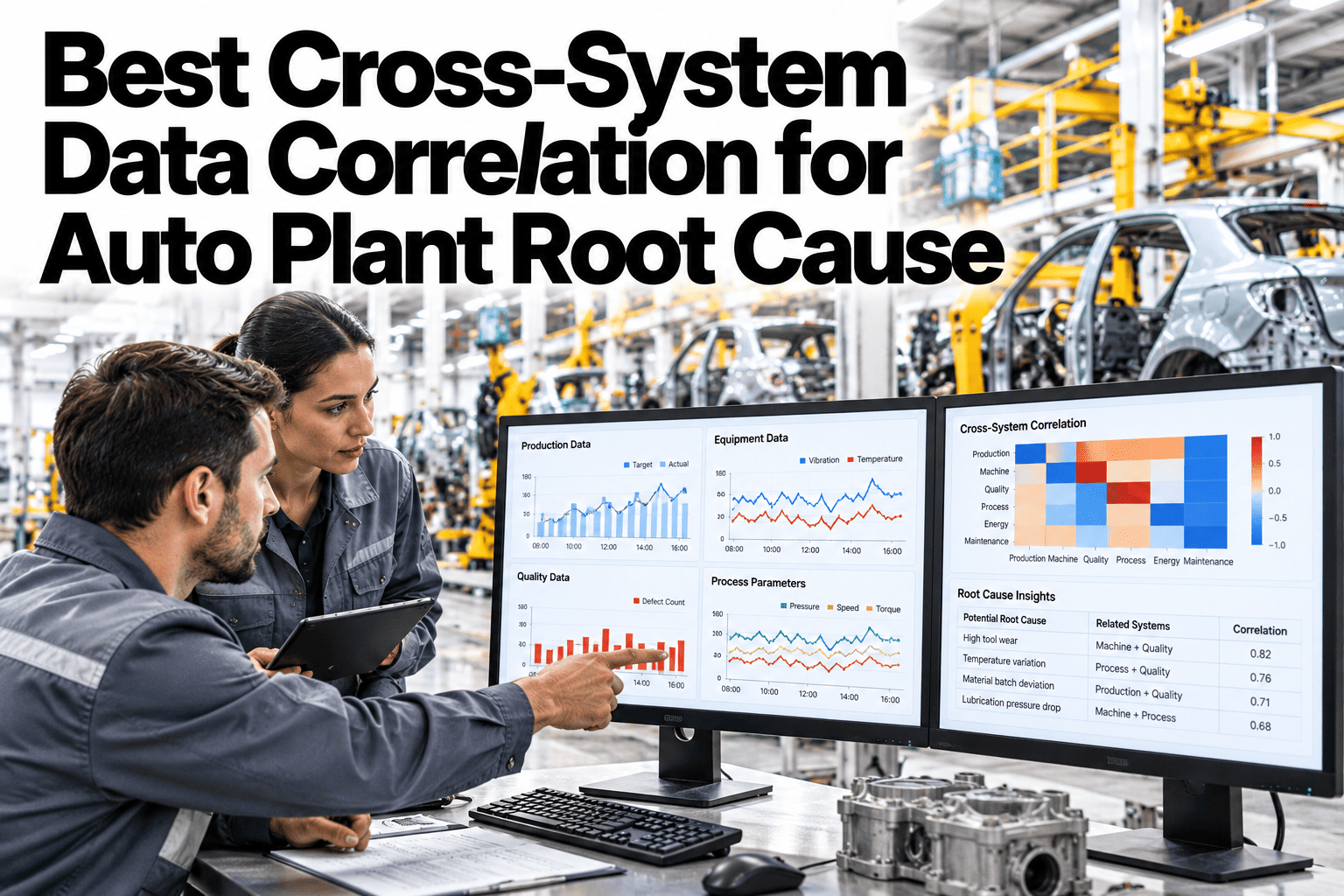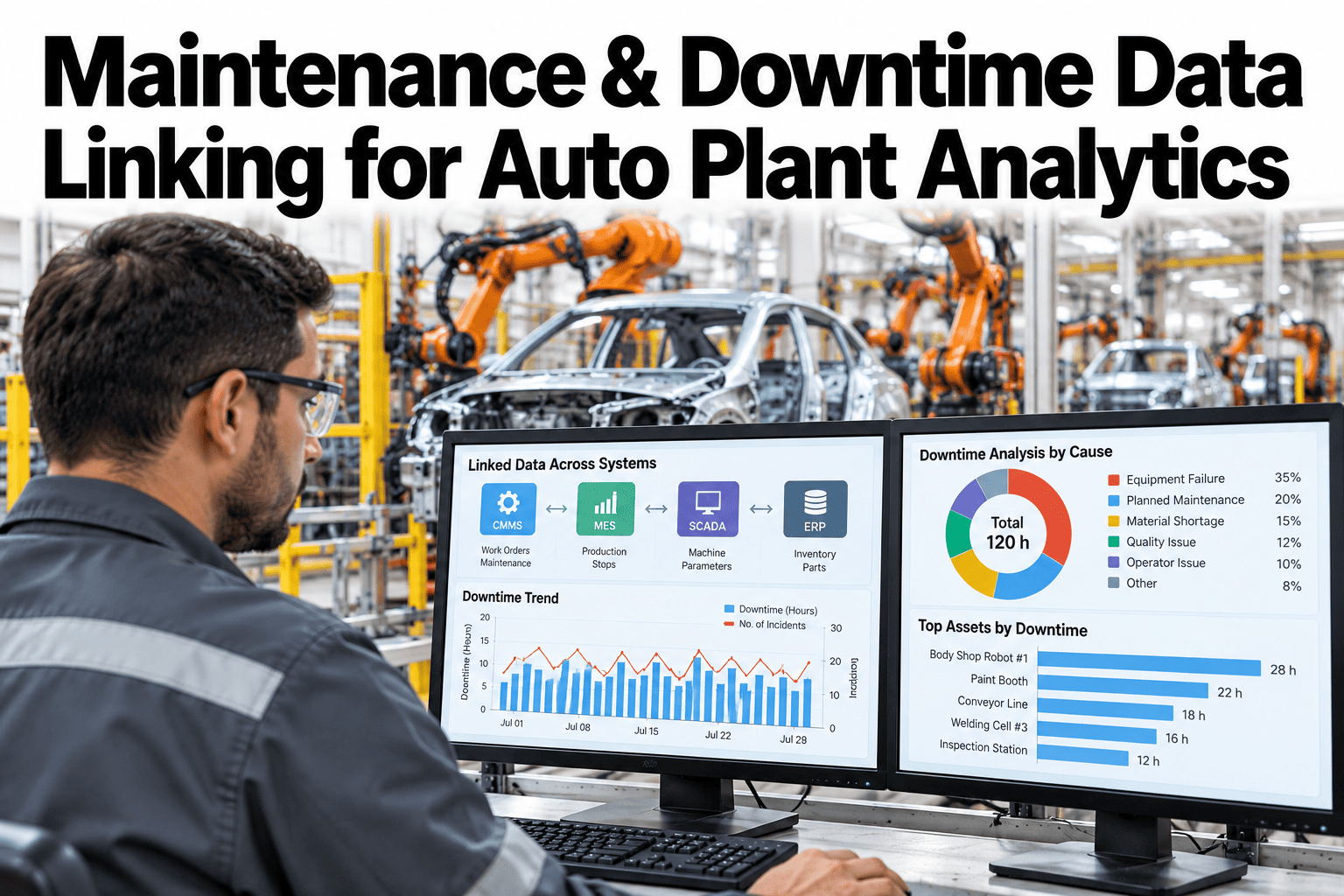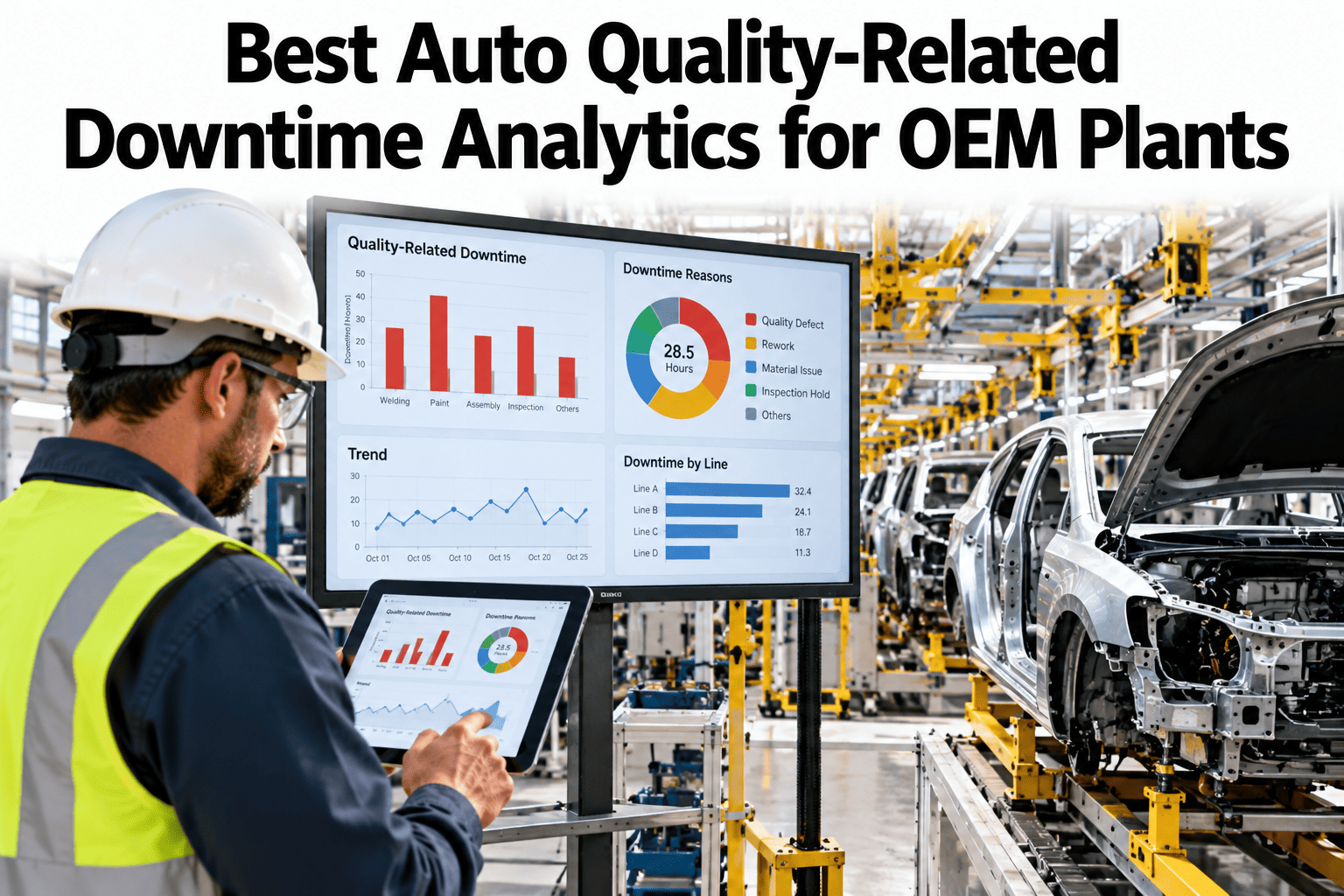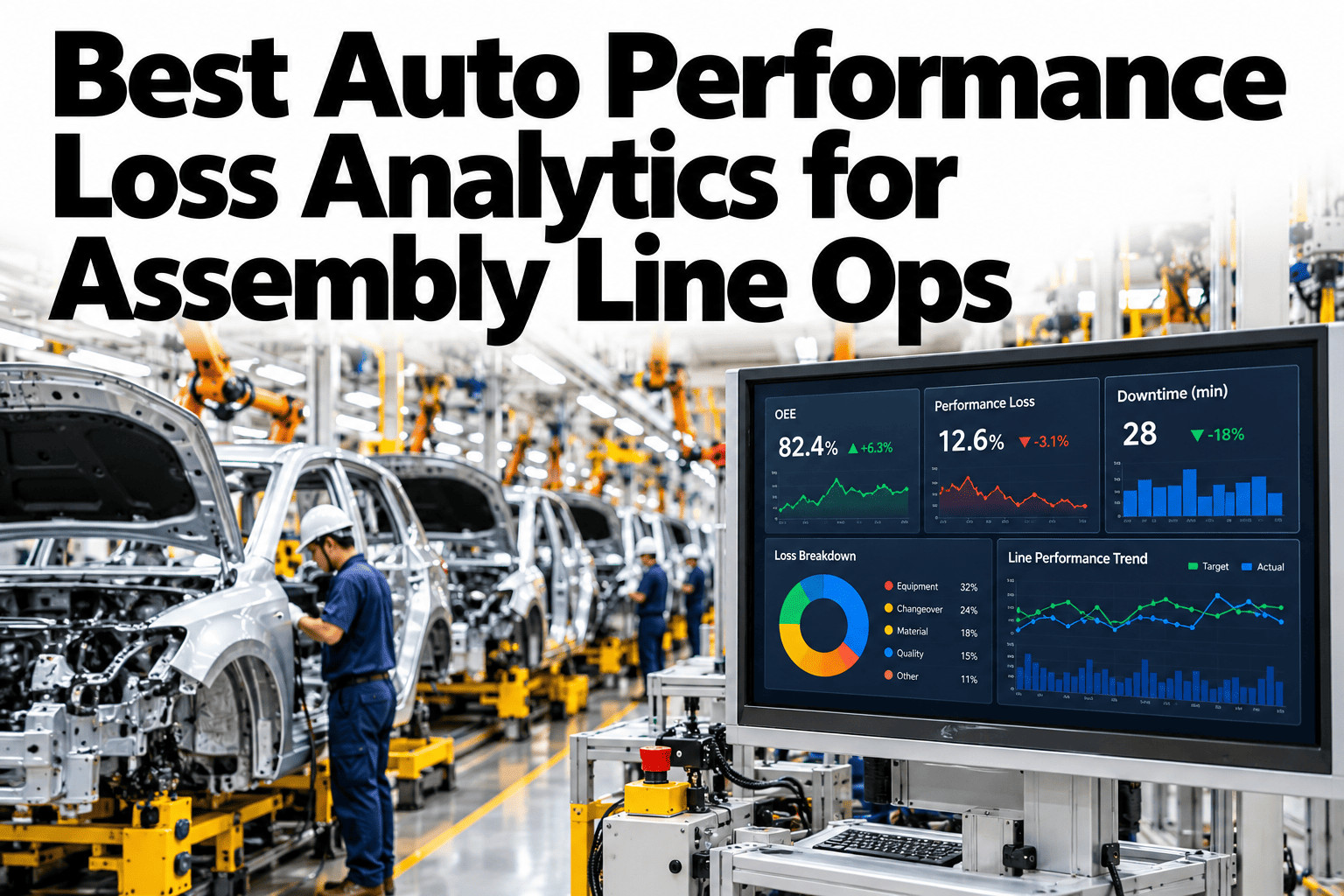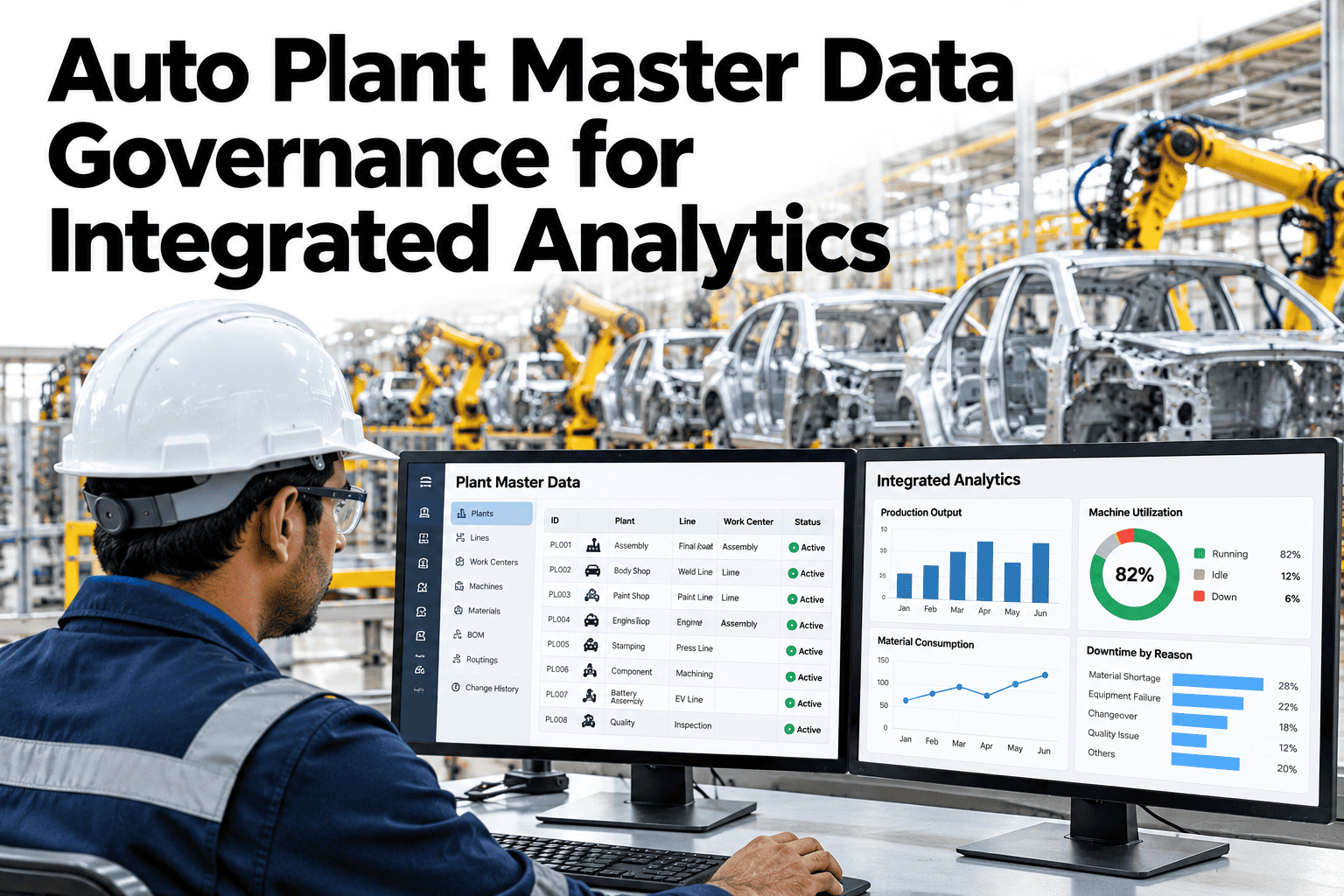
Underneath every unified dashboard sits a quieter and less glamorous layer: the master data that defines what an asset is called, what a product code means, and which words describe a downtime reason. Get this wrong and even the best-connected analytics platform will produce numbers nobody fully trusts. This guide covers the three pillars of master data governance for an auto plant: asset hierarchy, product master and event taxonomy. Teams ready to build this foundation can book a demo with the iFactory AI team.
Auto Plant Master Data Governance for Integrated Analytics
Every number in an integrated analytics platform rests on three foundations: a consistent asset hierarchy, a single product master, and a shared event taxonomy, agreed once and maintained deliberately.
The Three Pillars
Master data governance sounds abstract until it is broken into the three concrete lists every plant actually needs: what the assets are called, what the products are called, and what the events are called.
Asset hierarchy
A consistent naming structure from plant down to individual asset, used identically across every connected system.
Product master
One definition per product code, shared by production, quality and planning systems alike.
Event taxonomy
A shared list of downtime, defect and maintenance event categories, used consistently plant-wide.
Asset Hierarchy in Practice
An asset hierarchy needs to be deep enough to support drill-down analysis, but not so deep that maintaining it becomes a burden nobody keeps current. Four levels usually covers an auto plant well.
| Level | Example | Used For |
|---|---|---|
| Plant | Assembly Plant 4 | Site-level reporting and comparison |
| Line | Body Shop Line 2 | Line-level OEE and throughput tracking |
| Station | Weld Station 14 | Station-level defect and downtime correlation |
| Asset | Robot Arm 14-3 | Individual maintenance history and work orders |
Product Master Alignment
A product master mismatch is one of the quieter ways cross-system analytics breaks down. If quality tracks a defect against one product code and production reports volume against a slightly different one, the two numbers can never be reconciled cleanly.
Two product lists
Production and quality systems each maintain their own code list, drifting apart slowly as new trims or variants are added.
One product master
A single authoritative list, with every connected system referencing it rather than maintaining its own copy.
Build the Foundation Before the Dashboard
iFactory AI helps align asset hierarchy, product master and event taxonomy across your auto plant systems. Book a 30-minute walkthrough.
Event Taxonomy Alignment
A shared event taxonomy means a downtime reason, a defect category and a maintenance cause code all mean the same thing no matter which system logged them. Without it, even perfectly correlated data still needs manual translation before it can be summarized.
Why Leadership Trusts the Number
Master data governance rarely gets credit directly, since nobody puts "clean asset hierarchy" on a slide for leadership. But it is the reason the numbers on that slide hold up when someone asks a follow-up question.
Plain-Language Glossary
A shared vocabulary keeps IT, operations and quality teams reading the same governance plan the same way.
Expert Review
IT and operations leads who have run master data projects across auto plants keep returning to the same two notes.
Start with asset hierarchy
Of the three pillars, asset hierarchy tends to unlock the most immediate value, since it is the foundation almost every other correlation depends on.
Assign an ongoing owner
Master data governance is not a one-time project. Without a named owner to approve new codes and catch drift, the lists slowly diverge again within a year or two.
Frequently Asked Questions
Which pillar should we tackle first?
Asset hierarchy usually delivers the fastest payoff, since most other correlation work depends on it being consistent first. Book a demo to see an asset hierarchy starting point.
How many levels should an asset hierarchy have?
Four levels, plant through individual asset, covers most auto plants well without becoming a maintenance burden of its own.
Who should own master data governance long term?
A named owner, often a joint role between IT and operations, who approves new codes and reviews the lists periodically. Ask support for a sample ownership model.
Does this require replacing our existing systems?
No, governance is about alignment between existing systems, not replacement. Each system keeps running, referencing the shared master lists. Book a demo to see governance layered on your current systems.
How often should the master lists be reviewed?
A quarterly review catches most drift from new equipment, new products or new event types before it accumulates into a larger reconciliation project.
Give Every Dashboard a Trustworthy Foundation
iFactory AI helps govern asset hierarchy, product master and event taxonomy across your auto plant. Book a walkthrough built around your own systems.