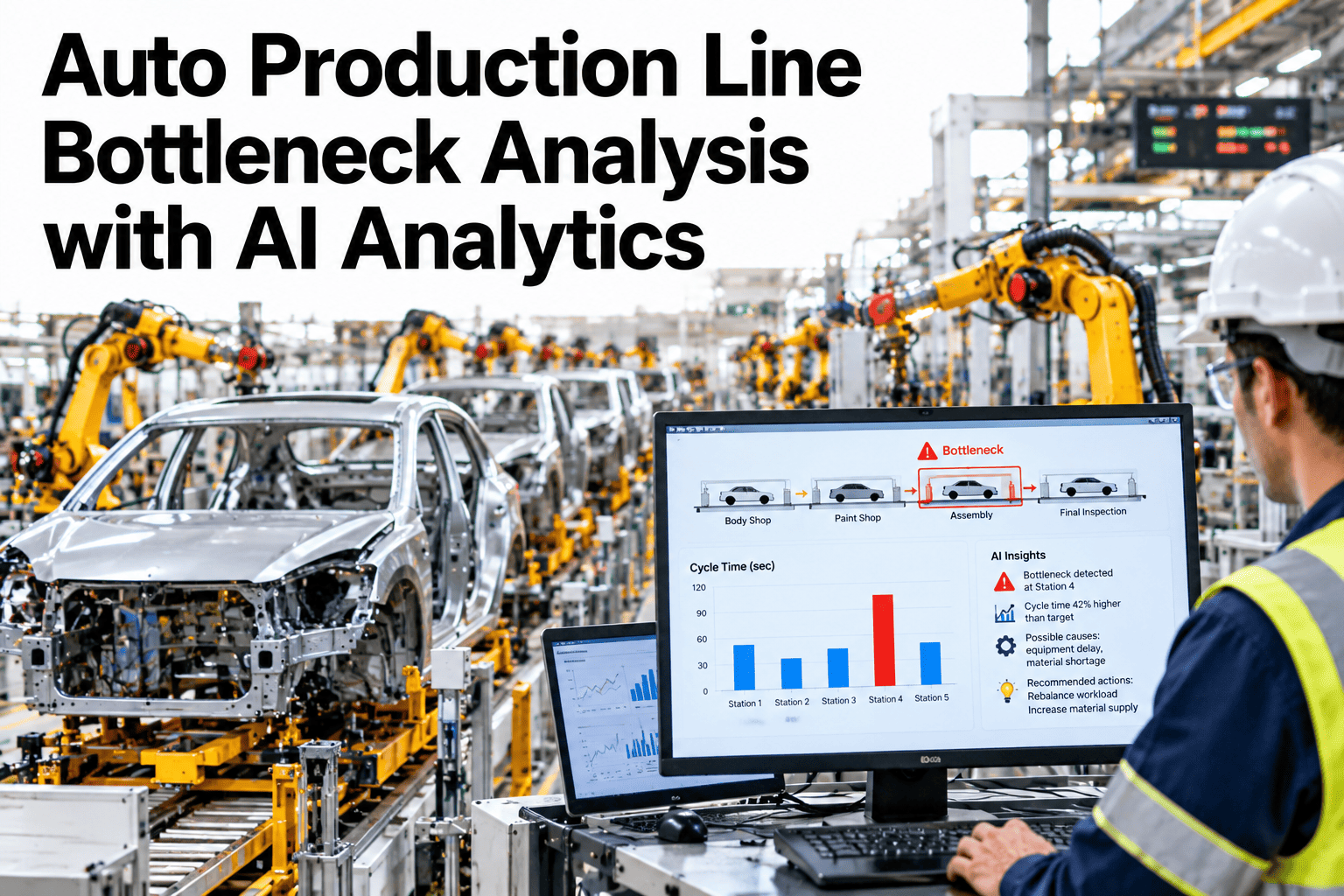
Every assembly line has a constraint, the one station that sets the pace for everything downstream of it, and the frustrating part is that the constraint rarely stays in the same place. A station running smoothly in the morning can become the bottleneck by afternoon once upstream variability, a tooling issue or a staffing change shifts the pressure point elsewhere. Teams that identify the bottleneck once a week from a static report are usually optimizing a station that stopped being the constraint days ago. Theory-of-constraints thinking only works when bottleneck identification is dynamic, tracking takt-time compliance station by station in real time rather than from a static snapshot. Production teams rethinking this approach can see dynamic bottleneck tracking running on a live assembly line before the next improvement cycle.
Auto Production Line Bottleneck Analysis with AI Analytics
Theory-of-constraints identification, dynamic bottleneck tracking, and takt-time compliance that moves with the line.
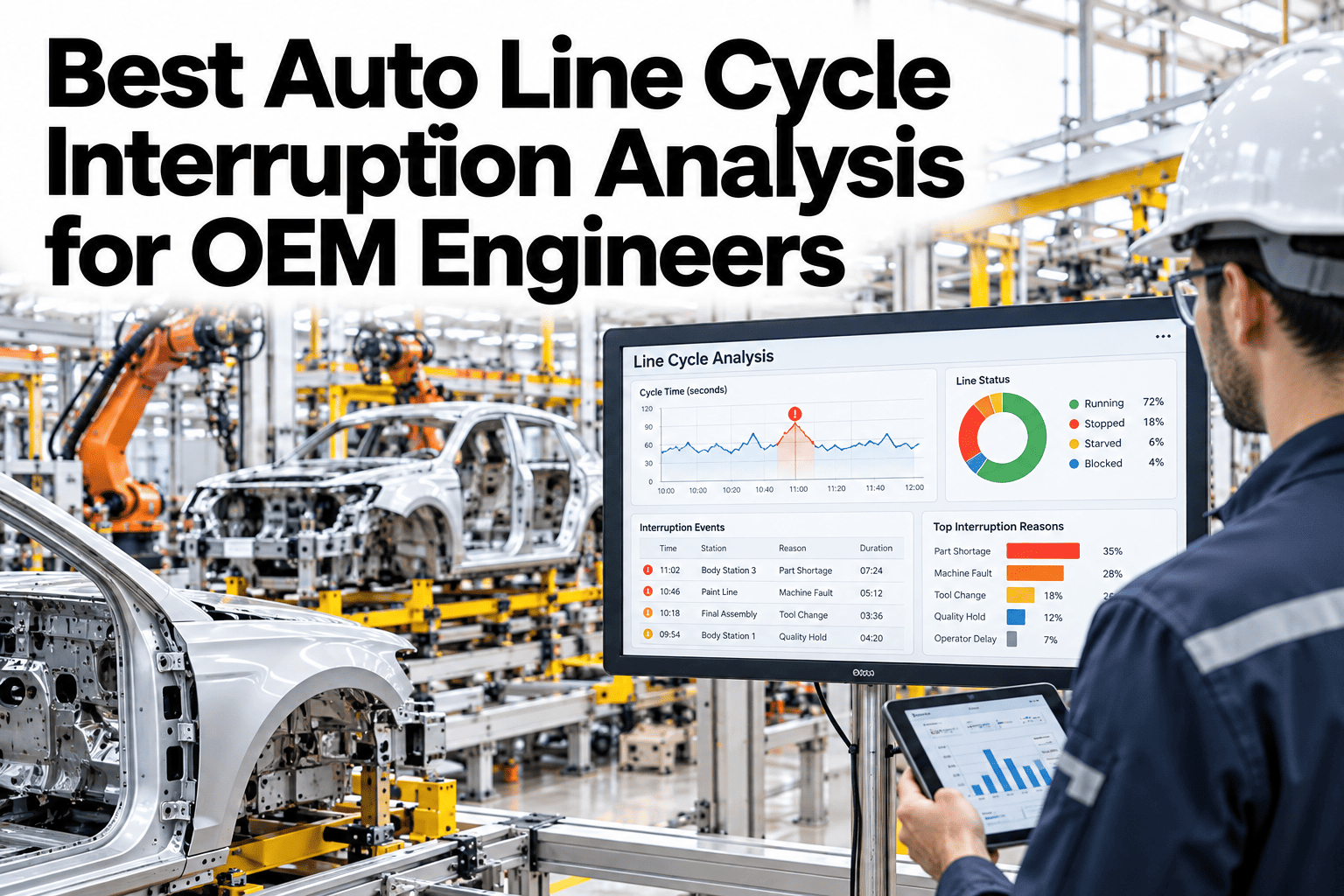
Illustrative line: the constraint station is identified and tracked as it shifts
Why Static Bottleneck Reports Mislead Teams
A weekly report answers where the constraint was, not where it is now. Three problems follow from that lag.
An improvement team can spend days fixing a station that is no longer the actual constraint.
A bottleneck can move mid-shift without anyone noticing until the next report cycle.
Capital improvement decisions based on a stale constraint miss where the real gain is available.
Theory of constraints only pays off when the constraint being worked on is the one actually limiting output right now.
How Dynamic Tracking Works
The constraint is recalculated continuously rather than assumed to stay fixed.
See Where Your Line's Constraint Actually Sits Today
Book a 30-minute session and bring your station cycle time data. iFactory AI will show the current bottleneck live.
Static vs Dynamic Bottleneck Identification
The difference shows up most clearly when the two approaches are compared directly.
| Factor | Static Weekly Report | Dynamic AI Tracking |
|---|---|---|
| Update frequency | Once per week or shift | Continuous, as cycle times are recorded |
| Shift detection | Missed until the next report | Flagged as it happens |
| Improvement targeting | Based on last period's constraint | Based on today's actual constraint |
| Takt compliance view | Aggregated, low resolution | Station by station, continuously updated |
What iFactory AI Supports
Constraint identification runs continuously from live station data, not a periodic export.
Continuous Takt Tracking
Every station's cycle time is compared against takt time in real time.
Live Constraint Identification
The current bottleneck station is identified continuously, not from a static snapshot.
Shift Alerts
A move in the constraint from one station to another triggers an alert immediately.
Improvement Prioritization
Improvement teams see which station deserves attention based on current data, not last week's.
iFactory AI connects to existing station timing and takt data. Scope covers data integration, constraint model setup, team training and ongoing support.
Expert Review
Teams that switch from weekly bottleneck reports to continuous tracking are almost always surprised by how often the constraint actually moves within a single shift. What looked like one stubborn problem station is usually two or three stations trading the role back and forth.
The improvement projects that get the most traction are the ones launched within hours of a constraint shift being flagged, not the ones queued up for the next scheduled review. Speed of response matters as much as accuracy of identification.
Frequently Asked Questions
How often does the bottleneck actually shift on a typical line?
This varies by line, but many assembly lines see the constraint move between two or three stations multiple times within a single shift, driven by small variations in staffing, material supply and equipment performance. Lines that look stable on a weekly report often show significant movement at a finer resolution. See your own shift-level pattern in a live session.
Does this require new sensors at every station?
Most lines already have enough timing data from existing PLCs, MES systems or manual logging to establish station-level cycle times, which is what the constraint model needs. New sensors are sometimes added for stations with limited existing data. Ask support about your current data sources.
How is a shifting constraint different from normal line variability?
Normal variability happens within every station without necessarily changing which one is the limiting factor for the whole line. A constraint shift specifically means a different station has become the one with the largest gap to takt time, which is the signal that matters for where to focus improvement effort. Request a walkthrough of how shifts are distinguished from normal noise.
Can this work alongside our existing continuous improvement process?
Yes, dynamic bottleneck tracking feeds directly into existing kaizen or continuous improvement processes by making sure the team is working the current constraint rather than a stale one. It does not replace the improvement methodology, just the targeting behind it. Contact support to discuss integrating it with your current process.
How long before the constraint model is accurate enough to trust?
Most lines reach a reliable constraint model within a few weeks of connecting station data, once enough cycles have run to establish a stable takt baseline per station. Lines with highly variable product mix may take slightly longer to stabilize. Book a session to estimate your own timeline.
Work the Constraint That's Actually Limiting Output Today
iFactory AI tracks your line's bottleneck continuously, not from last week's report. Book a walkthrough on your own line.

.png)