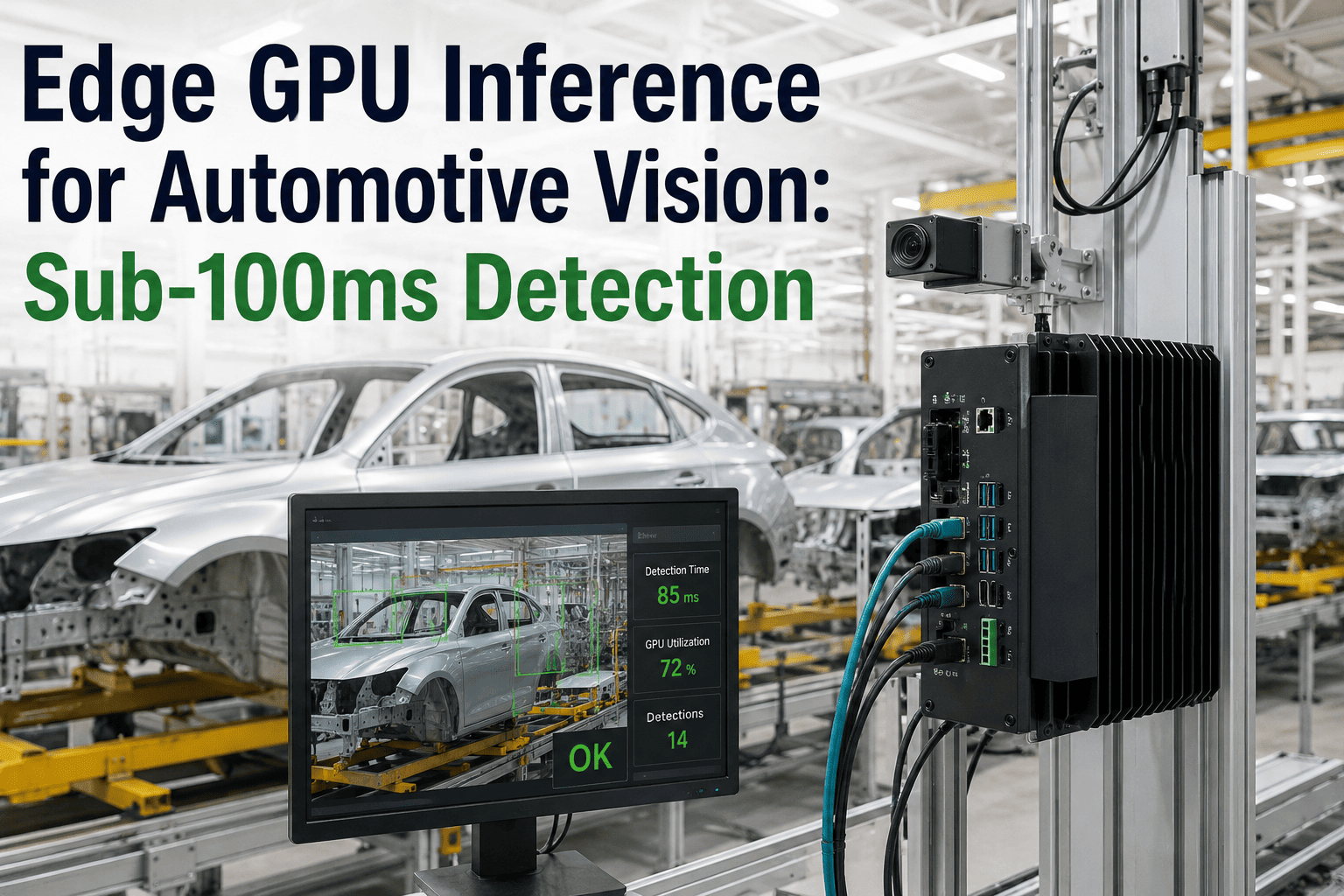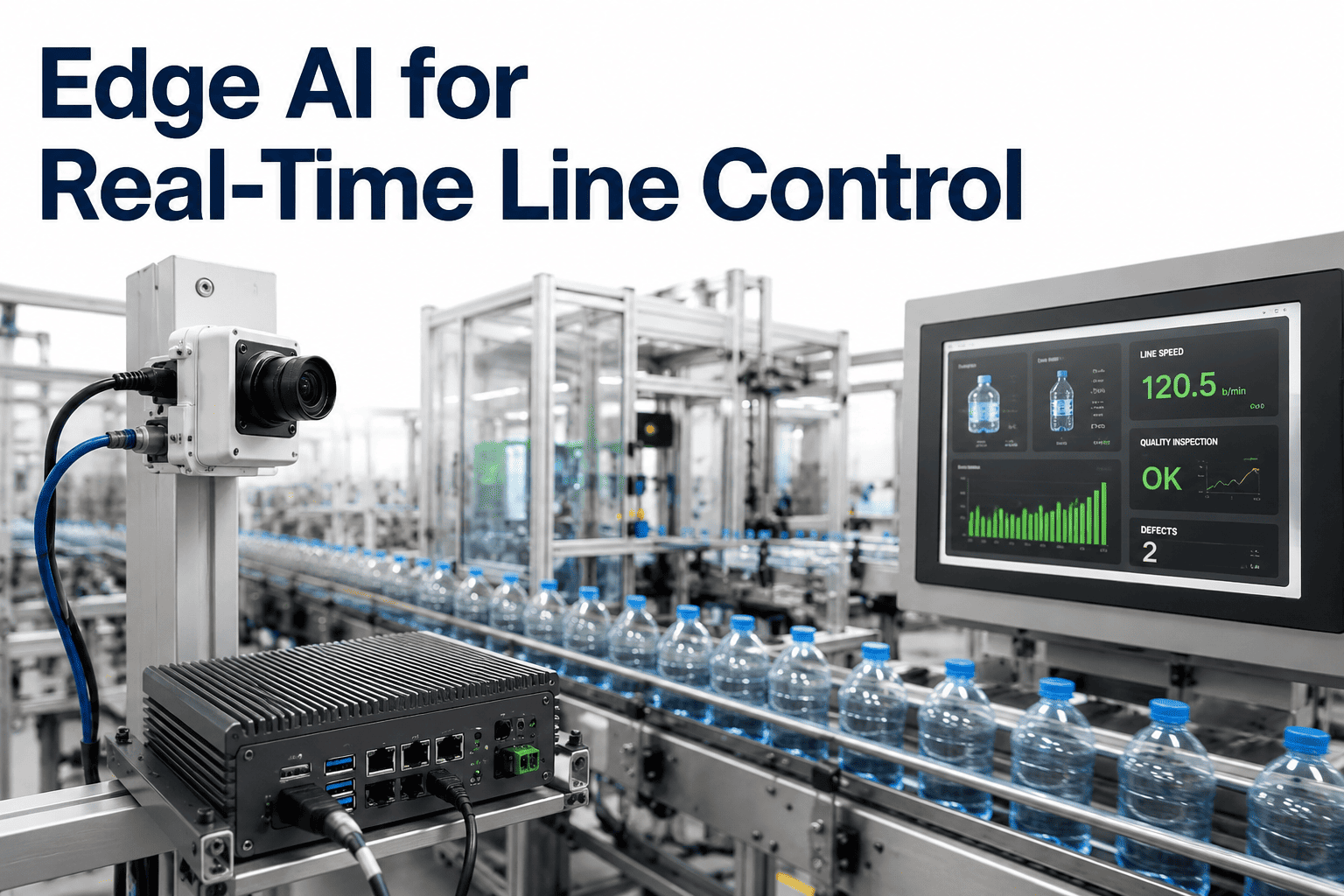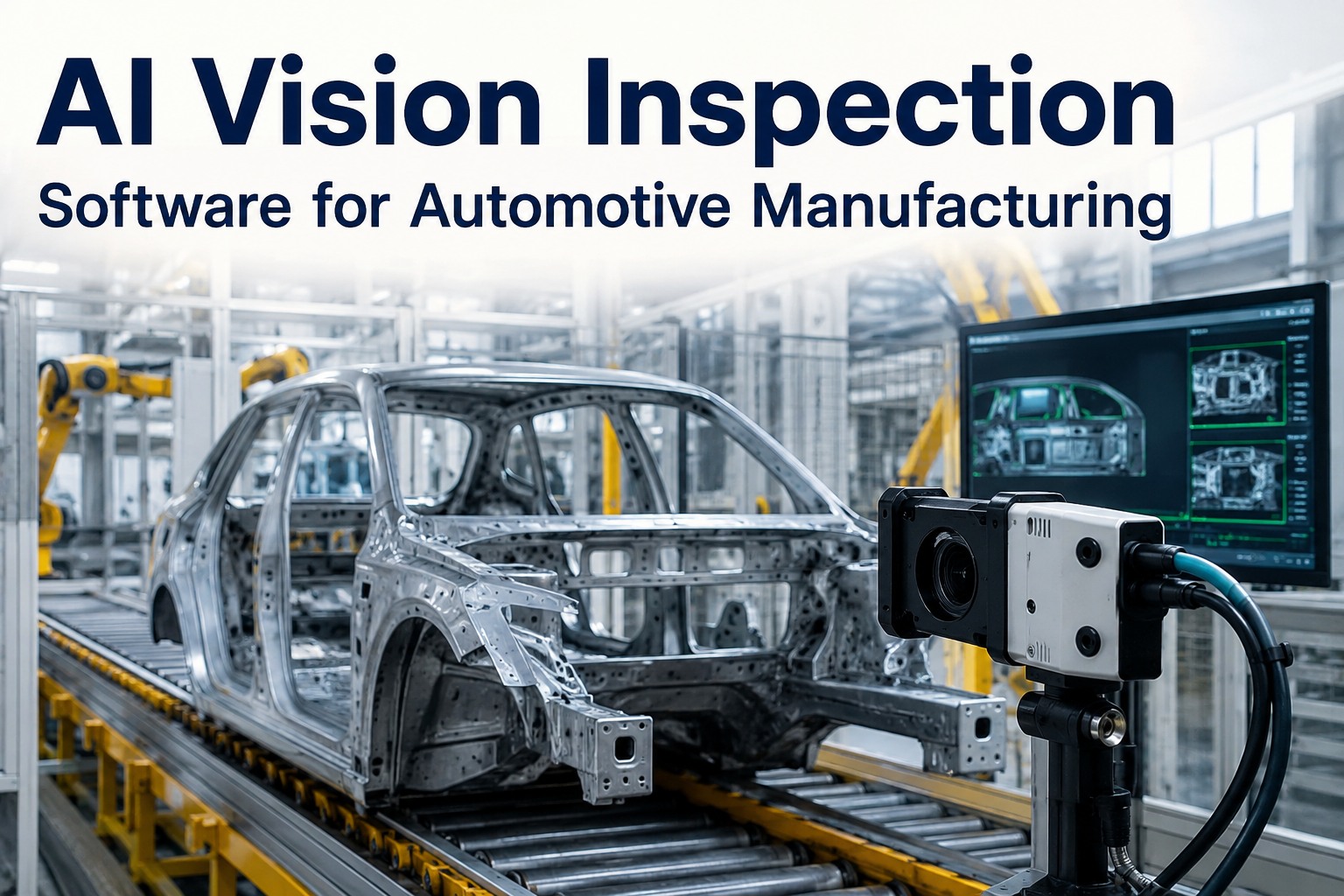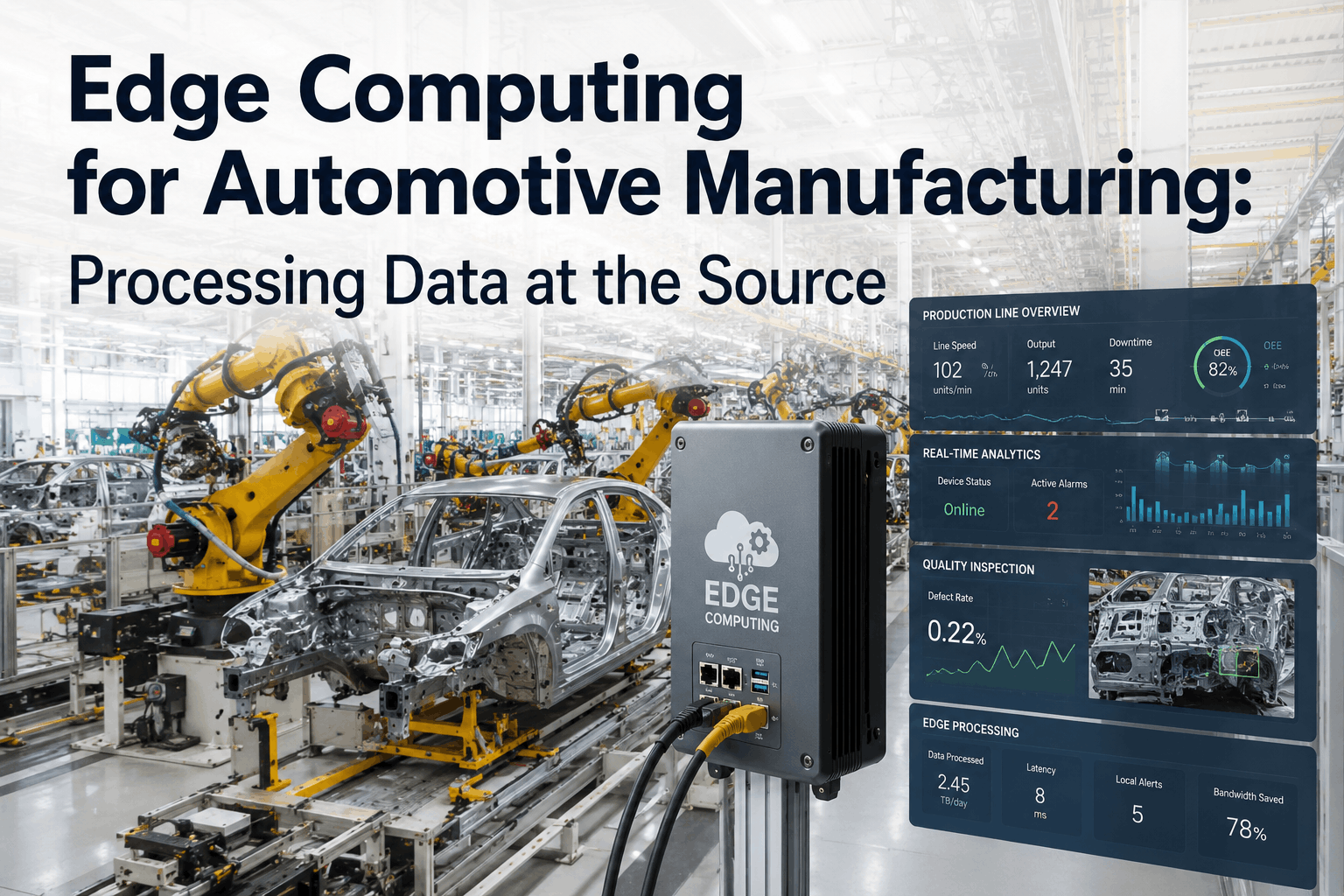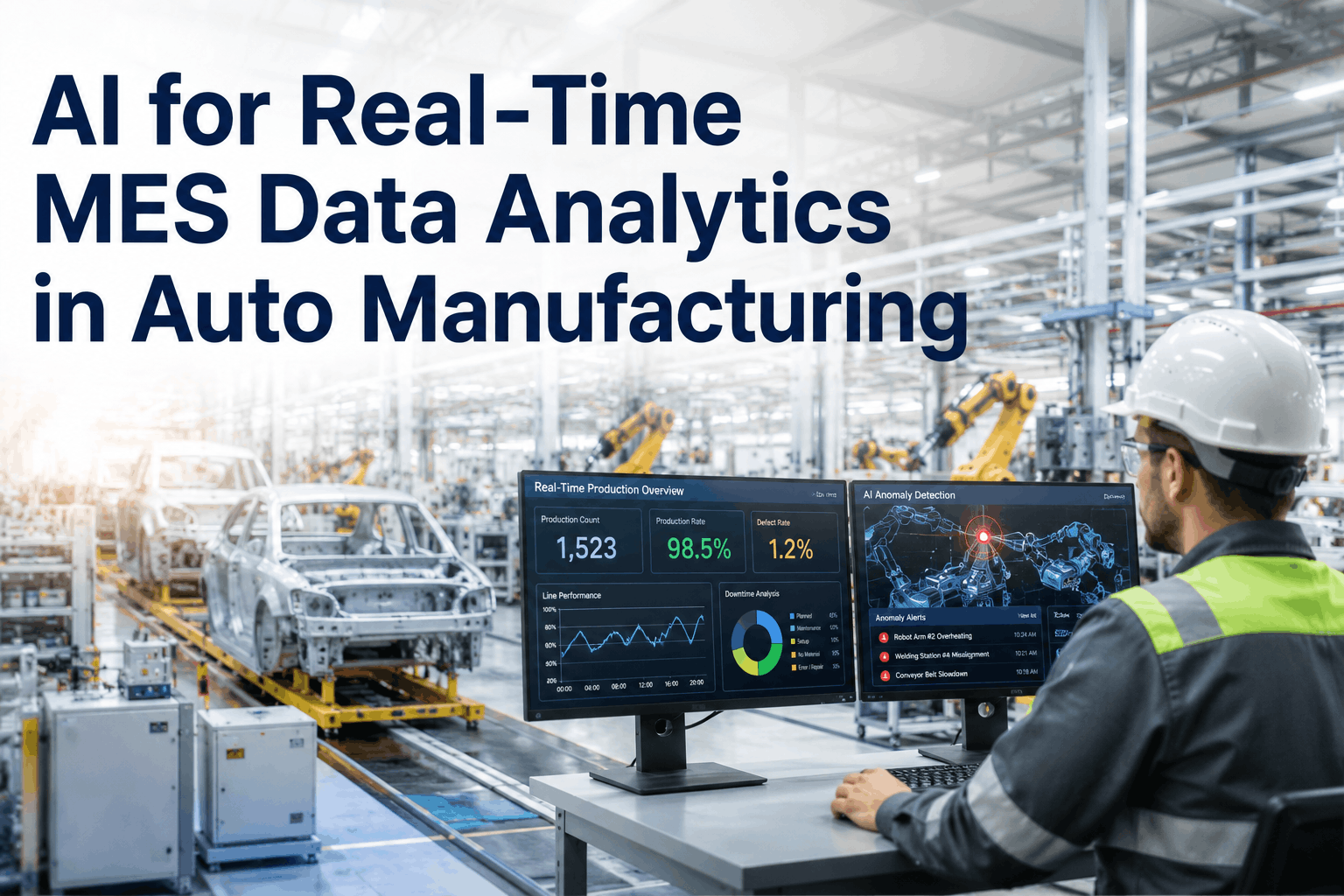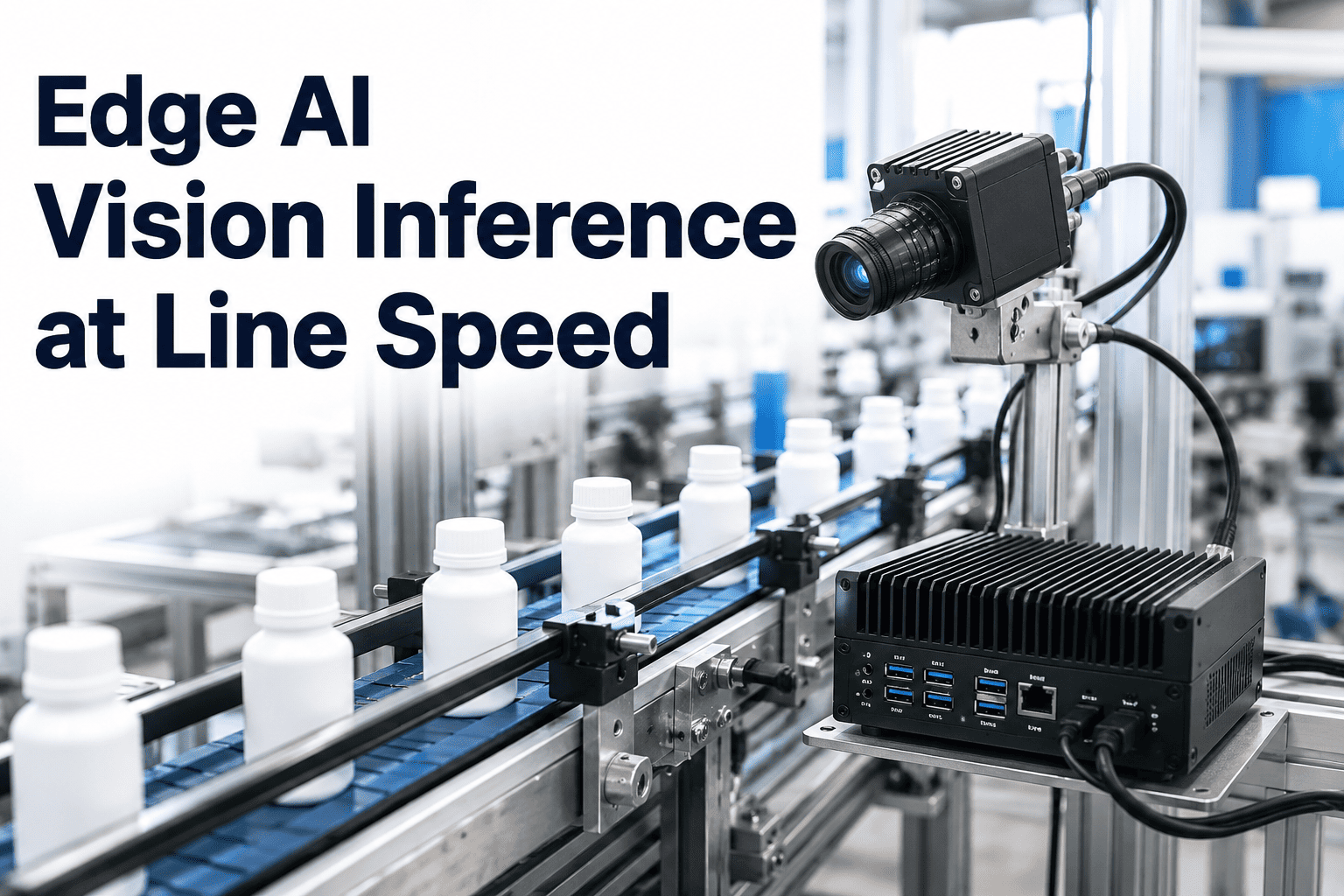
A part moving past a camera at production speed does not wait for a round trip to a remote server before the next part arrives. When an image has to leave the line, reach a data center, get processed, and return a decision, the delay is often measured in full seconds — long enough that a defective part has already moved three or four stations down the line before anyone knows it failed. Edge AI removes that delay entirely by running inference on hardware sitting right at the station, turning a cloud round trip into a decision that returns before the next part even arrives. Manufacturers weighing this shift can Book a Demo to see sub-100ms inference running live on an NVIDIA edge appliance.
Why Cloud Inference Is the Wrong Architecture for Inspection
For years, the default answer to where an AI model should run was a GPU cluster somewhere in a remote data center. That assumption breaks down the moment inference has to keep pace with a moving production line. Cloud AI vision typically incurs one to two seconds of round-trip delay — the image has to leave the line, reach the remote server, get processed, and the result has to travel back. On a line producing a part every few seconds, that delay means the decision arrives after the part has already moved past several downstream stations.
The factory floor has hard constraints that the cloud struggles to meet: latency, data control, cost, and uptime. A network outage should not mean quality inspection stops. A camera feed containing proprietary part geometry should not need to leave the building. And a bandwidth bill should not scale with every additional inspection station added to the line. Edge AI addresses all three by running the full inference pipeline locally, on hardware that lives inside the plant.
The Human Perception Threshold Applies to Production Lines Too
Roughly one hundred milliseconds is the point at which a response stops feeling instantaneous — below it, an interaction feels natural; above it, a delay becomes perceptible. On a production line, that threshold has a much more concrete consequence: it is the difference between a defect decision arriving before the part reaches the next station versus arriving after several more units have already been built with the same fault. Sub-100ms inference is not a performance nicety, it is what makes real-time, in-cycle rejection possible at all.
Immediate Rejection
A decision returned inside the station cycle lets the line reject or hold a defective part before it advances, instead of flagging it several stations later.
No Network Dependency
Inspection continues running even if the plant's wider network connection drops, since the entire pipeline lives on local hardware.
Data Stays On-Site
Proprietary part images and process data never leave the facility, removing a data governance question that cloud inference always raises.
What Runs Inside an Edge AI Appliance
Edge AI inference for industrial vision runs on purpose-built hardware positioned at or near the station, paired with models optimized specifically to run fast on that hardware without sacrificing the accuracy the inspection task requires.
GPU-Accelerated Capture
Cameras feed directly into local GPU hardware, eliminating the network hop and frame-copy overhead that adds latency to cloud-routed pipelines.
Quantized Model Inference
Models are optimized and quantized for the specific edge hardware, mapping operators directly to the accelerator to maintain strict latency budgets without a meaningful accuracy loss.
Local Decision & Routing
Pass/fail and classification results are pushed straight to the line PLC over standard industrial protocols, without waiting on any external system.
Aggregated Reporting
Summary data — not raw images — syncs to central dashboards on a normal schedule, keeping bandwidth needs low while preserving plant-wide visibility.
Choosing the Right Architecture for Each Workload
Edge and cloud are not always an either/or choice. The comparison below reflects where each architecture is the right fit for a manufacturing AI vision deployment.
| Factor | Cloud Inference | Edge AI Inference |
|---|---|---|
| Latency | 1,000ms+ round trip | Under 100ms, on-site |
| Network dependency | Full dependency | None for live inspection |
| Data residency | Leaves the facility | Stays on-premise |
| Best suited for | Model training, batch reprocessing | Real-time, line-speed inspection |
| Bandwidth cost | Scales with camera count | Minimal, summary data only |
What Plants Measure After Moving Inspection to the Edge
From image capture to pass/fail decision reaching the line controller, well inside a typical station cycle.
Of parts inspected at full line speed, with zero throughput penalty from network round trips.
From unboxing a pre-configured edge appliance to live inference running on the plant floor.
Getting From Rack Install to Live Inference
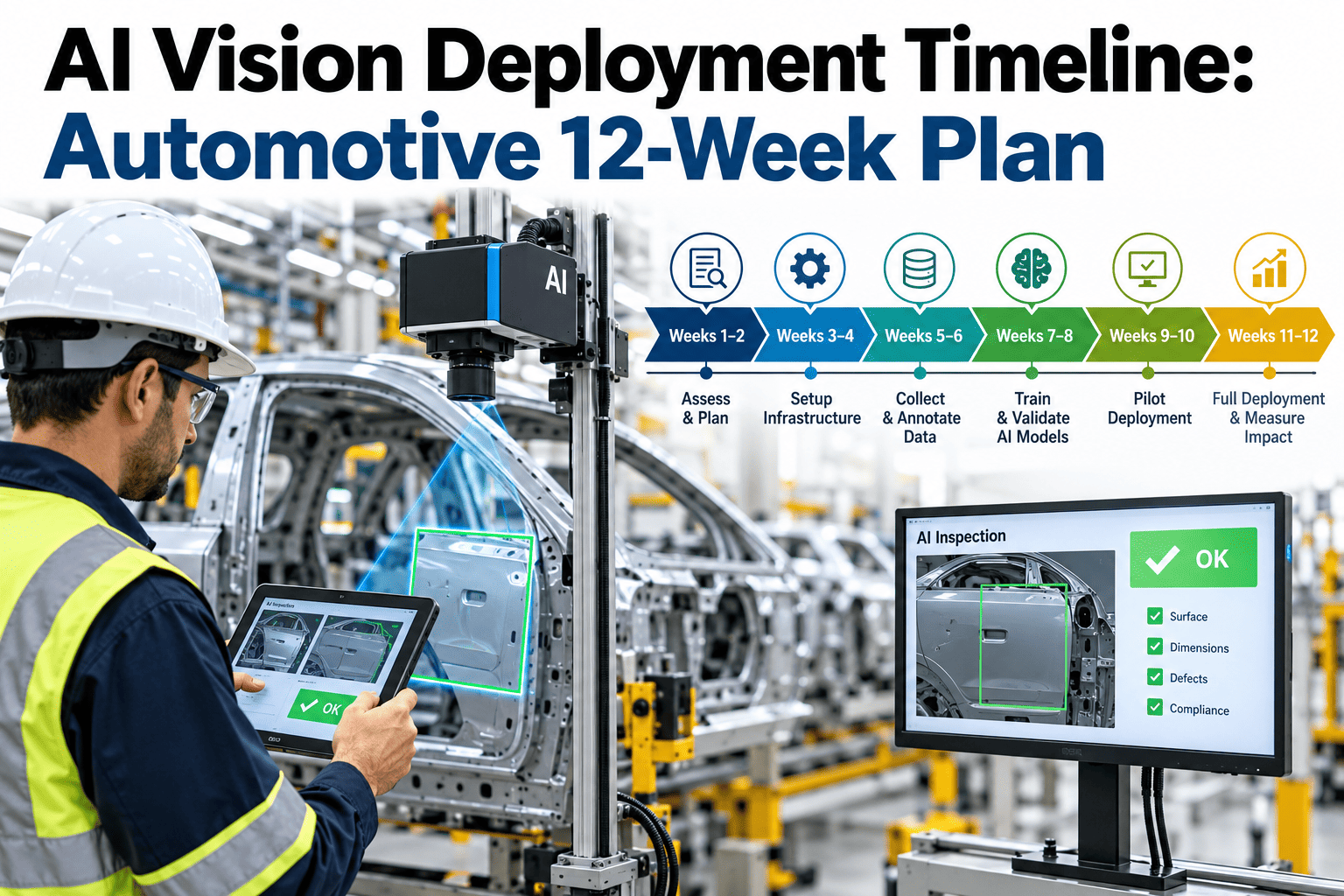
Deploying edge AI does not require a custom GPU build or a data science team on staff. A pre-configured edge server arrives racked and software-loaded, compressing what used to take months of custom integration into a short, structured rollout. Quality and operations teams typically go from unboxing to live inference within six to twelve weeks, with the first pilot station validated against existing inspection results well before the full rollout completes. Because the appliance runs entirely on-site, the sovereignty and uptime questions that come up in every cloud AI evaluation simply do not apply.
Edge AI Vision Inference — Common Questions
Does edge AI sacrifice accuracy to hit sub-100ms latency?
Not meaningfully, when the model is properly optimized for the target hardware. Techniques like quantization-aware training recover the accuracy lost during the conversion to lower-precision inference, and pairing that with runtime delegates that map operators directly to the accelerator keeps the pipeline fast without materially changing detection accuracy. In practice, the accuracy gap between a well-optimized edge model and its full-precision cloud counterpart is small enough that it does not change the pass/fail outcome for the vast majority of production defects.
What happens to inspection if the plant network goes down?
Live inspection keeps running without interruption, because the entire capture-to-decision pipeline executes on local hardware rather than depending on a connection to any external system. Only the periodic sync of summary data to central dashboards is affected by a network outage, and that sync simply resumes and catches up once connectivity returns, with no gap in the actual inspection coverage on the line itself.
Can one edge appliance serve multiple camera stations?
Yes, a single edge server can typically process multiple simultaneous camera feeds, depending on the resolution, frame rate, and model complexity required at each station. Full production deployments in high-throughput automotive cells often run several camera feeds through one appliance concurrently, which is part of why the hardware footprint and total cost of ownership compare favorably to per-station cloud connectivity and licensing.
How does data get shared with plant-wide systems if inference runs locally?
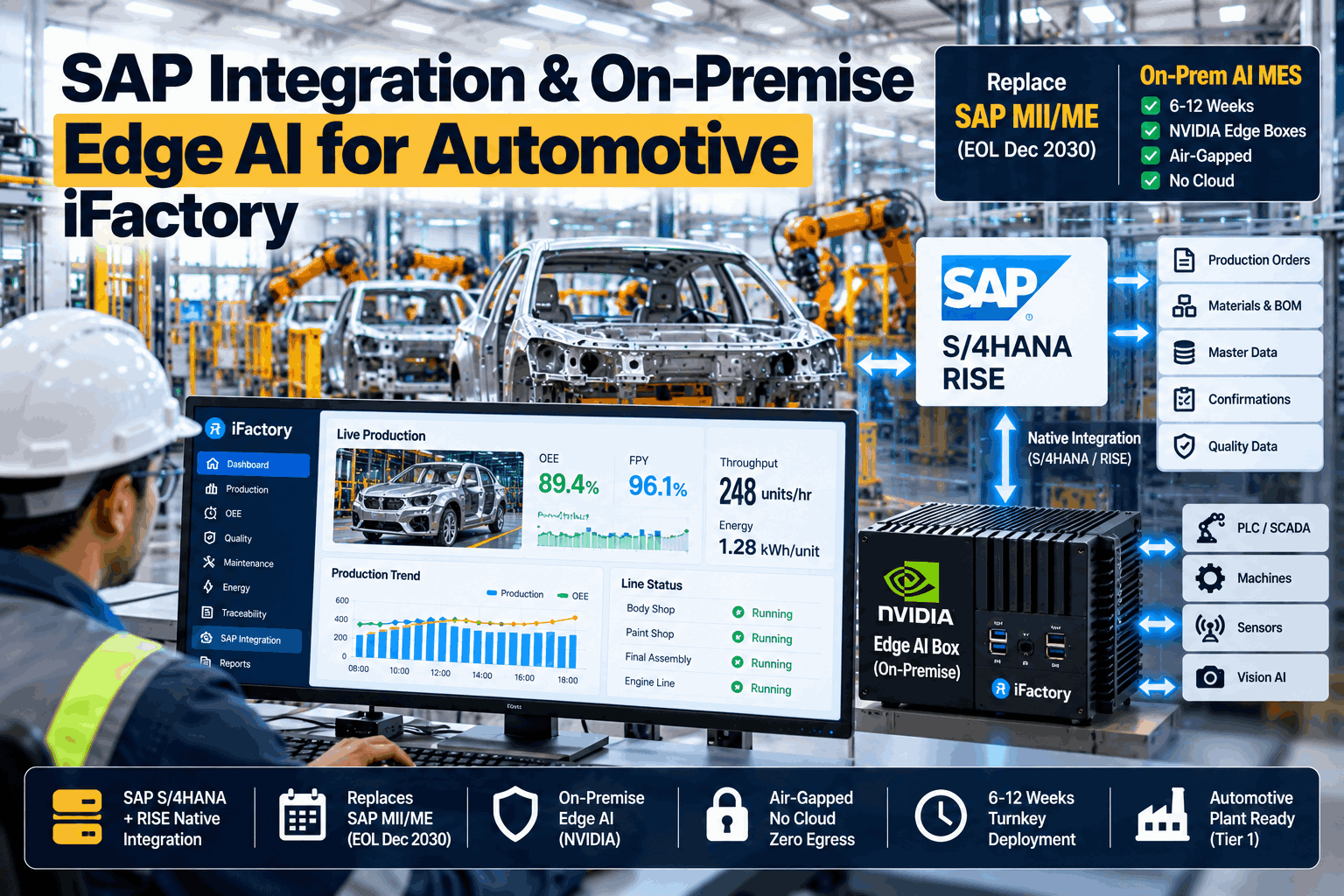
The edge appliance handles live inference locally, then syncs aggregated results, trend data, and flagged event summaries to central dashboards and the plant's MES on a normal schedule, rather than streaming every raw image off the line. This keeps bandwidth requirements low while still giving quality and operations leadership the plant-wide visibility they need. Teams can review integration specifics with the iFactory Support team.
How long does it take to get a pilot station running on edge hardware?
A single pilot station typically goes live within three to six weeks of hardware arrival, covering camera integration, model deployment, and PLC connection for automated routing. Teams wanting to see the appliance running on samples from their own line can Book a Demo to scope a pilot.