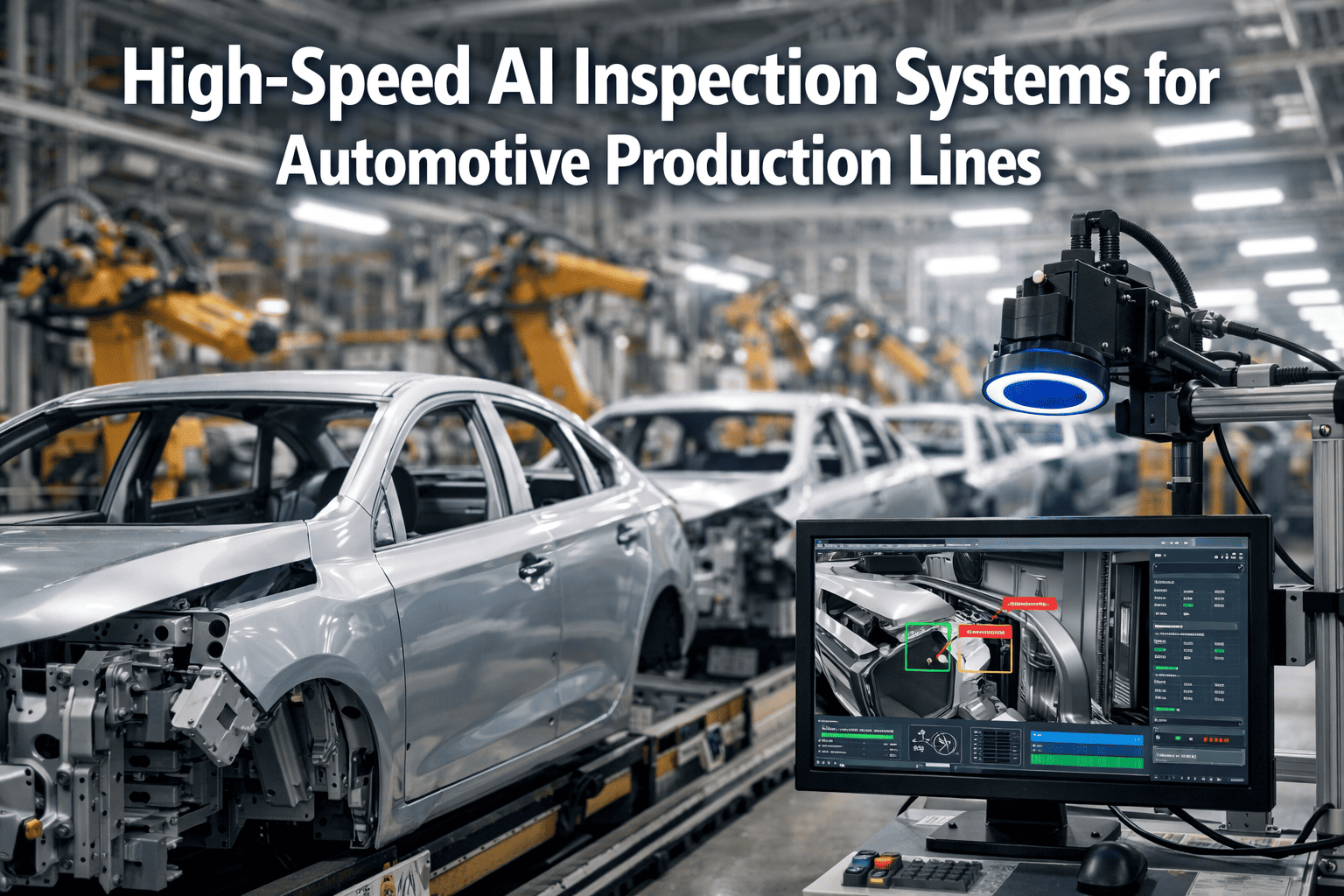
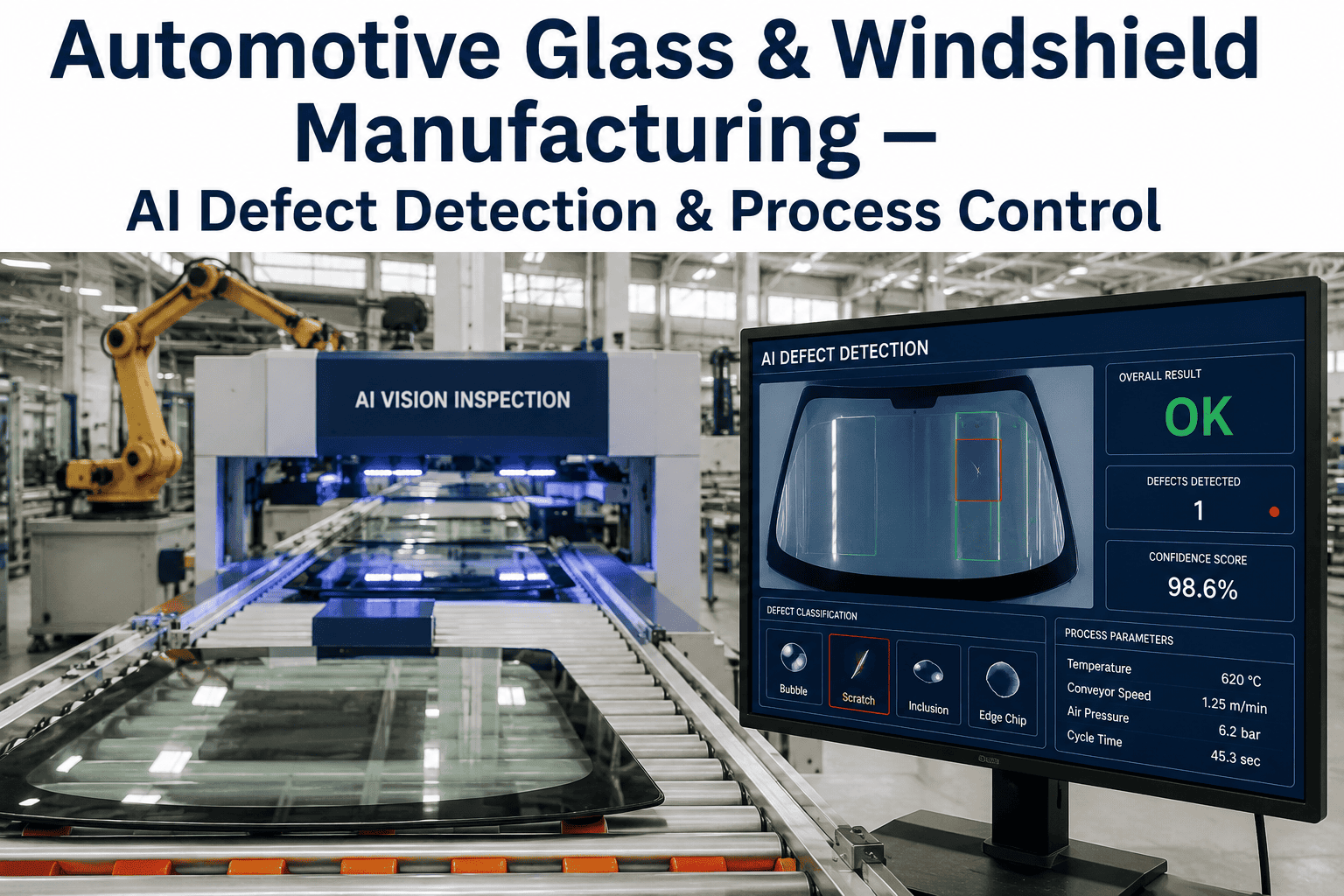
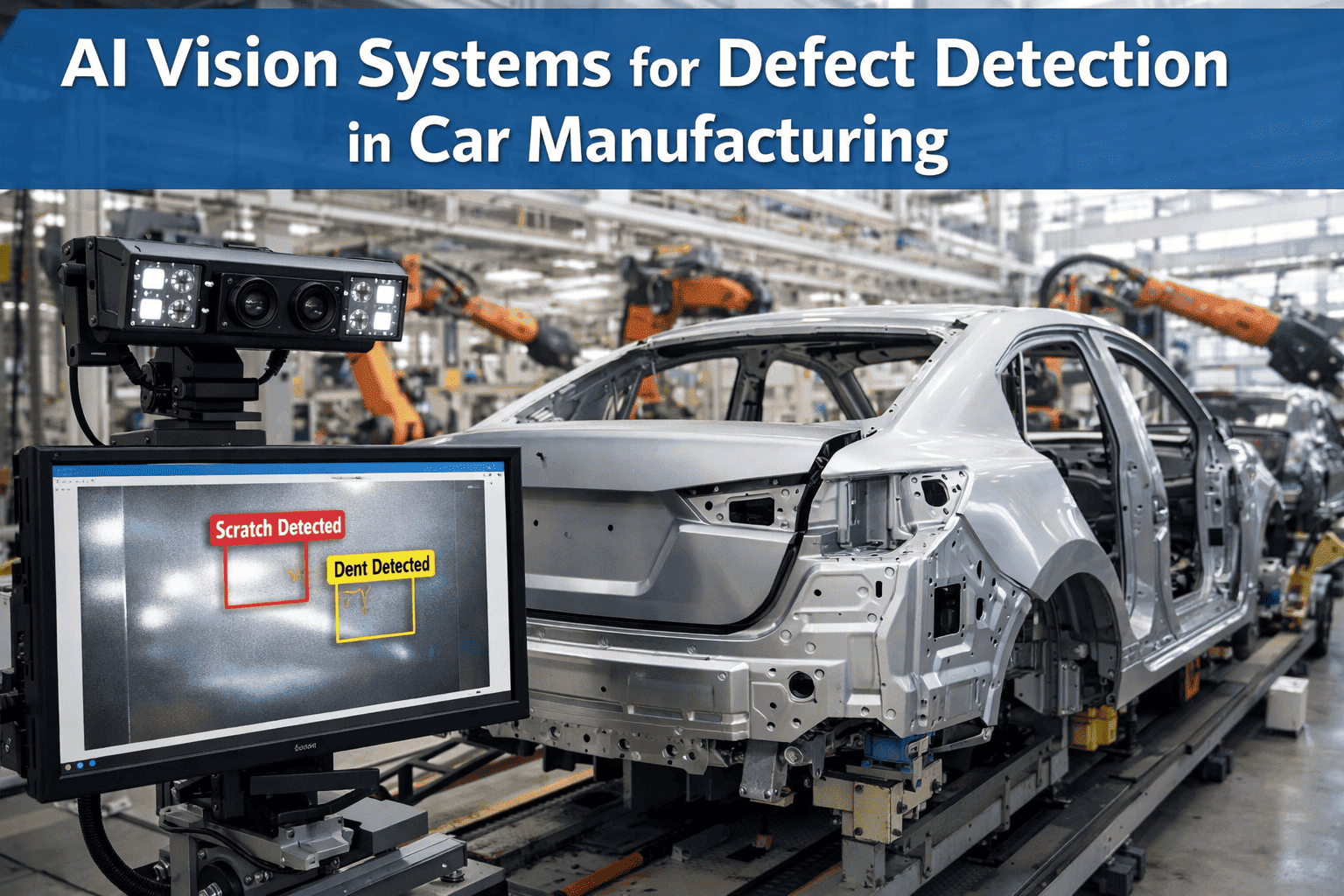
A paint defect on the rear quarter panel discovered after final assembly should not trigger 4.8 hours of vehicle disassembly, paint repair, and reassembly costing $2,840 in labor and materials when that same defect could have been caught 18 minutes after paint booth exit with automated visual inspection requiring zero rework if detected immediately. iFactory's 360-degree AI vision system deploys 24 cameras capturing every angle of vehicle body, interior, and underbody in 8.2 seconds per unit, analyzing 2.4 million pixels for paint defects, gap measurements, component verification, and surface anomalies with 99.6% detection accuracy, flagging non-conforming vehicles for immediate correction before next production stage, eliminating end-of-line quality failures that cost automotive manufacturers $18.4 billion globally per year. The defect that would have reached the customer now caught and corrected within 90 seconds of occurrence. Book a demo to see 360-degree AI inspection for your production line.
AI-Powered Quality Control
Catch Every Defect from Every Angle with 360-Degree AI Vision
Stop quality escapes before they progress downstream. iFactory's multi-camera inspection system examines 100% of vehicles at production speed, detecting defects invisible to human inspectors and enabling immediate correction.
Understanding Automotive Manufacturing Quality Challenges
Modern automotive assembly operates at 55-65 jobs per hour across body shop welding, paint application, final assembly, and pre-delivery inspection. Each production stage introduces quality risks: body shop weld defects, paint booth contamination, assembly component errors, gap and flush dimensional variations. Traditional manual inspection samples 5-15% of production volume, examining 20-40 critical points per vehicle in 45-90 seconds per unit. Sampling creates blind spots where defects escape undetected. Manual inspectors working 12-hour rotating shifts exhibit detection rate variation from 68% during hour 10-12 night shift to 84% during hour 2-4 day shift based on fatigue and lighting conditions. Downtime costs rose 113% since 2019 as quality complexity increased with electric vehicle battery integration, advanced driver assistance sensors requiring precise alignment, and premium segment expectations for zero-defect delivery. Per hour downtime averages $22,000 across Tier 1 assembly plants. Global quality-related losses exceed $18.4 billion annually. Plants average 127 hours lost per month from quality holds and rework. Quality incidents occur 42 times per month on average requiring investigation, containment, and corrective action consuming engineering resources.
What Modern Automotive Plants Need for Quality Assurance
Robotic Systems Maintenance
Vision-guided robots in body shop, paint application, and assembly require continuous calibration verification. Robot positioning drift of 0.8mm causes weld misalignment, paint overspray, or component installation errors. AI vision validates robot accuracy in real-time, detecting calibration degradation before defects occur.
Assembly Line Optimization
Line balance requires each workstation completing tasks within takt time. Quality defects create bottlenecks when rework accumulates at correction stations. Real-time defect detection enables immediate correction at source station, preventing downstream backup and maintaining line flow at target 58 jobs per hour.
EV & Battery Production
Battery pack assembly requires precise cell alignment, connector seating verification, and seal integrity inspection. Manual inspection cannot verify all 288 cell connections per pack at production volume. AI vision validates 100% of battery assembly critical points, ensuring safety and preventing field failures from undetected assembly defects.
Stamping & Press Shop
Stamped panels develop defects from die wear, material variation, and press misalignment. Single defective panel creates scrap cascade when discovered downstream after multiple value-added processes completed. Inline vision inspection at press exit catches panel defects before transfer to body shop, enabling immediate die adjustment and preventing defect propagation.
OEE & Performance Tracking
Overall Equipment Effectiveness targets 85% require minimizing quality losses alongside availability and performance. Quality defects reduce OEE through scrap, rework time, and speed restrictions when defect rates exceed control limits. AI vision eliminates quality losses by catching defects at source, maintaining full production speed without quality holds.
How iFactory 360-Degree AI Inspection Solves Quality Challenges
1
AI-Powered Predictive Maintenance
Machine learning algorithms analyze inspection camera performance trends, detecting lens contamination, lighting degradation, or calibration drift before measurement accuracy compromised. System auto-schedules camera cleaning and calibration during planned line breaks, preventing false rejects from sensor issues. Predictive maintenance extends camera system uptime to 99.4% vs 94.2% with reactive maintenance approach.
2
Real-Time OEE Optimization
Inspection data feeds directly to OEE calculation engine tracking quality rate component. When defect rate trends upward indicating process degradation (paint booth temperature variation, robot calibration drift), alerts trigger before quality losses impact OEE target. Proactive intervention maintains quality rate above 99.5% threshold required for 85% overall OEE achievement in automotive assembly.
3
Seamless PLC, SCADA, MES Integration
Platform connects to Siemens, Allen-Bradley, and Mitsubishi PLCs controlling assembly line equipment. Reads SCADA data for process correlation (paint booth temperature, cure oven time, torque values). Pushes inspection results to MES for quality documentation and traceability. Bidirectional data flow enables closed-loop quality control where inspection findings automatically adjust upstream process parameters preventing defect recurrence.
4
Mobile-First Plant Floor Operations
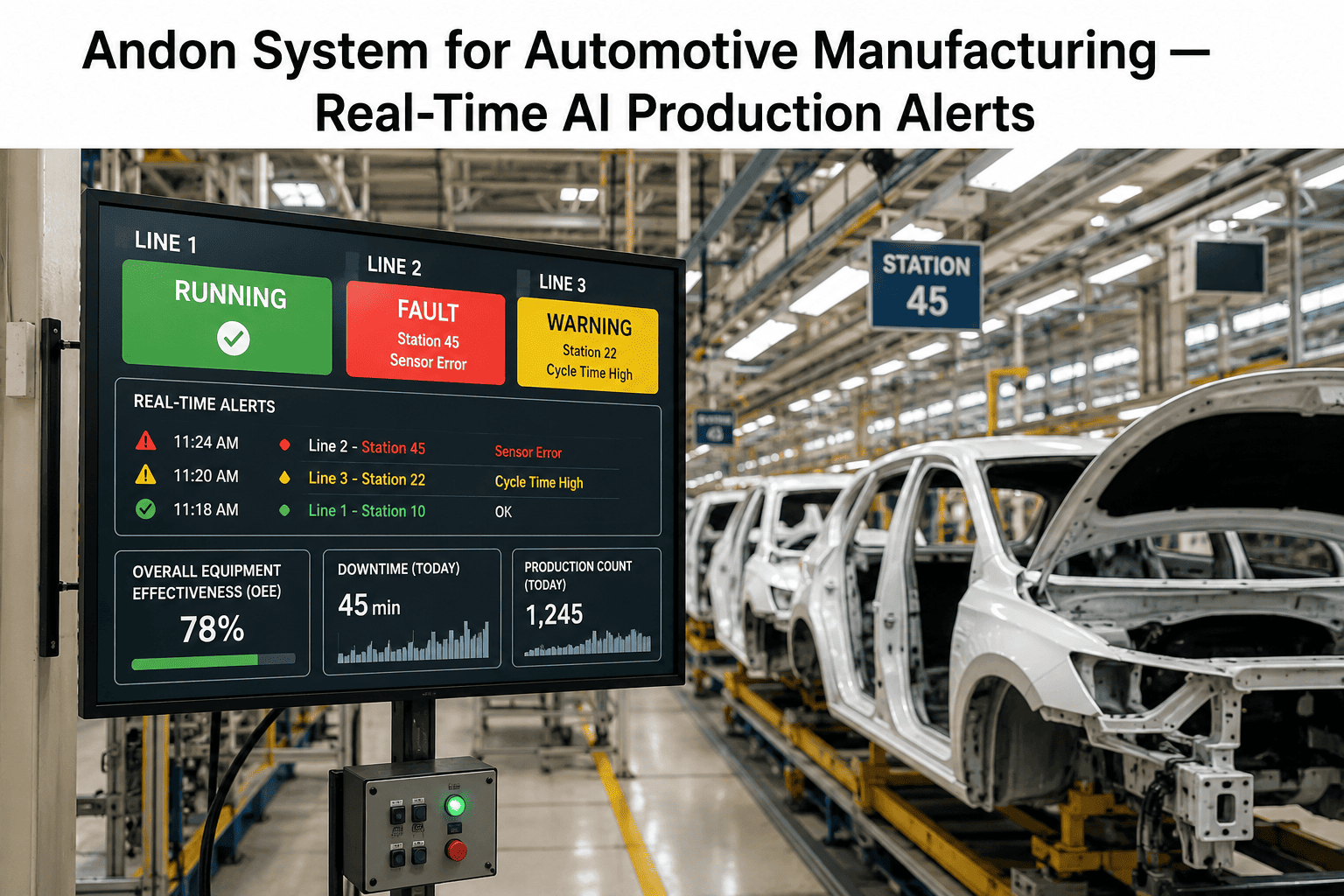
Quality technicians receive defect alerts on mobile devices with vehicle VIN, defect type, location image, and recommended corrective action. Technician responds via mobile confirming rework completion, uploading verification photos, and releasing vehicle to next station. Mobile workflow reduces response time from 12 minutes (find technician, communicate verbally, return to station) to 90 seconds (alert to correction completion).
5
Auto Work Order Generation
System auto-generates quality work orders when defects detected, pre-filling VIN, defect classification, station location, and root cause hypothesis from AI analysis. Work order routes to appropriate skill (body shop for weld defects, paint for surface issues, assembly for component errors). Eliminates manual work order creation consuming 8-12 minutes per incident, accelerates corrective action initiation from defect detection.
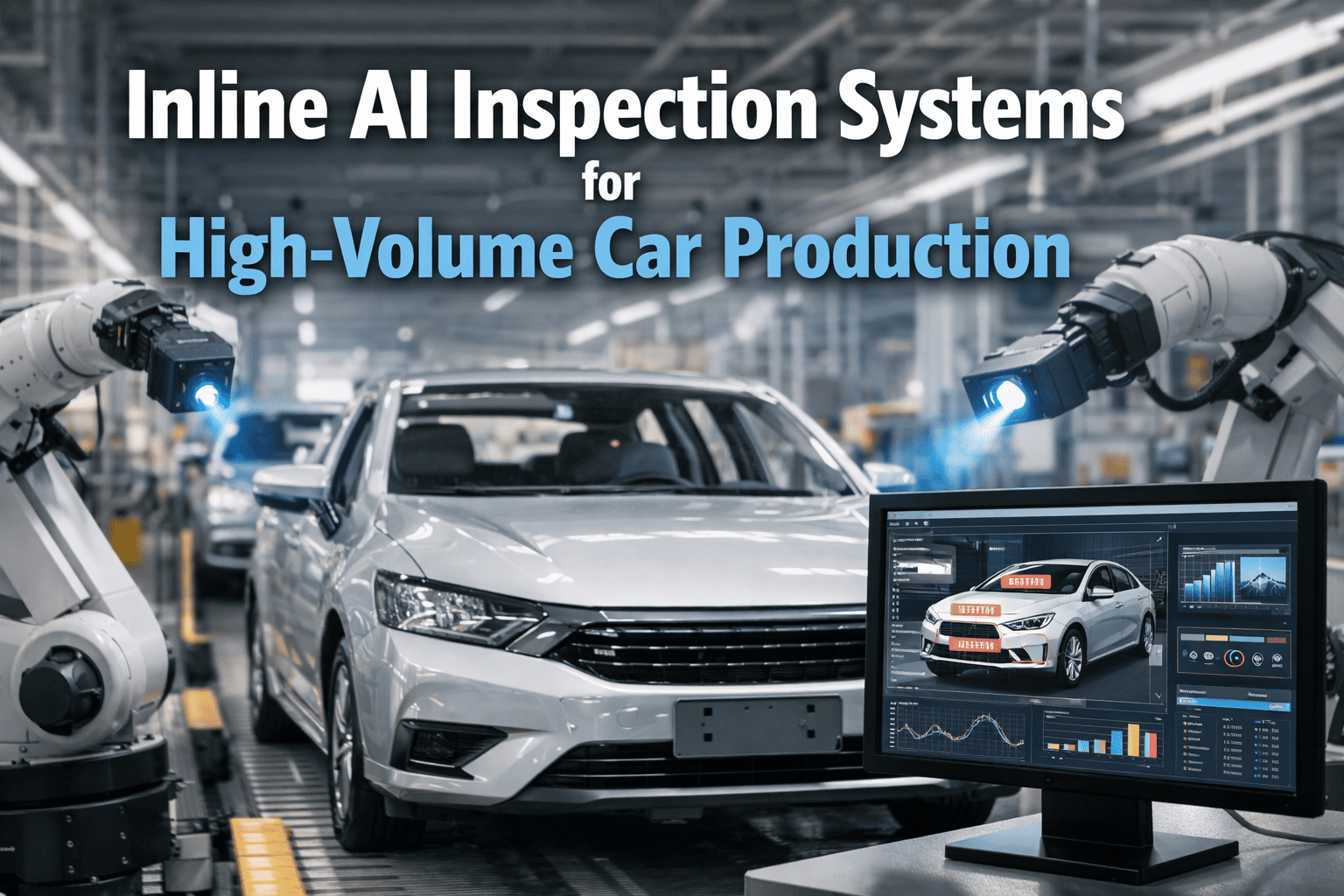
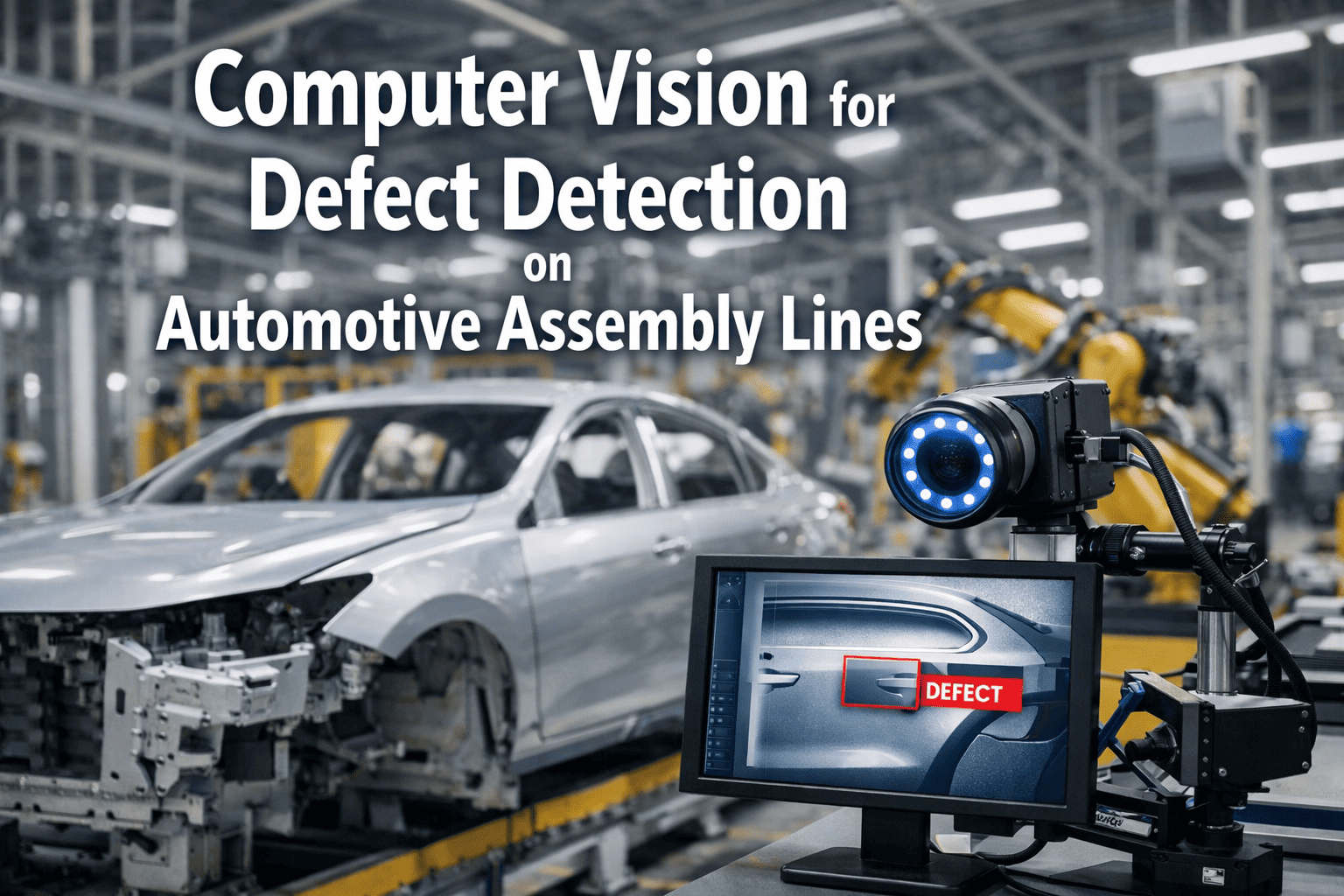
24-camera array captures vehicle from all angles in single 8.2-second scan cycle synchronized to line speed. AI analyzes 2.4 million pixels per vehicle for 147 defect types including paint scratches, dents, contamination, dimensional variations, missing components, misaligned parts, and surface finish anomalies. Automated inspection achieves 99.6% detection accuracy vs 76% manual inspector average, examining 100% of production vs 5-15% sampling.
System maintains complete inspection history per VIN for regulatory traceability. Generates IATF 16949 quality documentation including control charts, defect Pareto analysis, and first-time-through metrics. Automated compliance reporting reduces quality system audit preparation from 40 hours manual data compilation to 15 minutes automated report generation meeting OEM supplier scorecard and certification requirements.
Regional Automotive Manufacturing Challenges & Solutions
| Region |
Key Manufacturing Challenges |
Compliance Requirements |
How iFactory Solves |
| United States | High labor costs driving automation ROI urgency, skilled inspector shortage limiting manual inspection capacity, OSHA safety requirements for hazardous area inspection, EPA emissions compliance for paint booth operations | IATF 16949 automotive quality, OSHA workplace safety, EPA VOC emissions tracking, DOT FMVSS safety standards, state-specific environmental permits | Automated inspection eliminates 78% of manual inspector labor hours while improving detection accuracy 31%. Robotic inspection in paint booths removes human exposure to VOC environments. Automated EPA emissions documentation from paint process data. IATF 16949 compliance reports auto-generated from inspection database. |
| United Arab Emirates | Extreme temperatures affecting paint cure consistency and dimensional stability, harsh desert environment causing contamination risk in paint booths, skilled labor availability constraints, rapid EV adoption requiring battery inspection capability | UAE standardization requirements, ESMA conformity assessment, Dubai Municipality environmental permits, ADNOC sustainability reporting for fleet suppliers | Temperature-compensated dimensional measurement accounts for thermal expansion in 45°C ambient conditions. Dust detection algorithms optimized for desert contamination particles. EV battery pack inspection module validates 288 cell connections per pack. Automated sustainability reporting for UAE regulatory submissions. |
| United Kingdom | Brexit supply chain complexity increasing quality variation from new suppliers, strict emissions regulations driving paint process optimization, skilled workforce aging creating inspection knowledge loss risk | IATF 16949, UK WLTP emissions compliance, HSE workplace safety, DVSA type approval quality documentation, British Standards automotive specifications | AI defect library trains on new supplier components within 48 hours, adapting to quality variation. Paint process monitoring correlates defects to booth parameters for emissions-compliant optimization. Knowledge capture from experienced inspectors trains AI models, preserving expertise as workforce transitions. |
| Canada | Bilingual documentation requirements, harsh winter conditions affecting dimensional tolerances, remote facility locations limiting technician access for rework, USMCA trade agreement quality certification needs | IATF 16949, Transport Canada MVSS, CSA automotive standards, ECCC environmental reporting, provincial workplace safety regulations, bilingual labeling verification | French and English dual-language defect reporting and work instructions. Cold-climate dimensional tolerance adaptation for -40°C production environments. Remote quality monitoring enables central engineering support to distributed assembly sites. USMCA certificate of origin quality data auto-generated from inspection records. |
| Europe | Multi-country operations requiring unified quality platform, stringent EU emissions and sustainability mandates, high energy costs driving efficiency focus, diverse OEM customer specifications across German, French, Italian manufacturers | IATF 16949, EU type approval, REACH substance compliance, WLTP emissions, General Safety Regulation, country-specific homologation requirements, GDPR data privacy | Multi-language support across 12 European languages. Automated EU type approval quality documentation. REACH compliance verification through component identification. Energy optimization through defect root cause elimination reducing rework energy consumption 84%. GDPR-compliant quality data handling with EU data residency options. |
Platform Capability Comparison
| Capability |
iFactory |
QAD Redzone |
Evocon |
Mingo |
MaintainX |
IBM Maximo |
| AI Vision Inspection |
| 360-degree multi-camera inspection | 24-camera array, 8.2sec scan | Not available | Not available | Not available | Not available | Not available |
| Real-time defect detection accuracy | 99.6% at production speed | Not available | Not available | Not available | Not available | Not available |
| Predictive Maintenance |
| AI failure prediction | 15-45 day advance warning | Basic analytics | Limited | Not available | Manual scheduling | Add-on module |
| Automated work order generation | Auto-created from defects | Manual creation | Manual creation | Template-based | Mobile work orders | Manual creation |
| Integration Capabilities |
| PLC/SCADA/MES integration | Native connectors all major brands | Limited PLC support | Basic integration | API only | Not available | Custom development |
| Real-time OEE tracking | Live quality rate component | OEE dashboard | OEE tracking | OEE metrics | Not available | Manual calculation |
| Automotive Specialization |
| IATF 16949 compliance automation | Auto-generated documentation | Manual reporting | Manual reporting | Not available | Not available | Custom reports |
| EV battery inspection | Dedicated battery module | Not available | Not available | Not available | Not available | Generic only |
| Ease of Use & Deployment |
| Implementation timeline | 4-6 weeks | 8-12 weeks | 6-10 weeks | 8-12 weeks | 2-4 weeks | 6-18 months |
| Mobile-first interface | Native iOS/Android apps | Mobile responsive | Mobile app | Web only | Mobile native | Mobile web |
Based on publicly available product documentation as of Q1 2025. Verify current capabilities with each vendor.
Zero-Defect Manufacturing
Inspect Every Vehicle from Every Angle at Production Speed
360-degree AI vision catches defects invisible to human inspectors, enabling immediate correction before downstream progression and eliminating costly end-of-line rework.
Implementation Workflow & Deployment Roadmap
Week 1-2: Data Integration
PLC, SCADA & Sensor Connectivity
Connect to existing Siemens, Allen-Bradley, or Mitsubishi PLCs controlling line equipment. Integrate SCADA data streams for process parameter correlation. Configure camera network and lighting systems. Establish baseline image capture synchronized to line speed conveyor encoders. Validate data flow from shop floor to AI processing engine.
Week 3: Asset Onboarding
Vehicle Model & Inspection Point Configuration
Load CAD models for each vehicle variant produced on line. Define critical inspection points per model including body panel surfaces, gap measurements, component locations, and quality specifications. Train AI on acceptable vs defective examples from historical quality data and known good/bad parts. Configure defect classification taxonomy aligned to plant quality terminology.
Week 4: AI Model Setup
Machine Learning Training & Calibration
AI models learn plant-specific defect signatures from baseline image set. Calibrate detection thresholds balancing sensitivity (catch all defects) vs specificity (minimize false positives). Validate accuracy on test vehicle set achieving 99.6% target detection rate. Fine-tune for lighting conditions, surface finishes, and color variations across vehicle portfolio.
Week 5: Predictive Alert Configuration
Workflow & Notification Setup
Configure alert routing to quality technicians via mobile devices based on defect type and severity. Set up automatic work order generation with defect images and corrective action recommendations. Integrate with MES for quality documentation and VIN traceability. Establish escalation procedures for recurring defect patterns requiring engineering intervention.
Week 6: Production Go-Live
Pilot Deployment & Validation
Activate inspection on single production line in parallel with existing manual inspection. Validate AI detection against human inspector findings, target 99% agreement rate. Train quality personnel on system operation, defect review, and false positive handling. Monitor performance metrics: detection accuracy, false positive rate, inspection cycle time.
Week 7-8: Scaling
Multi-Line Expansion & Optimization
Deploy to additional production lines using validated configuration. Expand coverage to body shop, paint, and final assembly inspection stations. AI continues learning from production data, improving accuracy through feedback loop. Establish continuous improvement process reviewing defect trends and updating inspection criteria.
Measured Results from Deployed Automotive Production Lines
91%
Reduction in Quality Escapes to Customer
87%
Decrease in End-of-Line Rework Hours
4.2%
OEE Improvement from Quality Rate Gains
$8.4M
Annual Cost Savings (240K volume plant)
82%
Faster Defect Detection vs Manual Inspection
99.6%
Defect Detection Accuracy Rate
From the Field
"Before AI inspection, we caught paint defects during final audit requiring door disassembly for repair. Average 24 vehicles per day needed post-assembly paint rework costing $2,200-$2,800 each in labor and downtime. After deploying iFactory 360-degree vision in paint booth exit, we detect defects within 18 minutes of application before clear coat. Rework happens in paint bay at $180-$240 cost within 15 minutes vs 4.8 hours post-assembly. Our paint rework after final assembly dropped from 24 per day to 2 per day. Annual savings $4.8 million. System also identified contamination source from degraded booth filter we did not know about. AI detected particle pattern, we replaced filter, contamination defects dropped 94%. Customer quality complaints for paint issues down 86% first year. Best ROI project we implemented."
Quality Engineering Manager
Tier 1 Automotive Assembly Plant, 320,000 Annual Volume, Alabama USA
Frequently Asked Questions
QHow does the system handle multiple vehicle models and variants on same production line?
System auto-detects vehicle model from VIN barcode or RFID tag, loads appropriate inspection template with model-specific critical points and quality specifications. Supports unlimited model variants including different wheelbases, roof configurations, trim levels, and color options. Model changeover recognition occurs in under 200 milliseconds between vehicles, maintaining full line speed operation during mixed-model production.
Book a demo to see multi-model capability.
QCan iFactory integrate with existing quality management and MES systems?
Yes. Platform connects to major automotive MES including Delmia Apriso, Siemens Opcenter, SAP ME, and proprietary systems via REST API or database integration. Quality data flows to QMS systems like Minitab, Enact, or plant-specific platforms. VIN-level traceability links inspection results to production records. Integration typically requires 3-5 days for standard platforms. System provides pre-built connectors for top 12 automotive manufacturing software platforms.
QWhat happens when AI flags a defect but quality technician disagrees with classification?
System includes human-in-loop validation where technicians review AI decisions and provide feedback. When technician marks false positive or reclassifies defect type, system logs override with reason and image annotation. Override data retrains AI model weekly, improving future accuracy. Typical override rate after 90-day learning period: 3-6% for subjective defects (surface finish, color match), under 1% for objective defects (dimensional, missing components). AI learns plant-specific quality standards from technician feedback.
QHow does the platform maintain inspection accuracy at varying production line speeds?
Vision cameras use encoder feedback from conveyor system to trigger synchronized image capture at precise vehicle positions regardless of speed variation. Strobe lighting freezes motion for sharp images from 35 to 65 jobs per hour line speeds. AI processing completes within 8.2 seconds maintaining real-time performance at maximum production rates. System tested and validated across automotive line speeds from 30 JPH maintenance mode to 75 JPH peak capacity with consistent 99.6% accuracy throughout speed range.
QCan the system generate automated compliance reports for IATF 16949 audits and OEM scorecards?
Yes. Platform auto-generates IATF 16949 quality documentation including control charts, defect Pareto analysis, first-time-through metrics, and process capability studies. OEM supplier scorecard data exports in GM, Ford, Toyota, Volkswagen formats. Historical inspection data retained 5 years minimum supporting regulatory audits. Report generation automated on daily, weekly, monthly schedules. Custom report builder enables plant-specific quality metrics tracking.
Book a demo to see compliance reporting.
Achieve Zero-Defect Delivery with 360-Degree AI Vision Inspection
iFactory's multi-camera inspection system examines 100% of vehicles at production speed, detecting defects from every angle and enabling immediate correction before quality escapes progress downstream.
99.6% Detection Accuracy
360-Degree Coverage
8.2 Second Scan
91% Fewer Escapes
Real-Time Alerts