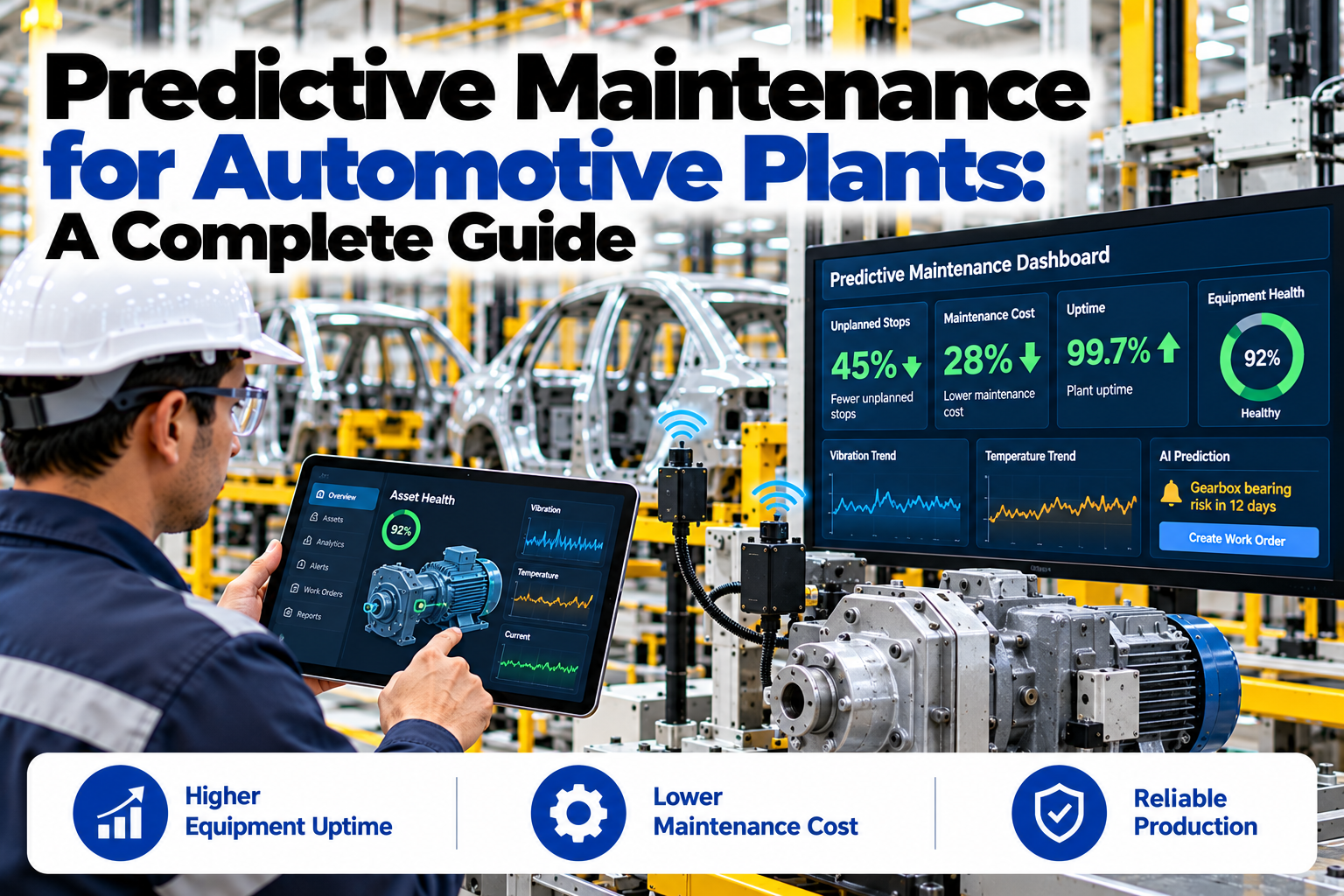
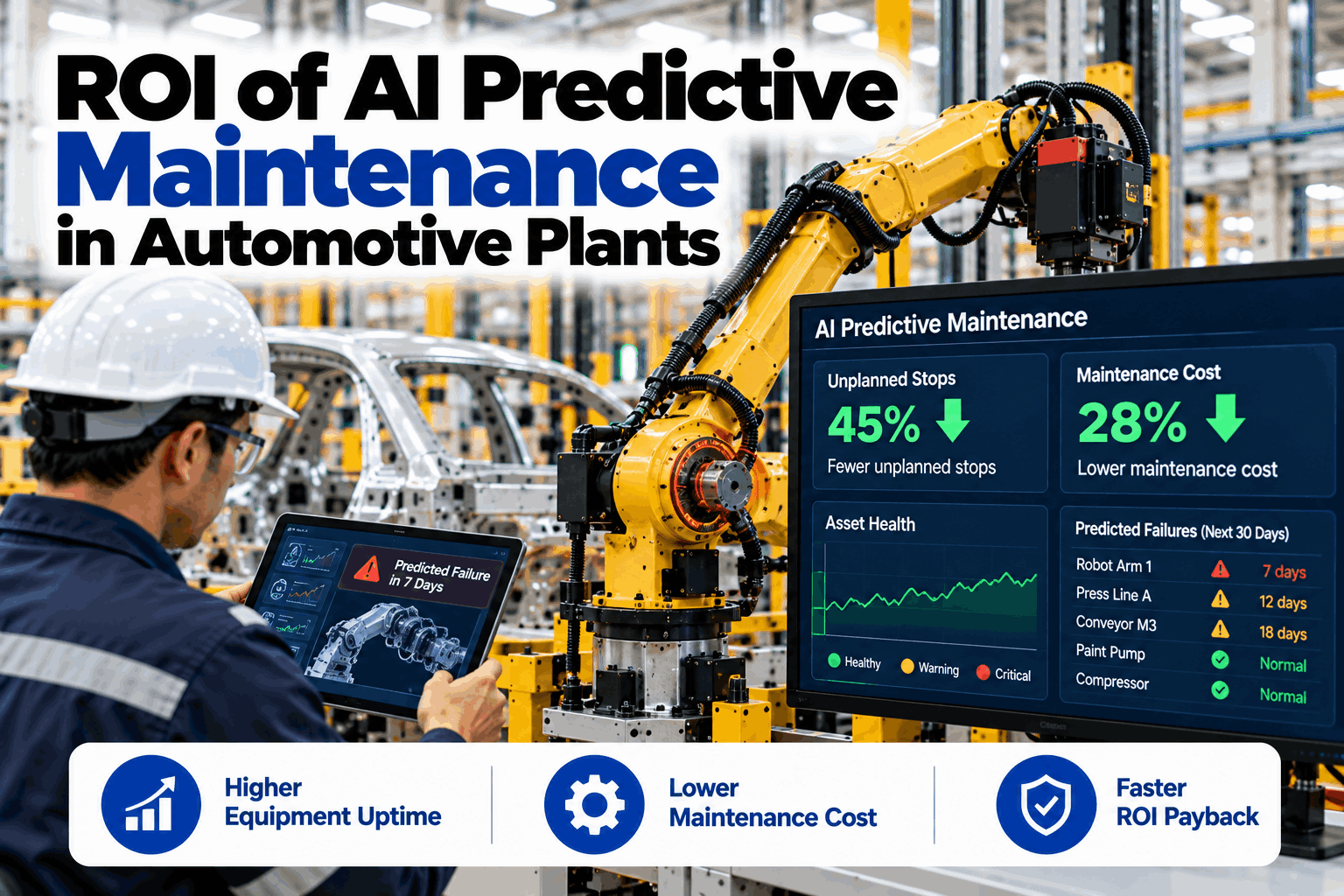
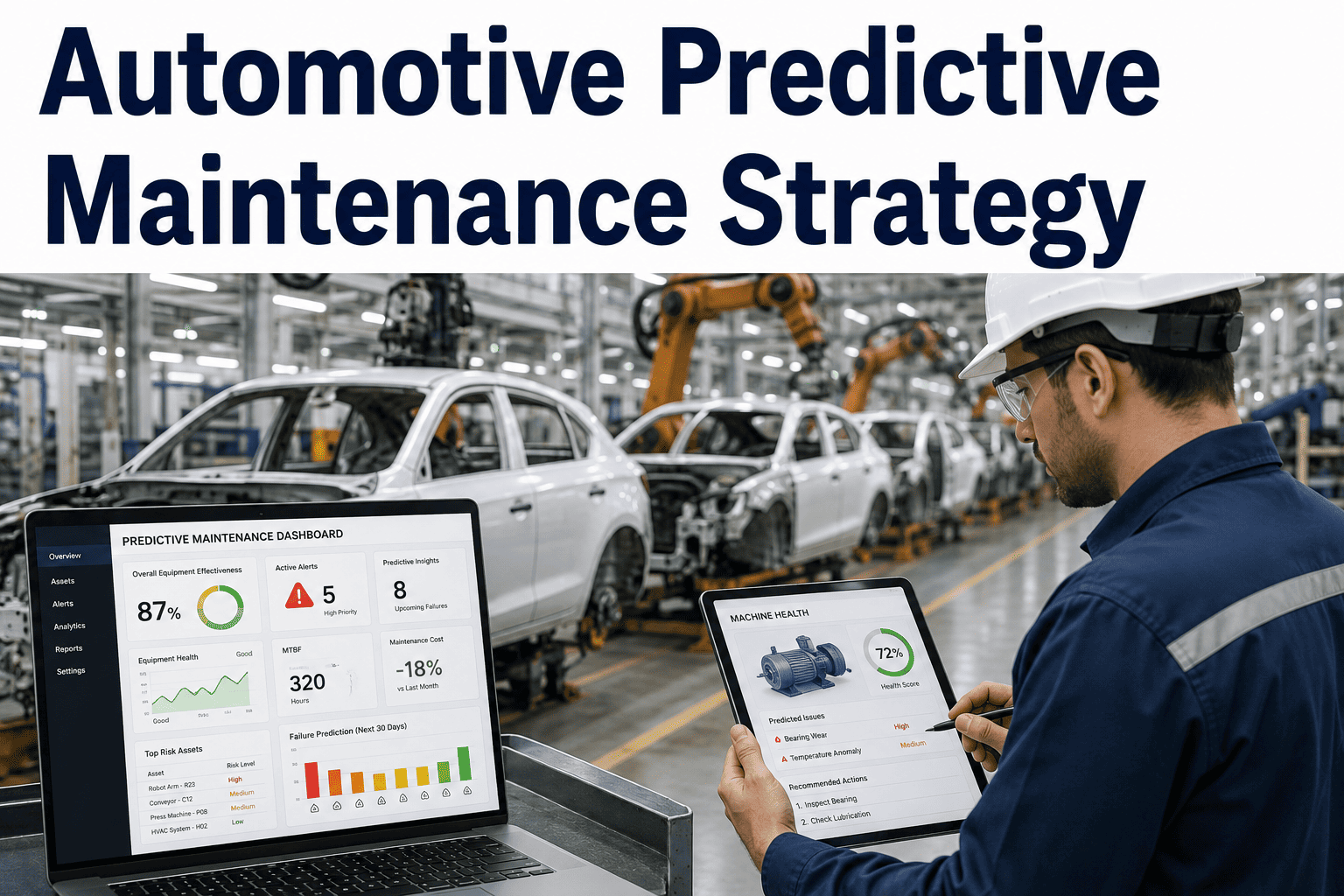
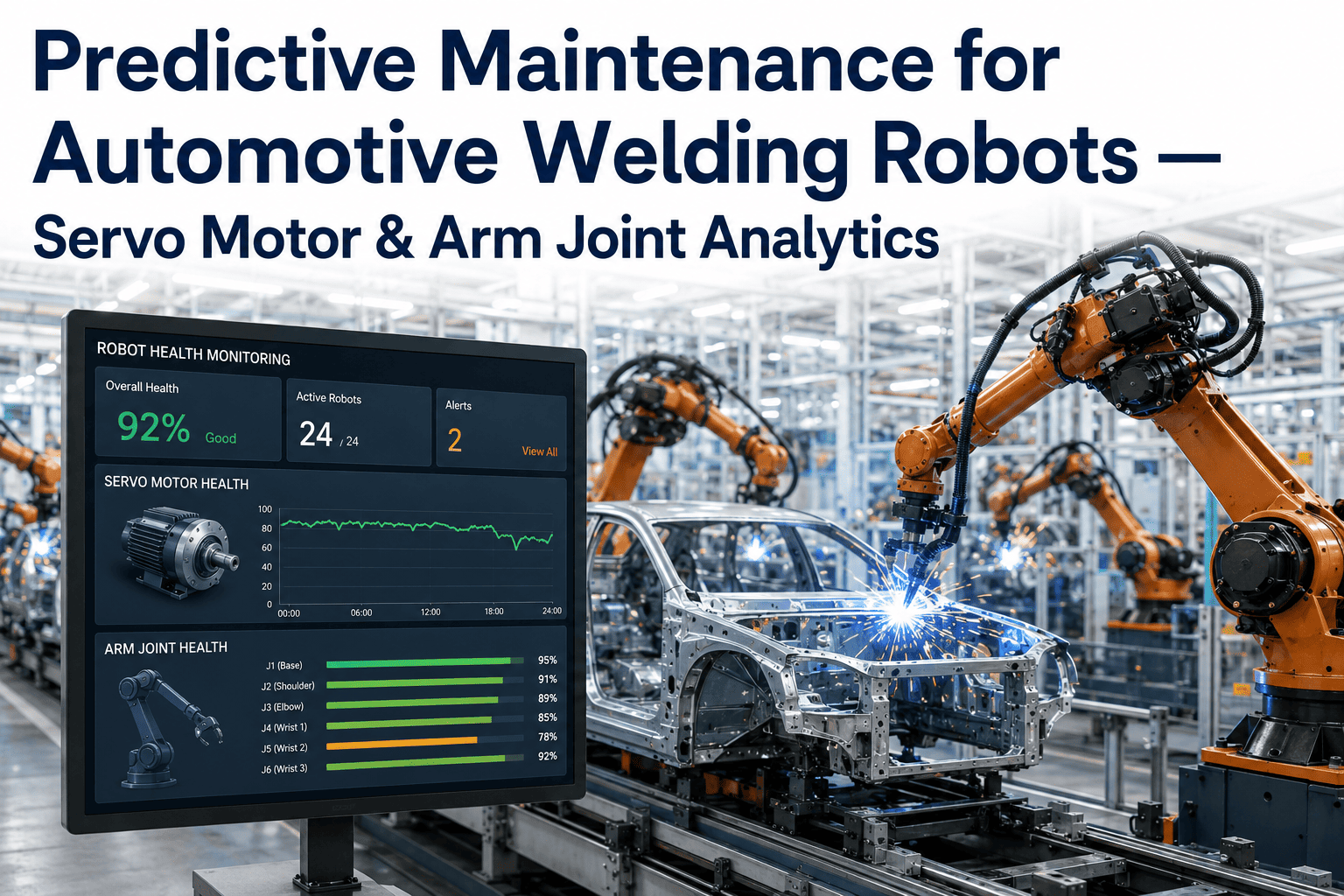
BMW's Munich assembly plant no longer shuts down production lines due to unexpected robot arm failures. Through AI-driven predictive maintenance, the facility detects bearing wear, motor degradation, and hydraulic pressure anomalies up to 14 days before failure, allowing scheduled interventions during planned downtime windows. iFactory's AI platform analyzes vibration signatures, current draw patterns, and motion profile deviations from 2,400+ robot arms across BMW's global assembly network, delivering failure predictions with 94% accuracy and reducing unplanned downtime by 67%. The system integrates directly with existing CMMS infrastructure, turning real-time sensor data into actionable maintenance work orders without requiring production line modifications. Book a demo to see BMW-grade robot monitoring in your facility.
iFactory uses machine learning to monitor robot arm health through vibration analysis, current signature monitoring, and motion profile tracking. The AI predicts failures 7-21 days in advance by detecting subtle degradation patterns invisible to traditional condition monitoring systems, enabling BMW and other automotive manufacturers to schedule maintenance during planned downtime rather than experiencing forced production stoppages. Average result: 67% reduction in unplanned robot downtime, 52% decrease in spare parts emergency orders.
How AI Predicts Robot Arm Failures Before Traditional Monitoring Detects Them
Robot arms in automotive assembly environments operate in high-precision, high-speed conditions where failures cascade across entire production lines. The five-stage AI monitoring pipeline below shows how iFactory detects degradation weeks before conventional vibration thresholds or motor current limits are breached.
See how iFactory's AI detects bearing wear, motor degradation, and mechanical faults 7-21 days before failure, enabling scheduled maintenance during planned downtime windows.
Critical Robot Arm Failure Modes AI Detects Early
Every failure mode below represents a production stoppage that cascades across automotive assembly lines, idling hundreds of workers and costing $8,000-$15,000 per hour of downtime. Traditional condition monitoring detects these faults only when they reach critical thresholds, AI identifies the degradation pattern weeks earlier. Talk to an expert about your robot monitoring requirements.
AI Detection: High-frequency vibration envelope analysis identifies micro-spalling 14-18 days before threshold breach. Maintenance scheduled during planned weekend shutdown. Failure mode detected in 89% of cases before any alarm triggers.
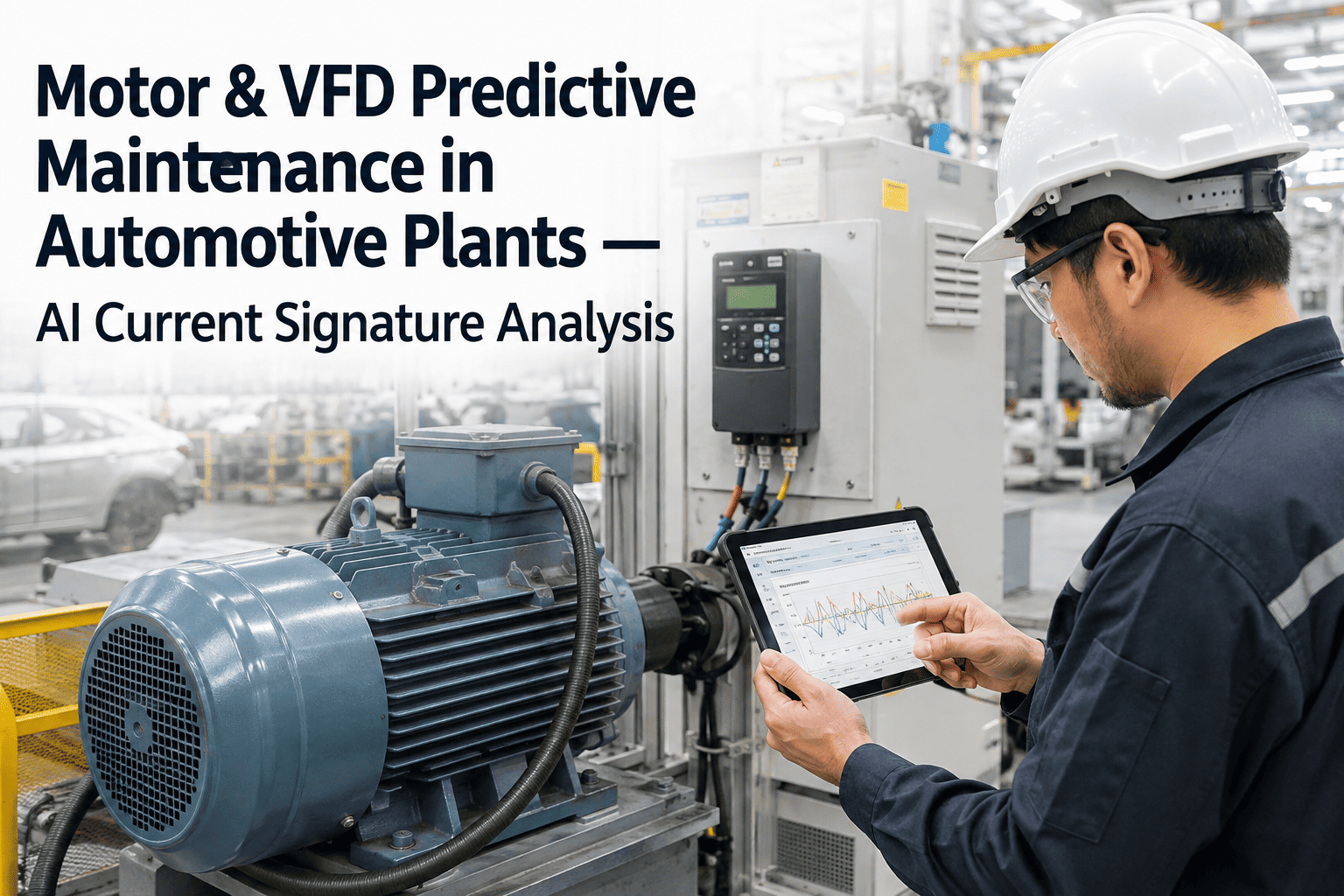
AI Detection: Current signature analysis detects winding insulation breakdown through asymmetric current draw patterns and rising phase imbalance. RUL prediction: 10-16 days. Motor replacement scheduled during model changeover downtime. Detected 94% of motor failures before any operational impact.
AI Detection: Motion profile analysis identifies micro-variations in acceleration consistency and position holding at 0.008 degree variance level. Gearbox wear detected 21-28 days before quality impact. Proactive replacement during scheduled maintenance prevents scrap and rework costs.
AI Detection: Pressure transducer pattern analysis detects seal degradation from micro-pressure fluctuations during extension/retraction cycles. Seal replacement scheduled 12-18 days before visible leakage. Parts ordered in advance, maintenance performed during weekend, zero production impact.
AI Detection: Communication packet timing analysis identifies degrading network interface or cable insulation breakdown from increasing retry rates and latency variance. Controller or cable replacement scheduled 8-14 days before critical failure threshold. Maintenance performed during planned downtime, parts pre-staged.
AI Detection: Brake engagement current signature and holding torque analysis detects friction material wear 16-22 days before slip occurrence. Brake module replaced during scheduled maintenance window with pre-ordered parts. Zero safety incidents, zero emergency stoppages.
Implementation Workflow for Automotive Assembly Lines
iFactory's robot monitoring system integrates with existing assembly line infrastructure without production interruption. The workflow below shows the typical 45-day deployment timeline from initial site survey to full predictive analytics operation.
AI Prediction Accuracy vs Traditional Condition Monitoring
The table below compares failure detection performance between threshold-based condition monitoring and iFactory AI predictive analytics, measured across BMW and other automotive manufacturer deployments after 12 months of operation.
| Performance Metric | Traditional Condition Monitoring | iFactory AI Predictive Analytics | Improvement |
|---|---|---|---|
| Advance warning time before failure | 2-5 days | 7-21 days | +5-16 days |
| Prediction accuracy (confirmed failures) | 68-72% | 94% | +22-26 pts |
| False positive rate (unnecessary interventions) | 28-35% | 6-9% | -19-29 pts |
| Unplanned robot downtime events per year | 24-32 per 100 robots | 8-11 per 100 robots | 67% reduction |
| Emergency spare parts orders | 18-22 per quarter | 3-5 per quarter | 78% reduction |
| Maintenance performed during planned downtime | 42-48% | 91-94% | +43-52 pts |
| Average production impact per robot failure | 6.5 hours line downtime | 0.3 hours (scheduled maintenance) | 95% reduction |
| Mean time between failures (MTBF) | 1,840 hours | 2,680 hours | +46% increase |
Regional Compliance & Data Security Standards
iFactory's robot monitoring platform operates in full compliance with regional manufacturing data security and industrial safety regulations across our primary automotive markets. Discuss compliance requirements for your region.
| Region | Data Security Standards | Industrial Safety Compliance | Manufacturing Regulations |
|---|---|---|---|
| United States | NIST Cybersecurity Framework, SOC 2 Type II, ISO 27001 | OSHA 1910.212 Machine Guarding, ANSI/RIA R15.06 Robot Safety | FDA 21 CFR Part 11 (automotive medical devices), ITAR compliance available |
| United Arab Emirates | UAE Data Protection Law (GDPR-equivalent), Dubai International Financial Centre (DIFC) Data Protection | UAE Federal Law No. 8 of 1980 (Labour Relations), ESMA Industrial Safety Standards | Emirates Authority for Standardization (ESMA) ISO 9001, Automotive Industry Action Group (AIAG) standards |
| United Kingdom | UK GDPR, Cyber Essentials Plus, ISO 27001 | Health and Safety at Work Act 1974, PUWER 1998, BS EN ISO 10218 Robot Safety | Automotive Council UK standards, SMMT manufacturing guidelines |
| Canada | PIPEDA, SOC 2 Type II, Canadian Centre for Cyber Security guidelines | Canada Labour Code Part II, CSA Z434 Industrial Robots, Provincial OHS regulations | Transport Canada Motor Vehicle Safety Act, APMA automotive manufacturing standards |
| European Union | GDPR, NIS Directive, ISO 27001, eIDAS regulation | Machinery Directive 2006/42/EC, EN ISO 10218-1/2 Robot Safety, Framework Directive 89/391/EEC | EU Type Approval Framework, ACEA automotive manufacturing standards, CE marking requirements |
iFactory's robot monitoring system integrates with your existing assembly line sensors and CMMS infrastructure without production interruption. Full predictive analytics in 6 weeks.
Platform Capability Comparison for Robot Predictive Maintenance
Traditional CMMS platforms like QAD Redzone and IBM Maximo offer scheduled maintenance and threshold-based alerts. iFactory differentiates through AI-driven RUL prediction, multi-sensor fusion analytics, and automated failure mode classification. Book a comparison demo.
| Capability | iFactory | QAD Redzone | IBM Maximo | UpKeep | Fiix |
|---|---|---|---|---|---|
| Predictive Analytics | |||||
| AI-driven RUL prediction for robot components | ML models, 7-21 day forecast | Rule-based only | Health Insights add-on | Not available | Not available |
| Multi-sensor fusion (vibration, current, thermal) | 6+ sensor types integrated | Single sensor threshold | Requires custom integration | Manual sensor readings | Basic IoT integration |
| Automated failure mode classification | AI classifies bearing, motor, gearbox faults | Manual categorization | Template-based | Manual categorization | Manual categorization |
| Work Order Automation | |||||
| Predictive work order auto-generation | Auto WO with parts, priority, schedule | Threshold-triggered only | Condition-based rules | Meter-based triggers | Basic automation |
| Spare parts inventory cross-check | Real-time stock + auto-order | Manual verification | MRO integration | Parts tracking | Inventory management |
| Maintenance window optimization | AI schedules during planned downtime | Manual scheduling | Calendar-based | Manual scheduling | Basic scheduling |
| Fleet Intelligence | |||||
| Cross-robot failure pattern analysis | Fleet-wide ML, model transferability | Individual asset tracking | Asset class reporting | Individual asset tracking | Individual asset tracking |
| Production impact prediction | Line downtime cost calculation | Downtime tracking only | Reporting only | Not available | Not available |
Based on publicly available product documentation as of Q1 2025. Verify current capabilities with each vendor before procurement decisions.
Measured Results Across Automotive Manufacturing Deployments
From the Field
Frequently Asked Questions
Continue Reading
iFactory's robot monitoring platform delivers BMW-grade predictive maintenance for automotive assembly lines, eliminating unplanned downtime through machine learning that actually works. 45-day deployment, full CMMS integration, zero production impact during implementation.