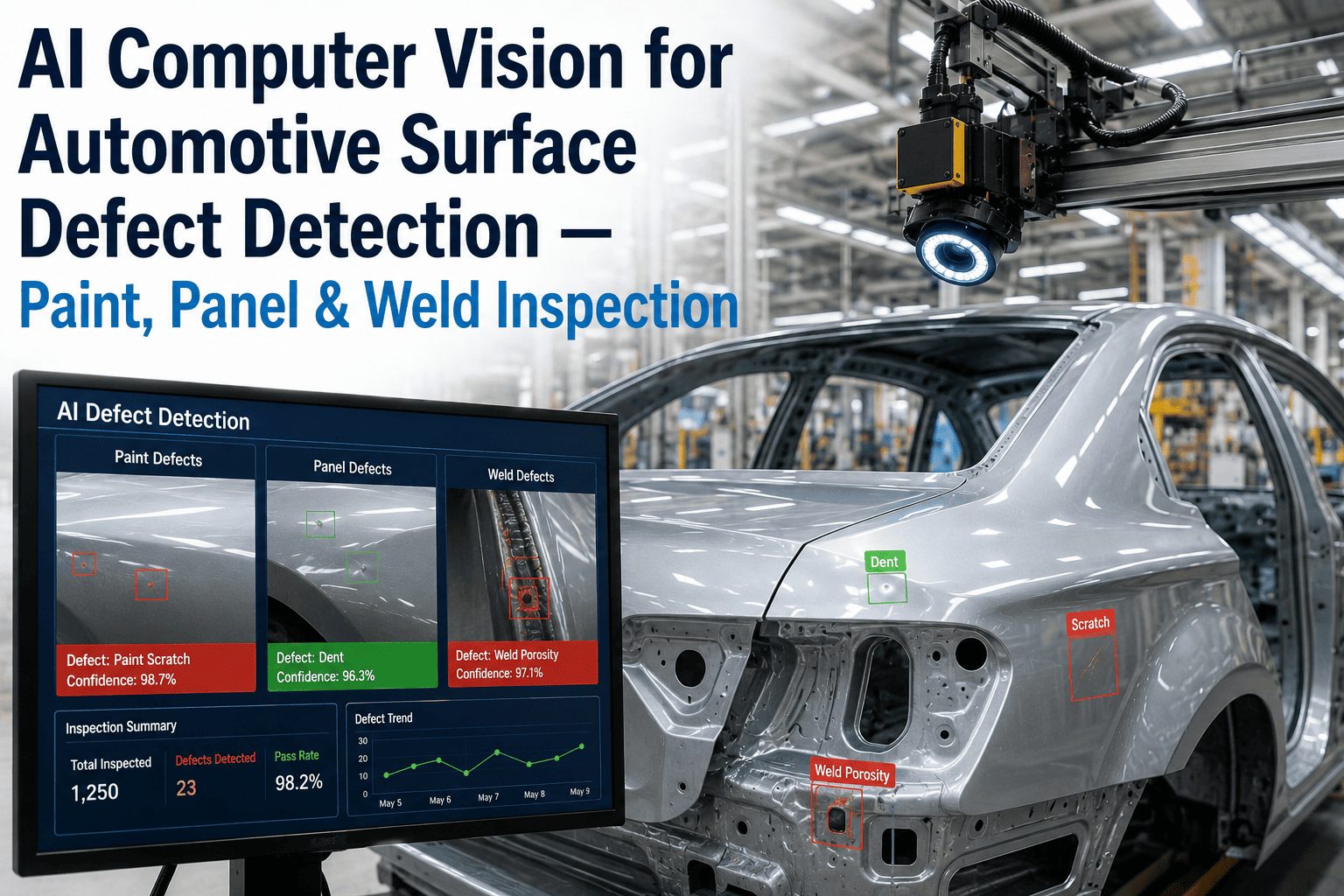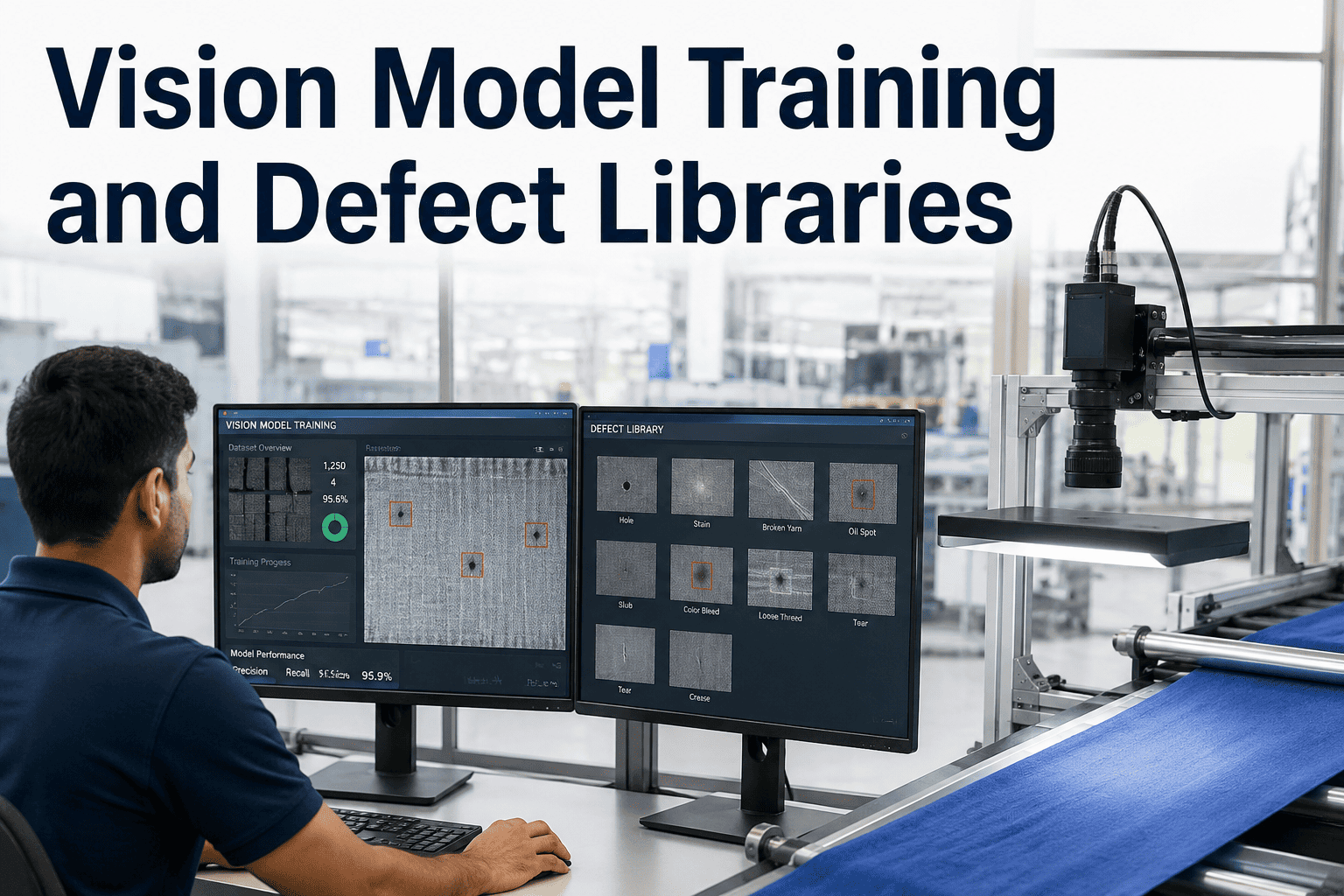
A vision model is only as good as the defect examples it has actually seen, and most manufacturing defects are rare by definition — which is exactly what makes them hard to learn from. A crack that appears once every few thousand units, or a contamination pattern that only shows up under a specific lighting condition, will not train a reliable model if the only data available is a handful of manually labeled photos. This is the quiet bottleneck behind most underperforming vision AI deployments: not the algorithm, but the defect library underneath it. Synthetic data generation and curated defect libraries solve this by giving the model enough varied, well-labeled examples to generalize from. Teams building out a vision program can Book a Demo to see how iFactory accelerates model training with synthetic and curated defect data.
Why Most Vision Models Struggle With the Defects That Matter Most
The defects that cause the most damage — cracks, contamination, structural voids — are almost always the rarest ones in a plant's historical image data, simply because a well-run process does not produce them often. That scarcity creates a training paradox: the model needs the most examples of exactly the defect category it will see the least of in normal production. A library built purely from manually captured photos of naturally occurring defects can take months to accumulate enough examples of a rare failure mode, and by the time it does, the model has already been shipping missed detections in production.
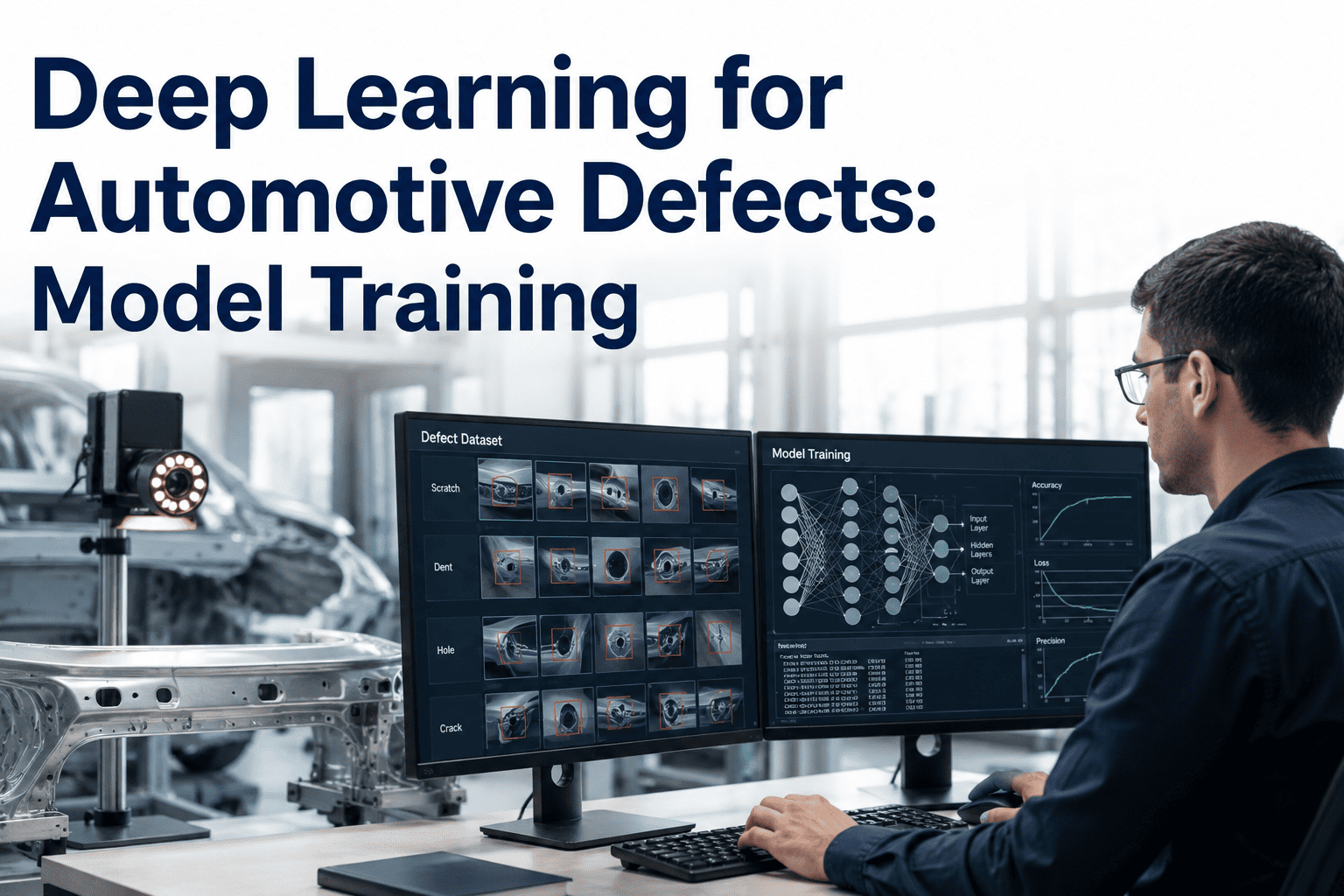
The fix is not to wait longer for more organic examples. It is to build a defect library deliberately, combining real production images with synthetically generated variations that expand coverage across lighting conditions, defect orientations, and severity levels the plant has not yet happened to encounter naturally. This is what separates a vision program that plateaus at a mediocre detection rate from one that keeps improving as new defect modes appear.
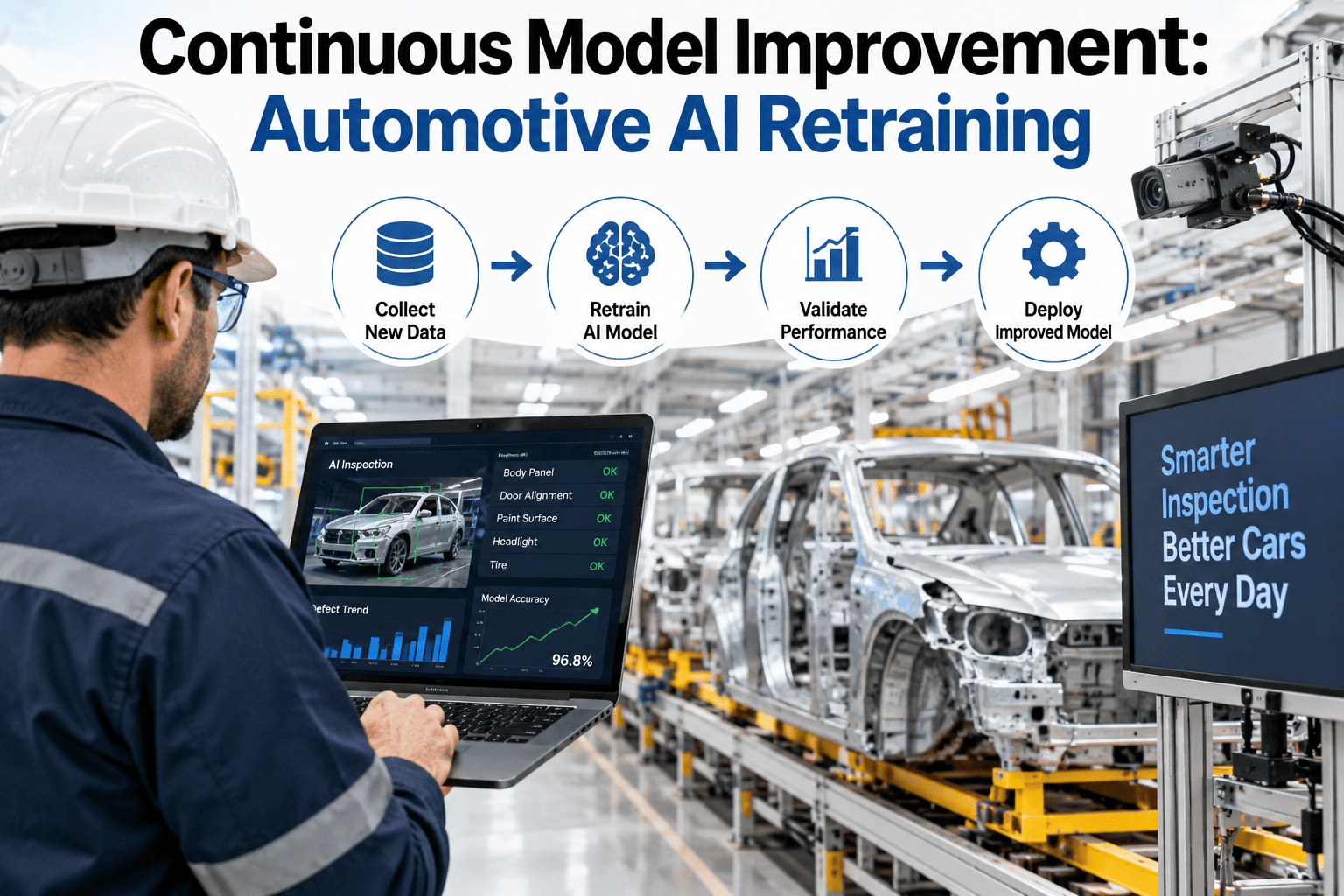
The Continuous Loop Behind a Model That Keeps Improving
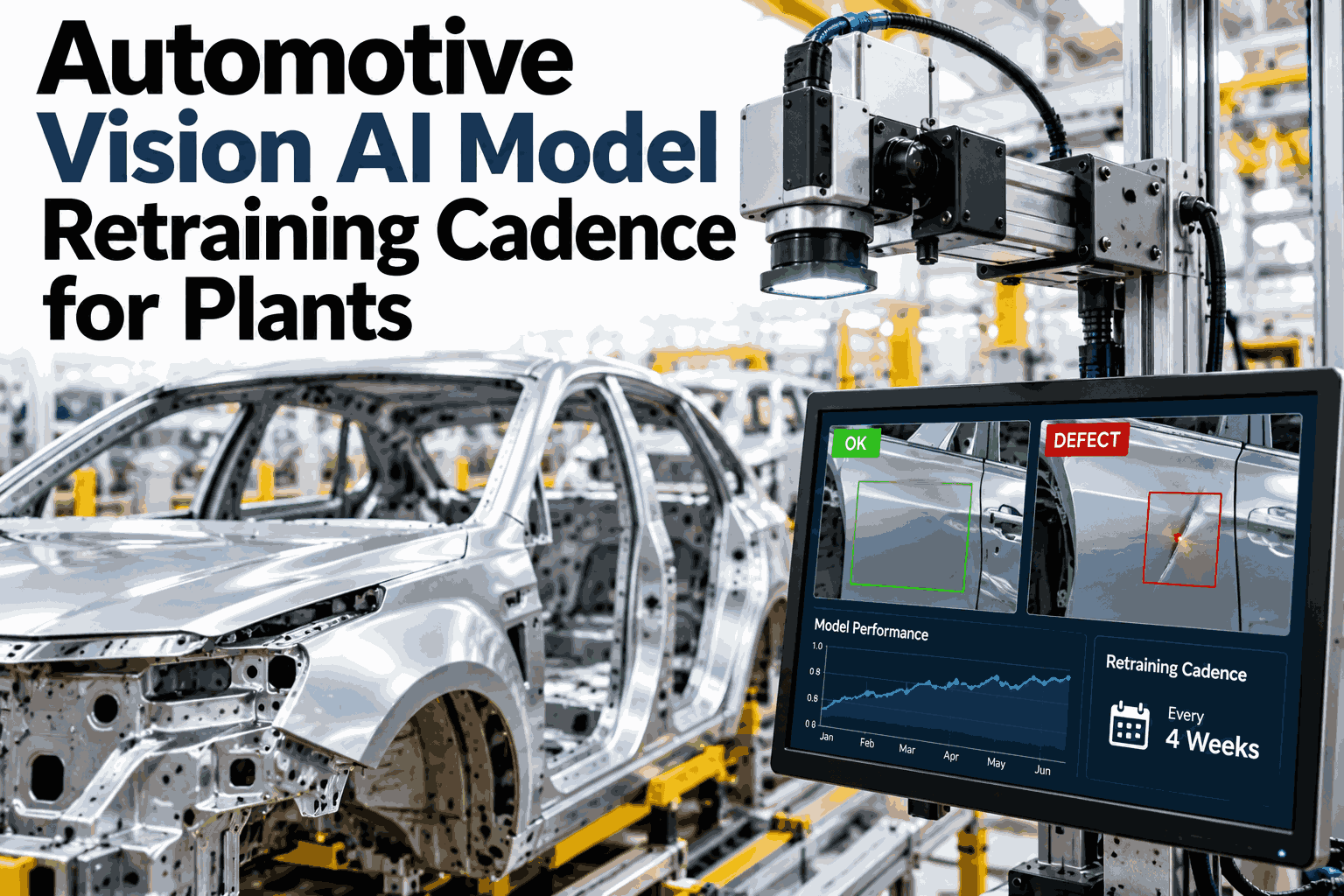
Vision model training is not a one-time event before go-live — it is an ongoing cycle that keeps the model current as production conditions, materials, and defect patterns evolve. The four stages below repeat continuously, each one feeding the next.
Collect
Production images, including flagged and borderline cases, are captured and routed into the labeling pipeline continuously as the line runs.
Label
Curated defect libraries and expert annotation establish ground truth for each defect category, severity level, and acceptable variation.
Synthesize
Synthetic data generation expands rare defect examples across lighting, angle, and severity variations the plant has not yet captured naturally.
Retrain & Redeploy
The model is retrained on the expanded dataset and redeployed to the line, with performance monitored against the previous version before full rollout.
Why Neither Data Source Works Alone
Production images ground the model in reality, capturing the exact lighting, surface texture, and camera geometry the model will see in deployment. Synthetic data expands coverage into scenarios that are too rare, too costly, or too dangerous to wait for naturally. Neither source is sufficient by itself — the strongest defect libraries blend both deliberately.
| Factor | Real Production Images | Synthetic Data |
|---|---|---|
| Realism | Ground truth accuracy | Approximation, tuned to match |
| Coverage of rare defects | Limited by natural occurrence | Generated on demand |
| Labeling cost | Manual annotation required | Automatically labeled at generation |
| Time to expand a category | Weeks to months | Hours to days |
| Best use | Validation and fine-tuning | Filling coverage gaps |
Getting a New Defect Category Into Production Fast
When a new defect mode appears — a new material introduces a novel surface pattern, or a process change produces an unfamiliar failure — waiting to accumulate hundreds of natural examples before training a detector is not realistic. Few-shot learning techniques let a model reach usable accuracy on a new defect category from a handful of labeled examples, augmented by synthetic variation, rather than requiring a full retraining dataset from scratch.
Capture Initial Examples
A small number of confirmed instances of the new defect are captured and labeled as soon as they are identified on the line.
Augment Synthetically
Synthetic generation expands those few examples across lighting, angle, and severity variations to build a workable training set within hours.
Fine-Tune the Existing Model
Rather than training from scratch, the new category is added to the existing model through targeted fine-tuning, preserving accuracy on established defect types.
Validate Before Deployment
The updated model is validated against a held-out set of real examples before it goes live, confirming the new category is caught without new false positives.
Managing a Defect Library as a Living Asset
A defect library that is never maintained degrades in value over time as materials, suppliers, and process parameters shift. Treating the library as a governed, versioned asset — rather than a static training folder — is what keeps model performance stable as production conditions evolve.
Version Control
Every dataset version and corresponding model version is tracked, so a performance regression can be traced back to a specific training change.
Class Balance Monitoring
The library is monitored for class imbalance, flagging when a defect category has too few examples to maintain reliable detection accuracy.
Deployment Rollback
Every model version remains available for rollback, so a retrained model that underperforms in production can be reverted immediately.
What Structured Training Programs Deliver
To add a new defect category to production using few-shot learning and synthetic augmentation, versus months from natural data alone.
Expansion in training examples for rare defect categories when synthetic generation supplements natural production images.
Detection and correction of accuracy drift when the defect library is version-controlled and continuously monitored.
Vision Model Training & Defect Libraries — Common Questions
How much real production data is needed before synthetic data becomes useful?
Synthetic data delivers the most value once a small seed set of real, labeled examples exists for a given defect category, since the synthetic generation process uses that seed set to stay grounded in realistic lighting, texture, and geometry. A handful of confirmed real examples, expanded through synthetic variation, is typically enough to reach a workable starting model, which is then refined further as more natural production data accumulates over time.
Can synthetic data alone train an accurate defect detector?
Not reliably on its own. Synthetic data expands coverage and volume efficiently, but a model trained purely on synthetic examples risks learning patterns that do not perfectly match real production conditions. The strongest approach blends real production images for grounding with synthetic data for coverage expansion, and validates the resulting model against a held-out set of genuine production examples before it goes live.
How often should a defect library be updated?
Most production vision programs treat the library as a continuously updated asset rather than a fixed dataset, capturing new flagged and borderline cases as the line runs and scheduling periodic retraining cycles rather than a single annual refresh. The right cadence depends on how frequently materials, suppliers, or process parameters change, but plants with active retraining cycles catch drift and new defect modes considerably faster than those retraining only when performance visibly degrades.
What happens if a retrained model performs worse than the previous version?
A properly governed training pipeline validates every retrained model against a held-out test set before deployment, and keeps prior model versions available for immediate rollback if the new version underperforms in production. This version control is a core part of managing a defect library responsibly, and teams can review specific governance practices with iFactory Support.
How long does it take to stand up a defect library and training pipeline from scratch?
An initial defect library covering the most common and highest-cost defect categories typically comes together within four to six weeks, combining existing production images with synthetic augmentation to reach workable coverage. Teams starting from limited historical image data can Book a Demo to scope a training pipeline for their specific defect categories.