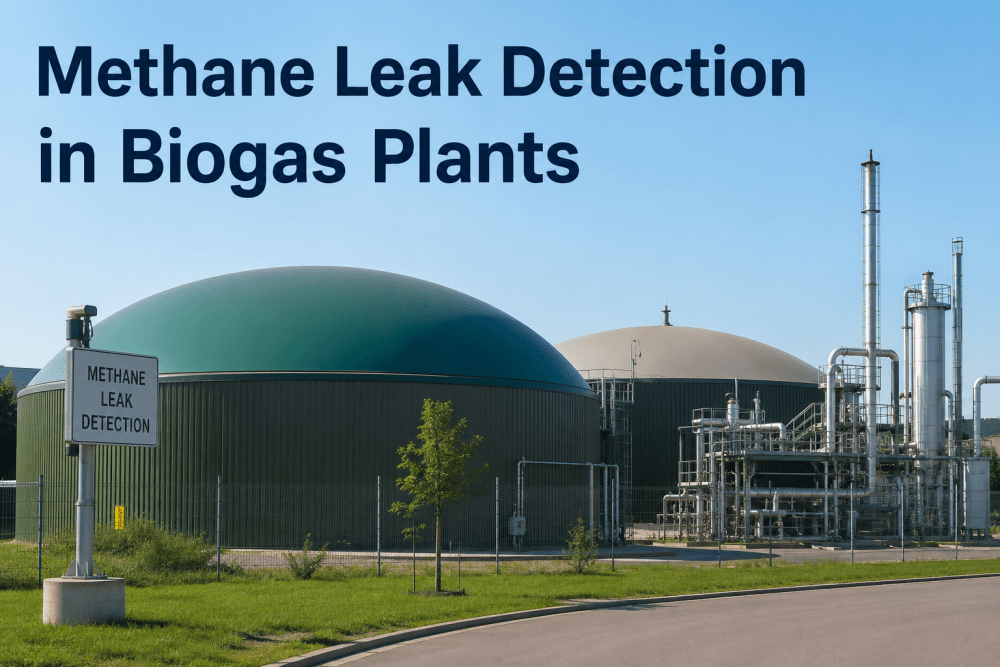
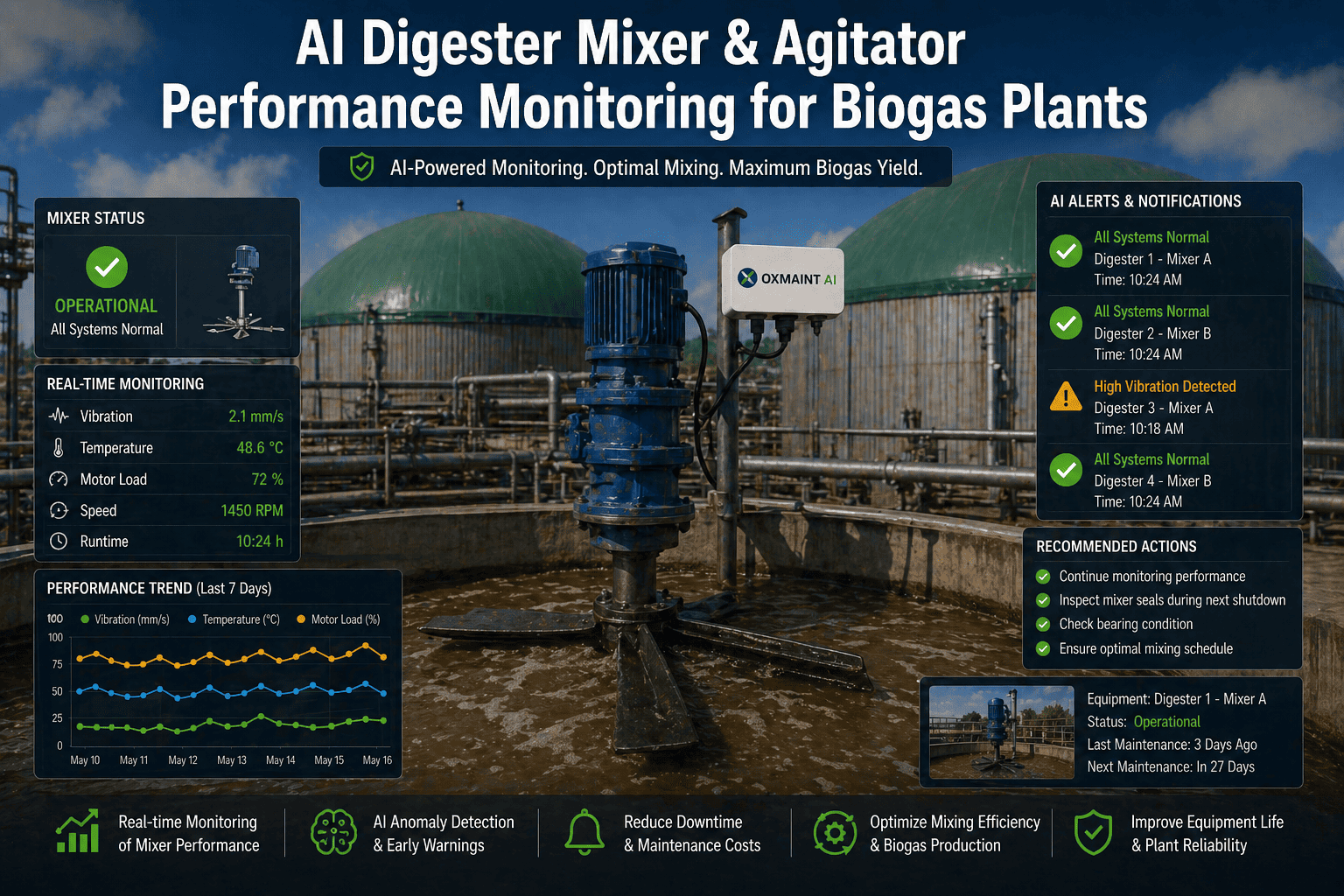
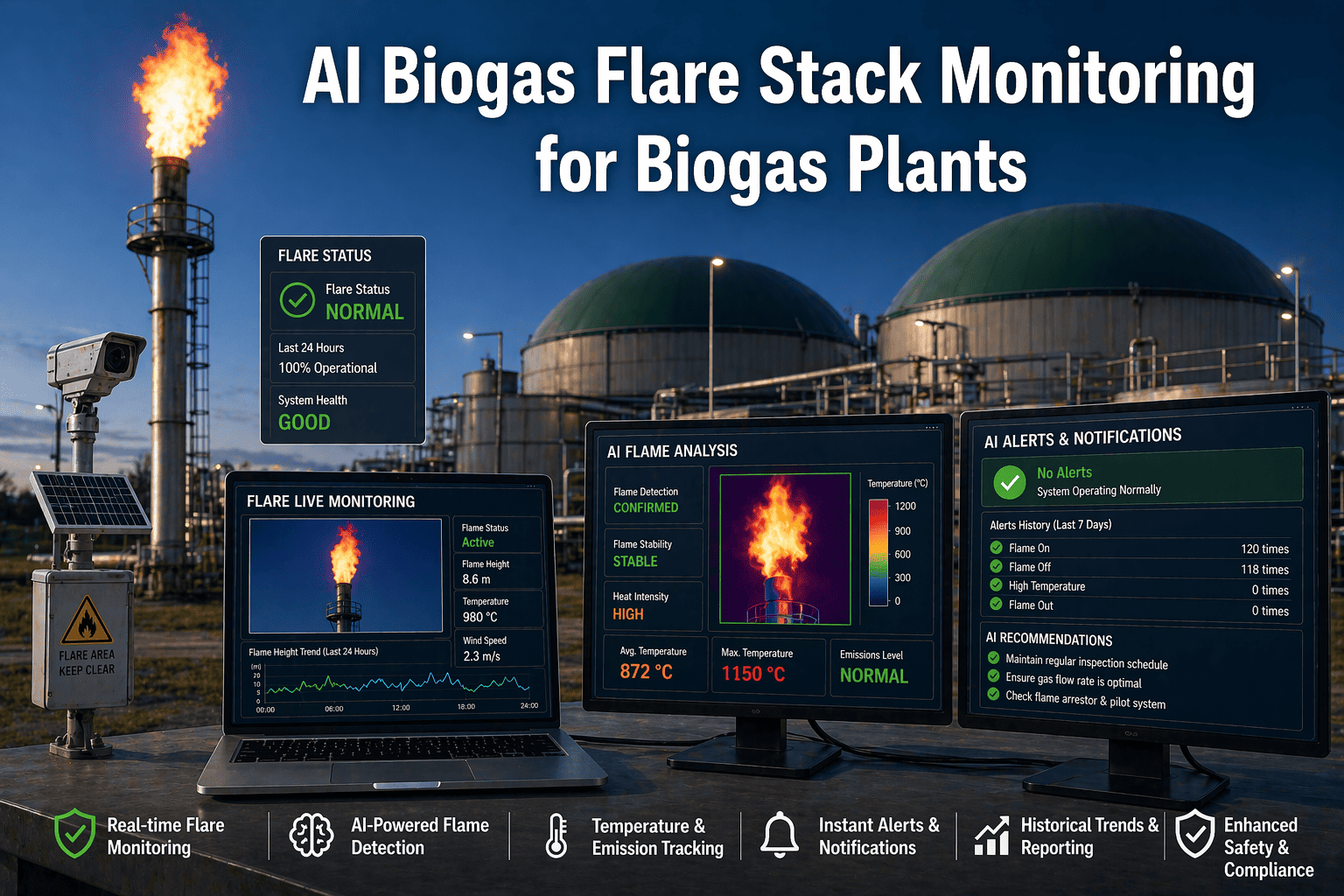
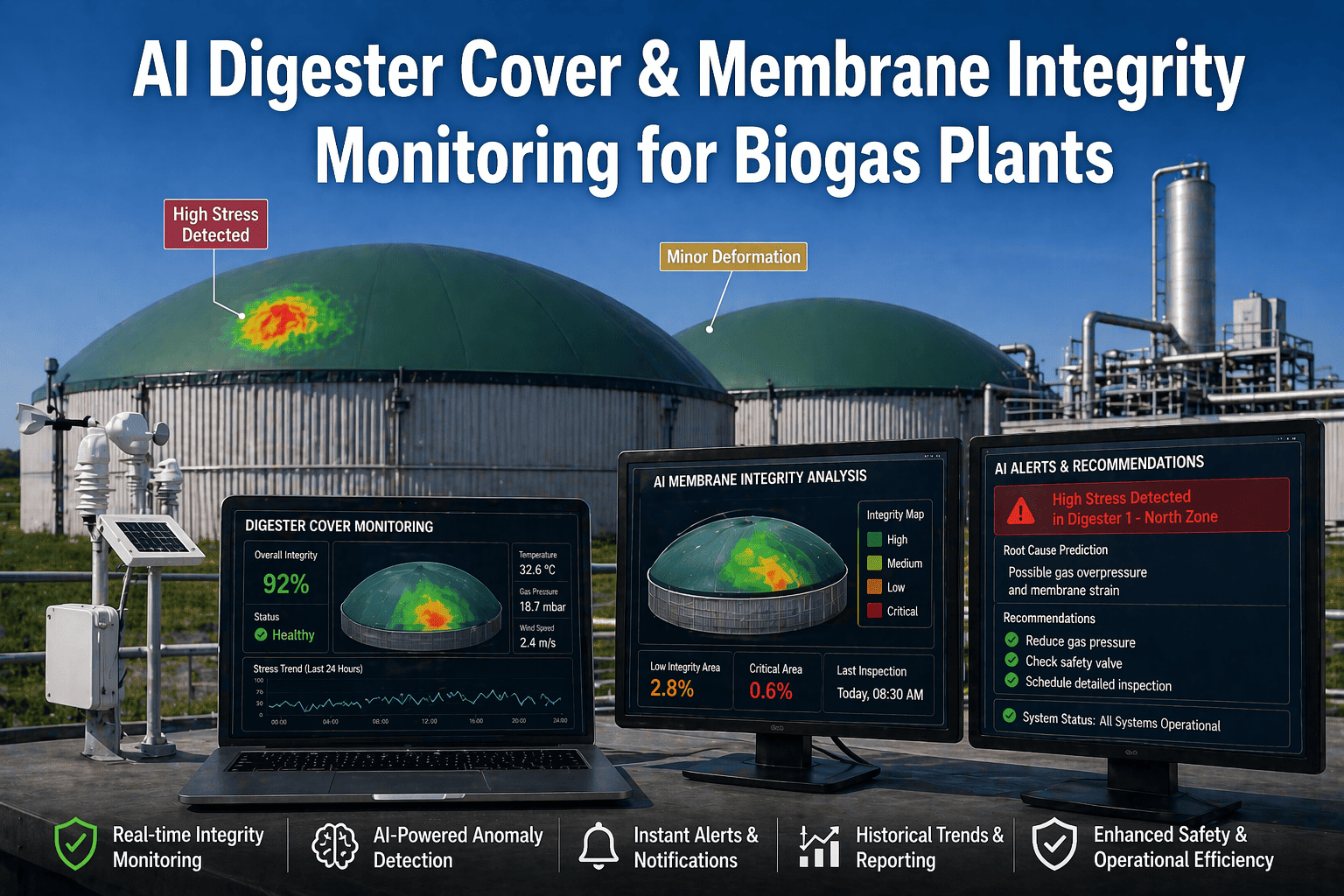
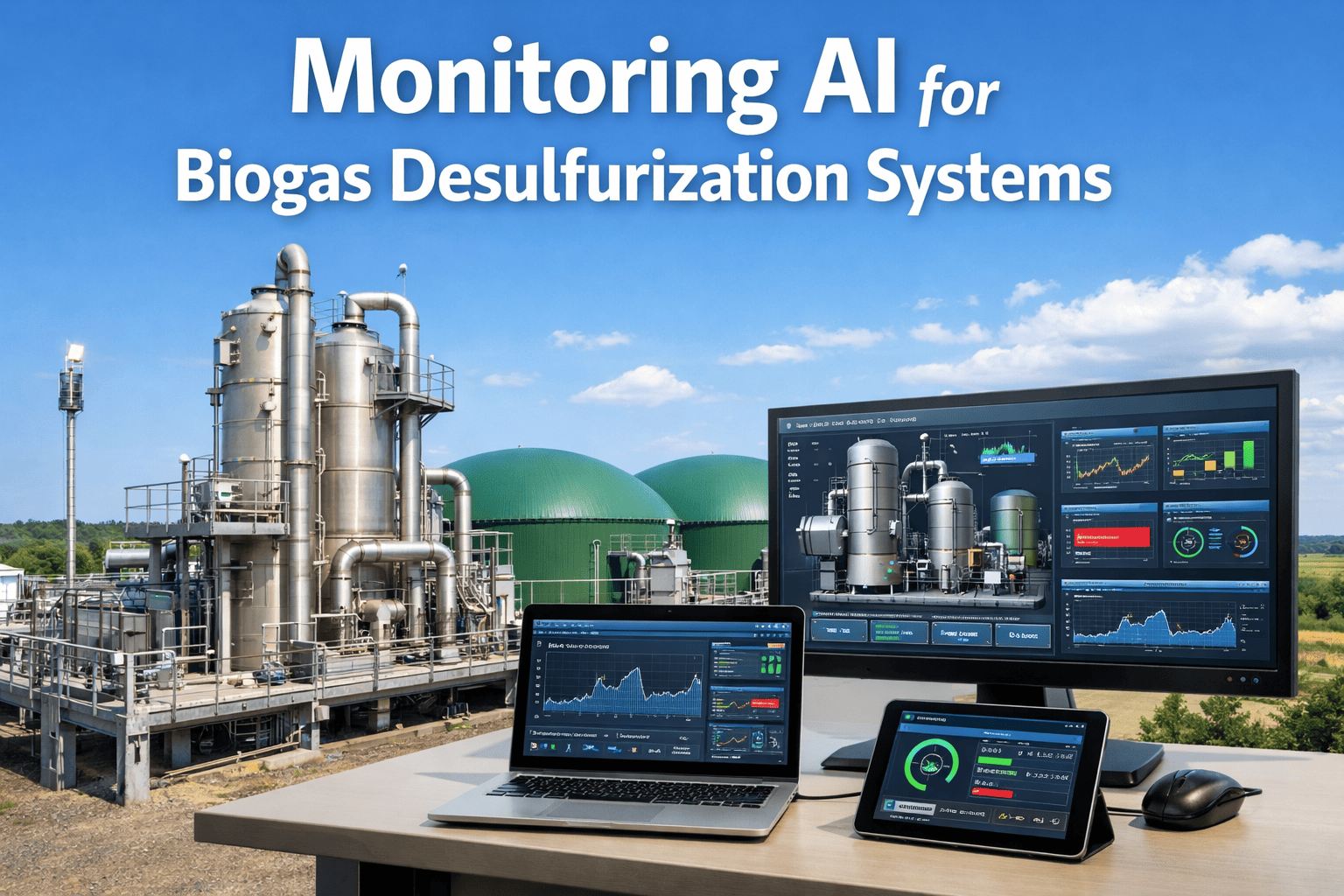
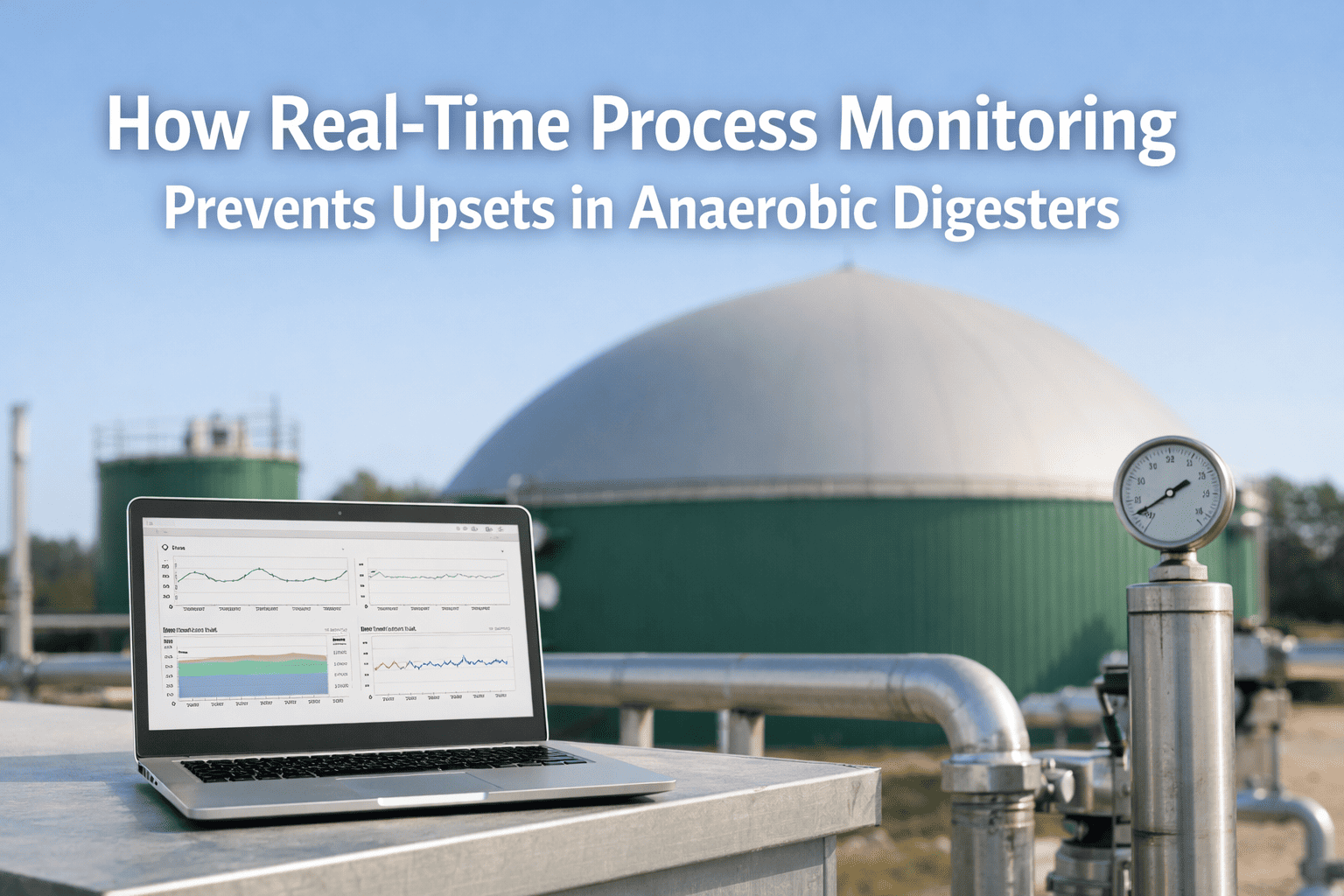
Biogas plants lose an average of 18–34% of produced methane to undetected leaks — not from equipment failure, but from invisible gas escape at digester covers, flange connections, pressure relief valves, and aging pipework that no manual sniffing or periodic OGI surveys can catch in real time. By the time explosive atmospheres form, regulatory emission limits are breached, or revenue loss is calculated through mass balance discrepancies, the compounding costs are already realized: safety hazards, carbon credit penalties, lost energy revenue, and reputational damage. iFactory's AI-powered optical gas imaging (OGI) platform changes this entirely — detecting invisible methane, CO₂, and H₂S plumes in real time across digesters, gas holders, and compression stations, classifying leak severity before safety impact occurs, and integrating directly into your existing OGI cameras, SCADA, and maintenance systems without replacing legacy infrastructure. Book a Demo to see how iFactory deploys AI gas leak detection across your biogas facility within 6 weeks.
97.4%
Invisible gas leak detection accuracy with sub-4 second alert latency
$1.2M
Average annual revenue protection & penalty avoidance per mid-size biogas plant
92%
Reduction in undetected methane emissions vs. manual OGI survey protocols
6 wks
Full deployment timeline from site survey to live AI monitoring go-live
Every Undetected Methane Leak Is a Safety Hazard and Revenue Loss. AI Vision Intervenes at the Source.
iFactory's AI vision engine monitors digesters, gas holders, flanges, and pipework using existing optical gas imaging (OGI) infrastructure — detecting invisible methane, CO₂, and H₂S plumes 24/7, without survey gaps or manual analysis lag.
The Hidden Cost of Invisible Leaks: Why Manual OGI Surveys Fail Biogas Plants
Before exploring solutions, understand the root causes of gas leak latency in anaerobic digestion environments. Conventional inspection methods introduce systemic gaps that compound during critical operations — gaps that AI vision directly addresses.
Periodic Survey Limitations
Manual OGI surveys occur quarterly or annually. Methane leaks can escalate to explosive concentrations or significant revenue loss between survey windows, especially under variable pressure conditions or thermal cycling.
Subjective Interpretation Variability
Thermal gas image analysis depends on technician experience and judgment. Small but significant leaks may be misclassified, overlooked, or deprioritized without objective, AI-driven severity scoring.
Delayed Intervention Windows
Traditional OGI identifies gas plumes only after significant accumulation has occurred. By the time a leak is documented, safety risks may have escalated and revenue loss may be irreversible.
Integration Gaps with Safety Systems
Standalone OGI reports often lack seamless integration with SCADA, gas detection, or maintenance systems. Critical leak alerts require manual escalation, delaying isolation or repair actions.
How iFactory Solves Optical Gas Imaging Challenges in Biogas Plants
Traditional gas monitoring relies on periodic OGI surveys, manual image analysis, and reactive maintenance scheduling — all of which respond after gas leaks have already escalated. iFactory replaces this with a continuous AI vision model trained on industrial gas imagery that detects methane, CO₂, and H₂S plumes at the earliest observable stage, not after safety or revenue impact. See a live demo of iFactory detecting simulated methane leaks from digester flanges and gas holder connections in an operational biogas facility.
01
Multi-Spectral Gas Analysis
iFactory ingests video feeds from existing fixed-mount and PTZ optical gas imaging (OGI) cameras simultaneously — analyzing gas plume density, movement patterns, and spectral signatures to detect invisible leaks with 97.4% accuracy.
02
AI Leak Classification
Proprietary deep learning models classify each detection as methane leak, CO₂ escape, H₂S release, or steam interference — with confidence scores and severity tiers. Safety teams receive graded alerts, not raw thermal data. False positive rate drops to under 8%.
03
Sub-4 Second Alert Latency
iFactory's edge-optimized inference engine processes OGI streams locally, identifying gas plumes and triggering alerts in under 4 seconds — giving safety teams critical time to isolate zones, activate ventilation, or dispatch repair crews before safety impact occurs.
04
SCADA, Gas Detection & Maintenance Integration
iFactory connects to Siemens, Rockwell, and Honeywell SCADA environments plus point gas detectors and CMMS platforms via OPC-UA, Modbus TCP, and REST APIs. Auto-trigger work orders, ventilation activation, or zone isolation on confirmed high-severity leaks. Integration completed in under 10 days.
05
Automated Emissions Documentation
Every leak event — detected, classified, and addressed — generates a structured environmental report with timestamped OGI imagery, leak rate estimation, and intervention timeline. Audit-ready for EPA GHG reporting, ISO 14064, and insurance compliance requirements.
06
Predictive Maintenance Decision Support
iFactory presents ranked intervention recommendations per alert — schedule immediate repair, adjust flange torque, replace gasket, or isolate digester section — with revenue loss estimates and safety risk metrics. Teams prioritize based on verified visual intelligence, not guesswork.
Industry Standards & Regulatory Alignment
iFactory's AI optical gas imaging platform is engineered to meet the safety and compliance requirements of US and global biogas facilities. No custom development needed — detection logic and reporting are pre-aligned with recognized industry frameworks.
EPA GHG Reporting & NSPS
Greenhouse gas reporting standards and New Source Performance Standards for wastewater and biogas facilities. AI OGI supports continuous leak detection and quantification requirements for regulatory compliance.
OSHA PSM & NFPA 54
Process safety management for flammable gases and fuel gas code requirements. Continuous methane monitoring supports hazard analysis, mechanical integrity, and emergency response planning for biogas operations.
ISO 14064 & Carbon Credits
Greenhouse gas accounting and verification standards. Automated leak detection and quantification supports carbon credit validation, emission reduction claims, and sustainability reporting accuracy.
Insurance & Risk Mitigation
FM Global, Allianz, and other industrial insurers recognize predictive gas leak monitoring as a risk mitigation control. Automated incident logs and early detection capabilities support premium reductions and coverage optimization.
iFactory AI Gas Imaging Implementation Roadmap
iFactory follows a fixed 4-stage deployment methodology designed specifically for biogas plant gas monitoring — delivering pilot detection results in week 3 and full facility coverage by week 6. No open-ended implementations. No OGI camera infrastructure overhaul.
01
Site Survey
Critical asset mapping & OGI camera gap analysis
02
System Integration
SCADA, gas detection, and CMMS connection via OPC-UA, Modbus
03
Pilot Validation
Live AI monitoring on 3–5 highest-risk gas assets
04
Full Production
Facility-wide AI gas monitoring live
6-Week Deployment and ROI Plan
Every iFactory engagement follows a structured 6-week program with defined deliverables per week — and measurable safety and revenue improvement indicators beginning from week 3 of deployment. Request the full 6-week deployment scope document tailored to your biogas facility gas risk profile.
Weeks 1–2
Infrastructure Assessment
Critical gas leak risk audit and OGI camera coverage gap identification across digesters, gas holders, flanges, and pipework
SCADA, gas detection, and CMMS system connection planning via OPC-UA or Modbus — no camera replacement required
Historical leak data and OGI video ingestion for baseline AI model calibration
Weeks 3–4
Pilot Deployment & Validation
AI model trained on your facility's specific gas profiles, camera angles, and operational conditions
Pilot monitoring activated on 3–5 highest-risk assets: main digester cover, gas holder seal, compressor flanges
First gas leak detections validated — safety and revenue protection evidence begins here
Weeks 5–6
Scale & Operationalize
Alert thresholds refined based on pilot false positive and detection latency data
Coverage expanded to full facility high-risk gas assets: pipework joints, pressure relief valves, condensate traps
Maintenance team training completed — AI alert protocols and work order integration activated
ROI IN 4 WEEKS: MEASURABLE SAFETY & REVENUE PROTECTION FROM WEEK 3
Facilities completing the 6-week program report an average of $165,000 in avoided revenue loss and maintenance efficiency gains within the first 4 weeks of full production monitoring — with gas leak detection improvements of 12–18 days earlier intervention detected by week 3 pilot validation.
$165K
Avg. risk mitigation value in first 4 weeks
12–18 days
Earlier intervention time by week 3
92%
Reduction in undetected methane emissions
Full AI Gas Monitoring. Live in 6 Weeks. Safety Evidence in Week 3.
iFactory's fixed-scope deployment program means no open timelines, no OGI camera infrastructure overhaul, and no months of consulting before you see a single result.
Use Cases and KPI Results from Live Deployments
These outcomes are drawn from iFactory deployments at operating biogas facilities across three gas risk categories. Each use case reflects 6-month post-deployment performance data. Request the full case study report for the gas asset most relevant to your facility.
A municipal biogas facility operating 4 large anaerobic digesters was experiencing recurring methane losses due to undetected leaks at flexible membrane covers and seal points. Legacy quarterly OGI surveys identified leak conditions only after significant gas accumulation. iFactory deployed multi-spectral gas analysis across 12 existing fixed-mount OGI cameras, with AI models trained on methane plume signatures and background thermal differentiation. Within 4 weeks of go-live, the platform detected 8 early-stage cover leaks at the precursor phase — before any safety alarm activation or significant revenue loss.
Book a Demo to see how iFactory protects your digester assets.
8
Pre-escalation digester leaks detected in 4 weeks
$920K
Estimated annual methane revenue & penalty cost prevented
96.8%
Detection accuracy with solar loading and ambient filtering
An industrial biogas plant operating high-pressure gas pipework was generating 45–70 false gas alarms per month from legacy point detectors — causing alert fatigue and delayed response to actual leaks. iFactory replaced threshold logic with AI plume classification, reducing actionable alerts to under 4 per month while increasing early leak detection coverage from 52% to 94% of critical joints. Maintenance response time improved by 73% as teams trusted and acted on graded AI alerts.
Book a Demo to see flange leak detection in action.
94%
Critical joint coverage with early leak detection — up from 52%
73%
Improvement in maintenance response time
93%
Reduction in monthly false gas alarm volume
An agricultural biogas complex was losing an average of $280K annually in corrosion repair costs and safety incidents, traced to undetected H₂S and CO₂ leaks from gas upgrading units. Manual sniffing and periodic OGI identified issues only after 3–5 days of continuous escape. iFactory's multi-gas classification models identified all 5 active leak patterns within 48 hours of go-live, enabling targeted sealing and ventilation adjustment before safety or equipment impacts occurred.
Book a Demo to see multi-gas detection capabilities.
$280K
Annual corrosion repair & safety cost prevented
48hrs
Time to identify all 5 active leak patterns
$490K
Annual safety & equipment value from proactive gas monitoring
What Biogas Facility Safety Teams Say About iFactory
The following testimonial is from a plant reliability engineer at a facility currently running iFactory's AI optical gas imaging platform.
We prevented a catastrophic methane accumulation event during a high-production period in month four. The iFactory system detected a significant leak from a gas holder seal 9 days before our quarterly OGI survey would have identified it and 14 days before point detectors indicated dangerous levels. Maintenance teams isolated the holder, performed targeted seal replacement during a planned window, and avoided an estimated $1.4M in potential explosion damage, regulatory fines, and lost production. Beyond the immediate ROI, the confidence our safety team now has in continuous, objective gas monitoring has transformed our preventive maintenance program and reduced our overall gas loss by 31%.
Senior Reliability & Safety Engineer
Municipal Biogas Facility, California
Frequently Asked Questions
Does iFactory require new OGI cameras or sensors to be installed?
In most deployments, iFactory connects to existing fixed-mount and PTZ optical gas imaging (OGI) camera infrastructure via standard video protocols — no new hardware required. Where coverage gaps are identified during the Week 1 site survey, iFactory recommends targeted additions only (typically 2–4 OGI cameras per critical asset group), not a full camera overhaul. Integration is complete within 10 days in standard environments.
Which SCADA, gas detection, and maintenance systems does iFactory integrate with?
iFactory integrates natively with Siemens, Rockwell, Honeywell, and Emerson SCADA systems via OPC-UA and Modbus TCP. For maintenance management, iFactory connects to IBM Maximo, SAP PM, Infor EAM, and custom work order systems via REST APIs. For gas detection, iFactory supports standard point detectors and open-path systems via discrete I/O or REST APIs. Custom integration support is available for legacy systems. Integration scope is confirmed during the Week 1 site survey.
How does iFactory handle challenging environmental conditions like sunlight, rain, or background heat?
iFactory uses multi-spectral fusion and contextual AI filtering to differentiate true gas plumes from solar loading, rain, fog, and background thermal noise. Models are trained on biogas facility-specific scenarios: outdoor digesters, variable ambient temperatures, and complex backgrounds. Detection accuracy remains above 96% across varied operating conditions.
What cybersecurity standards does iFactory meet for critical infrastructure?
iFactory is designed for NERC CIP and IEC 62443 compliance: video streams encrypted in transit and at rest, role-based access control, audit logging, and operation on segregated industrial networks. The platform supports air-gapped deployments and integrates with existing cybersecurity monitoring tools. Security architecture is reviewed during the Week 1 site survey.
How long does it take before the AI model produces reliable gas leak detections?
Baseline model calibration on historical OGI feeds and leak data typically takes 3–5 days using 30–60 days of facility video history. First live detections are validated during the Week 3 pilot phase. Full model tuning — with false positive rate under 8% and latency under 4 seconds — is achieved within 4 weeks of deployment for standard biogas environments.
Can maintenance teams override AI alerts or maintain manual inspection protocols?
Yes. iFactory provides graded alerts with confidence scores and severity tiers, not autonomous maintenance activation. Reliability engineers and maintenance supervisors retain full authority to acknowledge, escalate, or suppress alerts based on situational context and equipment knowledge. All decisions are logged for auditability and continuous model improvement. The platform enhances human expertise, it does not replace it.
Stop Waiting for OGI Surveys to Reveal Gas Leaks. Start Detecting Invisible Hazards at the Source.
iFactory gives biogas facility safety teams real-time AI gas monitoring, multi-spectral plume classification, automated compliance reporting, and predictive maintenance decision support — fully integrated with your existing OGI cameras and maintenance systems in 6 weeks, with safety improvement evidence starting in week 3.
97.4% gas leak detection accuracy with sub-4 second alert latency
SCADA, gas detection & CMMS integration in under 10 days
Graded alerts with under 8% false positive rate
Auto-generated emissions reports for EPA GHG, ISO 14064 & insurance