AI gas storage optimization underground is fundamentally reshaping how midstream operators manage injection and withdrawal cycles, monitor cavern integrity, and balance supply with demand across the U.S. natural gas storage network. Operators who have deployed AI-based storage optimization platforms report 89% improvement in injection and withdrawal forecasting accuracy and 47% reduction in unplanned storage field downtime within the first operating cycle. iFactory's AI optimization platform delivers this capability by continuously analyzing subsurface conditions, equipment health data, and market signals to recommend the optimal operating strategy for every storage asset. Book a Demo to see how iFactory's gas storage optimization platform can increase working gas capacity utilization and reduce operational expense across your underground storage portfolio.
Why Underground Gas Storage Optimization Requires AI — and Why Conventional Methods Fall Short
Traditional underground gas storage operations rely on manual pressure-volume readings from wellhead gauges, periodic wireline surveys for well integrity assessment, and spreadsheet-based inventory reconciliation. These methods introduce data latency that creates measurable operational blind spots. A storage reservoir experiencing a 2% pressure deviation on day three of a seven-day data collection cycle will not be detected until the next scheduled manual reading — by which point the anomaly may have progressed from a correctable pressure drift to a caprock integrity concern requiring regulatory notification. The analytics gap is structural: most storage facilities generate thousands of condition data points per hour across wellhead sensors, compressor SCADA, pipeline metering, and gas chromatographs, but these systems do not communicate in a unified optimization framework.
Core AI Capabilities Driving Gas Storage Optimization Underground
AI gas storage optimization underground addresses distinct operational challenges across the full storage asset lifecycle — from subsurface reservoir management and well integrity to surface compression optimization and market-responsive withdrawal scheduling. Each application domain produces specific data signatures that AI models learn to recognize, classify, and trend over time.
Reservoir Digital Twin and Injection-Withdrawal Optimization
AI-driven reservoir digital twins combine physics-based material balance equations with machine learning pattern recognition to model every well's pressure response, deliverability curve, and gas composition behavior across multiple injection and withdrawal cycles. The digital twin continuously calibrates itself against real-time bottomhole pressure, temperature, and flow rate data from downhole gauges, updating reservoir parameters as operational data reveals formation behavior that static models could not predict. This enables injection and withdrawal scheduling that maximizes working gas recovery while respecting pressure boundaries, rate constraints, and caprock integrity limits.
Predictive Well Integrity Monitoring and Leak Detection
Well integrity failure is the highest-consequence operational event in underground gas storage — a casing breach, cement bond failure, or caprock integrity loss can result in uncontrolled gas migration, regulatory intervention, and production shut-in. The pre-failure signals — rising annular pressure trends, micro-seismic event clustering, gas composition changes indicating migration pathways — are present 20–30 days before conventional monitoring methods would identify the anomaly.
Compression Train Predictive Maintenance and Energy Optimization
Compression equipment represents both the highest energy operating cost and the most common source of unplanned deliverability constraint in underground storage operations. A compressor failure during peak withdrawal demand forces rate reduction across the facility, directly reducing revenue and potentially triggering contractual deficiency penalties. iFactory monitors every compressor in the fleet — centrifugal and reciprocating units — with AI models trained on vibration spectra, bearing temperature, suction-discharge pressure ratio, lubrication oil condition, and motor current signatures.
Market-Responsive Withdrawal and Inventory Optimization
The value of stored natural gas is realized only when withdrawal timing, rate, and sequencing align with market prices, pipeline capacity availability, and seasonal demand forecasts. AI optimization engines integrate forward price curves, pipeline nomination data, weather-driven demand models, and storage asset deliverability constraints to generate withdrawal schedules that maximize revenue while respecting well rate limits, pressure boundaries, and contractual obligations. iFactory's market optimization module recalibrates schedules hourly as intraday price signals, pipeline operational changes, and weather forecasts evolve — enabling storage operators to capture premium pricing opportunities without exceeding asset-safe operating limits.
AI Applications Across Underground Gas Storage Facility Types
Underground gas storage facilities are not uniform — depleted reservoirs, salt caverns, and aquifer formations each present distinct geological and operational characteristics that require AI optimization strategies tuned to their specific behavior. iFactory's gas storage optimization platform supports all three storage types with model configurations calibrated for each geological context. The table below documents how AI optimization parameters differ across storage facility types and what performance impact operators can expect.
| Storage Type | Primary AI Application | Optimization Parameter | Expected Improvement | Implementation Profile |
|---|---|---|---|---|
| Depleted Reservoir | Dynamic flow modeling with multi-well scheduling | Withdrawal rate accuracy vs. modeled deliverability | 12–18% peak-day capacity improvement | Medium complexity; 30+ wells typical, requires historical cycle data |
| Salt Cavern | Leak detection and brine displacement monitoring | Cavern pressure and brine inventory mass balance accuracy | 92% leak detection rate; 99.5% inventory accuracy | Low complexity; fewer wells, higher instrumentation maturity |
| Aquifer Formation | Reservoir characterization and cushion gas management | Cushion-to-working gas ratio; injection pressure management | 6–10% working gas capacity increase; 28% cushion optimization | Higher complexity; geological uncertainty requires longer calibration period |
| Depleted + Salt Cavern Hybrid | Combined portfolio scheduling across storage types | System-wide injection and withdrawal allocation | 15–22% portfolio-level value optimization | Requires integrated SCADA and market data across facilities |
| Aquifer with Cushion Conversion | Cushion-to-working gas conversion optimization | Incremental working gas recovery without pressure support loss | 8–14% marketable inventory increase | Long-term calibration; 12+ months monitoring for model validation |
| Multiple Cavern Facility | Multi-cavern inventory and cycling optimization | Cushion and working gas allocation across cavern cluster | 10–16% total working gas utilization improvement | Phase deployment; individual cavern models scaled to cluster |
iFactory customers deploying AI gas storage optimization across their storage portfolio report a 91% improvement in well integrity detection lead time and measurable capacity gains within the first storage cycle after deployment. Book a Demo with iFactory's midstream team to build a site-specific optimization assessment for your underground storage facilities.
How iFactory's Consequence-Weighted Optimization Engine Converts Condition Data into Operational Decisions
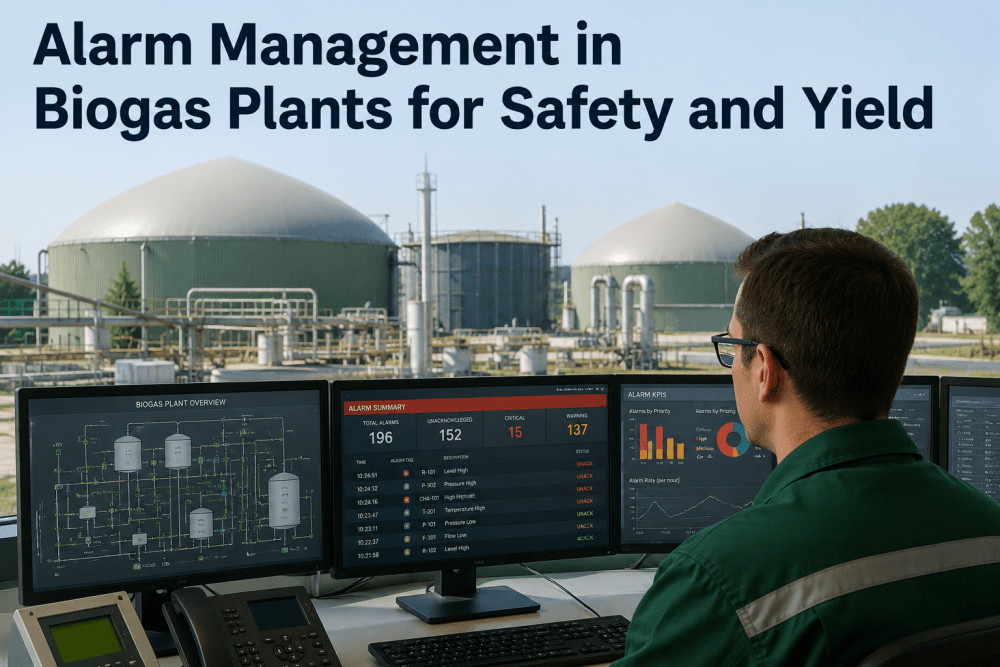
Standard SCADA alarm systems in storage facilities monitor individual parameters against fixed setpoints — pressure high alarm, temperature high alarm, flow rate low alarm — without any understanding of the operational or financial consequence of the condition being signaled. The result is the alarm flood that characterizes every midstream control room: hundreds of alerts per day, the majority requiring no immediate action, operators trained by experience to dismiss alarms that have historically been informational rather than actionable.
Implementation Roadmap for AI-Driven Underground Gas Storage Optimization
Deploying AI gas storage optimization across underground facilities follows a structured four-phase methodology that delivers incremental value at each stage while building toward comprehensive storage asset coverage. iFactory's deployment framework has been validated across depleted reservoir, salt cavern, and aquifer storage facilities operated by major midstream companies in North America. The table below documents how each phase changes the facility's optimization capability and what operational impact the change delivers.
| Implementation Phase | Scope of Work | Duration | Operational Impact | Investment Range |
|---|---|---|---|---|
| Data Infrastructure and Sensor Audit | Review of existing wellhead instrumentation, downhole gauge coverage, compressor telemetry, and pipeline metering. Gap assessment with prioritized sensor upgrade roadmap targeting high-value wells. | Weeks 1–3 | Identifies instrumentation gaps limiting AI model accuracy; 20% of wells typically handle 60–80% of total facility volume | $25K–$60K |
| Digital Twin Construction and Model Calibration | Physics-based digital twin built from historical production data, well logs, and 36+ months of injection and withdrawal cycle history. AI models calibrated against observed pressure behavior and deliverability curves. | Weeks 4–10 | Baseline forecasting accuracy established; initial optimization potential quantified against actual operational data | $65K–$140K |
| Pilot Validation on Well Cluster | AI optimization models deployed on a representative 3–5 well cluster over a full injection and withdrawal cycle. AI-recommended schedules compared against operator-selected schedules with controlled metrics. | Weeks 11–18 | Measurable improvements in working gas recovery, energy consumption, and pressure management validated against baseline | $45K–$95K |
| Full Facility Rollout and Optimization | Validated AI optimization configuration deployed across all wells, compression assets, and storage facilities. Operations team onboarding with role-based dashboard access and mobile deployment completed. | Week 19+ | Continuous optimization across entire storage asset portfolio; compliance reporting automated with audit-ready data lineage | $80K–$155K |
For a mid-size storage facility with 50 Bcf working gas capacity, a 6–10% capacity improvement alone represents 3–5 Bcf of additional marketable inventory at prevailing seasonal spreads. The single-cycle financial uplift across the storage portfolio recovers the full platform investment. Book a Demo with iFactory's midstream storage team to build a deployment plan for your specific facilities.
Measurable ROI — The True Financial Impact of AI Gas Storage Optimization
The financial case for AI gas storage optimization underground is built on three primary value drivers: increased working gas capacity and deliverability from AI-optimized injection and withdrawal scheduling, reduced energy and maintenance costs through predictive compression management, and lower compliance risk from automated regulatory reporting and continuous integrity monitoring.
- Working gas capacity increased 6–10% via dynamic cushion-to-working ratio optimization with reservoir digital twin models
- Peak-day withdrawal capacity improved 12–18% through AI-sequenced multi-well withdrawal scheduling during high-demand events
- Inventory accuracy elevated from 94–96% manual reconciliation to 99.2% with continuous AI mass balance correction
- Revenue capture from market-responsive withdrawal scheduling: $1.2M–$3.8M incremental annual value per 50 Bcf facility
- Cushion gas losses minimized through real-time pressure-volume monitoring and early anomaly identification
- Compression energy costs reduced 14–22% through AI-optimized compressor dispatch and load balancing across the fleet
- Well intervention frequency decreased 25–35% with predictive integrity alerts enabling planned vs. emergency repairs
- Manual data collection and regulatory reporting labor reduced by 60–75% through automated workflow deployment
- Unplanned compression downtime reduced 35–45% through predictive maintenance on centrifugal and reciprocating units
- Leak detection and remediation costs minimized through early anomaly identification enabling targeted intervention
- Well integrity anomaly detection lead time extended by 20–30 days through continuous AI trend analysis of annular pressure, micro-seismic, and gas composition data
- Regulatory reporting time reduced by 75% with auto-generated FERC, PHMSA, and state-level compliance submissions with complete data lineage
- Leak detection and repair programs enhanced with continuous monitoring replacing periodic LDAR survey intervals
- Caprock integrity monitored continuously vs. annual wireline surveys; developing issues detected pre-notification threshold
- PHMSA mechanical integrity test compliance maintained automatically with interval tracking and advanced scheduling
- Portfolio-level optimization across multiple storage facilities: 15–22% incremental value from coordinated scheduling
- Insurance premium stabilization and reduction potential with documented continuous integrity monitoring program
- FERC and state regulatory compliance posture strengthened with auditable continuous monitoring records
- Asset valuation increase: documented 6–10% working gas capacity improvement directly increases facility market valuation
- Capital efficiency: capacity gains achieved through software optimization rather than costly well workovers or drilling
Expert Review: Why Midstream Gas Storage Operations Need AI Optimization, Not Better SCADA Alarms
In 24 years of reservoir and storage engineering across depleted reservoir and salt cavern facilities in the Gulf Coast and Appalachian basins, I have evaluated more than 40 storage optimization programs at U.S. midstream companies. The finding that appears in the majority of those assessments — the one that never makes it into the management summary — is that the data was already being collected. Wellhead pressure, bottomhole temperature, flow rate, gas composition, compressor vibration — the information needed to optimize injection and withdrawal decisions was present in the historian. What was missing was a system that connected those data streams to a unified optimization model, applied consequence-based priority rather than parameter-based alarm settings, and delivered actionable recommendations with enough lead time to capture the highest-value market windows. The gap is not instrumentation. It is not reservoir engineering capability. It is the absence of a platform that treats storage optimization with the same analytical rigor that production operations receives. When I see a midstream operator run a weekly spreadsheet-based inventory reconciliation alongside an AI-driven compression predictive maintenance pilot, I know exactly where the optimization gains are being left on the table.
Conclusion: The Gap Between Periodic Storage Management and Continuous AI Optimization
Underground gas storage facilities that produce detectable performance anomalies — pressure deviations, deliverability degradation, inventory discrepancies, well integrity trends — before they impact operational or regulatory outcomes are facilities with a monitoring frequency problem, not a technology problem.
iFactory's gas storage optimization platform delivers exactly that capability: consequence-weighted risk scoring across reservoir management, well integrity monitoring, compression predictive maintenance, and market-responsive withdrawal scheduling; automated work order generation that converts condition alerts into accountable inspection and maintenance actions; The operational case is equally clear. The data is available. The question is whether your storage management system is connected to it. Book a Demo with iFactory's midstream storage team to build a site-specific continuous optimization assessment for your underground gas storage facilities.
Frequently Asked Questions
Conventional reservoir simulation is a physics-based modeling approach that engineers use to predict long-term reservoir behavior — typically run in batch mode during seasonal planning cycles, with updates occurring quarterly or annually following new well tests or survey data. This continuous optimization cycle is what enables the 12–18% peak-day withdrawal capacity improvements and 6–10% working gas capacity gains that periodic simulation alone cannot deliver. iFactory's platform deploys this hybrid modeling approach across every well in the storage facility, continuously updating reservoir parameters as operational data reveals formation behavior that static models could not predict.
Depleted reservoir storage facilities typically see the most significant improvements from AI optimization because their complex pressure dynamics, multi-well configurations, and variable deliverability curves across multiple cycles benefit most from machine learning models that can identify optimal injection and withdrawal sequences across hundreds of interacting variables. Aquifer storage sites gain value from AI-enhanced reservoir characterization and cushion gas management, as their geological uncertainty is typically higher than depleted reservoirs or salt caverns. iFactory's platform supports all three storage types with model configurations tuned to each geological and operational context, with deployment templates validated across storage facilities in major North American producing and consuming regions. Regardless of storage type, facilities with 10+ operating wells, existing SCADA infrastructure, and at least 24 months of historical injection and withdrawal data achieve the fastest optimization model calibration and earliest measurable ROI.
A complete AI gas storage optimization deployment — including data infrastructure assessment, digital twin construction and AI model calibration on 36+ months of historical data, pilot validation on a representative well cluster, and full-facility rollout — typically ranges from $150,000 to $450,000 depending on facility size, instrumentation maturity, and total number of wells. The deployment timeline averages 16–20 weeks from project initiation to full-facility optimization recommendations. Most facilities achieve initial AI model calibration within 8–10 weeks and measurable improvements in inventory accuracy and well integrity detection within the first 12 weeks. The payback period ranges from 10 to 18 months, driven primarily by increased working gas capacity (6–10% improvement, worth $1.2M–$3.8M annually for a 50 Bcf facility at typical seasonal spreads), reduced compression energy costs (14–22%, typically $200K–$600K annual savings), and avoided well integrity failures (single-event cost avoidance of $500K–$2M). Additional sensor hardware for wells currently without real-time pressure telemetry is typically $15,000–$60,000 and is identified during the Phase 1 gap assessment with prioritized recommendations targeting the highest-impact data points first.
Yes. iFactory's gas storage optimization platform is designed specifically for integration with existing midstream OT infrastructure. The platform includes native protocol adapters for Modbus, OPC-UA, HART, and proprietary historian APIs (OSIsoft PI, AspenTech, AVEVA) that enable direct data ingestion from downhole pressure-temperature gauges, wellhead flow computers, compressor PLCs, and pipeline custody transfer meters — without requiring replacement of existing SCADA, historian, or DCS investments. The platform sits as an analytics and optimization layer above existing OT infrastructure, applying AI models and digital twin simulations to data streams that are already being collected but underutilized for real-time optimization. iFactory provides a prioritized sensor upgrade roadmap during the Phase 1 assessment, targeting the 20% of wells that typically handle 60–80% of total facility injection and withdrawal volume for the highest ROI instrumentation investment.
Well integrity constraints and regulatory safety requirements are non-negotiable boundary conditions within iFactory's AI optimization engine — not override parameters or afterthoughts. Every injection and withdrawal schedule generated by the platform operates within the operating envelope defined by each well's maximum allowable annular pressure, minimum bottomhole pressure, rate limits, and cumulative cycle limits as documented in the facility's mechanical integrity program. The well integrity prediction model continuously monitors casing pressure trends, A/B annulus behavior, gas composition changes, and micro-seismic signals to detect developing anomalies, automatically flagging wells that require immediate engineering review and excluding them from optimization schedules until integrity is re-confirmed. Compliance documentation — including FERC storage reports, PHMSA mechanical integrity test records, and state-level regulatory submissions — is auto-populated with complete data lineage, timestamps, and alert history to support audit and enforcement preparedness without additional manual compilation effort. For PHMSA Part 192 and Part 195 integrity management compliance, the platform maintains continuous records of each well's operating history, anomaly events, inspection findings, and corrective action completions, ensuring that every data point supporting the facility's integrity status is auditable and time-stamped. This automated compliance framework reduces reporting cycle time by 75% and eliminates the documentation gaps that can trigger regulatory findings during scheduled and for-cause inspections.