Biogas plant operators face a relentless stream of decisions every shift. Feedstock composition shifts, digester temperature fluctuates, gas quality targets must be met, and every parameter must be documented for regulatory compliance.
Is Your Shift Data Working for You or Against You?
Unify shift events, handover notes, process parameters, and compliance records into one intelligent platform purpose-built for biogas plant operations.
Why Digital Shift Logbooks Are Redefining Biogas Plant Operations
The management of shift-based operations in biogas plants has always required meticulous attention to detail — but the tools available to operators have not kept pace with the complexity of modern AD facilities. Modern digital shift log platforms bridge this critical gap by aggregating data from SCADA systems, sensor networks, laboratory information systems, and operator observations into a single, unified intelligence layer. When plant managers book a demo, the most common discovery is that their shift operations are generating enormous volumes of untapped data that — once connected — can prevent process upsets, reduce unplanned downtime, and dramatically improve biogas yield predictability.
The shift from reactive to proactive operations management begins with visibility. Each shift generates a complex web of interconnected events — feedstock deliveries, digester feed rates, temperature deviations, gas quality measurements, maintenance interventions, and safety inspections.
Real-Time Event Capture
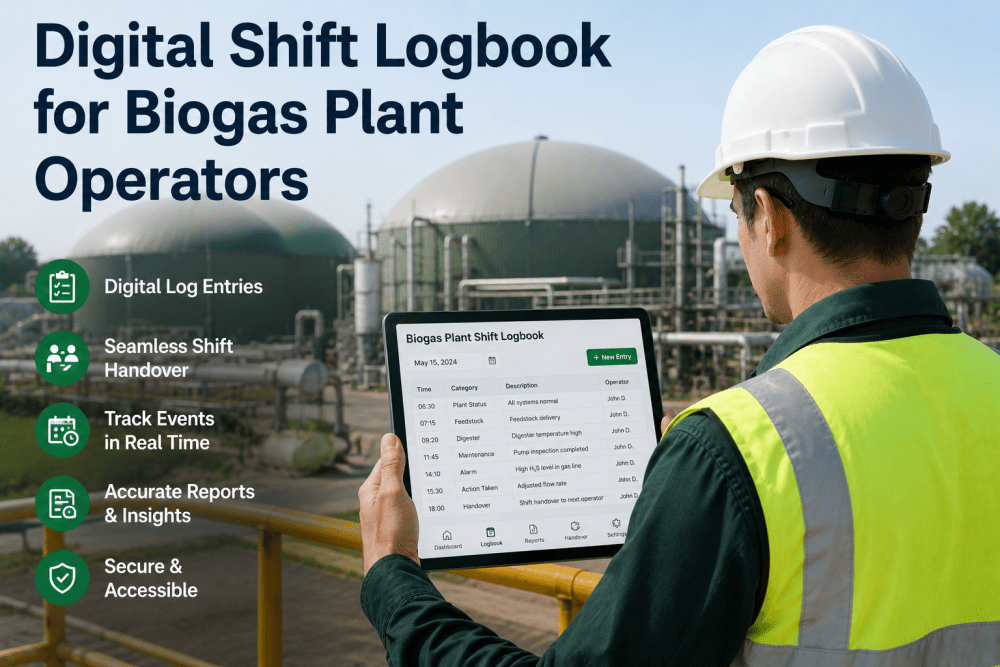
Log every shift event — feedstock changes, temperature excursions, gas quality alerts — as structured data with timestamps, operator IDs, and contextual parameters. Eliminate the data loss that occurs between shifts with paper-based systems.
Intelligent Shift Handover
Replace verbal handovers with structured digital shift summaries that automatically aggregate key events, pending tasks, equipment status, and process trends — ensuring every incoming operator starts their shift fully informed.
Compliance Documentation
Automatically generate audit-ready records for environmental permits, renewable energy credits, and safety regulations. Every operator entry becomes part of a tamper-proof, timestamped digital archive.
Process Trend Analytics
Transform daily shift logs into actionable insights. Identify recurring patterns in digester performance, correlate feedstock changes with gas output, and build predictive models that prevent process upsets before they occur.
Building a Unified Digital Shift Log Architecture for Biogas Operations
A purpose-built digital shift log platform for biogas plants must address five foundational requirements unique to AD operations: event traceability, parameter monitoring, compliance documentation, handover standardization, and analytics integration. Connecting fragmented shift logs, SCADA data, and compliance records into a unified platform is the single most impactful step in an operational excellence journey.
| Platform Module | Primary Function | Biogas Application | Operational Benefit | Priority Level |
|---|---|---|---|---|
| Shift Event Logger | Structured event capture | Feedstock, digester, CHP | Zero data loss between shifts | Critical |
| Handover Dashboard | Shift summary generation | Operator shift transitions | Informed start-of-shift readiness | Critical |
| Compliance Reporter | Regulatory documentation | Permits and REC reporting | Audit-ready digital records | High |
| Trend Analytics Engine | KPI and pattern analysis | Gas yield and process stability | Predictive upset prevention | High |
| SCADA Integration Layer | Real-time data ingestion | Sensor and PLC connectivity | Unified operational view | Standard |
How Digital Shift Logs Support Regulatory Compliance and Operational Standards
Compliance with environmental permits, renewable energy certification requirements, and health and safety regulations is a non-negotiable reality for every biogas plant operator. Yet most facilities still manage their compliance documentation through paper shift logs, disconnected spreadsheets, and manual data aggregation — creating dangerous documentation gaps that can jeopardize permits, delay REC certification, and expose plants to significant penalties during regulatory audits. Modern digital shift log platforms address this directly by digitizing every compliance touchpoint — from feedstock receipt documentation to digestate quality records — into a single, audit-ready system of record. Operations directors who book a demo early in their digital transformation journey consistently achieve stronger regulatory outcomes and faster certification approvals.
Shift Log Digitization and Data Structure Design
Define structured data templates for every shift — feedstock inputs, digester parameters, gas production metrics, maintenance actions, and safety checks — creating a standardized digital vocabulary for all operators.
Real-Time SCADA and Sensor Integration
Connect the digital shift platform to existing SCADA systems, PLCs, and sensor networks. Automatically populate shift logs with real-time data on temperature, pH, gas composition, and flow rates — eliminating manual transcription errors.
Automated Compliance Reporting
Configure automated report generation for environmental permits, REC certification bodies, and internal quality audits. Schedule recurring reports that aggregate shift data into regulatory-ready formats without manual effort.
Tamper-Proof Audit Trail Establishment
Enable immutable, timestamped records for every shift entry. Ensure that any edit or correction is tracked with full traceability — providing regulators with complete confidence in data integrity.
Continuous Improvement and KPI Benchmarking
Leverage historical shift data to generate performance benchmarks, identify top-performing shift teams, and build data-driven continuous improvement programs that raise operational standards across all shifts.
"We were losing nearly two hours every shift handover to verbal updates and scribbled notes. Since deploying iFactory's digital shift logbook, our handover time dropped by 70%, and we caught a developing digester temperature excursion three days earlier than we would have with paper logs — saving us an estimated $180,000 in avoided downtime and restabilization costs."
Top Operational Gaps in Biogas Plant Shift Management
Most biogas plants pursuing improvements to their shift management programs encounter a predictable set of operational and documentation challenges. Understanding these gaps before a digital shift log deployment dramatically improves implementation success and helps plant managers allocate finite budgets more strategically.
Shift logs, maintenance notes, and compliance records exist in physical binders and disconnected spreadsheets — making it impossible to correlate process events across shifts or identify recurring patterns in digester performance.
Verbal handovers between shifts routinely miss critical details — pending maintenance items, developing process trends, or recent equipment adjustments — leading to repeated issues and lost institutional knowledge.
Paper logs are typically completed at the end of shift, creating a six- to twelve-hour delay between event occurrence and documentation. This latency makes real-time intervention impossible and allows minor issues to escalate.
Without trend analytics and automated alerts, operators respond only to visible alarms — a reactive posture that results in more frequent process upsets, higher restabilization costs, and reduced gas yield consistency.
Manual compliance reporting introduces transcription errors, missed deadlines, and documentation gaps that can jeopardize environmental permits and renewable energy credit certification.
Integrating modern digital platforms with legacy SCADA systems and older PLC infrastructure creates compatibility challenges that require careful planning and a unified data architecture.
Closing these gaps requires more than off-the-shelf note-taking software — it demands a purpose-built platform designed for the operational complexity and regulatory requirements of biogas production. Plant managers regularly book a demo to benchmark their gaps against a proven industrial shift management architecture.
Integrating Digital Shift Logs Into Existing Biogas Plant Infrastructure
One of the most critical aspects of digital shift log deployment is the responsible integration of modern software platforms into existing operational infrastructure. Legacy SCADA systems, PLC networks, and sensor arrays must all be connected without disrupting ongoing production. A robust digital shift platform supports this process by maintaining detailed documentation of every data connection, system integration, and workflow change — creating a complete digital record that satisfies regulatory requirements and supports future operational planning.
Key Digital Shift Log Capabilities for Modern Biogas Plants
Maintain standardized digital forms for every shift activity — feedstock receipts, process rounds, maintenance tasks, and safety inspections — with automated validation and required field enforcement.
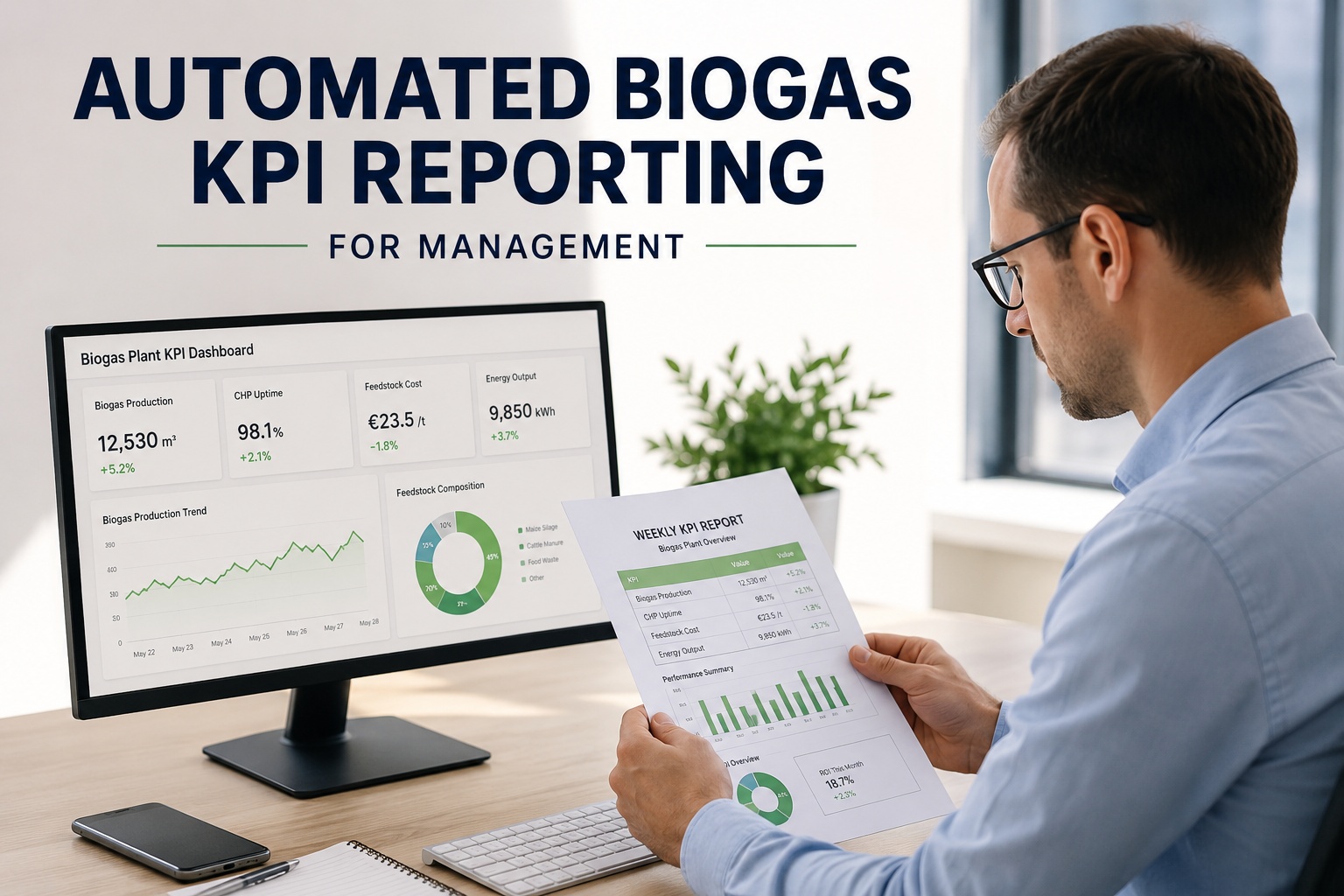
Centralize KPI tracking for gas yield, uptime, feedstock efficiency, and safety incidents across all shifts. Generate trend reports that identify top-performing teams and improvement opportunities.
Automatically compile shift data into permit-required reports, REC certification documentation, and internal compliance audits with complete version control and electronic signature support.
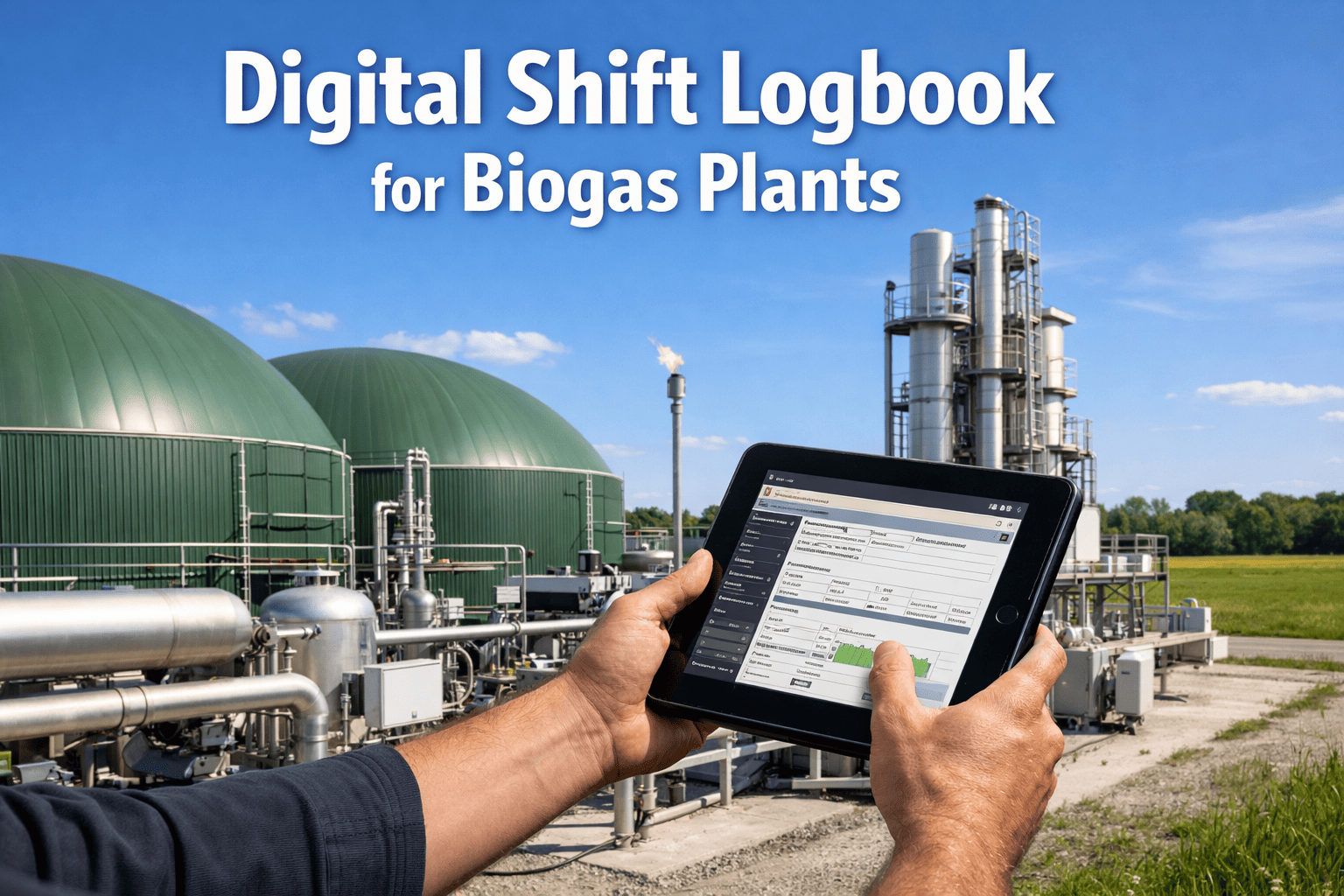
Provide operators with intuitive mobile interfaces for logging events on the go, capturing photo evidence of equipment conditions, and accessing shift summaries from any location in the plant.
Conclusion: Building a Data-Driven Shift Management Culture
The transition from paper-based shift logs to a digital platform represents more than a technology upgrade — it is a fundamental shift in how biogas plant operators manage their most critical resource: operational knowledge. By capturing every shift event as structured, searchable data, digital shift logbooks enable a culture of continuous improvement where every handover builds on the knowledge accumulated in previous shifts, every process deviation becomes a learning opportunity, and every compliance submission is backed by an immutable record of operational reality.
For plant managers and operations directors evaluating their shift management modernization options, the path forward is clear. The technology exists today to eliminate paper-based data loss, reduce handover inefficiencies, and build the data foundation needed for predictive operations. The question is not whether digital shift logs will become the standard — it is which plants will lead the transition and capture the competitive advantage that comes with operational visibility.
Modernize Your Biogas Plant Shift Management Today
Deploy a unified digital shift log platform that integrates real-time event capture, structured handovers, compliance reporting, and performance analytics — built specifically for biogas and AD plant operations.
Biogas Plant Digital Shift Logbook — Common Questions Answered
How does a digital shift logbook integrate with our existing SCADA system?
iFactory's digital shift log platform provides standard API connectors and OPC-UA compatibility for seamless integration with leading SCADA systems, PLCs, and sensor networks. Data from your existing instrumentation — temperature, pH, gas composition, flow rates — is automatically populated into shift logs, eliminating manual transcription and ensuring real-time accuracy.
Can operators access the shift log from mobile devices in the field?
Yes. The platform is built with a mobile-first interface that works on smartphones and tablets, allowing operators to log events, capture photo evidence, and review shift summaries from anywhere in the plant — including remote feedstock receiving areas and digestate storage zones.
What happens if an operator forgets to log an event during the shift?
The platform supports configurable reminders and escalation workflows. If critical events — such as scheduled feedstock additions or safety rounds — are not logged within a defined timeframe, supervisors receive automated notifications. Shift supervisors can also perform mid-shift reviews to identify and fill documentation gaps before handover.
How does the platform support environmental permit compliance?
The digital shift logbook includes pre-built report templates aligned with common biogas permitting requirements. Shift data is automatically compiled into regulatory-ready formats for emissions reporting, feedstock documentation, digestate quality records, and REC certification bodies — with complete timestamped audit trails for every entry.
Can the platform generate reports for multiple shift teams across different plant sites?
Absolutely. The platform supports multi-site deployments with centralized administration. Shift data from each site is maintained in a unified system, enabling cross-site benchmarking, consolidated compliance reporting, and standardized operational procedures across your entire fleet of biogas plants.