A cement kiln burning alternative fuels or higher-chlorine raw materials can push HCl, HF, and SO2 concentrations well past what a plant's original air pollution control equipment was sized for, and by the time a stack test flags the exceedance, the plant is already looking at a compliance order instead of a planning window. Acid gas scrubbing in a cement plant is not one piece of equipment but a choice between four distinct technology classes, each with its own sorbent chemistry, capital profile, and byproduct stream, and picking the wrong one for a given gas concentration range wastes either capital or removal efficiency. This guide walks through how dry sorbent injection, spray dryer absorbers, and wet scrubbers actually compare, and how booking a demo of continuous emissions and sorbent-dosing monitoring keeps removal efficiency inside spec instead of drifting after the next fuel or raw material change.
CEMENT · EMISSIONS CONTROL · ACID GAS · SCRUBBER SYSTEMS
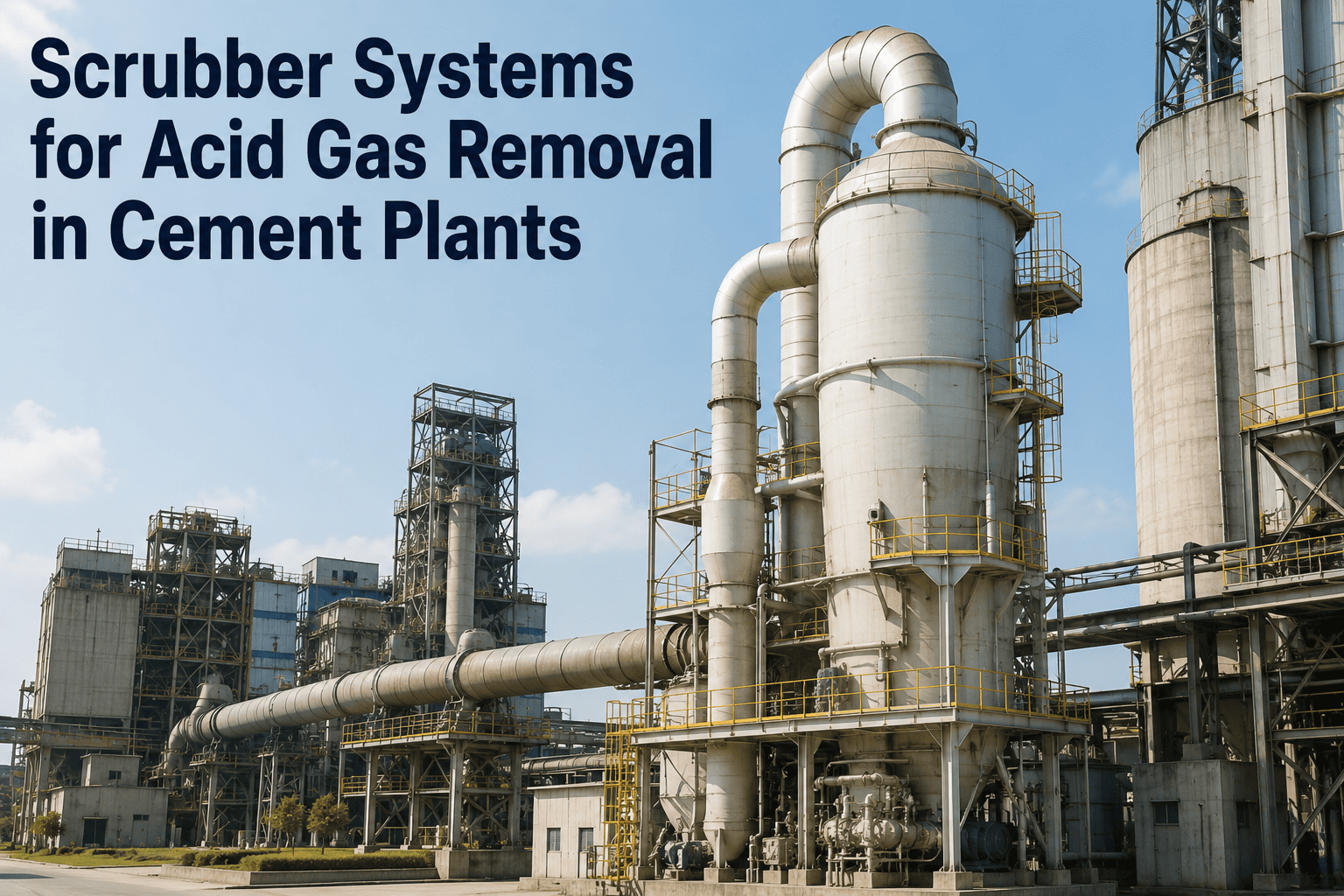
HCl, HF, and SO2 removal is a sorbent chemistry problem before it is an equipment problem.
Dry sorbent injection, spray dryer absorbers, and wet scrubbers all remove acid gas, but each is matched to a different concentration range, temperature window, and capital budget. Getting the match wrong shows up as either an emissions exceedance or a scrubber running far below its rated efficiency.
90–98%
Typical SO2 removal efficiency range across dry and wet scrubber systems.
95–99%
Typical HCl removal efficiency achievable with dry sorbent injection.
300–1,500°F
Effective temperature window for dry sorbent injection into the gas stream.
250–10,000 ppmv
Typical acid gas concentration range that scrubber systems are sized against.
Where HCl, HF, and SO2 actually come from in a cement kiln
Acid gas load is not a fixed property of cement production, it is a function of what goes into the kiln. Fuel mix and raw material chemistry both shift the gas load a scrubber has to handle, which is why a system correctly sized at commissioning can fall behind spec after later process changes, sometimes years after the original design basis was established and long forgotten.
G-01
Sulfur in Fuel and Raw Materials
Pyrite sulfur in raw meal and sulfur content in coal, petcoke, or alternative fuels oxidizes to SO2 in the burning zone, with the exact yield depending on kiln oxygen levels and residence time.
G-02
Chlorine in Alternative Fuels
Chlorinated plastics and certain industrial waste fuels introduce chlorine that converts to HCl in the gas stream, a major reason plants ramping up AFR substitution need to revisit scrubber sizing.
G-03
Fluorine-Bearing Raw Materials
Certain clay and shale sources carry fluorine minerals that release HF at kiln temperatures, typically in smaller quantities than HCl or SO2 but still subject to strict emission limits.
G-04
Kiln Operating Conditions
Temperature profile, oxygen availability, and residence time in the burning zone all influence conversion rates, meaning the same fuel and raw mix can produce different acid gas loads under different kiln operating regimes.
Four scrubber technology classes compared
Every acid gas control system in cement service falls into one of four classes. None is universally superior — the right choice depends on gas concentration, available capital, and how much byproduct handling complexity the plant is prepared to take on.
| Technology | Typical SO2 Removal | Capital Profile | Byproduct |
| Dry Sorbent Injection |
Up to roughly 75–90% |
Lowest, no scrubber tower needed |
Dry solid, captured in baghouse |
| Hot Meal Injection |
Moderate, process-dependent |
Low, uses existing calcined material |
Reabsorbed into raw meal stream |
| Spray Dryer Absorber |
High, 90%+ |
Moderate to high |
Dry lime and reaction product |
| Wet Lime/Limestone Scrubber |
90–98% |
Highest, tower and slurry handling |
Gypsum, often marketable |
See whether your current scrubber is still matched to your actual gas load
iFactory tracks acid gas concentration trends against sorbent dosing and removal efficiency, flagging when a fuel or raw material change has pushed the system past its original design basis.
Choosing a sorbent: four common options
The sorbent chemistry injected into the gas stream matters as much as the mechanical system delivering it. Each of the common options trades off reactivity, cost, and downstream handling differently, and the right choice often depends on which acid gas is the primary concern.
Hydrated Lime
The most common dry-injection sorbent, effective across SO2, HCl, and HF, with reaction products that are straightforward to dispose of in landfill due to minimal leaching.
Limestone
Lower reactivity than hydrated lime but lower cost, commonly used in wet scrubber systems where the slower reaction rate is compensated for by longer residence time in the slurry.
Sodium Bicarbonate and Trona
Higher reactivity than calcium-based sorbents at lower injection temperatures, often chosen where duct space or residence time limits calcium-based sorbent effectiveness.
Caustic Soda
Used primarily in wet scrubbing applications for its high reactivity, though at a materially higher reagent cost than lime-based alternatives in most regions.
The variables that actually determine removal efficiency
Two plants running the same sorbent at the same feed rate can see different removal efficiencies, because the chemistry is only half the equation. These four variables determine whether a given sorbent dose translates into the removal efficiency it is capable of, and each one is fully within the plant's control to adjust once it is understood.
01
Stoichiometric Ratio
The molar ratio of sorbent to acid gas needed rises sharply at lower injection temperatures, meaning the same removal target can require several times more reagent depending on where in the process it is injected.
02
Sorbent Particle Size
Finer sorbent particles expose more reactive surface area per unit mass, directly improving removal efficiency at a given feed rate, which is why milling and dosing equipment quality matters as much as the sorbent chemistry itself.
03
Injection Temperature
Each sorbent has an effective reaction temperature window, and injecting outside that range wastes reagent regardless of dosing rate, making injection point selection as important as sorbent selection.
04
Residence Time Before Capture
Sorbent needs contact time with the gas stream before it reaches the baghouse or ESP, and duct geometry that shortens this window limits achievable removal efficiency no matter how much sorbent is fed.
Deciding between dry and wet scrubbing for a given gas load
The dry-versus-wet decision comes down to concentration, available capital, and whether the plant wants a marketable byproduct or a landfill-ready dry residue. Neither option is categorically better — each fits a different combination of these constraints.
01
Lower Concentration, Capital-Constrained
Dry sorbent injection avoids the cost of a scrubber tower entirely, making it the fastest and lowest-capital path to meaningful HCl and moderate SO2 reduction.
02
High Concentration, Byproduct Value Available
Wet limestone scrubbing reaches the highest SO2 removal efficiencies and produces gypsum that can be sold into wallboard or cement production, offsetting part of the higher capital cost.
03
Existing Baghouse Infrastructure
A plant with a baghouse already in place is well positioned for dry sorbent injection, since the existing filter becomes the particulate capture step for the reacted sorbent at minimal additional investment.
04
Multiple Pollutant Targets
Where mercury or dioxin control is also required, some dry injection systems can be configured to address several pollutants simultaneously, reducing the number of separate control systems needed.
Why acid gas limits keep tightening for cement kilns
Acid gas control was once treated as a secondary compliance item behind particulate matter. That has changed, and plants that sized their scrubber system to a permit written a decade ago are increasingly finding the margin between actual emissions and the current limit narrower than it used to be.
Rising Alternative Fuel Substitution
As plants increase AFR use to cut fuel cost and carbon intensity, chlorine and sulfur content in the fuel mix often rises with it, pushing acid gas generation closer to or past original permit assumptions.
Tightening Regional Emission Standards
Permit renewals increasingly carry lower HCl, HF, and SO2 limits than the original permit, meaning a scrubber that comfortably met its original limit may no longer have adequate margin at the next renewal.
Continuous Monitoring Requirements
Regulators are moving from periodic stack testing toward continuous emissions monitoring requirements, which removes the averaging effect that periodic testing allowed and exposes short-term exceedances that used to go unrecorded.
Co-Located Pollutant Limits
Mercury, dioxin, and acid gas limits are increasingly regulated together under combined air toxics rules, meaning a scrubber upgrade decision now has to account for more than just the acid gas target it was originally designed for.
Common scrubber underperformance scenarios and their likely cause
When removal efficiency drifts below expectation, the cause is usually one of a small set of recurring issues rather than a fundamentally undersized system. Working through these before assuming a capital upgrade is needed saves both time and reagent cost.
01
Removal Efficiency Drops After a Fuel Change
A new fuel supplier or AFR blend likely shifted chlorine or sulfur content; the fix is usually a dosing rate adjustment rather than equipment replacement, once the new gas load is characterized.
02
Consistent Underperformance Despite Adequate Dosing
This pattern points toward an injection temperature or particle size problem rather than a feed rate problem, and is best diagnosed by reviewing the injection point location against the sorbent's rated reaction window.
03
Intermittent Spikes Rather Than Sustained Drift
Short-duration exceedances often correlate with kiln upset conditions or fuel feed inconsistency rather than the scrubber itself, and are best caught by correlating emissions data against kiln process parameters in the same time window.
04
Gradual Long-Term Decline
A slow downward trend over months typically signals sorbent supply quality drift, injection nozzle wear, or gradual duct fouling, all of which are maintenance items rather than a signal the system is undersized.
Frequently asked questions
How do we know if our current scrubber is still adequate after switching to more alternative fuels?
Alternative fuel substitution often raises chlorine load, and a scrubber sized for a coal-dominant baseline can fall behind on HCl removal once AFR use increases, even if SO2 remains within spec. The only reliable way to know is to track acid gas concentration continuously against removal efficiency rather than relying on periodic stack tests, since those only capture a snapshot and can miss the gradual drift a fuel mix change creates.
Book a demo to see continuous acid gas tracking layered against your fuel program.
Is dry sorbent injection enough, or do we eventually need a wet scrubber?
Dry sorbent injection reaches strong HCl removal and moderate to good SO2 removal at a fraction of the capital cost of a wet system, and for many plants that is sufficient to stay within permit limits. Wet scrubbing becomes the better choice once SO2 concentration climbs into the higher end of the typical range or once the plant wants a marketable gypsum byproduct rather than a dry waste stream. The decision should be revisited any time fuel or raw material chemistry shifts materially.
Contact our support team to review your gas load against both technology paths.
Why does the same sorbent sometimes perform worse than expected?
Underperformance usually traces back to injection temperature, particle size, or residence time rather than the sorbent chemistry itself. Injecting hydrated lime outside its effective temperature window, or with a coarser particle size than the system was designed around, can cut achieved removal efficiency well below the sorbent's rated capability even at a correct feed rate. Reviewing injection point and milling equipment is usually the first troubleshooting step before increasing dosing rate.
Book a demo to see dosing and removal efficiency correlated over time.
Can gypsum from a wet scrubber actually be sold, or does it need to be landfilled?
Gypsum produced by a limestone wet scrubber is chemically similar to natural gypsum and is commonly used in wallboard manufacturing or as a set-control additive in cement production itself. Whether it is marketable depends on purity, which in turn depends on scrubber operating conditions and the purity of the limestone reagent used. Plants running consistent, well-controlled scrubber chemistry are more likely to produce a gypsum byproduct that meets buyer specifications rather than one destined for landfill.
Contact our support team to assess your gypsum byproduct quality.
How often should acid gas emissions be monitored versus tested periodically?
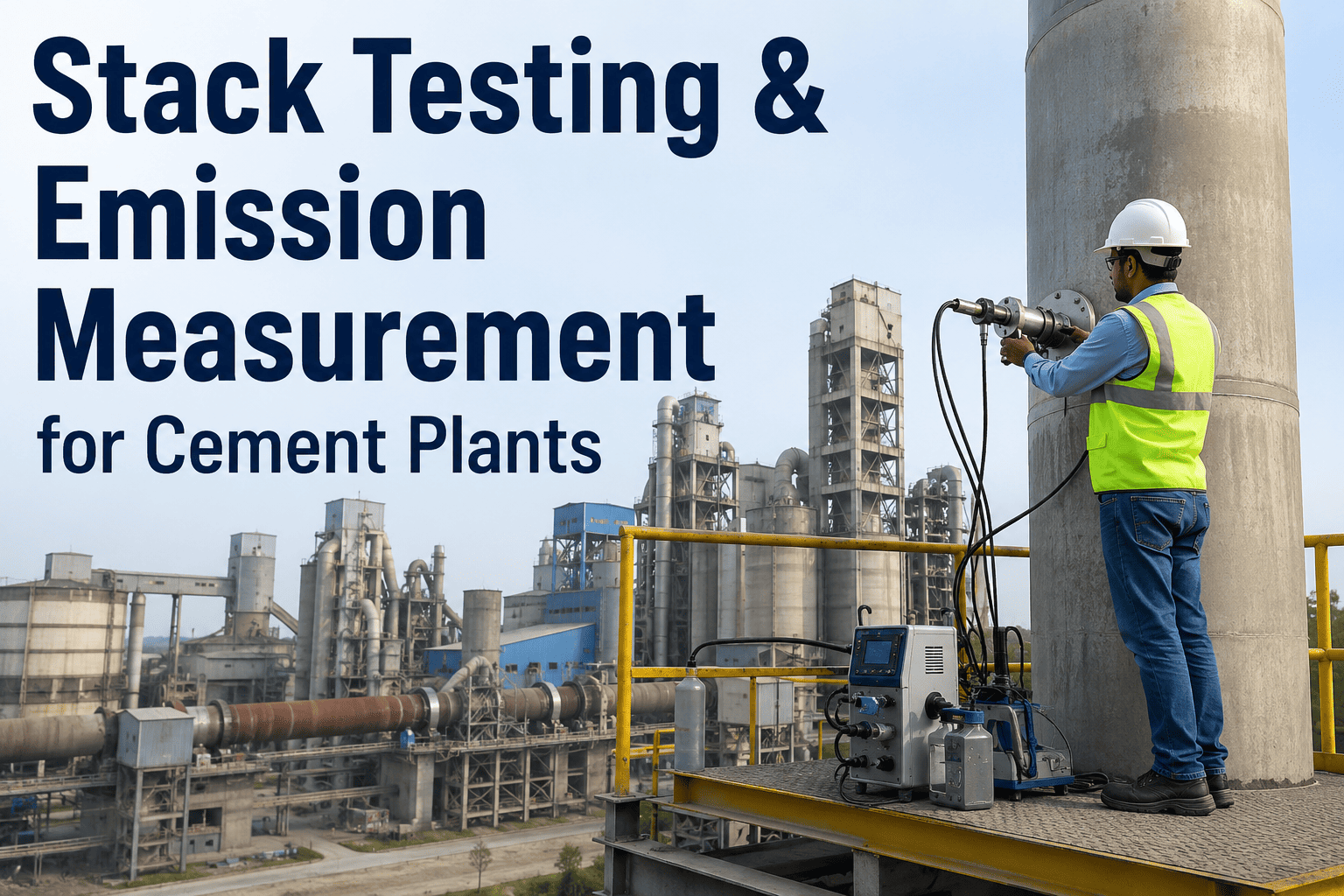
Periodic stack testing confirms compliance at a single point in time, but it cannot catch gradual drift between test dates caused by a fuel change, sorbent supply variation, or equipment wear. Continuous emissions monitoring paired with sorbent dosing data closes that gap, giving operators an early warning when removal efficiency starts trending down well before the next scheduled test would catch it.
Book a demo to see how continuous monitoring complements your existing test schedule.
Keep acid gas removal inside spec through every fuel and raw material change
iFactory continuously correlates acid gas concentration, sorbent dosing, and removal efficiency, so drift gets caught between stack tests instead of at the next compliance audit.