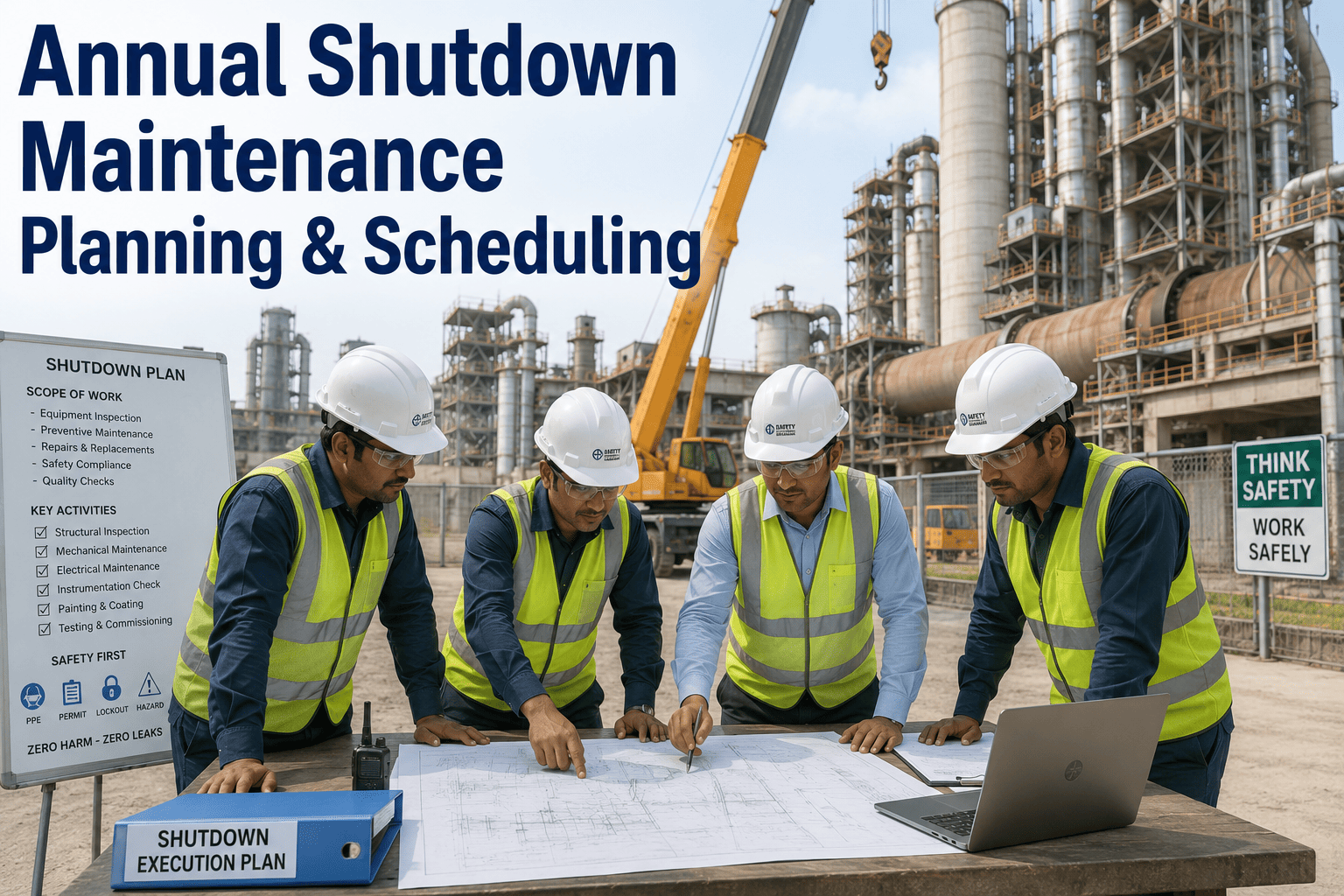
A cement plant's annual shutdown scope starts as a tight list of critical work, then grows every week between now and the outage as deferred work orders get added because "we're already going to be down anyway." By the time the crew mobilizes, the three-week window everyone budgeted for has quietly become a four-week window nobody approved, contractors are working from a job list that changed twice since they quoted it, and spare parts ordered months earlier are still sitting in a supplier's warehouse. A disciplined scope development and material readiness process turns an annual shutdown from a recurring budget surprise into a predictable, on-schedule event, protecting both the maintenance budget and the production calendar the rest of the plant is planned around, and iFactory's shutdown planning tools help plants keep scope, contractors, and materials aligned from the twelve-month mark through execution.
Cement Operations · Annual Shutdown Planning
The Shutdown Doesn't Fail on Day One. It Fails on Month Nine.
A structured scope, contractor, and material readiness process for annual cement plant shutdowns — built to catch the scope creep, missed lead times, and coordination gaps that turn a planned three-week outage into an unplanned five-week one.
12 Months Out
Draft scope opens, long-lead procurement begins
6 Months Out
Preliminary scope freeze, contractor bidding starts
8 Weeks Out
Final scope freeze, material staging begins
1 Week Out
Readiness review, contractor mobilization confirmed
Day 0
Shutdown begins on a fixed, frozen scope
Why Shutdowns Run Over Before They Even Start
Four Habits That Quietly Break the Annual Shutdown Budget
Most cement plants don't lose their shutdown budget to a single dramatic failure. It erodes gradually, through small decisions made months before mobilization that seem reasonable in isolation but compound into weeks of added scope, unplanned contractor costs, and parts that arrive too late to be useful — the kind of overrun that looks inevitable in hindsight but was actually avoidable at almost every point along the way. Recognizing these patterns early, before they've fully compounded, is the difference between a shutdown that closes on schedule and one that becomes the plant's most expensive line item of the year.
The Deferred-Work Dumping Ground
Every work order too disruptive to do during normal operation gets flagged "do during the next shutdown," and by the time planning starts, the backlog attached to the outage is several times larger than what the window can actually absorb, forcing planners into an uncomfortable triage exercise instead of executing against a list that was sized to the schedule from the start.
No Formal Freeze Date
Without a defined point where scope stops changing, new requests keep arriving right up until mobilization, and each one seems small on its own even as the cumulative effect pushes the schedule past what contractors quoted and staffed for.
Procurement Started Too Late
Long-lead components ordered after the scope is finalized rather than as soon as they're identified routinely arrive after the shutdown has already started, forcing crews to work around missing parts or extend the outage to wait for them — a delay that's almost always more expensive than the modest carrying cost of ordering the part a few months earlier than strictly necessary.
Contractors Quoted Against a Moving Target
A contractor who bid against an early scope draft has every right to submit change orders once the actual job list looks different on-site, and those change orders are rarely cheaper than if the scope had been locked before bidding opened — contractors price uncertainty into every change order, which means a moving scope costs the plant a premium on top of the added work itself.
Scope Discipline by Stage
How Much Scope Change Should Be Allowed, and When
Scope doesn't need to be locked from the first day of planning — it needs to close in stages, with the rules getting stricter as the shutdown date approaches and the cost of a late addition rises. A staged freeze gives engineers and operations time to surface real needs early, while still protecting the schedule and budget from last-minute additions that arrive too close to mobilization to plan around properly. The stages below reflect what most cement plants find workable in practice, though the exact timing should flex to match how far in advance a plant's contractors and suppliers typically need commitments locked in, since a plant relying on specialty overseas fabrication may need an earlier freeze than one sourcing mostly domestic parts.
| Stage | Timing | Scope Change Allowed | Why |
| Draft Scope |
10-12 months out |
Fully open |
Widest input window while there's still time to plan and price properly |
| Preliminary Freeze |
5-6 months out |
Reliability-critical only |
Contractor bidding and long-lead procurement need a stable baseline |
| Final Freeze |
6-8 weeks out |
Safety-critical emergencies only |
Material staging and crew scheduling are already locked against this list |
| Execution |
During shutdown |
Formal change order required |
Every addition now competes directly with the fixed schedule and crew capacity |
Scope Control, Not Just a Spreadsheet
Keep Scope, Contractors, and Materials Moving on the Same Timeline
iFactory tracks shutdown scope status, contractor milestones, and material readiness against a single planning horizon, so nothing slips through unnoticed until it's too late to fix.
Contractor Coordination
Four Touchpoints Where Contractor Coordination Breaks Down
Mobilization Planning
Crew sizes, equipment access windows, and laydown areas need to be confirmed weeks in advance, not discovered on the first morning when three contractors show up expecting the same crane at the same time, a conflict that costs far more in lost hours than the coordination call that would have prevented it.
Safety Orientation and Site Access
Badging, orientation, and permit training completed before mobilization day prevents a contractor crew from losing its first shift to paperwork instead of working the scope they were hired for.
Work Package Handoff
Each contractor needs a clearly bounded work package with drawings, isolation points, and acceptance criteria attached, so there's no ambiguity about where one crew's scope ends and another's begins on shared equipment.
Daily Coordination Meetings
A short daily sync across all active contractors surfaces schedule conflicts, parts shortages, and safety issues while there's still time to adjust the next day's plan instead of finding out during the close-out review, when the opportunity to fix the problem in real time has already passed.
Material Readiness
Tracking Parts From Order to On-Site, Not Just "On Order"
A parts list marked "ordered" gives a false sense of security if nobody is tracking whether it has actually shipped, cleared customs, or been staged at the plant in the days before the crew needs it. Material readiness should be tracked as a progression through distinct stages, because a shutdown crew standing next to a mill with no bearing in hand loses just as much time as one waiting on a part that was never ordered in the first place. Visualizing readiness as a percentage complete per category, rather than a binary ordered-or-not status, gives planners an early warning when a category is falling behind well before it becomes a shutdown-week emergency.
Long-Lead Critical Parts
Ordered at 10+ months out — gearboxes, refractory, specialty bearings
Standard Spares
Ordered at 4-6 months out — seals, gaskets, common wear parts
Rental Equipment
Confirmed at 2-3 months out — cranes, generators, temporary lighting
Consumables
Staged in the final weeks — welding supplies, PPE, lubricants
Before and After
What a Disciplined Scope Process Actually Changes
Before
A cement plant enters its annual kiln shutdown with a scope list still growing two weeks before mobilization. A critical refractory shipment ordered late arrives four days into the outage, forcing the crew to resequence work and extend the shutdown by nearly a week, well past the contracted labor window and into significant additional standby cost.
After
The same plant locks scope at the eight-week freeze point, with long-lead refractory ordered ten months out and tracked through staging. Contractors bid against a stable job list, mobilize on schedule, and the shutdown closes within its planned window with material readiness confirmed a full week before crews arrive on site.
Execution Week
The First 72 Hours Set the Tone for the Entire Shutdown
A shutdown that starts with confusion over isolation points, missing permits, or a contractor waiting on equipment access rarely recovers that lost time later in the schedule, because every subsequent day is built on the assumption that the prior day's work finished on time. Treating the opening days of execution with the same discipline as the planning phase — clear sequencing, a confirmed readiness review, and a single point of coordination — is what actually protects the schedule once crews are on site and the pressure to move fast makes shortcuts tempting.
01
Isolation and Lockout Verification
Every equipment isolation point is walked and confirmed against the plan before any contractor crew begins work, closing the single most common source of first-day delay and safety risk on a shutdown site.
02
Sequenced Mobilization by Work Area
Crews mobilize into their work zones in a defined order rather than all at once, preventing the equipment and laydown-area conflicts that happen when multiple contractors converge on the same access point simultaneously.
03
Daily Progress Against the Baseline Schedule
Actual progress gets compared against the planned critical path every day, not just at the weekly review, so a slipping task gets caught and re-resourced while there's still schedule float left to absorb it.
04
Testing and Startup Readiness
Equipment coming out of the shutdown gets a defined test and inspection sequence before startup, catching issues while repair crews and parts are still on site rather than after the plant has already returned to production.
05
Contractor Demobilization and Sign-Off
Each contractor's scope is formally closed out with documented completion and any punch-list items assigned an owner, so nothing gets quietly forgotten once the crew has left site.
Close-Out
What a Post-Shutdown Review Should Actually Capture
The value of a close-out review depends entirely on whether its findings make it into next year's planning cycle rather than sitting in a report nobody revisits until the same problems resurface. A close-out done well becomes the single most useful input for building a tighter scope and a more realistic schedule the following year, which is exactly why it deserves the same structured approach as the planning phase itself. Plants that skip a formal close-out tend to relearn the same lessons every year, because the institutional knowledge from one shutdown rarely survives informally until the next one begins.
Scope Variance Analysis
Compare the final executed scope against the frozen baseline to quantify how much was added after freeze, and by whom, so the next planning cycle can address the actual source of scope creep rather than guessing at it.
Schedule Performance by Work Area
Identify which contractors or work zones consistently ran ahead or behind the baseline schedule, giving next year's planning team real data for setting more accurate durations and crew allocations.
Material Readiness Gaps
Document which parts arrived late or were missing entirely, and trace each gap back to when the order was actually placed, so procurement timing can be corrected at the source rather than the symptom.
Safety and Near-Miss Findings
Capture every safety observation and near-miss from the shutdown while details are still fresh, feeding directly into next year's contractor orientation and site-access planning rather than being lost in a filing cabinet.
Readiness Review
What to Confirm Before Locking the Final Scope
Scope Reconciled Against Backlog
Confirm every deferred work order genuinely needs the shutdown window rather than being scheduled out of habit, freeing capacity for work that actually requires downtime.
Long-Lead Items Ordered
Verify every component with a lead time longer than the planning horizon was ordered at the draft-scope stage, not after the preliminary freeze.
Contractor Scopes Bounded
Check that each contractor's work package has clear boundaries and acceptance criteria to prevent overlap disputes once crews are on site together.
Change-Order Process Defined
Set the approval path for any scope addition after final freeze, so an urgent request during execution goes through a decision-maker instead of getting added informally.
Common Questions
Frequently Asked Questions
How far in advance should annual shutdown scope development actually start?
Most cement plants get the best results starting draft scope development around ten to twelve months before the shutdown date, which gives enough runway to identify long-lead procurement needs, build an accurate contractor bid package, and still leave room for a staged freeze process rather than a single rushed scope-lock a few weeks before mobilization. Starting later usually means compressing procurement lead times to the point where critical parts risk arriving mid-shutdown instead of before it, which can turn a planned outage into an extended one purely because the ordering clock started too late relative to the equipment's actual delivery timeline.
Talk to support about setting up a planning horizon that fits your shutdown cadence.
What's a reasonable amount of scope contingency to plan for?
Many plants build in a contingency allowance of roughly ten to fifteen percent of planned labor hours to absorb legitimate findings discovered once equipment is opened up, since some scope genuinely can't be known until inspection happens during the shutdown itself. The goal of a freeze process isn't zero change — it's making sure that contingency stays reserved for real discoveries rather than getting consumed by requests that could have been identified months earlier, which is the failure mode that turns a reasonable contingency buffer into an overrun by the time the crew demobilizes.
How should contractor change orders be handled once the shutdown is underway?
Every change order during execution should route through a single decision-maker who can weigh the cost and schedule impact against the fixed shutdown window before approving it, rather than allowing field-level verbal approvals that bypass budget visibility.
Book a demo to see how change-order tracking connects to your live shutdown schedule.
Does a staged scope freeze slow down legitimate reliability findings from being addressed?
No — the preliminary freeze stage is specifically designed to stay open to reliability-critical additions discovered through inspections, vibration trending, or condition monitoring, while filtering out lower-priority wishlist items that could just as easily wait for the next planned maintenance window without risking equipment integrity. Each addition may seem small on its own, but each contractor's daily coordination burden and each unplanned parts order compounds the same way, which is exactly the pattern a disciplined, staged process is built to interrupt before it snowballs into a shutdown that runs long and over budget.
What's the biggest single driver of shutdown cost overruns in cement plants?
Scope creep between the preliminary freeze and mobilization is consistently the largest driver, more than labor rate increases or equipment rental costs, because each individually small addition adds crew hours and schedule risk that compound across dozens of work orders by the time the shutdown actually begins.
Plan the Outage, Not Just the Work List
Lock Scope Early, Track Materials Continuously, Hit the Schedule
iFactory keeps annual shutdown scope, contractor coordination, and material readiness aligned on one planning horizon, from the twelve-month mark through close-out.