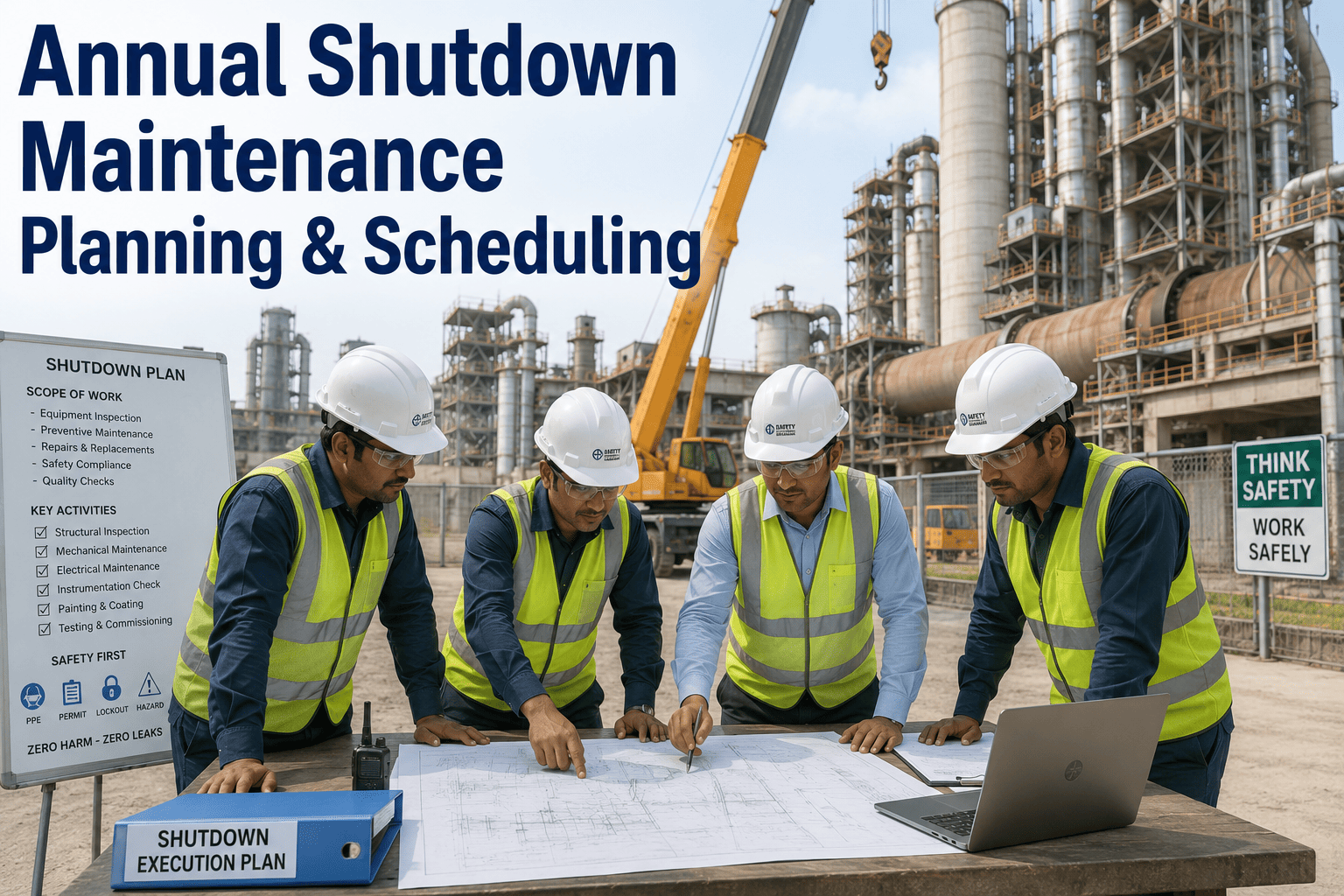
A cement plant annual shutdown — typically 25 to 45 days of planned downtime for kiln refractory replacement, mill overhaul, cooler maintenance, and electrostatic precipitator servicing — represents the single most complex and expensive maintenance event in the cement production calendar. A typical integrated cement plant shutdown involves 400 to 800 individual work packages, 150 to 300 contractors across 20-plus specialized trades, and 15 to 30 major asset interventions coordinated through a critical path schedule where a single day of schedule overrun can cost $200,000 to $500,000 in lost production and contractor standby charges. Despite this complexity, most cement plants still manage annual shutdowns using spreadsheets, whiteboards, and institutional knowledge that walks out the door when experienced shutdown planners retire. iFactory's AI-driven Outage Planning Module with Critical Path Tracking transforms annual shutdown management by automating work package sequencing, optimizing contractor coordination, predicting schedule risks before they materialize, and providing real-time critical path visibility to every stakeholder from the plant manager to the contractor foreman. Book a Demo to see iFactory's shutdown planning platform configured for your cement plant's specific equipment configuration and shutdown scope.
Plan and Execute Cement Plant Annual Shutdowns 30% Faster With AI-Driven Outage Planning and Critical Path Tracking
iFactory's Outage Planning Module automates work package sequencing, contractor coordination, resource leveling, and real-time critical path tracking across your entire annual shutdown — reducing planning time by 50% and execution duration by 30% with measurable results from the first shutdown cycle.
Annual shutdowns are the highest-risk period on the cement plant calendar. Unlike routine planned maintenance where a single asset is taken offline, an annual shutdown requires simultaneous intervention on the kiln, preheater tower, clinker cooler, raw mill, cement mill, coal mill, electrostatic precipitators, baghouses, compressors, and material handling systems — all within a compressed time window dictated by clinker inventory levels, market demand, and seasonal cement consumption patterns. The margin for error is measured in hours, not days. A kiln refractory failure discovered during cooldown that requires an additional week of scaffold access and bricklaying can delay the entire shutdown by 7 to 10 days, triggering a cascade of contractor standbys, inventory shortages, and missed customer commitments that can cost $1 million to $3 million in total economic impact. iFactory's AI-driven Outage Planning Module addresses the five root causes of shutdown schedule failure, providing cement plant shutdown planners with the decision support tools needed to plan, execute, and control annual shutdowns with precision, predictability, and confidence.
The Five Pillars of AI-Driven Annual Shutdown Management
Work Package Decomposition and Sequencing
The foundation of any successful annual shutdown is a complete, accurate work breakdown structure that decomposes the full shutdown scope into individual work packages with defined tasks, resource requirements, duration estimates, dependencies, and safety permits. iFactory's AI module ingests historical shutdown data, OEM maintenance recommendations, and condition-based assessment results to auto-generate a baseline work breakdown structure for each asset, which the shutdown planner then refines based on current condition assessment findings, inspection results, and regulatory requirements.
Critical Path Optimization and Scenario Modeling
The critical path through a cement plant annual shutdown runs through the kiln refractory replacement sequence — cooldown, scaffold erection, refractory demolition, brick installation, curing, heating, and process stabilization. Any delay on this path directly extends the total shutdown duration. iFactory's critical path engine calculates the optimal sequence for every work package on the critical path, considering resource constraints, spatial conflicts, safety requirements, and weather dependencies.
Contractor Coordination and Resource Leveling
Annual shutdowns require the simultaneous coordination of bricklayers, welders, millwrights, riggers, scaffold erectors, insulator crews, electrical technicians, and instrumentation specialists — often multiple crews from different contractors working in the same physical space on interdependent tasks. iFactory's resource leveling engine optimizes contractor crew allocation across the shutdown schedule, ensuring that critical path tasks have the resources they need while non-critical tasks are leveled to avoid resource conflicts.
Real-Time Schedule Control and Alerting
Once the shutdown is in execution, the challenge shifts from planning to control — tracking actual progress against the plan, identifying schedule variance early, predicting the downstream impact of delays, and recommending corrective actions before schedule slippage compounds. iFactory's real-time schedule control module integrates with daily progress reporting, time and attendance data, work order completion status, and inspection sign-off tracking to provide a live picture of shutdown status.
Post-Shutdown Analytics and Continuous Improvement
Every annual shutdown generates a wealth of data that can improve the next shutdown — actual work package durations versus estimates, contractor productivity metrics, quality issues discovered during inspection, safety incident patterns, and scope changes that emerged during execution. iFactory's analytics module captures this data automatically, providing post-shutdown analytics that feed directly into the next year's planning cycle for continuous shutdown improvement.
Annual Shutdown Planning — Traditional Approach vs AI-Driven Outage Planning
- Work breakdown structure created manually in spreadsheets; 4–8 weeks of planning time; scope gaps discovered during execution
- Critical path calculated manually with desktop scheduling software; no real-time optimization or what-if modeling capability
- Contractor coordination managed through phone calls, emails, and paper timesheets; resource conflicts resolved on-the-fly during execution
- Schedule control relies on daily progress meetings and paper tracking; schedule variance detected 2–4 days after delay occurs
- Post-shutdown lessons learned captured informally; no systematic data capture for continuous improvement between shutdown cycles
- Auto-generated work breakdown structure from asset data and historical shutdown records; 2-week planning time; 95% scope completeness
- AI-powered critical path optimization with real-time what-if scenario modeling; schedule risk forecasting for every work package
- Unified contractor coordination dashboard with resource leveling engine; automated daily crew allocation across all contractors
- Real-time schedule control with live variance tracking; AI predicts delay impact and recommends corrective actions before slippage compounds
- Automated post-shutdown analytics with duration accuracy trending, contractor productivity benchmarking, and continuous improvement recommendations
- Integration with CMMS for work order generation, parts inventory reservation, and safety permit management in a single platform
The Annual Shutdown Lifecycle — From Planning to Post-Shutdown Analytics
Phase 1 — Shutdown Scope Definition and Work Breakdown (T-12 to T-6 Months)
The shutdown planning cycle begins 12 months before the scheduled outage date with scope definition. iFactory ingests asset condition data from predictive maintenance models, OEM service interval recommendations, regulatory inspection requirements, and capital project schedules to generate a draft shutdown scope. The shutdown planner reviews and refines the scope, adding work packages identified during the current operating campaign. The system auto-generates duration estimates based on historical performance data for each asset and work package type, adjusted for the specific scope complexity of the current shutdown.
Phase 2 — Schedule Development and Resource Planning (T-6 to T-3 Months)
The AI engine generates the optimized shutdown schedule, calculating critical path, float for each work package, and resource requirements across the full shutdown duration. The planner runs what-if scenarios — adjusting resource levels, shifting non-critical work, and modeling different contractor crew configurations — to find the optimal balance of duration, cost, and risk. The resource leveling engine ensures that critical path tasks receive priority resource allocation while non-critical tasks are leveled to smooth resource demand across the shutdown period.
Phase 3 — Contractor Procurement and Pre-Shutdown Preparation (T-3 to T-0 Months)
The approved shutdown scope and schedule are published to the contractor portal, where each contractor views their assigned work packages, schedule windows, resource requirements, safety permit prerequisites, and quality acceptance criteria. The system manages contractor qualification verification, safety training compliance, insurance certificate tracking, and site access badging. Material and parts reservations are confirmed against inventory, and long-lead procurement orders are tracked to ensure delivery before the shutdown start date.
Phase 4 — Shutdown Execution and Real-Time Schedule Control (Days 1–35)
During shutdown execution, the iFactory platform becomes the central nervous system for schedule control. Daily progress is reported against each work package — percentage complete, actual hours worked, quality inspection status, and safety observation count. The real-time critical path engine recalculates the schedule with each update, predicting the downstream impact of any delay and recommending corrective actions such as resource reallocation, overtime authorization, or scope re-sequencing. Automated alerts notify stakeholders when schedule variance exceeds configured thresholds.
Phase 5 — Post-Shutdown Analytics and Continuous Improvement (T+0 to T+3 Months)
Within 30 days of shutdown completion, the platform delivers the post-shutdown analytics package: actual versus planned duration for every work package, contractor productivity metrics, quality acceptance rate, safety incident summary, scope change analysis, and total shutdown cost versus budget. These analytics feed into the knowledge base for the next shutdown planning cycle, with AI models that continuously improve duration estimates, resource allocation recommendations, and risk identification accuracy based on each successive shutdown's actual performance data.
Annual Shutdown Cost Structure — Where AI-Driven Planning Delivers the Greatest Financial Impact
| Cost Category | Traditional Approach | iFactory AI-Driven Approach | Typical Savings |
|---|---|---|---|
| Shutdown planning labor | 4–8 weeks of planner time; $15,000–$40,000 per shutdown | 2 weeks of planner time with AI assistance; $5,000–$12,000 per shutdown | 55–70% planning labor reduction |
| Schedule overrun risk | 3–7 day average overrun; $600K–$3.5M economic impact | <1 day average overrun; <$200K economic impact | 70–90% schedule overrun cost reduction |
| Contractor standby cost | $15,000–$40,000 per day of delay for critical path contractor crews | Near-zero standby through optimized resource leveling and schedule control | 80–95% standby cost reduction |
| Scope change management | 10–20% scope growth during execution; $50K–$150K in unplanned cost | 3–7% scope growth with AI detection of emerging work; $15K–$50K | 50–70% scope change cost reduction |
| Quality rework | 5–10% of work packages require rework; $30K–$100K per shutdown | 1–3% rework rate through automated quality inspection tracking | 60–80% rework cost reduction |
| Safety incident cost | $20,000–$80,000 per lost-time incident; average 1–3 incidents per shutdown | 0–1 incidents through integrated permit-to-work and safety observation tracking | 60–90% safety incident cost reduction |
| Total shutdown cost impact | $750K–$3.8M in avoidable costs per annual shutdown | $20K–$200K in residual avoidable costs | 85–95% total avoidable cost reduction |
What Cement Plant Outage Planning Experts Say About AI-Driven Shutdown Management
After 22 years in cement plant maintenance — the last eight as maintenance director for a three-plant integrated cement company — I have managed 30-plus annual shutdowns ranging from 28-day kiln-only outages to 52-day full plant shutdowns involving five production lines simultaneously. The most painful lesson I learned over those years is that the quality of the shutdown is determined in the planning phase, not the execution phase. Every hour invested in planning saves three to five hours in execution, but the traditional approach to planning — spreadsheets, Gantt charts, institutional knowledge, and hope — has fundamental limitations. Spreadsheets cannot optimize the critical path across 600 interdependent work packages. Gantt charts cannot model resource constraints across 20 different contractor crews working in the same physical space. Institutional knowledge walks out the door when experienced planners retire.
What impressed me most about iFactory's Outage Planning Module was not just the AI optimization engine — it was the integration between planning and execution. In traditional shutdown management, the plan lives in the planning office, and the execution lives on the plant floor, and the two rarely stay synchronized after the first week. iFactory's platform keeps the plan alive during execution, recalculating the critical path with every daily progress update and alerting me to schedule variance before it compounds into a week-long delay. Our first shutdown using the platform completed 3.5 days ahead of the optimized schedule — a first in my career — with zero safety incidents and zero quality rework. The platform paid for itself in that single shutdown cycle.
Deploy AI-Driven Outage Planning and Critical Path Tracking for Your Next Cement Plant Annual Shutdown
From auto-generated work breakdown structures to real-time critical path optimization and post-shutdown analytics — iFactory AI delivers the complete annual shutdown management platform in one system built for cement plant outage planning and execution.
Cement plant annual shutdowns are the highest-stakes maintenance events in the cement production calendar — a 25 to 45 day period where the entire plant is offline and every hour of schedule overrun costs $200,000 to $500,000 in lost production and contractor standby charges. The traditional approach to shutdown management — spreadsheets, desktop scheduling software, and institutional knowledge — is no longer adequate for the complexity of modern multi-kiln cement operations, where 400 to 800 work packages must be sequenced across 20-plus contractor trades with interdependent schedules, spatial constraints, and safety requirements that compound delay risk exponentially. iFactory's AI-driven Outage Planning Module with Critical Path Tracking addresses the full shutdown lifecycle: auto-generated work breakdown structures that reduce planning time from six weeks to two weeks, AI-optimized critical path scheduling that minimizes shutdown duration while respecting all resource and safety constraints, real-time schedule control that detects and corrects variance before it compounds, and post-shutdown analytics that drive continuous improvement between shutdown cycles.
The investment required to deploy iFactory's Outage Planning Module across a single integrated cement plant averages $65,000 to $120,000, including platform configuration, historical data migration, planner training, and contractor portal setup. Typical payback is achieved within a single shutdown cycle — the reduction in schedule overrun alone typically saves $400,000 to $1.5 million in avoided lost production and contractor standby costs, while planning labor savings, reduced rework, and safety improvement deliver additional measurable value. For cement plant maintenance and reliability leaders ready to transform annual shutdown management from a risk-filled event to a predictable, controlled process, book a demonstration with iFactory's outage planning engineering team to review your current shutdown management process and build a deployment roadmap for your next annual shutdown.
Plan and Execute Your Next Cement Plant Annual Shutdown With AI-Driven Precision
iFactory's Outage Planning Module manages 400+ work packages, coordinates 150+ contractors, tracks real-time critical path, and reduces shutdown duration by 30% — in a single platform built for cement plant annual outage planning and execution.
Cement Plant Annual Shutdown Planning — Frequently Asked Questions
How does AI improve critical path scheduling for cement plant annual shutdowns compared to traditional desktop scheduling software?
Traditional desktop scheduling tools require manual input of all work packages, durations, dependencies, and resource assignments, then calculate the critical path once based on that static input. iFactory's AI engine optimizes the critical path dynamically by running thousands of scheduling scenarios that account for resource constraints, spatial conflicts, weather dependencies, and contractor availability. Unlike static scheduling, the AI continues to optimize the critical path during execution, recalculating with every daily progress update and recommending corrective actions when variance is detected.
What is the typical planning time reduction when using AI-generated work breakdown structures for cement plant shutdowns?
Cement plants using iFactory's AI-generated work breakdown structures typically reduce shutdown planning time from 4–8 weeks to 10–14 days — a 55–70% reduction in planning labor. The AI auto-generates the baseline WBS by ingesting asset condition data, OEM maintenance recommendations, historical shutdown records, and regulatory inspection requirements. The planner then refines the auto-generated scope based on current inspection findings and specific shutdown objectives, rather than building the WBS from scratch.
How does the platform handle contractor coordination across multiple trades during an annual shutdown?
iFactory's contractor coordination module provides each contractor with a secure portal showing their assigned work packages, schedule windows, resource requirements, safety permit prerequisites, and quality acceptance criteria. The resource leveling engine optimizes crew allocation across all contractors simultaneously, prioritizing critical path task resources while leveling non-critical tasks to smooth demand. Daily progress reporting and schedule updates are visible to both the plant shutdown team and contractor management in real time.
Can the Outage Planning Module integrate with existing CMMS and ERP systems already deployed at the cement plant?
Yes. iFactory's platform includes pre-built integration connectors for major CMMS platforms including SAP, Maximo, Infor EAM, and Oracle — enabling automatic work order generation from shutdown work packages, parts inventory reservation from the shutdown bill of materials, and safety permit management across all shutdown work activities. Integration with ERP systems enables shutdown cost tracking against budget, contractor invoice validation, and procurement coordination for long-lead shutdown materials. Book a Demo to discuss integration with your specific systems.
What is the typical ROI and payback period for deploying AI-driven outage planning at a cement plant?
Annual shutdown ROI is driven primarily by schedule overrun reduction — most plants achieve payback within one shutdown cycle. A typical $65,000–$120,000 deployment generates $400,000–$1.5 million in measurable savings from reduced schedule overrun, planning labor savings averaging $10,000–$28,000 per shutdown, contractor standby cost elimination ($15,000–$40,000 per day of avoided delay), scope change cost reduction of 50–70%, quality rework reduction of 60–80%, and safety incident cost reduction of 60–90%. Book a Demo for an ROI assessment tailored to your cement plant's specific shutdown configuration, scope, and contractor structure.