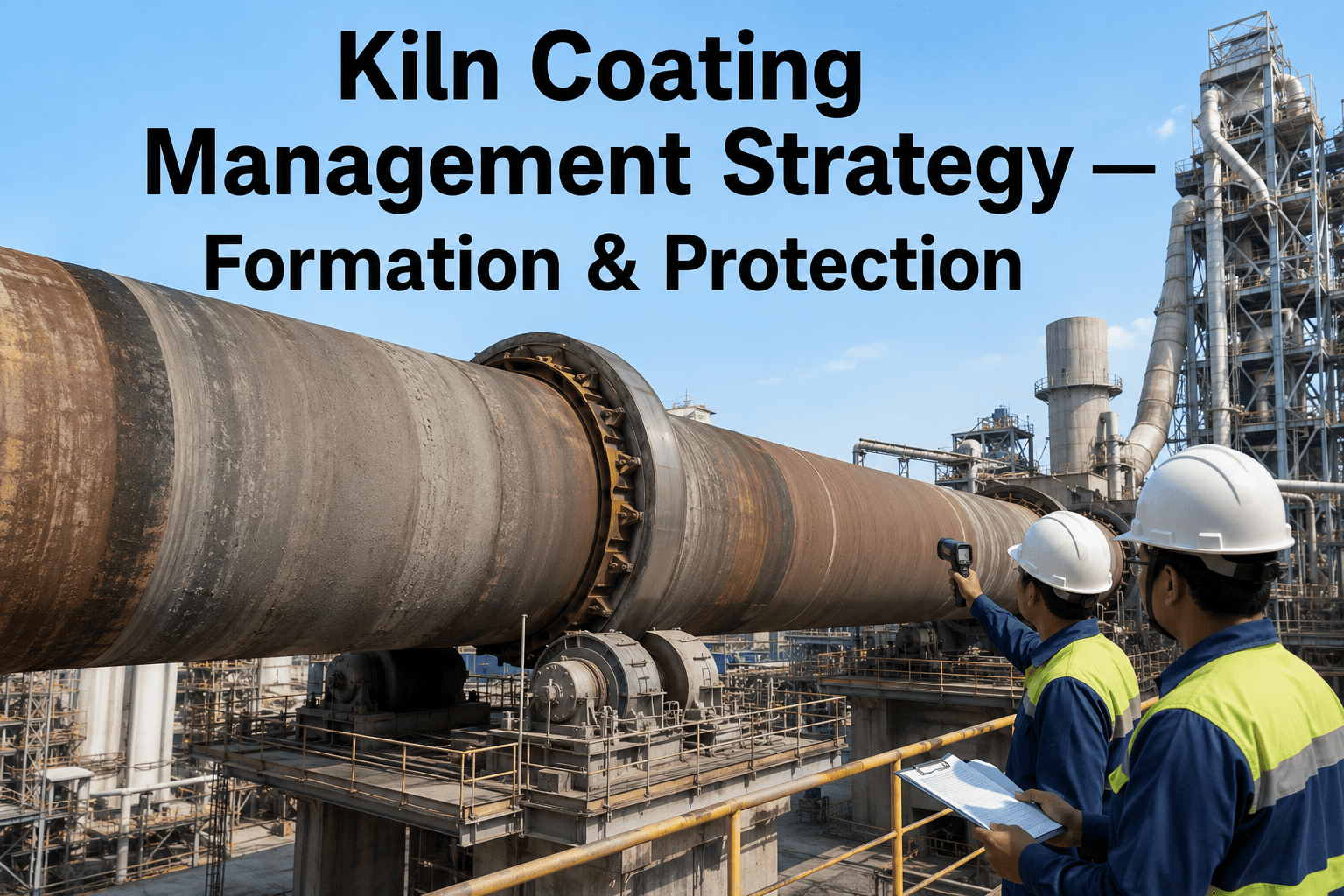
Inside the burning zone of a rotary kiln, the refractory brick is never actually facing the flame directly — a layer of semi-molten clinker material, the coating, sits between the two and does the job of absorbing heat the brick itself was never designed to survive unprotected. A stable coating, typically somewhere between 150 and 300 millimeters thick, can extend refractory service life dramatically compared to a kiln running bare or with a coating that keeps sloughing off and reforming. Losing that layer even briefly, through an impinging flame or an unstable burning zone, can damage brick in minutes in a way that takes months of stable coating to protect against again. A demo can show how continuous kiln shell temperature monitoring flags coating loss before refractory damage sets in.
Why the Kiln Wall Is Really Three Layers, Not One
Operators often talk about "the refractory" as if it's the only thing standing between the flame and the steel shell, but in a properly run burning zone the actual barrier is a system: refractory brick on the outside, a coating layer forming the true hot face, and the flame itself, whose shape and stability determine whether that coating stays put or burns away. Each layer depends on the one next to it — a poorly chosen refractory won't hold coating no matter how good the burning zone control is, and a perfectly suited refractory will still fail early if the flame is allowed to impinge directly on the wall during an unstable burn.
What Actually Determines Whether Coating Forms and Stays
Coating formation isn't luck — it's the product of raw meal chemistry, refractory properties, and kiln operation lining up in a fairly narrow window. The alumina ratio of the raw meal, generally kept between 1.3 and 1.6 for stable coating formation, controls the viscosity of the liquid phase that has to be sticky enough to adhere to the wall without being so viscous that it never forms an even layer in the first place. Refractory conductivity plays a counterintuitive role here too: brick that conducts heat well toward the shell keeps the coating's own surface temperature lower, which paradoxically makes coating easier to hold rather than harder.
| Factor | Effect on Coating Stability |
|---|---|
| Alumina ratio (IM) 1.3-1.6 | Ideal liquid phase viscosity for even adhesion |
| Kiln speed (3.5-4.5 RPM typical) | Higher speeds increase mechanical flexing stress on coating |
| Flame shape | Bushy and stable favors coating; impinging flame destroys it locally |
| Refractory thermal conductivity | Higher conductivity often supports easier coating retention |
| Burning zone temperature swings | Frequent swings are the leading cause of unstable coating |
The Transition Zones: Where Coating Instability Actually Starts
The burning zone isn't uniform along its length — it's typically divided into an upper-transition zone, the sintering zone at its center, and a lower-transition zone, and coating behaves very differently across the three. The sintering zone has the highest and most consistent liquid content, which generally makes coating there the most stable once it's established. The upper and lower transition zones see lower liquid content and more frequent temperature swings as the burning zone location itself shifts slightly with changes in feed rate or fuel firing, which is exactly why unstable coating shows up at the ends of the burning zone far more often than in its center.
This has a direct operational implication: if a plant is seeing repeat coating loss, the first question isn't "what refractory should we install" — it's "is the burning zone location itself moving around more than it should be." A burning zone that's drifting because of feed rate instability or inconsistent fuel firing will keep punishing whatever refractory sits at its shifting edges, and no brick specification fixes an operating problem underneath it.
Recovering Coating After It's Lost
When coating drops in a localized area, the instinct is often to push more fuel at that section to encourage rapid re-formation, but that's frequently the wrong move — a hotter flame aimed at bare or thinly coated refractory risks the exact impingement damage that caused the loss in the first place. The more reliable approach is stabilizing the burning zone first: steady feed rate, steady fuel firing, and a flame shape that isn't hunting between positions, which allows coating to re-form naturally across the affected section over a period of hours to days rather than forcing it with a heat spike that can make brick damage worse.
Refractory porosity and thermal conductivity matter again here, specifically for how quickly a section recovers. Bricks with the right porosity characteristics support faster re-coating after a localized spall because they allow the surface temperature profile to re-establish itself in the range where liquid phase clinker actually adheres, while a brick chosen purely for maximum heat resistance without regard to this property can leave a section running bare for far longer during recovery, extending the exposure window where thermal, mechanical, and chemical stress accumulates on the underlying lining.
Instrumentation: What to Measure Beyond Shell Temperature Alone
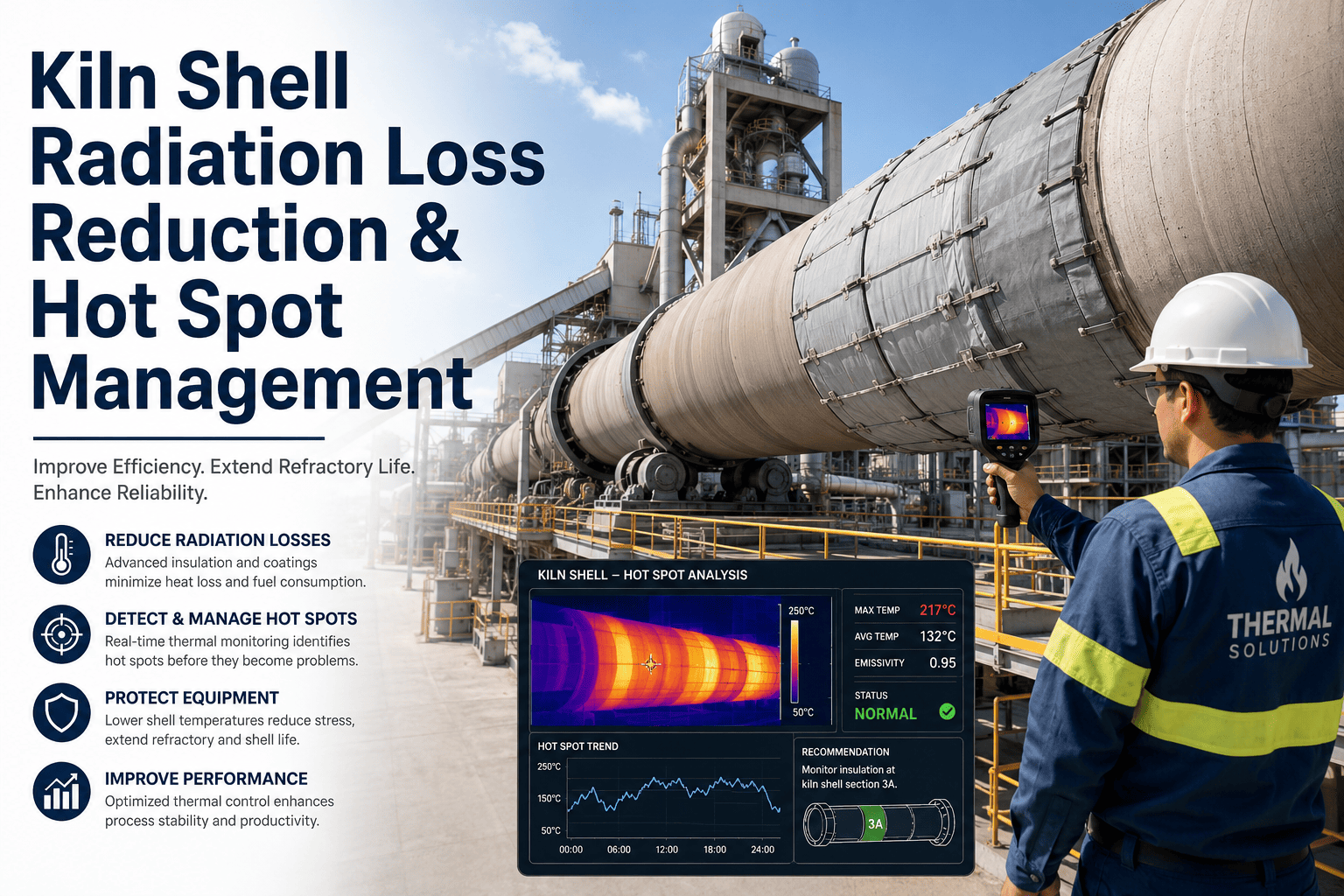
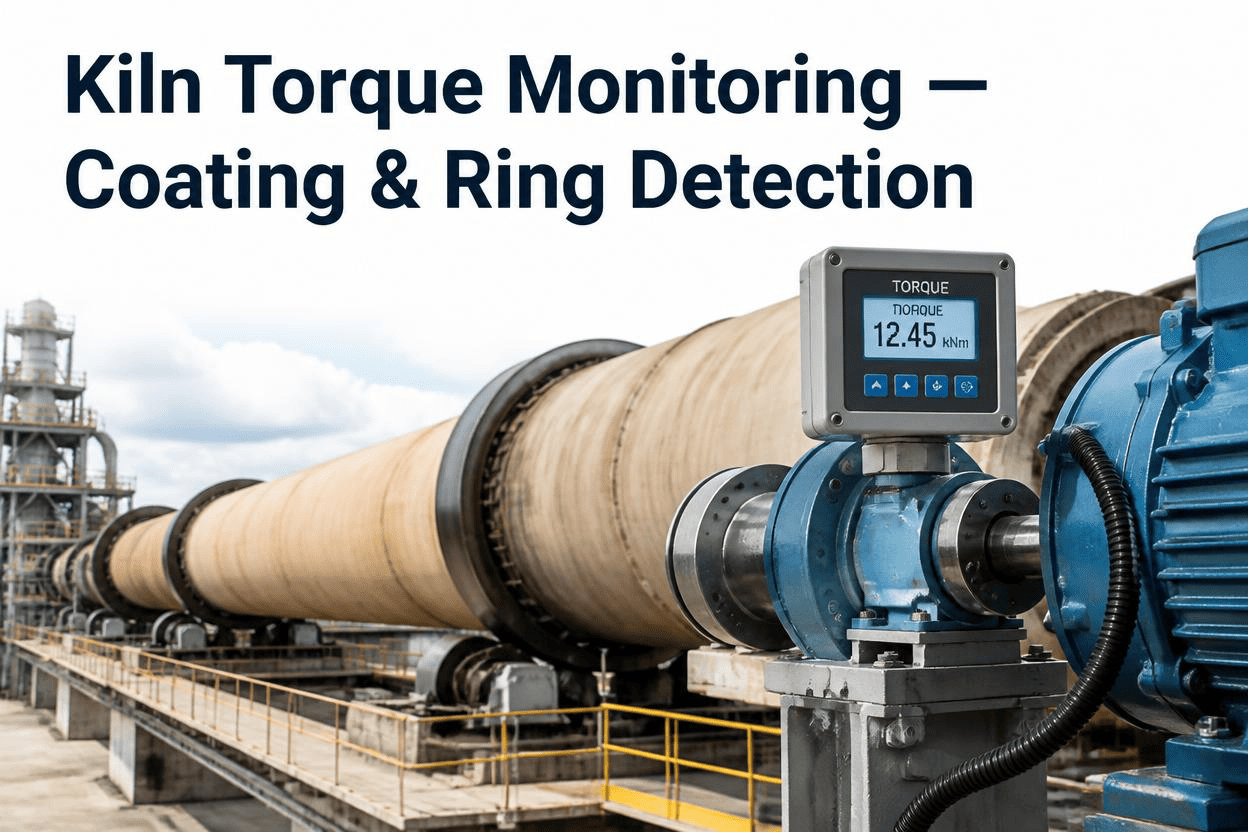
Shell temperature scanning is the most common coating indicator because it's the easiest to instrument continuously along the full length of the kiln, but it's a lagging signal in one specific sense: by the time a shell hot spot shows up clearly, the coating loss underneath it has usually already been developing for some time. Pairing shell scanning with kiln torque and main drive amperage adds an earlier signal, since a coating buildup that's growing unevenly around the circumference changes the load distribution on the tire and rollers well before it becomes visible as a temperature anomaly on the shell itself.
Burning zone flame monitoring, whether through a fixed camera or a flame scanner tied into the control system, closes the loop by connecting cause and effect in something close to real time. A kiln that pairs shell temperature, drive torque, and flame stability data in one continuously reviewed view can usually trace a shell hot spot back to the specific operating change that caused it — a feed rate swing, a fuel firing adjustment, a raw meal chemistry shift — rather than treating the hot spot as an isolated event with no clear cause.
| Signal | What It Reveals |
|---|---|
| Shell temperature by zone | Confirms where coating has already thinned or dropped |
| Main drive torque / amperage | Flags uneven coating buildup before it shows up as heat |
| Flame shape and stability | Connects burning zone behavior directly to coating cause and effect |
| Raw meal alumina ratio trend | Shows whether chemistry is drifting outside the stable coating window |