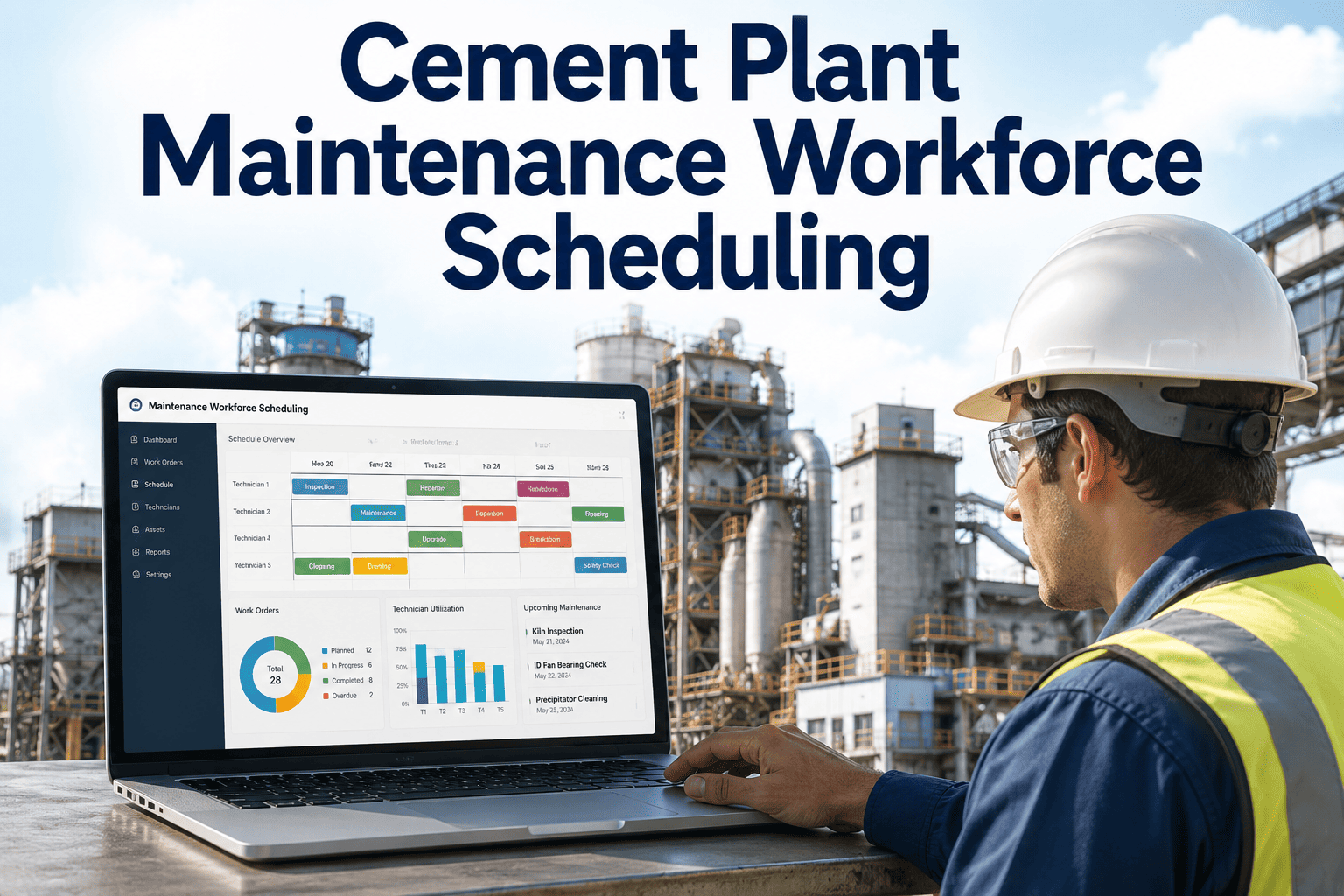
An integrated cement plant's annual shutdown is the single most expensive maintenance event on the calendar — twenty five to forty five days where the entire plant sits offline, four hundred to eight hundred work packages compete for the same crews, and a single day of schedule overrun can cost hundreds of thousands of dollars in lost production and standby contractor charges. Most plants still run this event on spreadsheets, whiteboards, and the institutional memory of a planner who might retire next year. iFactory's outage planning module replaces that fragility with a critical-path schedule everyone can see.
Annual Shutdown Maintenance Planning & Scheduling for Cement Plants
Why Scope Discovered Mid-Shutdown Is So Expensive
The single most damaging thing that can happen during a shutdown is discovering work that wasn't planned for. Scope changes found during a live shutdown cost three to four times more than the identical work planned ninety days in advance, and every added task extends the outage by an average of more than two days on a major kiln or mill event. The reason is structural, not incidental: expedited parts carry a premium, contractors already on standby cost more per hour to redirect, and every added task on the critical path pushes the entire startup date — with it, the entire production loss — further out. Plants that begin shutdown planning less than ninety days out report spending roughly a third more on expedited parts and contractor premiums than plants that plan from a full six months ahead.
The Shutdown Planning Timeline
Why the Kiln Refractory Reline Is Almost Always the Critical Path
Every major cement shutdown has one task that determines the finish date, and on an integrated plant it is almost always the kiln refractory reline. The sequence cannot be compressed below a physical minimum: two to three days of controlled cooldown before anyone can safely enter the kiln, brick removal, shell inspection, the actual relining work, and then two to three days of controlled heat-up before the kiln can return to production. Every other work package — mill overhauls, cooler rebuilds, electrostatic precipitator servicing — gets scheduled around this spine, because finishing early on a non-critical task does nothing for the overall shutdown duration while a delay on the refractory reline extends it day for day.
One plant maintenance director reported finishing a shutdown two days ahead of schedule for the first time in eleven years after switching to a live critical path dashboard. Book a 30-minute demo to see the same tracking against your own equipment list.
Resource Loading: The Cost of Understaffing the Critical Path
Understaffing the critical path is one of the most expensive mistakes a shutdown plan can make, because every hour lost on the critical path extends the entire outage — while extra crew on a non-critical task saves nothing at all. The table below shows a representative labor loading pattern for a mid-size cement plant shutdown, illustrating how crew allocation should track the critical path rather than being spread evenly across all work fronts.
| Work Package | Critical Path? | Typical Crew Size | Duration Driver |
|---|---|---|---|
| Kiln refractory reline | Yes — defines finish date | 25-40 workers | Cooldown, brick work, heat-up sequence |
| Raw/cement mill overhaul | Usually not | 10-18 workers | Liner replacement, girth gear inspection |
| Clinker cooler rebuild | Sometimes | 12-20 workers | Grate repair, drive alignment |
| ESP / baghouse servicing | Rarely | 8-15 workers | Element replacement, casing inspection |
Where Shutdowns Actually Go Wrong
Want a second pair of eyes on where your shutdown scope is likely to slip? Talk to our outage planning team before your next scope freeze.
A 90-Day Scope Freeze Checklist
Post-Shutdown Review: The Step Everyone Skips
The formal post-shutdown review is the most frequently skipped phase of the entire process, and it is also the one with the clearest return. A structured comparison of actual versus planned duration, cost, and work order completion — done within two weeks while the details are still fresh — routinely improves turnaround efficiency by ten to fifteen percent on the next cycle. Skip it, and the same scheduling conflicts, the same underestimated cooldown windows, and the same contractor coordination gaps tend to resurface the following year, because nothing was captured to prevent them.
Material Procurement: The Silent Schedule Killer
A perfectly sequenced critical path schedule still fails if a single long-lead part isn't on site when its task begins. Refractory brick, girth gear segments, mill liners, and specialized bearings often carry lead times measured in months rather than weeks, which is exactly why the ninety-day scope freeze exists — it gives procurement a real window to secure delivery rather than chase an expedited shipment at a premium once the shutdown has already started. Confirming delivery is not the same as confirming a promised ship date; plants that treat a supplier's estimated ship date as confirmed, rather than tracking the shipment itself, are the ones most likely to discover a missing part with the crew already standing at the work front. A material readiness review at the thirty-day mark, checking every critical-path part against an actual delivery confirmation rather than a purchase order status, closes this gap before it becomes a schedule problem.
Spare parts staging matters just as much as procurement timing. Parts confirmed on site but stored in the wrong location, or not kitted with the fasteners and consumables the task actually needs, cost just as much time on day one of the shutdown as a part that never arrived. The most reliable shutdown programs stage every critical-path work package's materials together, in one location, verified against the work order before the shutdown window opens — turning what would otherwise be a scramble on day one into a five-minute confirmation.
Contractor Qualification & Safety Management
A shutdown brings hundreds of contractors from dozens of trades onto the site at once, many of whom have never worked in that specific plant before. Safety and qualification gaps that would be caught easily on a normal day get lost in the volume and pace of a shutdown unless they're checked systematically before work begins.
Digital Critical Path Tracking vs. Spreadsheet Planning
Many cement plants still run shutdown coordination through spreadsheets and radio calls, and for a small minor shutdown that can work. On a major annual shutdown involving hundreds of work packages and dozens of contractors, the same approach breaks down in a specific, predictable way — nobody has a single current view of the schedule, so problems surface hours or a full shift later than they could have.
Schedule updates require someone to manually re-enter data, often once per shift at best
A delay on one task is discovered by whoever happens to walk past, not by the schedule itself
Dependency links between tasks live in the planner's head, not in the document
Progress updates flow in from the field as tasks close, visible to every supervisor immediately
A delay on a dependent task automatically flags every downstream task it affects
Recovery decisions — redeploying a crew from a finished task — happen the same shift, not the next morning