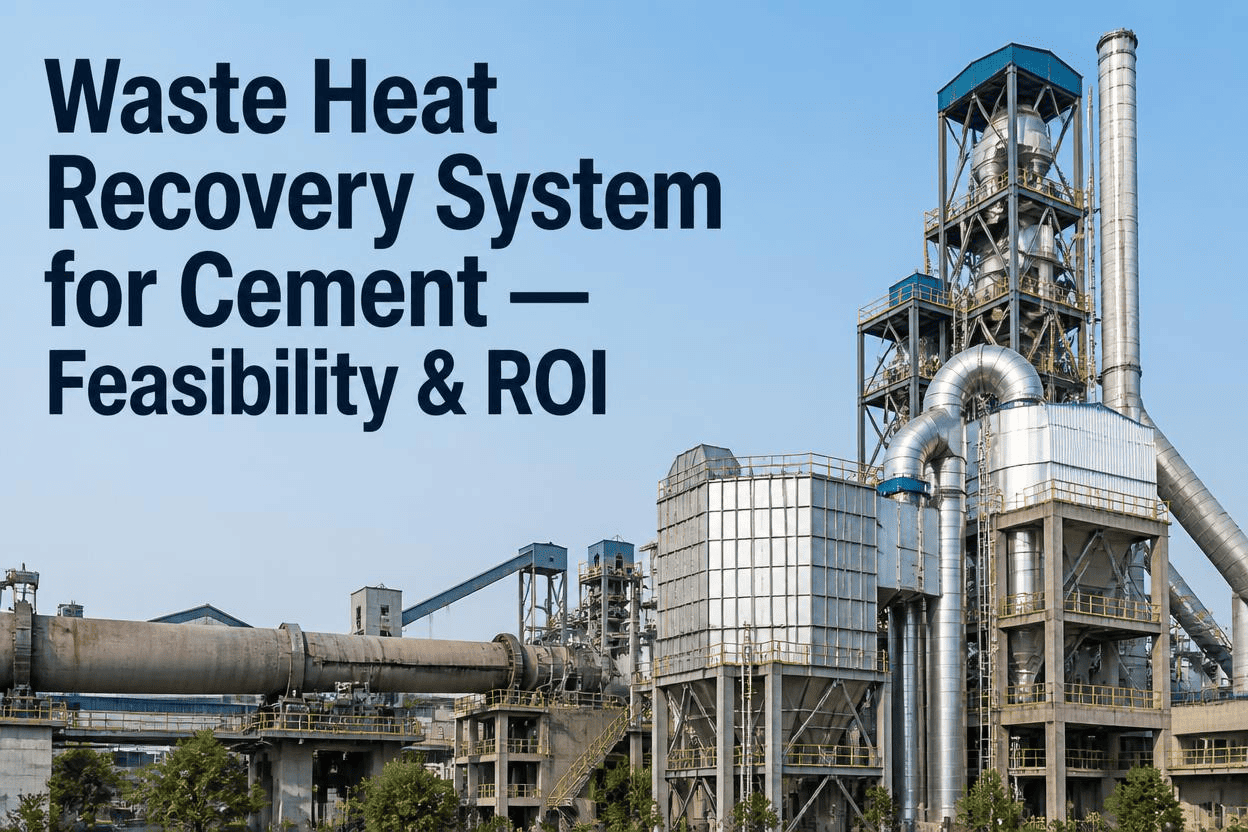
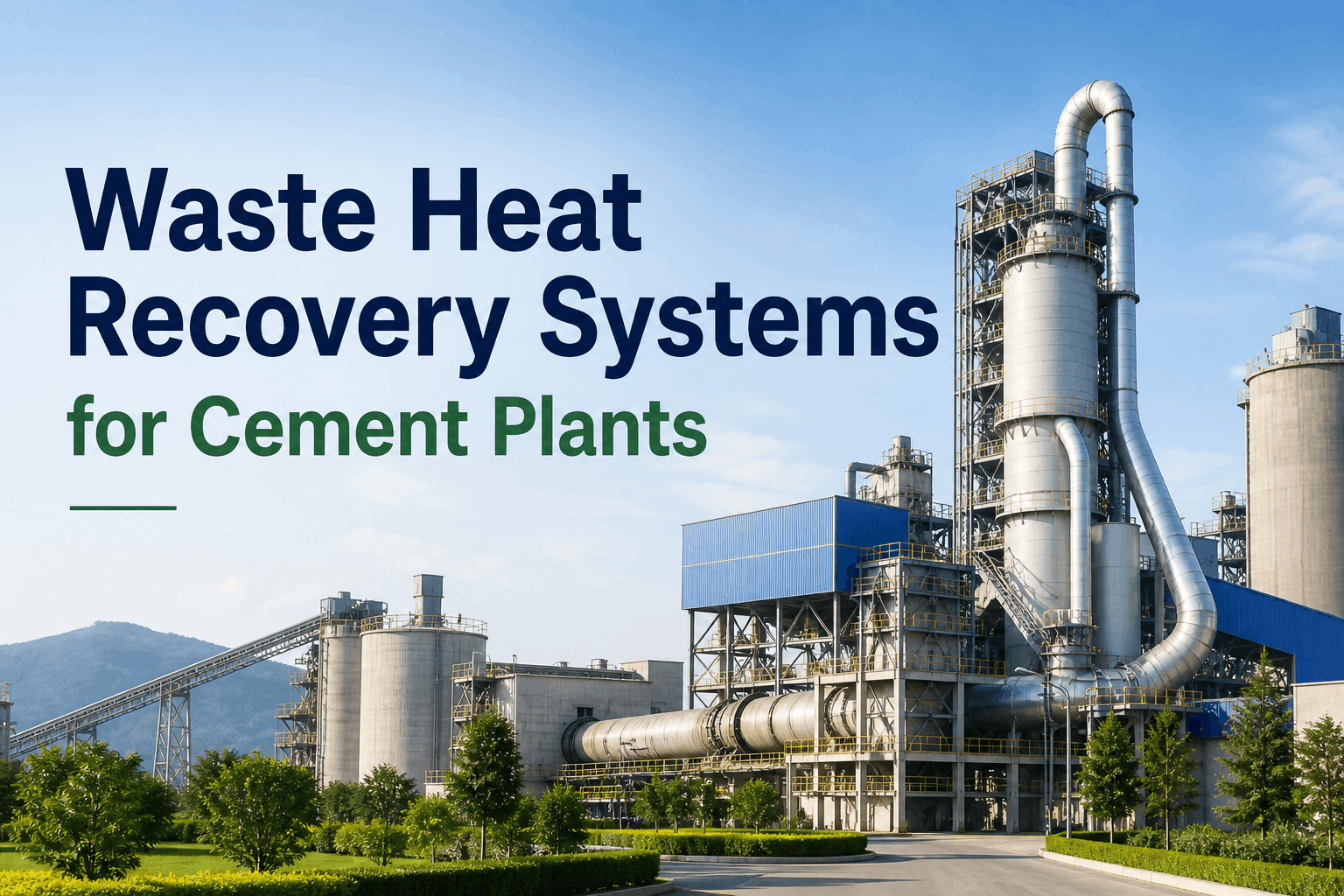
Walk to the back of almost any cement plant during a shift and you'll find two things happening within a few hundred meters of each other: a stack venting several hundred degrees of exhaust straight into the sky, and a coal dryer or rotary drum burning fuel to do a job that hot air could already do for free. That gap exists at most plants not because the heat isn't available, but because nobody has mapped which vent stream, at which temperature, matches which drying or heating duty on site. Book a free waste heat utilization assessment to map your kiln exhaust against site drying and heating loads.
Quick Answer
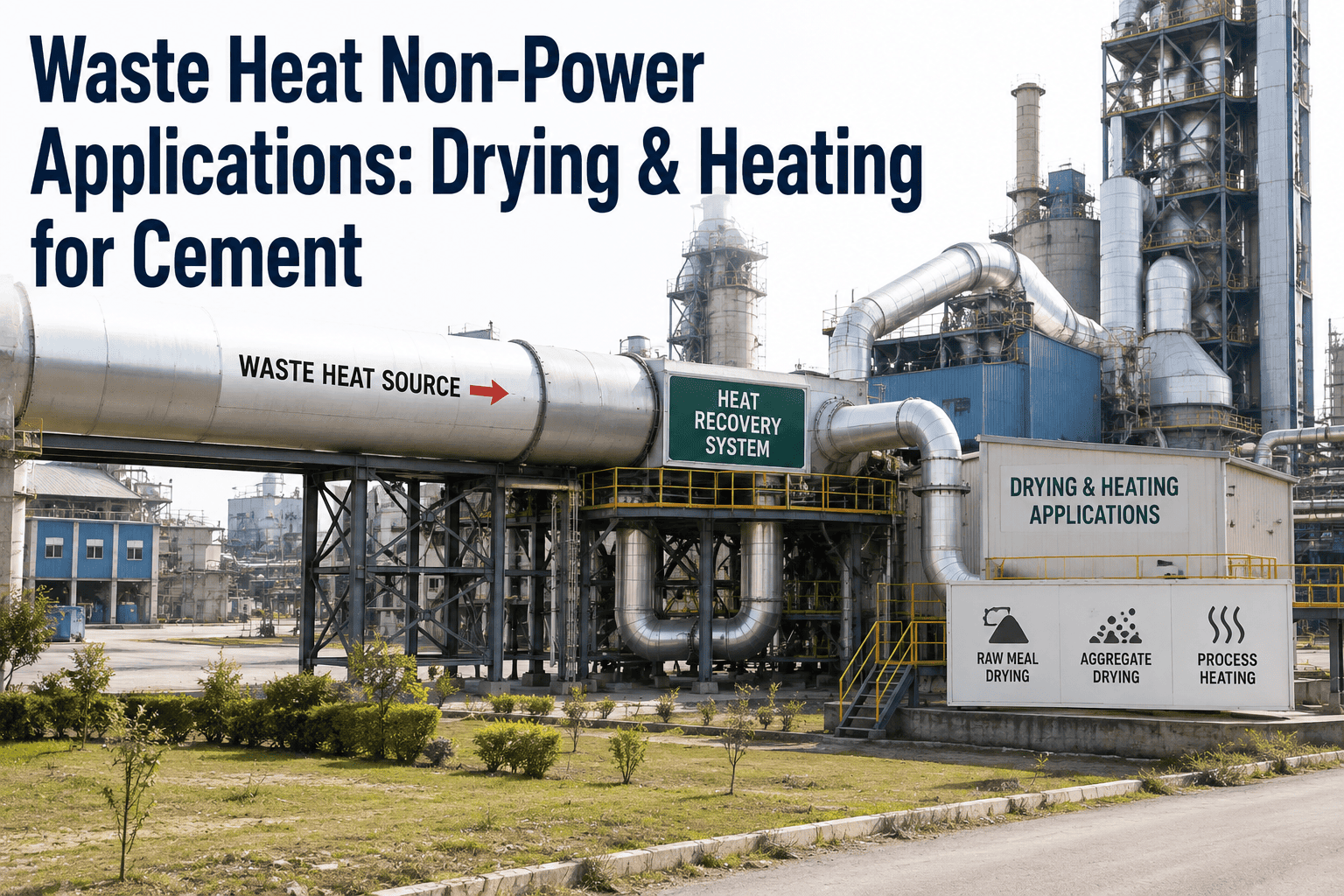
Non-power waste heat utilization means routing hot exhaust from the preheater, clinker cooler, or kiln shell directly into raw material drying, alternative fuel drying, building space heating, process water heating, or combustion air preheating instead of venting it to atmosphere. These applications typically need only 60°C to 250°C, well below the 300°C to 450°C threshold usually required to justify a waste heat power generation system, which makes non-power recovery the more accessible starting point for plants that want fuel savings without a full ORC or steam turbine investment.
Your Kiln Is Already Generating the Heat Your Dryers Are Paying For
iFactory tracks preheater exhaust, cooler vent air, and kiln shell heat continuously against your drying and heating loads, showing exactly how much purchased fuel each recoverable stream could displace.
40-50%Of kiln system heat input typically leaves as waste heat across preheater exhaust and cooler vent air combined
300-450°CPreheater exhaust temperature range, hot enough for drying, heating, and preheating duties without a power system
10-25%Typical reduction in purchased drying or heating fuel once matched recovery streams are put into service
Where This Heat Actually Comes From
Before any application can be matched to a heat source, it helps to know exactly which streams on a cement line are carrying usable thermal energy, at what temperature, and in what volume. Three sources account for nearly all of the recoverable non-power waste heat on a typical dry-process kiln.
| Heat Source |
Typical Temperature |
Typical Volume |
Best Fit Applications |
| Preheater tower exhaust (after raw mill bypass) |
300°C - 450°C |
High, continuous |
Raw material drying, coal or alternative fuel drying, process preheating |
| Clinker cooler vent air (secondary/tertiary excess) |
200°C - 300°C |
High, continuous |
Combustion air preheating, raw material drying, coal drying |
| Kiln shell and hood radiant/convective loss |
60°C - 120°C surface |
Moderate, continuous |
Building space heating, low-grade process water heating |
| Raw mill and cement mill exhaust (post-grinding) |
80°C - 150°C |
Moderate, intermittent |
Building heating, low-temperature material pre-drying |
Matching Heat Quality to Application Temperature
Every non-power application has a minimum inlet temperature it needs to work efficiently, and mismatching a low-grade stream to a high-temperature duty is one of the most common reasons a waste heat project underperforms its business case. The cascade below shows how each source lines up against the demand side.
Preheater Exhaust
300-450°C
Cooler Vent Air
200-300°C
Raw Material Drying Need
100-200°C
Coal/AF Drying Need
150-250°C
Building Heating Need
60-90°C
Five Non-Power Applications Worth Evaluating
Non-power waste heat use covers more ground than most plants initially assume. These five applications are the ones most consistently justified on a dry-process cement line, ranked roughly by how much recoverable heat they can absorb.
01
Raw Material Drying
Limestone, clay, and other raw feed components arriving at 8-15% surface moisture need drying before they can be ground efficiently in the raw mill. Preheater exhaust or cooler vent air ducted into the raw mill circuit as sweep or drying air can replace a hot gas generator that would otherwise burn coal or fuel oil just to knock moisture out of incoming feed.
02
Coal and Alternative Fuel Drying
Coal mills and RDF or biomass drying systems both need hot gas in the 150-250°C range to bring fuel moisture down to a level the mill or feed system can handle. Cooler vent air is frequently the better match here since its temperature and cleanliness are usually more consistent than raw preheater exhaust carrying dust load.
03
Combustion Air Preheating
Routing cooler vent air into the kiln's primary or secondary combustion air path reduces the fuel needed to bring air up to ignition-supporting temperature in the burning zone, a use that many plants already exploit partially through tertiary air ducting but rarely optimize continuously against changing production rates.
04
Building and Space Heating
Lower-grade heat from kiln shell surfaces, hood surfaces, and mill exhaust is generally too cool for process duty but works well piped through a heat exchanger into administrative buildings, control rooms, or workshop spaces in colder climates, cutting a facility's separate heating fuel or electric load.
05
Process Water and Utility Heating
Hot water for wash-down, laboratory use, or gland cooling makeup can be preheated through a low-grade waste heat exchanger loop rather than an electric or gas water heater, a small but consistent fuel offset that adds up across a plant running continuous shifts.
See Which of Your Vent Streams Is the Best Match for Which Application
iFactory continuously logs preheater exhaust, cooler vent air, and mill exhaust temperature and volume, then benchmarks it against your drying and heating fuel consumption to show where recovery pays back fastest.
Design and Sizing Considerations
A ducting run from a vent stack to a dryer inlet sounds simple on paper, but four variables determine whether the project actually delivers the fuel savings the business case promised.
| Consideration |
Why It Matters |
| Distance between source and application |
Longer duct runs lose more heat and pressure, and can erase a large share of the temperature advantage before the air reaches its destination |
| Dust loading in the source stream |
Raw preheater exhaust carries fine dust that can foul ductwork, exchangers, or the receiving process, often requiring a cyclone or filtration stage before use |
| Production rate variability |
Waste heat volume and temperature swing directly with kiln feed rate, so drying or heating systems designed around average conditions can be short of heat during low-load periods |
| Competing uses for the same stream |
Cooler vent air is often already partially used for combustion air or raw mill drying, so a new application may be competing for volume rather than tapping fully unused heat |
Common Mistakes That Undercut the Business Case
Most non-power waste heat projects fail to deliver their projected savings for operational reasons rather than engineering ones. These four issues show up repeatedly across plant reviews.
Sizing to Nameplate Instead of Actual Operating Range
Ductwork and fans sized for the theoretical maximum exhaust volume often run oversized and inefficient at typical production rates, where the real heat available is meaningfully lower than nameplate.
No Continuous Temperature or Volume Monitoring
Once installed, most recovery ducting runs without ongoing visibility into whether it is still delivering the design temperature, so degradation from fouling or damper drift goes unnoticed for months.
Treating It as a One-Time Capital Project
Waste heat availability shifts with kiln operating conditions, raw mix, and fuel blend, so a system tuned once at commissioning and left alone gradually drifts away from its original design point.
Ignoring Interaction With Existing Air Balances
Pulling additional volume from a cooler vent stream can shift pressure balance elsewhere in the system, sometimes affecting kiln draft or ESP performance if not modeled against the full air balance first.
What a Matched Recovery Program Looks Like in Practice
Before
A 3,500 TPD line was running a standalone hot gas generator to dry incoming raw material during the monsoon season, burning roughly 1.8 tons of coal per hour just for drying duty while preheater exhaust vented to atmosphere less than 80 meters away at over 350°C.
After
A dedicated tap off the preheater exhaust duct, fitted with a dust knockout stage and modulating damper tied to raw mill moisture readings, now supplies the bulk of drying air during normal operation, with the hot gas generator running only as backup during the wettest feed conditions, cutting standalone drying fuel by roughly 60-70% across the season.
Getting Started: A Practical Checklist
1
Log temperature and volume at every candidate vent point for at least one full production cycleA single spot measurement misses the swings driven by feed rate, fuel blend, and ambient conditions that determine whether a source can reliably support an application.
2
Inventory every fuel-fired drying or heating duty currently running on siteHot gas generators, standalone dryers, and building heating systems are often run by different teams and rarely appear together on one list, so this step alone frequently surfaces overlooked opportunities.
3
Model duct routing distance and heat loss before committing to a source-application pairingA shorter run to a lower-temperature source can sometimes beat a longer run to a hotter one once transmission losses are accounted for.
4
Build in continuous monitoring from day one, not as a later add-onTracking delivered temperature and volume against design targets is what catches fouling, damper drift, or air-balance shifts before they erode the fuel savings the project was built to capture.
Frequently Asked Questions
QHow is non-power waste heat use different from waste heat power generation?
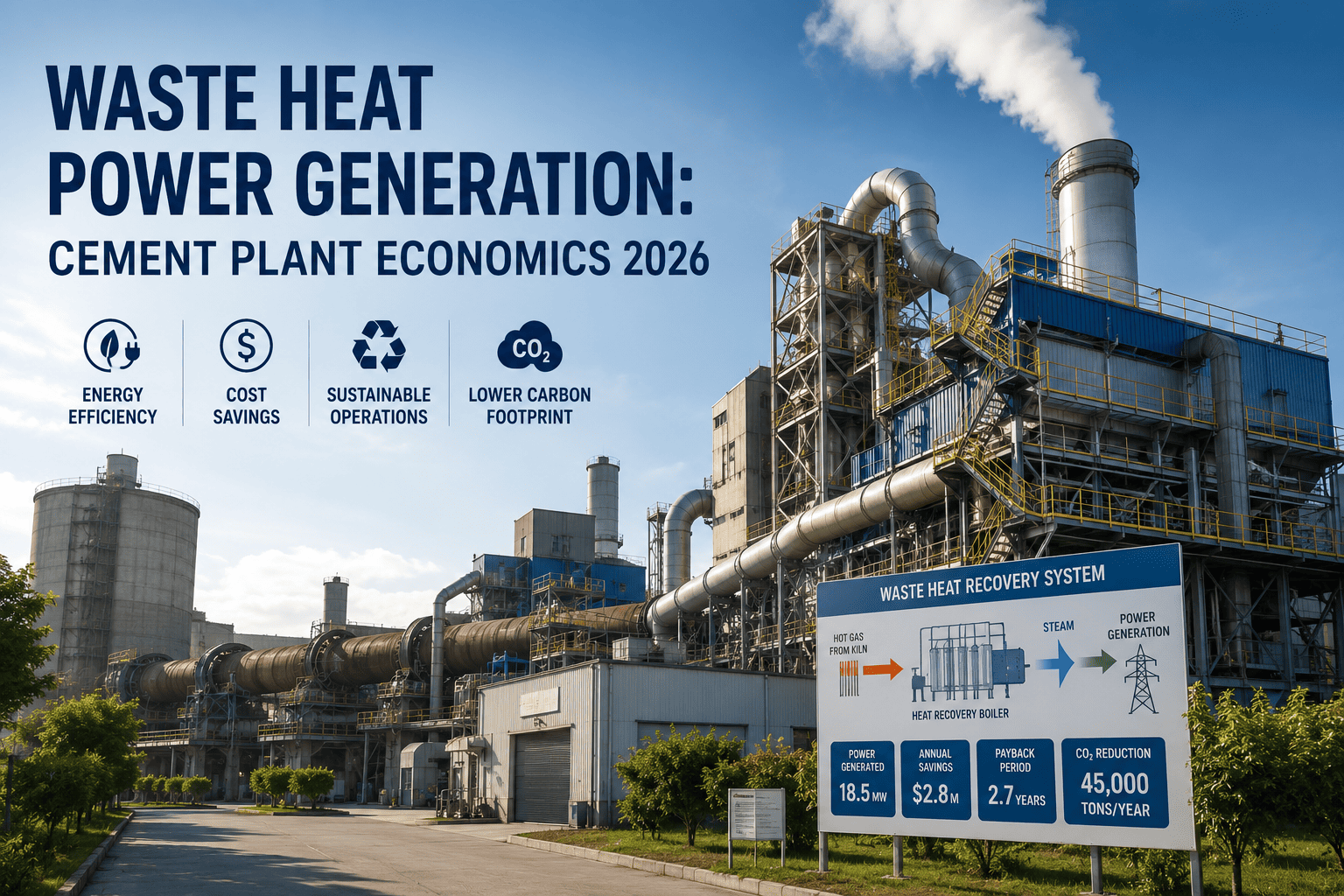
Waste heat power generation runs an organic Rankine cycle or steam turbine off high-temperature streams to produce electricity, and generally needs preheater exhaust or cooler air above roughly 300-350°C along with enough volume to justify turbine-grade capital cost. Non-power applications like drying, preheating, and building heating can use a much wider temperature band, including lower-grade streams a power system would reject, and typically cost far less to implement since they need ducting and heat exchange rather than a turbine and generator. Many plants pursue non-power recovery first because the payback is faster and the engineering risk is lower.
Book a demo to see both pathways modeled against your actual stream data.
QCan preheater exhaust be used directly for raw material drying without treatment?
It depends on the dust loading and the receiving equipment's tolerance for particulate. Preheater exhaust already carries fine dust from the kiln system, so many raw mill drying circuits are designed to accept it directly since the mill itself will separate material anyway, but applications like building heating or clean process water heating typically need a heat exchanger loop rather than direct air contact to avoid contaminating the receiving system. The right approach depends on what's downstream of the tap point.
QHow much fuel can a plant realistically expect to save from non-power waste heat recovery?
Savings depend heavily on how much fuel-fired drying or heating capacity already exists on site and how well-matched the recovered stream is to that duty, but plants replacing a standalone hot gas generator or auxiliary dryer with matched waste heat commonly see a 10-25% reduction in the fuel previously dedicated to that specific application. Building heating offsets tend to be smaller in absolute terms but still meaningful in colder climates with long heating seasons.
Talk to an expert about benchmarking your specific fuel-fired loads.
QDoes pulling more air from the cooler vent affect kiln operation elsewhere?
It can, which is why any new tap into cooler vent air or preheater exhaust should be modeled against the plant's existing air balance rather than added in isolation. Cooler vent air often already feeds combustion air preheating or raw mill drying circuits, so an additional draw can shift pressure distribution enough to affect kiln draft, ESP inlet conditions, or existing drying performance if the volumes aren't carefully reconciled first.
QWhat's the simplest first project for a plant that hasn't done any waste heat recovery yet?
Replacing or supplementing a standalone fuel-fired dryer, whether for raw material, coal, or alternative fuel, is usually the most straightforward entry point because the fuel offset is direct and easy to measure, the temperature match is generally good, and the project doesn't require touching the kiln's core combustion or draft system. Building heating is a close second in colder regions, since it draws from lower-grade heat that has no other competing use.
Stop Burning Fuel to Do What Your Kiln Exhaust Already Does
iFactory tracks every recoverable waste heat stream on your line against your drying, heating, and preheating loads, showing exactly where matched recovery pays back fastest.