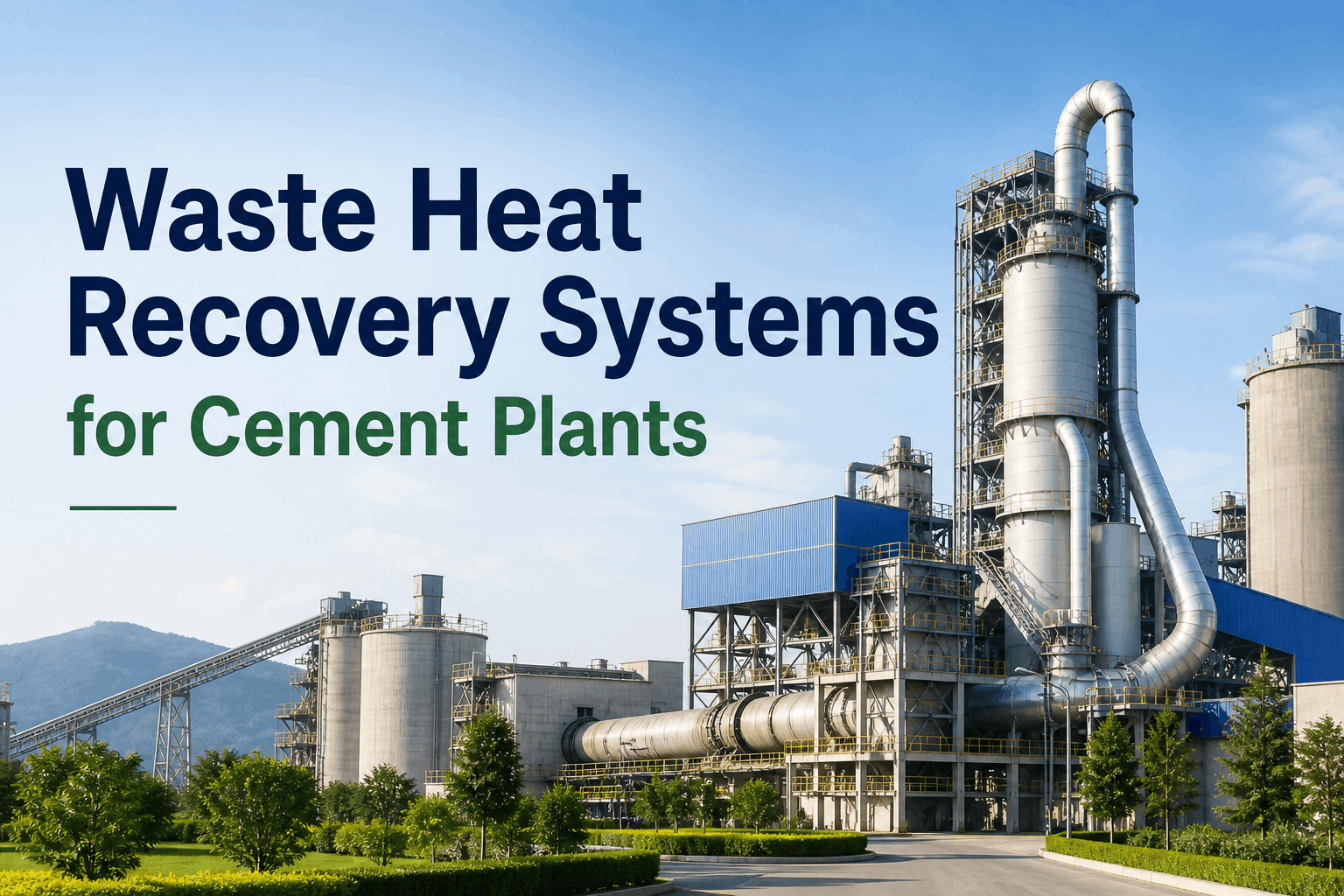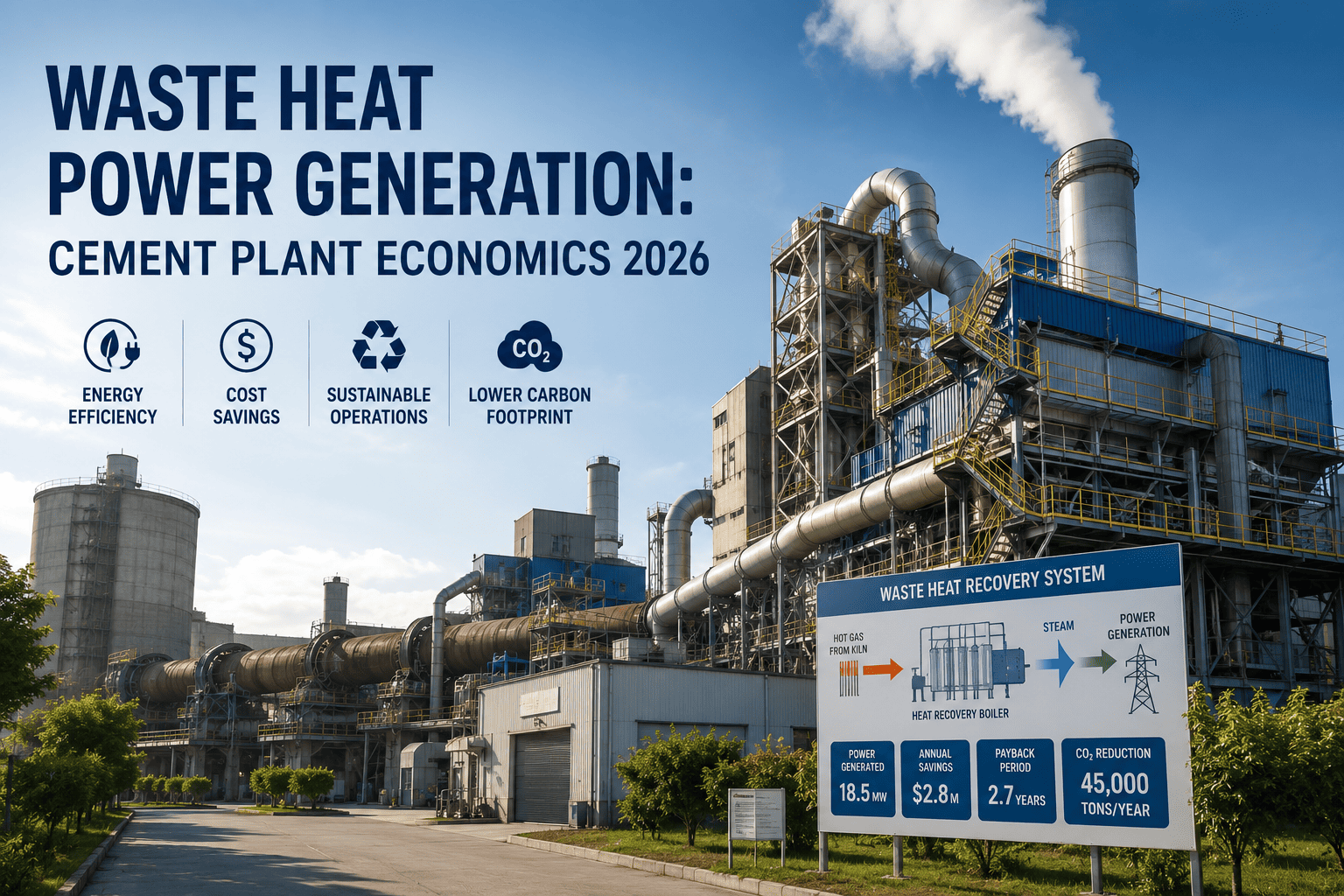
A cement kiln rejects roughly 30 to 40 percent of its input energy as waste heat through the preheater exhaust and clinker cooler exit air, most of which historically vented straight to atmosphere. Waste heat power generation captures a share of that stream and converts it into electricity, and at current grid power prices in most regions, the payback period for a properly sized system now lands well inside the useful life of the equipment. Whether that math works for a specific plant depends on exhaust gas volume, temperature, and hours of kiln operation, and getting the sizing right is where most WHR investment decisions are won or lost, a process iFactory's plant data platform helps quantify with real operating data rather than nameplate assumptions.
Waste Heat Power Generation Economics for Cement Plants
Model system sizing, power output, and payback before committing capital to a cogeneration investment.
Where the Recoverable Heat Comes From
Two exhaust streams provide the majority of recoverable waste heat in a dry-process cement kiln. The preheater exhaust gas carries a high volume of moderate-temperature heat, while the clinker cooler exit air carries a smaller volume of air at generally higher temperature. A properly designed WHR system captures both, using separate boiler circuits tuned to each stream's specific temperature and volume profile rather than a single generic heat exchanger.
Preheater Exhaust
Typical temperature: 300-360°C
Largest single recoverable heat source in most kiln systems. Requires dust-tolerant boiler design given the particulate load carried in preheater exhaust gas.
Clinker Cooler Exit Air
Typical temperature: 250-350°C
Cleaner air stream than preheater exhaust, generally requiring less specialized boiler dust handling, but volume varies more with cooler operating conditions.
Sizing a WHR System to Your Kiln
System sizing is the single largest determinant of both capital cost and eventual return, and it depends on more than nameplate kiln capacity. Actual exhaust gas volume and temperature fluctuate with raw mix moisture, kiln operating rate, and alternative fuel substitution level, all of which affect the real recoverable heat available across a typical operating year rather than at a single design point.
| Kiln Clinker Capacity | Typical WHR Power Output | Approximate Capital Cost Range | Typical Payback |
|---|---|---|---|
| Under 2,000 tpd | 3-6 MW | $8M-$15M | 6-9 years |
| 2,000-4,000 tpd | 6-12 MW | $15M-$28M | 5-8 years |
| 4,000-6,000 tpd | 12-18 MW | $28M-$42M | 4-7 years |
| Above 6,000 tpd | 18-28 MW | $42M-$60M | 4-6 years |
The Financial Model Behind the Investment Decision
A WHR investment case rests on four financial variables that interact with each other: capital cost, annual power output, avoided grid power cost, and operating and maintenance expense. Getting any one of these wrong by a meaningful margin changes the payback conclusion substantially, which is why plants that build a robust internal model, rather than relying solely on an EPC contractor's proposal numbers, tend to make better-informed capital decisions.
Annual Kiln Operating Hours
WHR power output only accrues while the kiln is running. A plant with frequent unplanned outages or a lower operating factor than assumed in the original proposal will see proportionally lower actual annual power generation.
Avoided Grid Power Cost
The value of self-generated power depends on the marginal grid electricity rate it displaces, including demand charges in some tariff structures, which can make the effective savings meaningfully higher than the average per-kilowatt-hour rate.
Boiler Maintenance and Dust Fouling
Preheater exhaust dust load requires periodic boiler cleaning to maintain heat transfer efficiency. Underestimating this maintenance requirement in the original proposal is a common source of lower-than-projected actual power output.
Alternative Fuel Program Interaction
Rising thermal substitution rates can change exhaust gas volume and moisture profile over time, which should be modeled against the WHR system's design range rather than assumed constant across the equipment's operating life.
ORC versus Steam Rankine Cycle Selection
Two turbine technologies dominate cement plant WHR installations, and the choice between them depends primarily on exhaust temperature profile and plant scale. Steam Rankine cycle systems have a longer track record in larger installations, while Organic Rankine Cycle systems are increasingly common in smaller plants and lower-temperature applications where steam cycle efficiency drops off.
Steam Rankine Cycle
Higher conversion efficiency at larger scale and higher exhaust temperatures, with a long installed base across large cement kilns globally. Requires water treatment infrastructure and more complex balance-of-plant systems.
Organic Rankine Cycle
Better suited to lower and more variable exhaust temperatures, with simpler operation and lower water treatment requirements. Increasingly the preferred choice for smaller kilns and retrofits on existing plants.
Before selecting turbine technology or capital scope, model the full financial case against your actual kiln operating profile. iFactory helps plant teams build a defensible business case grounded in real exhaust gas and production data.
Building the Capital Approval Case
WHR projects compete for capital against other plant investments, and the projects that clear approval fastest are the ones built on defensible, data-backed numbers rather than vendor proposal estimates alone. Finance teams evaluating a WHR business case typically want to see sensitivity analysis around the key assumptions, not just a single payback number, since grid power prices and kiln operating hours both carry real uncertainty over a project's useful life.
Independent Sizing Verification
Cross-check EPC contractor power output projections against an independent model built from actual plant operating data, rather than accepting vendor-supplied estimates as the sole basis for the investment case.
Sensitivity Analysis
Model payback period across a realistic range of grid power price and kiln operating factor assumptions, showing decision makers how the investment case holds up under conservative as well as optimistic conditions.
Incentive and Rebate Research
Identify applicable energy efficiency incentives, carbon credit programs, or utility rebates in the plant's jurisdiction, which can materially shorten the payback period beyond the base capital and energy savings math.
Phased Investment Option
Evaluate whether a smaller initial system sized to the more certain portion of recoverable heat, with expansion capacity built in, reduces risk compared to committing to full-scale capacity on the first investment.
Integrating WHR Into Broader Plant Energy Strategy
Waste heat recovery works best as one component of a coordinated plant energy strategy rather than an isolated capital project, since decisions about alternative fuel substitution, kiln operating rate, and even future capacity expansion all interact with WHR system performance over its operating life. Plants that model these interactions upfront avoid the common scenario where a separately planned fuel or process change unexpectedly reduces WHR output years after the original investment case was approved.
Coordinated Roadmap Planning
Sequence WHR investment relative to planned alternative fuel program expansion or kiln upgrades, since both affect exhaust gas conditions the WHR system is designed around.
Grid Reliability Benefit
Factor in the operational value of reduced grid dependency during peak demand periods or grid instability events, which is a real benefit beyond the direct energy cost savings captured in the payback calculation.
Installation Considerations for Retrofit Projects
Most WHR installations happen as retrofits on operating kilns rather than as part of new kiln construction, which introduces installation constraints that a greenfield design does not face. Managing the installation window against existing production schedules, tying construction activity into a planned kiln outage where possible, and accounting for limited physical space around existing ductwork all affect both project timeline and final capital cost more than the core boiler technology decision does.
Outage Window Coordination
Schedule the tie-in work requiring kiln downtime, such as ductwork modification, to coincide with an already-planned maintenance outage, avoiding a separate dedicated shutdown purely for WHR installation.
Site Layout Constraints
Assess available space near existing preheater and cooler ductwork early in design, since retrofit sites often require creative equipment layout compared to a purpose-built greenfield installation.
Comparing WHR Against Other Energy Investments
Waste heat recovery competes for capital against other energy-related investments a cement plant might consider, including alternative fuel infrastructure, solar power, or general efficiency upgrades. Evaluating WHR within that broader energy investment portfolio, rather than in isolation, helps plant leadership sequence capital spending toward the combination of projects that delivers the strongest overall return.
| Investment Type | Typical Payback | Primary Value Driver |
|---|---|---|
| Waste heat power generation | 4-9 years | Captures energy already being generated |
| On-site solar power | 5-10 years | Reduces grid electricity purchase |
| Alternative fuel infrastructure | 2-5 years | Reduces fuel cost, requires ongoing supply |
Frequently Asked Questions
What kiln capacity is needed before waste heat power generation becomes economical?
Waste heat recovery has historically been more common on larger kilns because fixed engineering and installation costs are spread across more recoverable heat, but declining Organic Rankine Cycle system costs have shifted the economic threshold lower over the past several years. Kilns as small as 1,500 to 2,000 tonnes per day clinker capacity can now show a reasonable payback in markets with higher grid electricity prices, though the payback period is generally longer than for larger installations. A site-specific model using actual exhaust conditions, discussed through iFactory's plant data platform, gives a more reliable answer than generic capacity thresholds.
Does adding waste heat recovery affect kiln operation or emissions?
A properly engineered WHR system is designed to have minimal impact on core kiln operation, since the boiler is installed in the exhaust gas path after it has already served its process function in the preheater or cooler. Pressure drop across the WHR boiler needs to be carefully managed to avoid affecting kiln draft, which is why boiler design and installation should always be engineered specifically for the existing kiln's fan and duct configuration rather than treated as a generic add-on. Emissions are generally unaffected, since the WHR system does not alter combustion chemistry.
How does thermal substitution rate from alternative fuels affect WHR system output?
Alternative fuel combustion can change exhaust gas moisture content and volume compared to conventional coal or petcoke firing, which affects the heat available for recovery. Plants planning to significantly increase thermal substitution rate after installing a WHR system should model that future fuel mix into the original system design range, rather than sizing the WHR system solely around current fuel mix conditions. This coordination between fuel strategy and WHR investment timing is a common gap that reduces long-term system performance if overlooked during planning.
What ongoing maintenance does a WHR system require?
Boiler tube cleaning to remove dust fouling from preheater exhaust gas is the most significant recurring maintenance requirement, typically performed during scheduled kiln outages to avoid additional downtime. Turbine maintenance follows a schedule similar to other rotating power generation equipment, including bearing inspection, lubrication system checks, and periodic overhaul. Total operating and maintenance cost is typically modeled as a percentage of capital cost per year in the financial case, and should be verified against actual supplier maintenance contract terms rather than industry rule-of-thumb figures alone.
Can WHR-generated power be sold back to the grid instead of used on site?
In many markets, cement plants can sell excess WHR power back to the grid under a power purchase agreement or net metering arrangement, though the value per kilowatt-hour sold is typically lower than the value of power self-consumed and avoided from the grid purchase side. Most WHR business cases are built primarily around self-consumption, since plant electricity demand usually exceeds WHR output capacity, with grid export treated as a secondary revenue stream during periods of lower plant power demand rather than the primary economic driver.
Get a data-backed waste heat recovery sizing estimate based on your actual kiln operating history, not generic industry assumptions. Talk to iFactory before your next capital planning cycle.