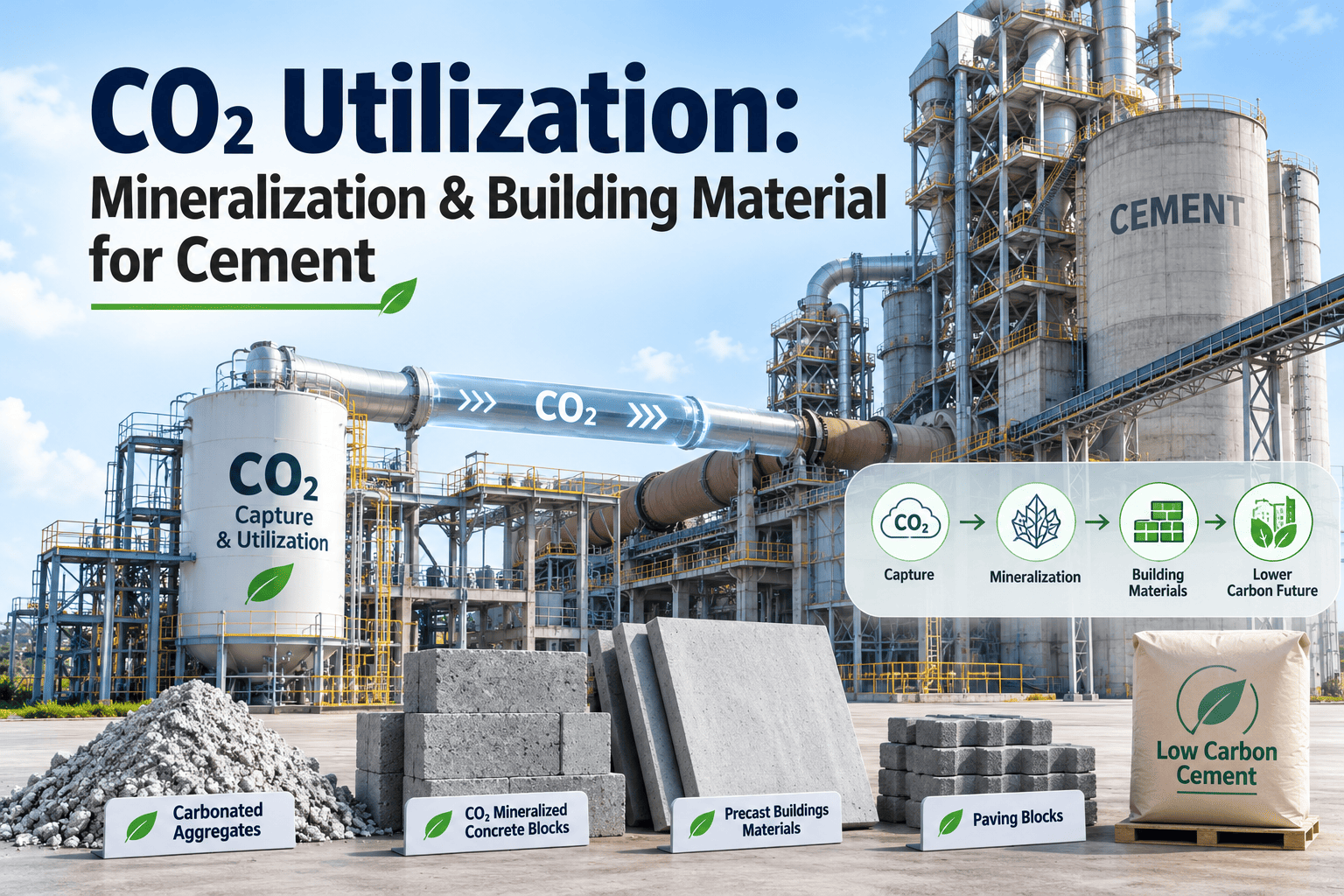
Captured CO2 does not have to end its life in a storage well. When it is injected into fresh concrete during mixing, it reacts almost immediately with calcium oxide in the cement to form nano-scale calcium carbonate, a mineral that locks the carbon into the concrete's crystal structure permanently rather than for a monitored storage period. Recent testing has shown a strong linear relationship between injected and mineralized CO2, with average uptake reaching roughly 90%, which is a very different economics story than capture-and-store alone. The part that rarely gets discussed is how a plant proves that uptake number to a buyer or a carbon registry rather than just claiming it, and that verification gap is exactly where ifactory support comes in.
Turn Captured CO2 Into a Verified, Sellable Building Material Input
AI that tracks dosing, verifies mineralization uptake in real time, and generates the auditable record buyers, regulators, and carbon registries actually ask for before they pay for utilization credits.
Two Ways CO2 Actually Gets Used, Not Just Captured
"CO2 utilization" gets used loosely, but in cement and concrete it really means one of two distinct mechanisms, and the distinction matters because it changes what a plant needs to measure and prove. Confusing the two is one of the fastest ways to submit a utilization claim that a registry or buyer later rejects.
Where the Injected CO2 Actually Ends Up
Every tonne of CO2 that goes into the mixer follows a traceable path, and the value of the whole process depends on how much of it actually converts to stable mineral rather than off-gassing before the reaction completes.
That last figure is where the real leverage sits. Producers using mineralization technology reduce cement content by roughly 5% on average with no compromise on concrete performance, and because cement production itself is carbon-intensive, every tonne of mineralized CO2 that displaces cement can avoid dozens of additional tonnes of upstream emissions on top of the CO2 physically embedded in the mix.
| Pathway | Where It Applies | Typical Uptake / Benefit | Verification Challenge |
|---|---|---|---|
| CO2 Curing | Precast, closed chamber | Up to 5% cement weight sequestered, 10-15% strength gain | Chamber CO2 concentration and dwell time must be logged per batch |
| Carbon Mineralization | Ready-mix, precast, recycled aggregate | ~90% injected CO2 uptake, ~5% cement content reduction | Injected-vs-mineralized ratio must be proven per load, not estimated |
| Traditional SCM Substitution | All cement production | Displaces clinker with fly ash or slag | Well-established, but does not itself sequester new CO2 |
Why "We Injected CO2" Is Not the Same as a Verified Credit
A carbon registry, a corporate net-zero buyer, or a green procurement policy does not pay for CO2 that was injected, it pays for CO2 that was demonstrably mineralized and permanently embedded, with a measurement, reporting, and verification trail behind the claim. That gap between injection and verified mineralization is currently one of the biggest friction points slowing wider adoption, because most plants still rely on periodic lab testing of cured samples rather than continuous, per-batch measurement of the actual reaction.
This distinction is not academic when carbon markets and green-building procurement start asking hard questions. A buyer purchasing a utilization credit, or a general contractor selecting a low-carbon concrete supplier for a certified project, is increasingly asking for evidence tied to the specific volume they are purchasing, not a company-wide average pulled from a one-time study. Plants that can produce that evidence on demand are the ones winning the premium contracts, while plants still relying on a single historical lab result are finding those claims questioned more often as buyers get more sophisticated about what "verified" actually means.
How AI Turns Injection Into an Auditable Utilization Record
Verifying mineralization is fundamentally a data problem before it is a chemistry problem. The reaction itself is well understood, what has been missing at plant level is a consistent way to tie dosing, mix conditions, and outcome together for every single batch rather than a periodic sample.
Stop Estimating CO2 Uptake, Start Measuring It Per Batch
Bring your current CO2 injection and dosing setup to the call. We will walk through how AI-based monitoring would verify your mineralization rate load by load.
Periodic Lab Testing vs Continuous AI Verification
| Factor | Periodic Lab Sampling | Continuous AI Verification |
|---|---|---|
| Batch-Level Confidence | Extrapolated from occasional samples | Estimated for every batch individually |
| Time to Detect Drift | Days to weeks, at next sample cycle | Immediate, within the same shift |
| Audit Trail for Buyers | Manually compiled from lab reports | Continuous, timestamped ledger by batch |
| Credit Claim Defensibility | Vulnerable to challenge on sampling gaps | Backed by a full production record |
A Ready-Mix Plant That Found Its Real Number
A ready-mix producer running a mineralization system for over a year had been reporting a flat 90% uptake figure across its entire product line, based on lab verification performed when the system was first commissioned. Once continuous monitoring was added, the actual per-batch data showed uptake ranging from 78% to 94% depending on mix design and ambient moisture, with the lower-performing batches concentrated in a specific high-slump mix used for one regional customer. Correcting the dosing sequence for that mix design brought its uptake in line with the rest of the product line, and the plant's overall verified average rose by several points, all documented per batch rather than asserted as a single company-wide figure.
Four Mistakes That Undermine a Utilization Claim
Plants that get a mineralization credit or utilization claim challenged rarely have a chemistry problem, they have a documentation problem that traces back to a small set of recurring habits.
Who Actually Owns a Mineralization Verification Program
Turning injection into a defensible, sellable utilization claim depends on a few distinct roles staying coordinated, since the data each one owns feeds the next.
None of this requires replacing an existing mineralization system or dosing hardware. Most producers already have CO2 injection equipment with some level of built-in metering, which means the shift to continuous, per-batch verification is typically a matter of connecting existing dosing data to a monitoring layer rather than a capital project. That lower barrier to entry is part of why continuous verification is spreading faster among ready-mix producers than the underlying mineralization hardware itself once did.
Frequently Asked Questions
Get a Mineralization Verification Assessment
Bring your current CO2 injection setup and dosing records to the call. We will walk through how AI-based, per-batch verification would work for your product lines and what it would take to build a registry-ready record.