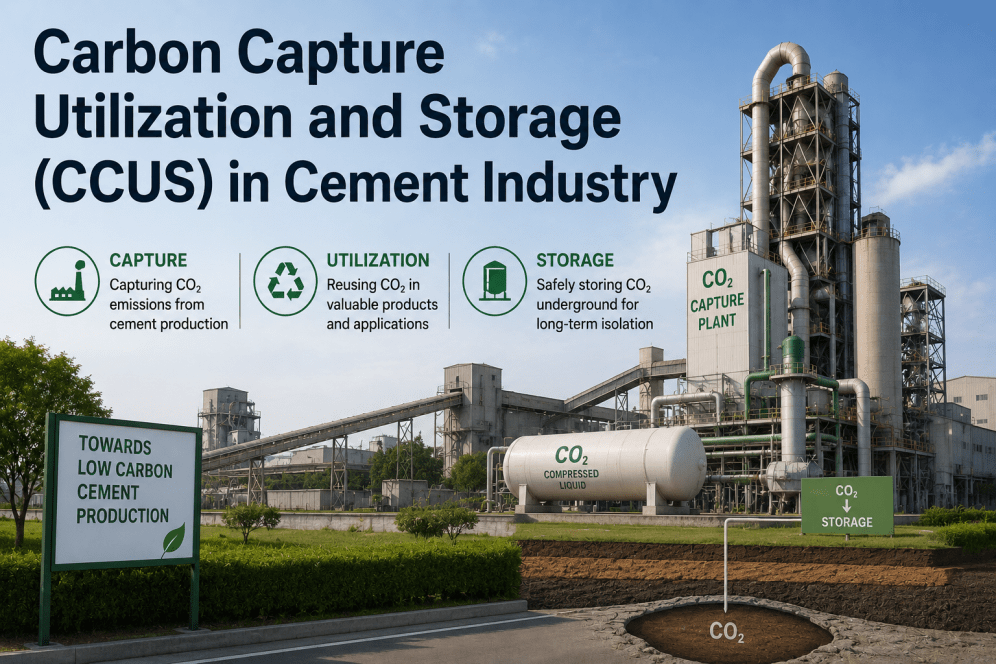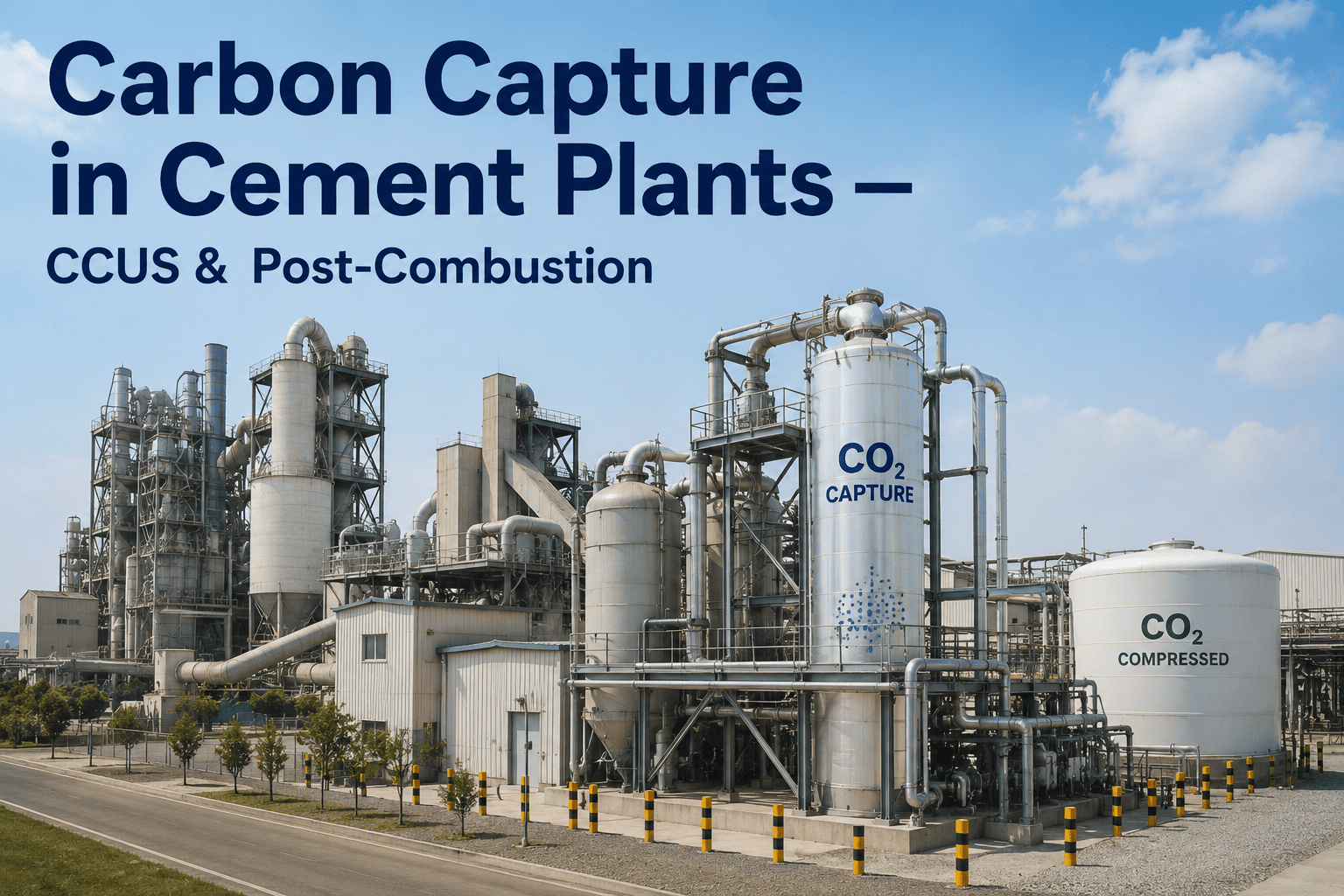
Cement is one of the hardest industries to decarbonize, because most of its CO2 does not come from the fuel burned in the kiln — it comes from the limestone itself. Roughly two-thirds of a cement plant's emissions are released when calcium carbonate breaks down into lime and CO2 during calcination, a chemical reaction with no fuel-switching workaround. That single fact is why cement producers who have already captured every gain from alternative fuels and thermal efficiency are now evaluating carbon capture technology as the next lever, and why the choice between post-combustion, oxyfuel, and direct separation carries a very different cost and disruption profile for each plant. Book a capture readiness assessment to see where your kiln line stands.
Choosing a Capture Pathway Is a Ten-Year Decision, Not a Retrofit
iFactory helps cement producers model the process, energy, and cost impact of post-combustion, oxyfuel, and direct separation capture against their specific kiln configuration before capital is committed to any single pathway.
Why Cement Cannot Decarbonize Its Way Out of CO2 with Efficiency Alone
Cement accounts for a substantial share of global industrial CO2 emissions, and unlike power generation or transport, it cannot simply switch to a lower-carbon fuel and solve most of the problem. The process chemistry itself is the largest single source.
of cement plant CO2 comes from limestone calcination, not fuel combustion
comes from fuel combustion, addressable through alternative fuels and efficiency
That split is why carbon capture, rather than fuel substitution alone, has become the technology cement producers turn to once thermal efficiency and alternative fuel programs have run their course.
Three Capture Pathways, Three Different Plant Impacts
Each capture technology intercepts CO2 at a different point in the process and demands a different level of plant modification. The right choice depends heavily on whether you are retrofitting an existing kiln or designing a new line.
Post-Combustion Capture
Flue gas is scrubbed after combustion, typically with amine-based solvents that chemically bind CO2 and release it under heat for compression and storage. Retrofits onto existing kilns with the least process disruption.
Oxyfuel Combustion
The kiln burns fuel in near-pure oxygen instead of air, producing a flue gas that is mostly CO2 and water vapor, which simplifies separation. Requires an air separation unit and kiln modifications built for oxyfuel conditions.
Direct Separation
An indirectly heated calciner isolates the pure process CO2 stream from limestone decomposition before it ever mixes with combustion flue gas, capturing the chemistry-driven emissions at the source.
What Capture Actually Costs, Pathway by Pathway
Published techno-economic studies show a wide cost range depending on plant scale, region, and whether the plant is new-build or retrofit. Understanding where your project falls on this range before committing capital changes the entire business case.
Figures are drawn from published techno-economic assessments and vary by plant scale, region, and integration with existing utilities. A site-specific study remains the only reliable way to price a project.
The Energy Penalty Is the Number That Decides Feasibility
Every capture pathway consumes energy to separate and compress CO2, and that energy penalty compounds with your existing fuel and power costs. iFactory models the full energy balance against your kiln's actual operating data before you scope a capture project.
From Feasibility Study to First Capture: What the Timeline Looks Like
Carbon capture is not a bolt-on project measured in weeks. Every phase compounds engineering risk, and skipping ahead to construction before the correlation and permitting work is complete is the most common cause of cost overruns.
Emissions & Process Audit
Flue gas composition, CO2 concentration, and existing utility capacity are measured across kiln operating states to establish the real baseline the capture system must handle.
Pathway Selection Study
Post-combustion, oxyfuel, and direct separation are modeled against the specific kiln, comparing capital cost, energy penalty, and disruption to production during construction.
Front-End Engineering Design
The selected pathway moves into detailed engineering, sizing absorbers, compressors, and heat integration against the plant's real thermal and electrical balance.
Permitting & Storage or Utilization Agreement
Captured CO2 needs a destination — geological storage, mineralization, or industrial utilization — each with its own permitting timeline that often runs longer than construction itself.
Construction & Commissioning
Capture equipment installs alongside continued kiln operation where possible, with commissioning validated against the emissions audit baseline from Phase 1.
The Data Layer That Makes a Capture Project Bankable
Capture projects are capital-intensive and often supported by carbon credit revenue or regulatory compliance targets, both of which require continuous, auditable measurement — not a one-time feasibility number.
Continuous CO2 Concentration Tracking
Real-time flue gas analysis validates capture rate against design targets and flags process upsets that reduce capture efficiency before they show up in a quarterly report.
Energy Balance Monitoring
Tracking the actual energy penalty against the modeled figure protects the business case, since even small deviations compound significantly across a full production year.
Verified Tonnage Reporting
Auditable, timestamped capture volume data is what carbon credit registries and regulatory bodies require, and what makes captured tonnage a defensible financial asset rather than an estimate.
Frequently Asked Questions
Which capture pathway is right for an existing kiln versus a new build?
Post-combustion capture is generally the most practical choice for retrofitting an existing kiln, because it attaches to the back end of the flue gas path without requiring a fundamental redesign of the combustion process itself. Oxyfuel combustion, by contrast, typically requires kiln modifications significant enough that it is usually evaluated for new-build lines or major kiln rebuilds rather than a straightforward retrofit. Direct separation sits in between, since it targets the calciner specifically and can sometimes be integrated during a planned calciner replacement. Book a demo to model which pathway fits your specific kiln generation.
How large is the energy penalty from carbon capture, in practical terms?
Published studies on cryogenic and amine-based capture put the energy penalty in the range of roughly one to two megajoules of electrical equivalent per kilogram of CO2 captured, though the exact figure depends heavily on the technology and heat integration design. This energy demand is why capture projects are frequently paired with waste heat recovery or on-site cogeneration, since using recovered heat for solvent regeneration measurably reduces the net energy cost of the whole system. Modeling this pairing early changes the economics substantially.
What happens to the captured CO2 after it leaves the plant?
Three broad destinations exist today: permanent geological storage in depleted reservoirs or saline aquifers, mineralization into concrete or aggregate products, and utilization as a feedstock for chemicals or synthetic fuels. Each destination has a different permitting pathway, a different revenue or cost profile, and different proximity requirements, since transporting CO2 any meaningful distance adds pipeline or trucking cost that can materially change project economics. Talk to a specialist about storage and utilization options near your site.
Do smaller cement plants have a realistic path to carbon capture?
Economies of scale matter significantly in capture economics, and published cost studies consistently show a large plant achieving a materially lower cost per tonne of CO2 avoided than a small one running the same technology. That does not rule out smaller plants, but it does mean the business case often depends more heavily on carbon credit pricing, regulatory compliance value, or shared infrastructure with a nearby cluster of emitters, rather than the capture technology paying for itself on energy savings alone.
How long before carbon capture becomes commercially standard in cement?
Post-combustion capture is already demonstrated at industrial scale and is the most commercially mature of the three pathways discussed here, while oxyfuel and direct separation remain in pilot and early demonstration phases at most sites globally. Producers who move early gain operational experience and, in many jurisdictions, access to earlier and more favorable carbon credit or subsidy structures, which is why leading producers are running pilot projects now rather than waiting for the technology to fully mature.
The Bottom Line on Cement Carbon Capture
There is no single correct capture pathway for cement — the right choice depends on whether you are retrofitting or building new, how much disruption your production schedule can absorb, and what destination exists for the captured CO2 near your site. What every pathway shares is a dependency on continuous, verifiable measurement to prove the capture rate, protect the energy balance, and make the tonnage defensible to regulators, auditors, and carbon markets alike.
Model Your Kiln's Capture Pathway Before You Commit Capital
Bring your flue gas data and kiln configuration to a 30-minute scoping call. iFactory compares post-combustion, oxyfuel, and direct separation against your specific plant and builds a data-backed feasibility summary.