Every tonne of clinker a cement plant makes from virgin limestone comes at a cost that shows up twice, once in the raw material bill and again in the fuel needed to calcine it, which is exactly why fly ash, granulated blast furnace slag, and a growing list of industrial by-products have moved from a sustainability talking point to a core procurement and process decision. The world's average clinker-to-cement ratio sits around 0.81, meaning nearly a fifth of global cement is already something other than pure clinker, and that share keeps climbing as plants find new ways to bring alternative raw materials into the mix without compromising strength or setting time. Getting there safely requires understanding exactly which materials work, how much of the mix they can occupy, and what has to change in the feed system to handle them, questions best worked through during a raw material substitution review.
ALTERNATIVE RAW MATERIALS IN CEMENT
Turning Industrial Waste Into Clinker Substitute
Fly ash, slag, contaminated soil, and other by-products can cut clinker factor, raw material cost, and emissions together, if the quality controls and feed system are set up right.
Why Alternative Raw Materials Matter Now
Producing conventional Portland cement requires roughly a tonne and a half of limestone and generates well over half a tonne of carbon dioxide for every tonne of cement made, a footprint that is increasingly under regulatory and cost pressure at once. Substituting a portion of clinker or raw feed with industrial by-products addresses both problems simultaneously, since it reduces the volume of virgin material quarried and calcined while also diverting waste streams that would otherwise need separate disposal.
Availability is the practical constraint most plants run into. Conventional supplementary cementitious materials like fly ash and blast furnace slag are byproducts of coal power and steel production, both industries that are themselves shifting toward cleaner processes, which means the supply of these traditional substitutes is not guaranteed to grow at the same rate as cement demand. This is pushing plants to evaluate a wider set of secondary materials than they might have considered a decade ago.
Six Material Categories Worth Evaluating
Not every alternative raw material is created equal, and plants generally move through a hierarchy from well-established conventional substitutes toward emerging materials as local supply and technical confidence allow.
CONVENTIONAL SCM
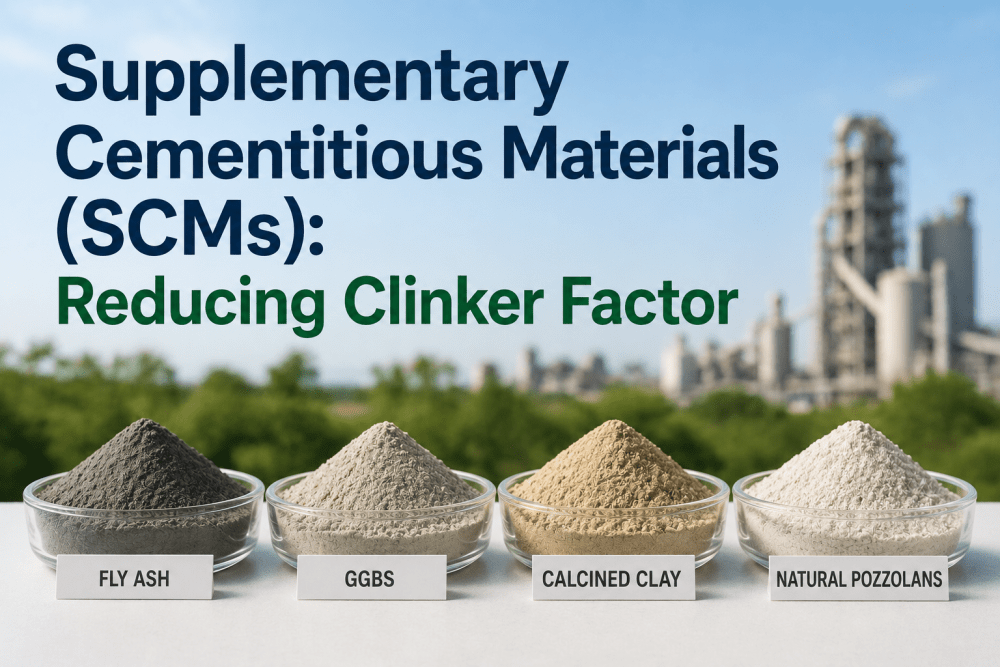
Fly Ash
A coal combustion by-product that can replace up to roughly 30% of Portland cement in a blend, improving long-term compressive strength through enhanced hydration while reducing both cost and emissions.
CONVENTIONAL SCM
Granulated Blast Furnace Slag
A steel industry by-product, water-cooled and ground for use as a cement substitute; roughly half of all slag generated globally is already captured for cement use where transport distance allows.
SECONDARY MATERIAL
Contaminated Soil & Sludge
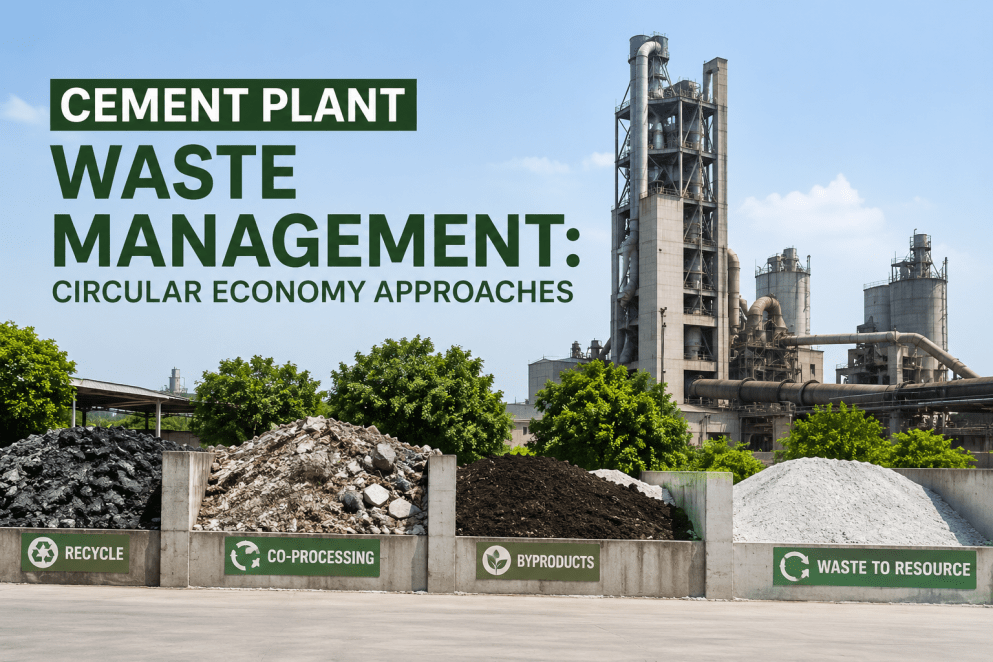
Lime-bearing sludge from water treatment, paper production, and sugar processing, along with contaminated soils, can substitute for calcareous or argillaceous raw feed when composition is properly characterized.
SECONDARY MATERIAL
Foundry Sand & Mineral Tailings
Foundry sand, ore tailings, and catalyst fines contribute silica and alumina content to the raw mix, offsetting the need for virgin clay or shale in the kiln feed.
EMERGING SCM
Agricultural Ash
Rice husk ash and sugarcane bagasse ash are gaining attention as regionally available pozzolanic substitutes in markets where conventional fly ash and slag supply is limited.
EMERGING SCM
Red Mud & Metallurgical Slags
By-products from aluminum and copper processing carry high aluminosilicate content, useful in alkali-activated binder systems, though they require careful handling due to alkalinity and trace metal content.
Quality Impact by Substitution Level
| Material | Typical Substitution Range | Quality Consideration |
| Fly ash (Class F) |
Up to 30% of cement |
High carbon content can affect setting time and require upgrading via carbon burn-out |
| Blast furnace slag |
Up to 50-70% in blended cements |
Slower early strength gain, stronger long-term durability |
| Lime-bearing sludge |
Minor kiln feed component |
Moisture content and handling consistency need tight control |
| Silica fume |
Above 20% affects durability |
Improves durability but can reduce strength via lower calcium hydroxide content |
| Mixed industrial waste blends |
Generally capped near 15% of mix |
Beyond this threshold, poor clinker phase formation risk increases |
The consistent theme across every material category is that quality standards, not availability alone, set the real ceiling on substitution rates. National and international cement standards define compositional limits precisely because early adopters learned through costly trial and error what happens when substitution pushes past what the clinker chemistry can absorb.
Evaluate Your Own Substitution Potential
Review which alternative raw materials fit your kiln chemistry, feed system, and regional supply availability.
Feed System Requirements
Bringing a new alternative raw material into the kiln feed is rarely as simple as substituting one bin for another. Four feed system considerations determine whether a substitution program runs smoothly or creates new operational headaches.
1
Material Handling and Storage
Moisture-sensitive materials like lime sludge need covered, drained storage, while fine materials like fly ash require dust containment during transfer to prevent both product loss and workplace exposure.
2
Dosing and Blending Accuracy
Substitution materials often have variable composition batch to batch, so dosing systems need tighter feedback control than a straightforward limestone feed to keep raw meal chemistry within target ranges.
3
Compositional Testing Frequency
Because secondary materials vary more than quarried limestone, incoming testing needs to run more frequently, particularly for moisture, carbon content, and trace element levels that quarried material rarely varies on.
4
Kiln Process Adjustment
Changes in raw meal burnability and volatile content from substitute materials can shift kiln operating parameters, so process teams need visibility into substitution levels in near real time, not after the fact.
0.81 Global Ratio
Average worldwide clinker-to-cement ratio, with the balance from gypsum and SCMs
Up to 30%
Typical fly ash substitution ceiling in conventional Portland cement blends
15% Mix Cap
Common threshold above which mixed waste blends risk poor clinker phase formation
Evaluating a New Material Before Adoption
A structured evaluation process protects both product quality and kiln reliability when a new alternative raw material is being considered, and skipping steps here is where most substitution programs run into trouble later. The first step is always compositional characterization: understanding the calcium, silica, alumina, and trace element content of the candidate material well enough to model how it will behave once blended into the existing raw mix, not just whether it looks similar to a material already in use.
The second step is supply reliability. A material that performs beautifully in a lab trial but is only available in small, inconsistent quantities from a single regional source creates more operational risk than value, since a plant that builds substitution into its cost model and then loses that supply source faces a sudden cost and quality gap. Long-term supply agreements, or at minimum a documented understanding of source volume trends, should accompany any material moving from trial to routine use.
The third step is trial-scale validation before full production adoption. Running a limited trial batch, testing the resulting clinker and cement against full quality specifications, and only then scaling to routine production use catches problems while they are still small and correctable, rather than after a full production run has already been committed to the market.
Frequently Asked Questions
How much can clinker factor realistically be reduced using alternative raw materials?
Plants with reliable access to conventional supplementary cementitious materials like fly ash and slag can often bring clinker factor down meaningfully below the global average of roughly 0.81, with blended cements incorporating slag sometimes reaching well below that figure while still meeting strength standards. The realistic ceiling depends heavily on regional availability of these materials and the specific cement grades a plant produces, since some construction applications require higher clinker content for early strength development than others.
Does using alternative raw materials compromise cement strength or durability?
Not when substitution stays within tested and standardized limits; in fact, materials like fly ash and slag often improve long-term durability and reduce permeability compared to pure Portland cement, even though early-age strength development can be slower. The risk of compromised quality comes specifically from exceeding compositional thresholds without adjusting the mix design and curing approach accordingly, which is why every national cement standard defines specific limits for each accepted supplementary material rather than leaving substitution rates to plant discretion.
What testing is needed before bringing a new waste stream into the raw mix?
A new material needs full compositional analysis covering major oxides, moisture content, and any trace elements relevant to emissions or product quality, followed by trial-batch testing that carries the material all the way through to finished clinker and cement quality results. Skipping straight to production-scale use without this staged validation is the most common cause of unexpected kiln operating issues or quality deviations tied to a new material introduction. Teams evaluating a specific waste stream can review a testing framework through
a raw material assessment.
Are there regulatory considerations specific to using industrial waste as raw material?
Yes, most jurisdictions classify certain waste streams, particularly those containing heavy metals or requiring specific handling like contaminated soils, under separate waste management regulations that govern transport, storage, and processing even when the material is destined for beneficial reuse in cement production. Compliance requirements vary significantly by region and by the specific waste classification, so this is typically one of the earlier steps in evaluating a new material rather than an afterthought once operational trials are already underway.
How does alternative raw material use affect long-term supply chain planning?
Because supply of conventional SCMs like fly ash and slag is tied to industries themselves transitioning to cleaner production, plants building substitution deeply into their cost and quality model need to actively track how available volumes are trending in their region rather than assuming today's supply will remain constant. This is prompting more cement producers to diversify across multiple secondary material sources rather than depending heavily on a single by-product stream, a strategy worth discussing during
a sourcing planning session.
CUT RAW MATERIAL COST WITHOUT CUTTING QUALITY
Build a Reliable Alternative Raw Material Program
Get a structured evaluation of which substitute materials fit your kiln chemistry, feed system, and regional supply reality.