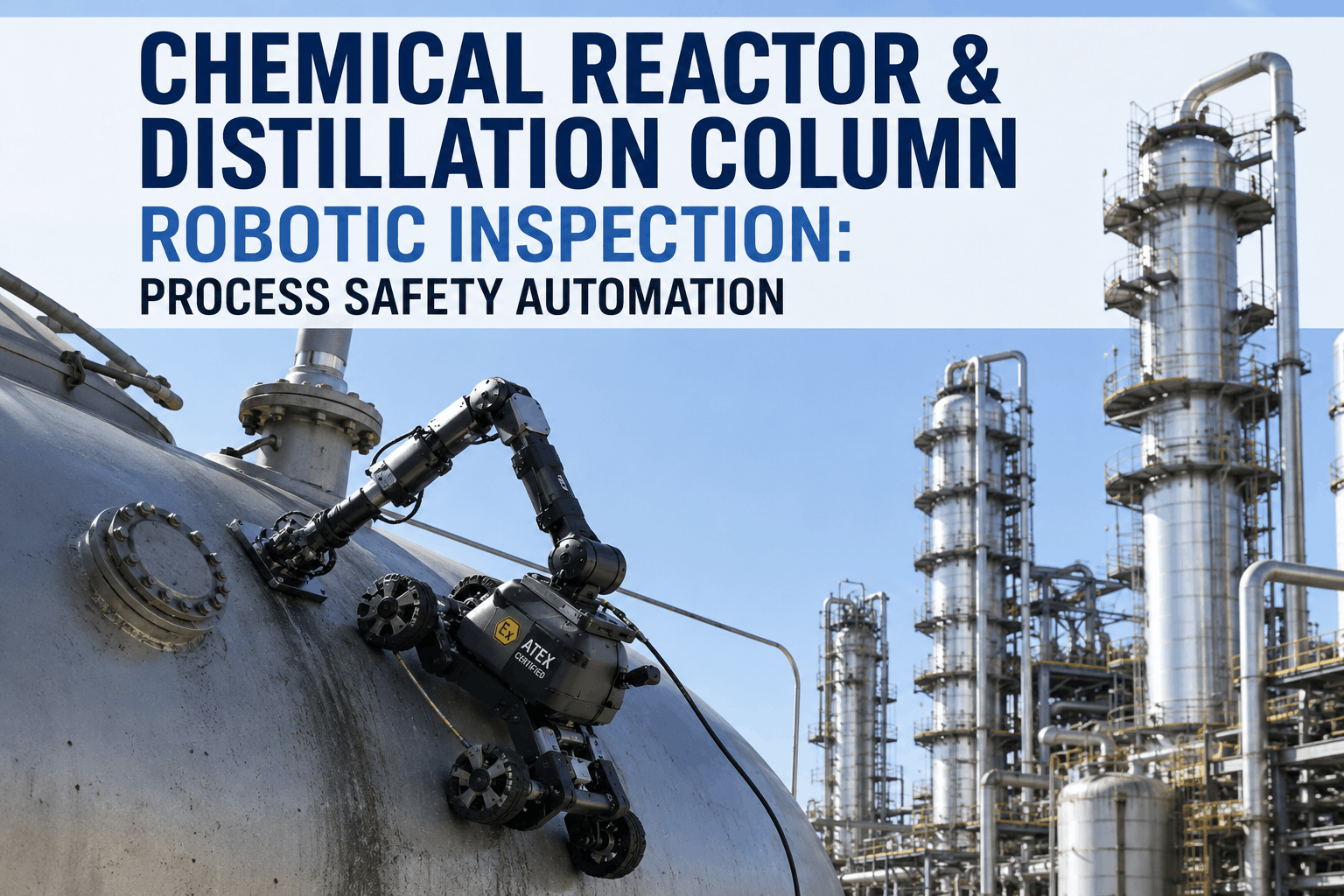
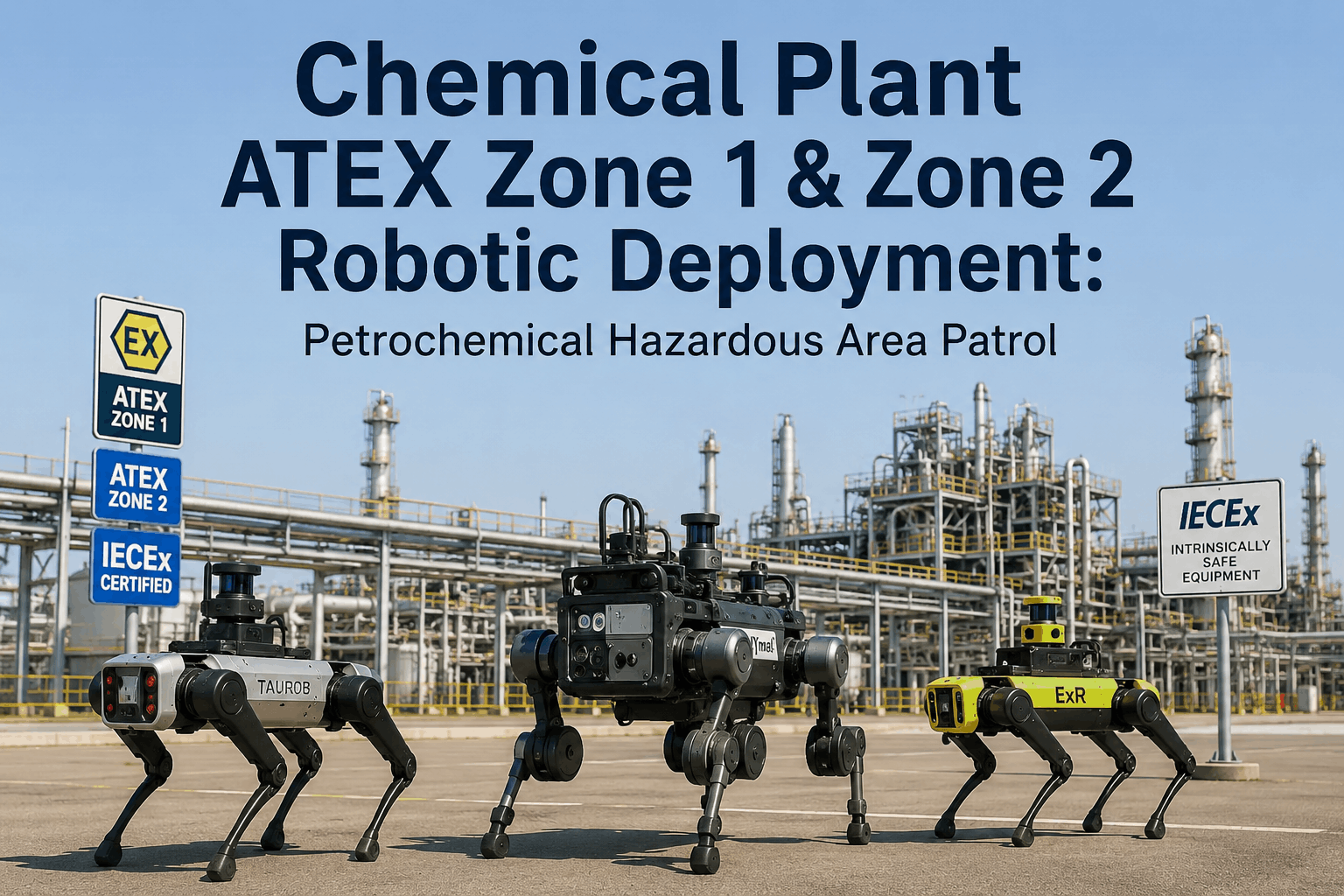
Of the dozens of inspection robots on the market in 2026, only three are certified for ATEX/IECEx Zone 1 deployment in chemical and petrochemical hazardous atmospheres: ANYbotics ANYmal X (legged, the only quadruped certified), Taurob Inspector (tracked, can negotiate stairs), and ExRobotics ExR-2 (tracked, flat terrain). Each is built around the IEC 60079 standards that underpin both ATEX 2014/34/EU and IECEx — but they differ significantly in mobility, payload capacity, charging architecture, and software integration model. This guide is a procurement-focused breakdown for chemical plant operators evaluating Zone 1 and Zone 2 robot deployments: the certification framework, side-by-side vendor comparison, ExR Spot positioning for non-Ex areas, and the IT integration architecture iFactory provides — delivered as both on-premise (air-gapped, plant-local) and cloud-managed (SOC 2 Type II, multi-site) services so you can match your data governance posture. Book a Chemical ATEX Robot Procurement Workshop to scope a deployment for your facility.
3
Inspection robots ATEX/IECEx Zone 1 certified in 2026
IEC 60079
Underlying standard for both ATEX and IECEx certifications
2
iFactory deployment modes — on-premise + cloud, same capability
12 wks
Standard deployment timeline from MOC to live patrol
ATEX Zone Classification — What Each Zone Demands
Before selecting any robot, you must understand which ATEX zones your patrol routes traverse. Zone classification determines which equipment categories are legally permitted and which robots can be deployed. Get this wrong and the procurement decision is invalid — regardless of what the vendor claims. Read our deeper context in our ATEX zones chemical robot compliance guide.
ZONE 0
Continuous Risk
Explosive atmosphere present continuously or for long periods. Typically inside reactor vessels, fuel tanks, distillation column internals.
CATEGORY 1G REQUIRED
No robot certified. Human-only access with full PPE protocols.
ZONE 1
Likely Risk
Explosive atmosphere likely to occur in normal operation. Typical of reactor vicinity, loading bays, tank farms, process areas around live equipment.
CATEGORY 2G REQUIRED
ANYmal X · Taurob Inspector · ExRobotics ExR-2
ZONE 2
Occasional Risk
Explosive atmosphere unlikely; brief duration if present. The most common ATEX classification in chemical plants — perimeter patrol routes, outdoor process areas.
CATEGORY 3G REQUIRED
All Zone 1 robots qualify. Additional Zone 2-only options expand the field.
UNCLASSIFIED
No Hazard Zone
Standard industrial environment outside hazardous classifications. Warehouses, control rooms, office corridors, outer plant perimeter.
NO ATEX REQUIRED
Boston Dynamics Spot, Unitree industrial variants — many options.
US equivalence: ATEX Zone 0 ≈ NEC Class 1 Division 1 (continuous), Zone 1 ≈ Class 1 Div 1 (likely), Zone 2 ≈ Class 1 Div 2 (occasional). Many vendors carry both certifications, but always verify against your specific facility's classification drawings.
Zone Classification Drives Everything. Procurement Decisions Made Before Zone Mapping Often Get Reversed.
Cross-reference your facility's ATEX zone drawings against vendor certification scope before any vendor selection. iFactory's workshop includes this mapping as standard scope.
The 3 Zone 1 Certified Robots — Side-by-Side Comparison
Three Ex-certified robots compete for chemical plant Zone 1 deployments in 2026. Each takes a different approach to the same problem: deliver autonomous inspection in atmospheres where a single ignition source could be catastrophic. Below is the procurement-grade comparison. Schedule a workshop to map vendor capabilities to your specific patrol requirements.
Form Factor
Legged (quadruped)
Tracked, flexible
Tracked, flat
ATEX Cert
Zone 1 (IECEx + ATEX)
Zone 1 (IECEx + ATEX)
Zone 1 (IECEx + ATEX)
Stair Capability
Full stair navigation
Stairs possible
Flat surfaces only
Multi-Level Facilities
Complex multi-story
Single-level + ramps
Single level only
Ingress Protection
IP67
IP67
IP67
Payload Capacity
~10 kg
~20 kg
Up to 30 kg
Charging Dock
Ex-certified docking
Ex-certified docking
Zone 1 cert docking
Customer References
PETRONAS, Equinor, Shell, BASF
TotalEnergies, Shetland Gas Plant
Energy Robotics cloud users
Best Fit
Multi-level facilities with diverse terrain
Single-level with stairs, gas plants
Heavy payload flat terrain inspections
Quick procurement summary: If your facility has multi-story structures and stairs, ANYmal X is the only legged Zone 1 quadruped. For single-level plants with predictable terrain and heavy payload needs (30+ kg sensors), ExR-2 wins on payload. Taurob Inspector sits between them — flexible tracks handle some stairs with proven offshore deployment record.
Where ExR Spot Fits — Zone 2 and Unclassified Areas
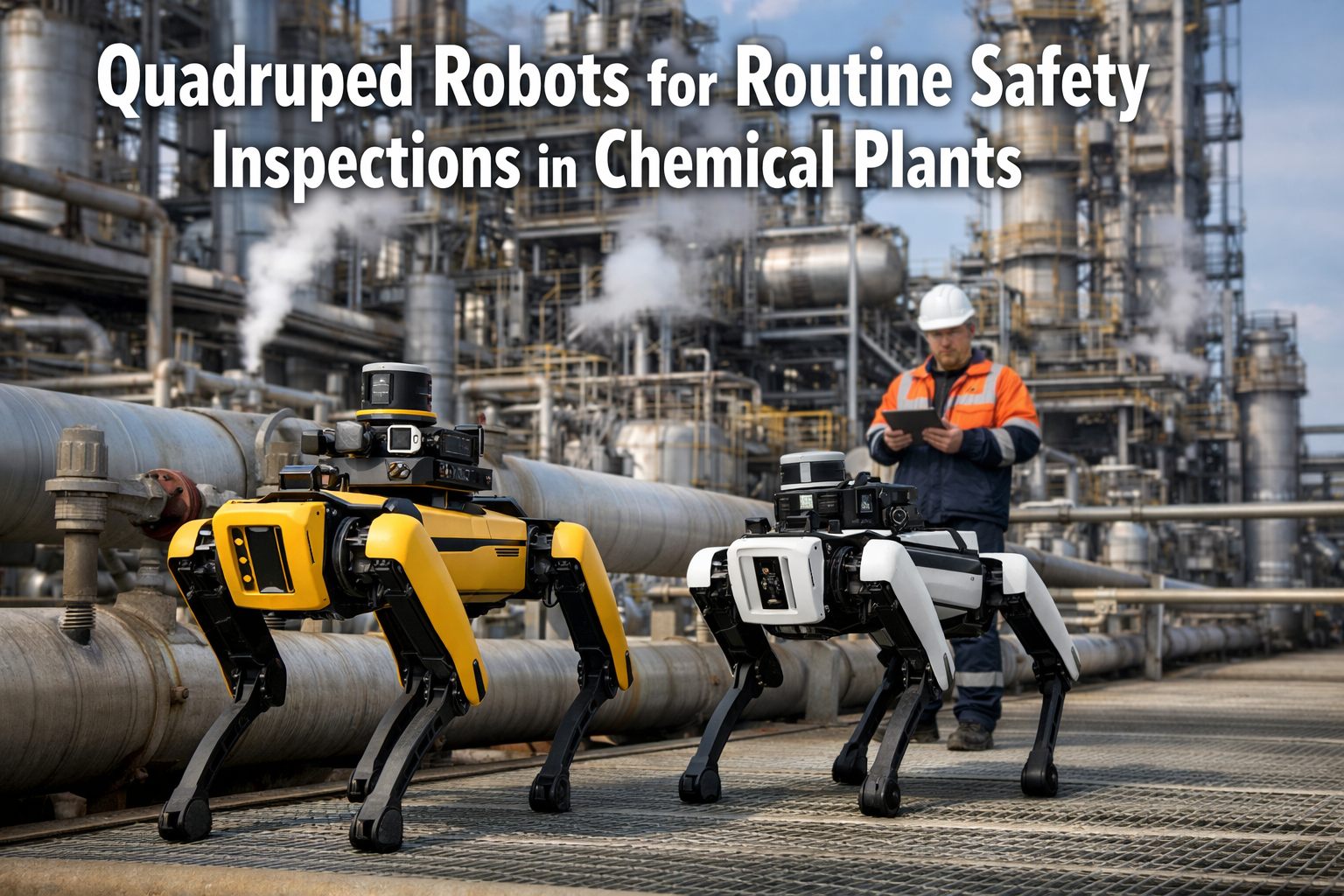
Boston Dynamics Spot — even with explosion-protected enclosure variants ("ExR Spot" in some marketing) — is not currently ATEX/IECEx Zone 1 certified. Spot is widely deployed in chemical plants for Zone 2 areas and unclassified perimeters where its mobility, ecosystem maturity, and lower cost are decisive. Understanding where Spot fits versus where it doesn't is critical procurement knowledge.
SPOT FITS
Zone 2 + Unclassified Areas
Outdoor perimeter patrols
Loading dock surveillance
Warehouse and storage area inspection
Control room corridor patrol
Office and admin building security
Outer plant boundary walk-downs
~$75K base + payloads
SPOT DOES NOT FIT
Zone 0 + Zone 1 Areas
Reactor vicinity patrols
Tank farm interior routes
Distillation column platform areas
Loading bay live equipment proximity
Pump stations handling volatile organics
Compressor station hazardous zones
Use ANYmal X, Taurob, or ExR-2 instead
Mixed-fleet reality: Most large chemical operators deploy Spot for Zone 2/unclassified + ANYmal X (or Taurob) for Zone 1. The fleet management software then orchestrates both vendor platforms through a single operational dashboard — which is exactly what iFactory's robot management layer delivers.
Mixed Fleets Are the 2026 Norm. Single Vendor Lock-In Is the 2019 Mistake.
iFactory's robot management layer connects to ANYmal X, Taurob, ExR-2, Spot, and Unitree platforms through standard APIs. Vendor-agnostic by design.
iFactory's Deployment Models — On-Premise & Cloud, Same Capability
Regardless of which Ex-certified robot you select, the data pipeline behind it must match your IT governance posture. iFactory delivers two deployment models — on-premise (air-gapped, plant-local) and cloud (SOC 2 Type II, managed) — with identical capability across both. Read more in our cloud vs on-premise TCO comparison.
DEPLOYMENT MODEL A
On-Premise
Air-Gapped Edge Deployment
ARCHITECTURE
Edge GPU appliance installed on plant network. Robot data, AI inference, and CMMS integration all run within your firewall. Zero internet connectivity required for operation.
BEST FIT FOR
Regulated EU/APAC plants, hazardous chemical sites, pharma-adjacent operations, plants under data residency or sovereignty rules.
KEY ADVANTAGES
Full data sovereignty — nothing leaves plant network
Sub-50ms edge inference at the line
100% offline-capable during WAN outages
CapEx model — predictable amortization
DEPLOYMENT MODEL B
Cloud
Managed Multi-Site Service
ARCHITECTURE
Robot inspection data flows to SOC 2 Type II / ISO 27001 certified cloud platform. Centralized dashboards across multi-site fleets. AI models updated continuously.
BEST FIT FOR
Multi-plant operators, fast-scaling specialty groups, OPEX-preferred budgets, plants needing fleet-wide benchmarking and rapid onboarding.
KEY ADVANTAGES
Multi-site centralized dashboards
Fastest onboarding (new plants in days)
Continuous AI model improvements
OPEX model — no infrastructure overhead
Identical capability across both modes. Same robot integrations, same AI models, same CMMS workflow, same compliance posture. The choice depends on your IT governance and multi-site strategy — not capability.
Compliance & Standards Stack
ATEX robot deployment must satisfy a layered stack of overlapping safety and certification standards. Below is the compliance map for chemical plants in 2026.
CS1
ATEX 2014/34/EU
Equipment Directive for explosive atmospheres in EU markets. Defines equipment categories (1G/2G/3G) matched to zones.
CS2
IECEx Scheme
International equivalent to ATEX. Recognized globally. Most Ex-certified robots carry both ATEX and IECEx.
CS3
IEC 60079 Series
Underlying technical standards for both ATEX and IECEx. Defines protection methods (Ex d, Ex e, Ex i, Ex p) used in robot enclosures.
CS4
NEC Class 1 Div 1/2
US equivalent classification system. Some Ex robots carry NEC certifications in addition to ATEX/IECEx for North American markets.
CS5
OSHA 29 CFR 1910.119
PSM standard. Robot deployment in PSM-covered processes requires MOC review, HAZOP, and PSM file integration.
CS6
ISO 25785-1 (Draft)
Emerging safety standard for mobile robots in industrial environments. Defines dynamic virtual safety zones replacing fixed physical barriers.
The 12-Week ATEX Robot Procurement Roadmap
A compliant Zone 1 chemical plant robot deployment requires a 12-week minimum timeline. Skipping any phase increases procurement risk dramatically — vendors that promise faster deployment typically deliver a system that fails its first MOC review.
Weeks 1–3
Zone Mapping & Use Case Scoping
Cross-reference facility ATEX zone drawings against vendor certification scope. Identify patrol routes, sensor payload needs, charging dock locations.
Weeks 4–6
Vendor Selection & Contract
Match facility geometry to ANYmal X / Taurob / ExR-2. Negotiate payload configuration, deployment model (on-prem or cloud), service terms.
Weeks 7–9
MOC Documentation & PSM Integration
Full Management of Change documentation. HAZOP coverage of robot upset conditions. Pre-startup safety review. Operating procedure updates.
Weeks 10–12
Pilot & Live Cutover
Pilot patrol in non-hazardous zones first. Validate sensor calibration and CMMS auto-work-order flow. Expand to Zone 1 areas. First inspection report generated.
FAQ: ATEX Zone 1 & Zone 2 Robot Procurement
Common questions from EHS managers, process safety leaders, and procurement officers evaluating Zone 1 and Zone 2 robot deployments. Question not covered? Reach our solutions team directly, or book an ATEX Robot Workshop.
Which robots are actually ATEX/IECEx Zone 1 certified in 2026?
Three robots hold Zone 1 (Category 2G equipment) certifications under both ATEX 2014/34/EU and IECEx standards: ANYbotics ANYmal X — the only legged quadruped, ideal for multi-level facilities with stairs; Taurob Inspector — tracked with flexible chassis, deployed offshore by TotalEnergies and on Shetland Gas Plant; ExRobotics ExR-2 — tracked, flat-terrain, highest payload capacity (up to 30 kg). All three are IP67 rated. Certifications must match your specific gas group (IIA, IIB, IIC), temperature class (T1–T6), and zone configuration.
Can we use Boston Dynamics Spot in chemical plant hazardous zones?
Not in Zone 0 or Zone 1. Spot is widely used in chemical plants for Zone 2 and unclassified areas — outdoor perimeter patrols, loading docks, warehouses, control room corridors. For Zone 1 hazardous areas where explosive atmospheres are likely during normal operation (reactor vicinity, tank farms, loading bays), Spot cannot be legally deployed. Most large chemical operators run mixed fleets — Spot for non-hazardous areas + ANYmal X / Taurob / ExR-2 for Zone 1. iFactory's fleet management layer orchestrates multiple vendors through a single dashboard.
Does iFactory offer both on-premise and cloud deployment?
Yes — both deployment models are fully supported with identical capability. On-premise runs the full AI inference and CMMS integration stack on edge GPU within your plant firewall, fully air-gapped. Cloud delivers managed multi-site dashboards with SOC 2 Type II and ISO 27001 certification. Both modes integrate with the same Ex-certified robot platforms (ANYmal X, Taurob, ExR-2). The choice depends on your data residency rules, IT policy, and multi-site strategy — not on what the robot can detect. Regulated EU/APAC chemical plants typically choose on-premise; multi-site groups typically choose cloud.
What's the difference between ATEX, IECEx, and NEC certifications?
ATEX 2014/34/EU is the European Directive governing equipment for explosive atmospheres — required for sale and use in EU markets. IECEx is the international scheme, recognized globally, built on the same IEC 60079 standards. NEC (National Electrical Code) Class 1 Division 1/2 is the US classification system using a different (but largely equivalent) framework. ANYmal X, Taurob Inspector, and ExR-2 typically carry both ATEX and IECEx certifications. Some platforms add NEC certifications for North American markets. Always verify against your specific facility's classification drawings.
How does ATEX certification differ for the robot vs. its charging dock?
Both must be certified for the zone they operate in. ANYmal X, Taurob, and ExR-2 all offer Zone 1 certified docking stations so robots can charge in the same hazardous zone they patrol — eliminating the need to return to a non-hazardous area for every charge cycle. ExR-2's docking station is rated for 2 km mission ranges with 120-minute runtime per charge. Extension is possible by deploying multiple docking stations across larger facilities. This is a significant procurement consideration often missed in initial vendor evaluations.
What sensor payloads should we specify for chemical plant ATEX patrols?
The standard 4-sensor payload for chemical plant Zone 1 patrols is: thermal imaging (FLIR A-series or equivalent) for heat anomaly detection; OGI optical gas imaging (FLIR GF320 or MFE Mileva) for VOC and methane leak detection; multi-gas detector (PID + electrochemical for H2S, CO, O2, LEL); and acoustic emission for ultrasonic leak detection on flanges and steam traps. All payloads must be intrinsically safe and certified for the zone they operate in. ExR-2's 30 kg payload capacity allows the heaviest sensor combinations; ANYmal X at 10 kg requires more selective payload choice.
How does the OSHA PSM MOC process work for adding an ATEX robot?
Adding any equipment to a PSM-covered process under 29 CFR 1910.119(l) requires a formal Management of Change review. For ATEX robots specifically, the MOC must document: certification matching to facility zone drawings, HAZOP coverage of robot upset conditions (loss of power, communication failure, sensor malfunction in hazardous zones), updated operating procedures, pre-startup safety review, and operator training. iFactory's procurement workshop includes MOC documentation templates and PSM integration consulting as standard deliverables.
How quickly can we book an ATEX Robot Procurement Workshop?
Workshops are typically scheduled within 5–7 business days of request. The session is a
90-minute working call with your EHS, process safety, procurement, and IT teams — we map your facility's ATEX zone drawings, current inspection workload, deployment model preference (on-premise vs cloud), and target patrol routes to a tailored procurement plan. Output includes vendor recommendation (ANYmal X, Taurob, or ExR-2), payload specification, MOC documentation framework, and a 12-week deployment timeline.
Book your workshop now.
Procure the Right ATEX Robot. Deploy On-Premise or Cloud. Live in 12 Weeks.
Three Zone 1 certified robots, two iFactory deployment models, one procurement framework. Whether your facility needs ANYmal X for multi-level coverage, Taurob Inspector for offshore-grade reliability, or ExR-2 for heavy payload flat-terrain patrol — iFactory's vendor-agnostic platform delivers the AI inference, CMMS integration, and compliance documentation pipeline across both on-premise and cloud deployments.
On-premise OR cloud — same capability
Vendor-agnostic robot integration
ATEX 2014/34/EU + IECEx + NEC compliance
Full OSHA PSM MOC documentation
12-week deployment with pilot phase
.png)