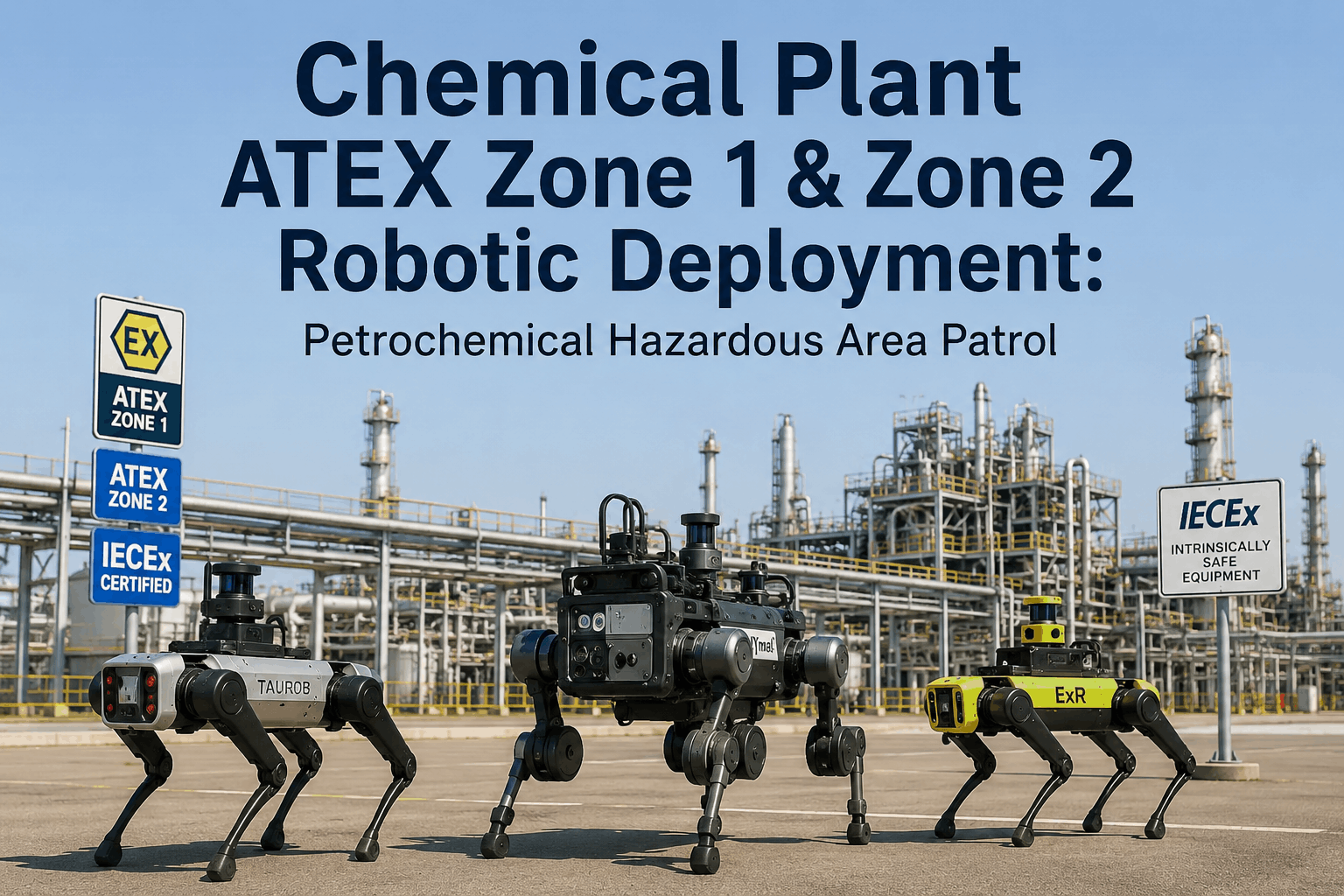
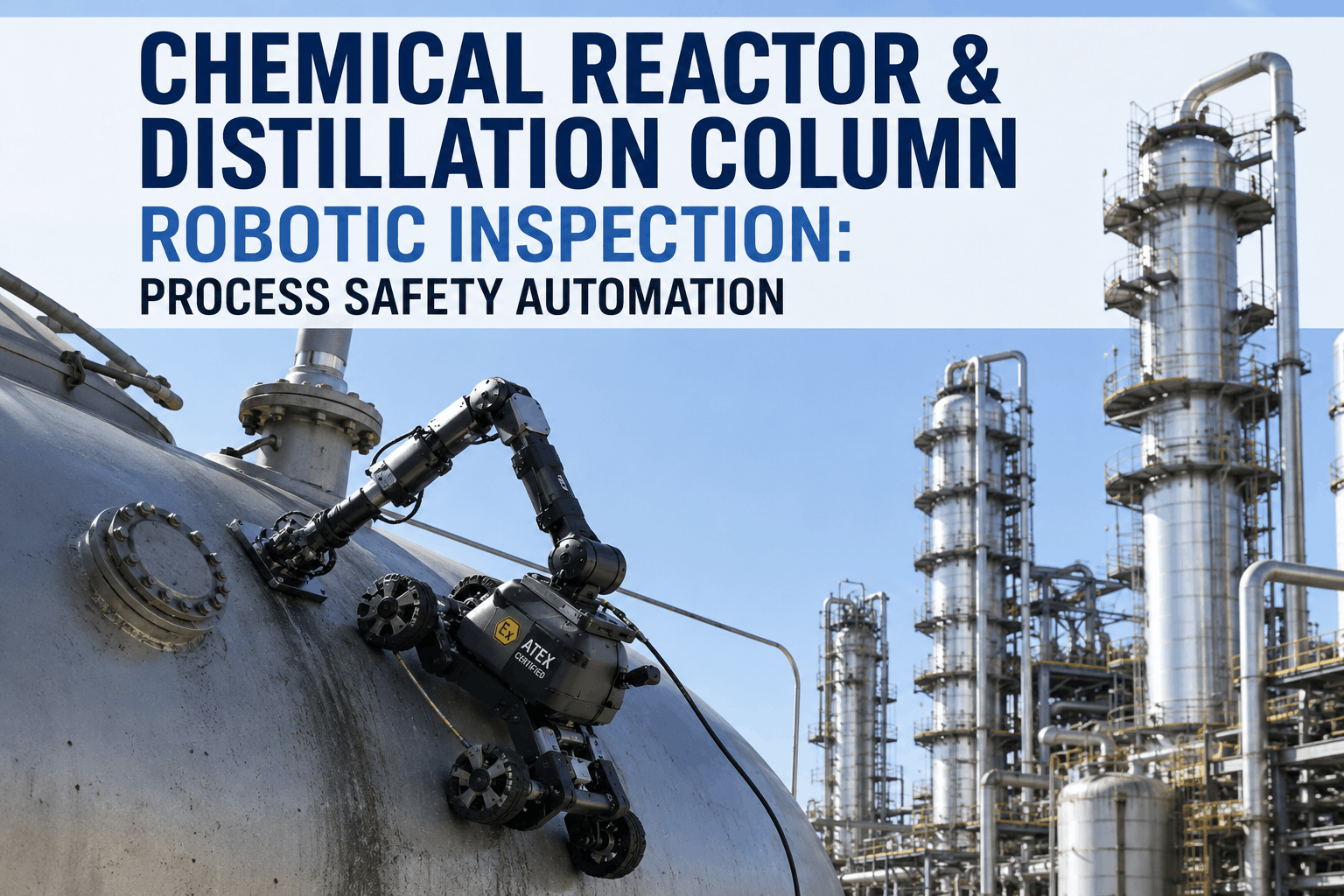
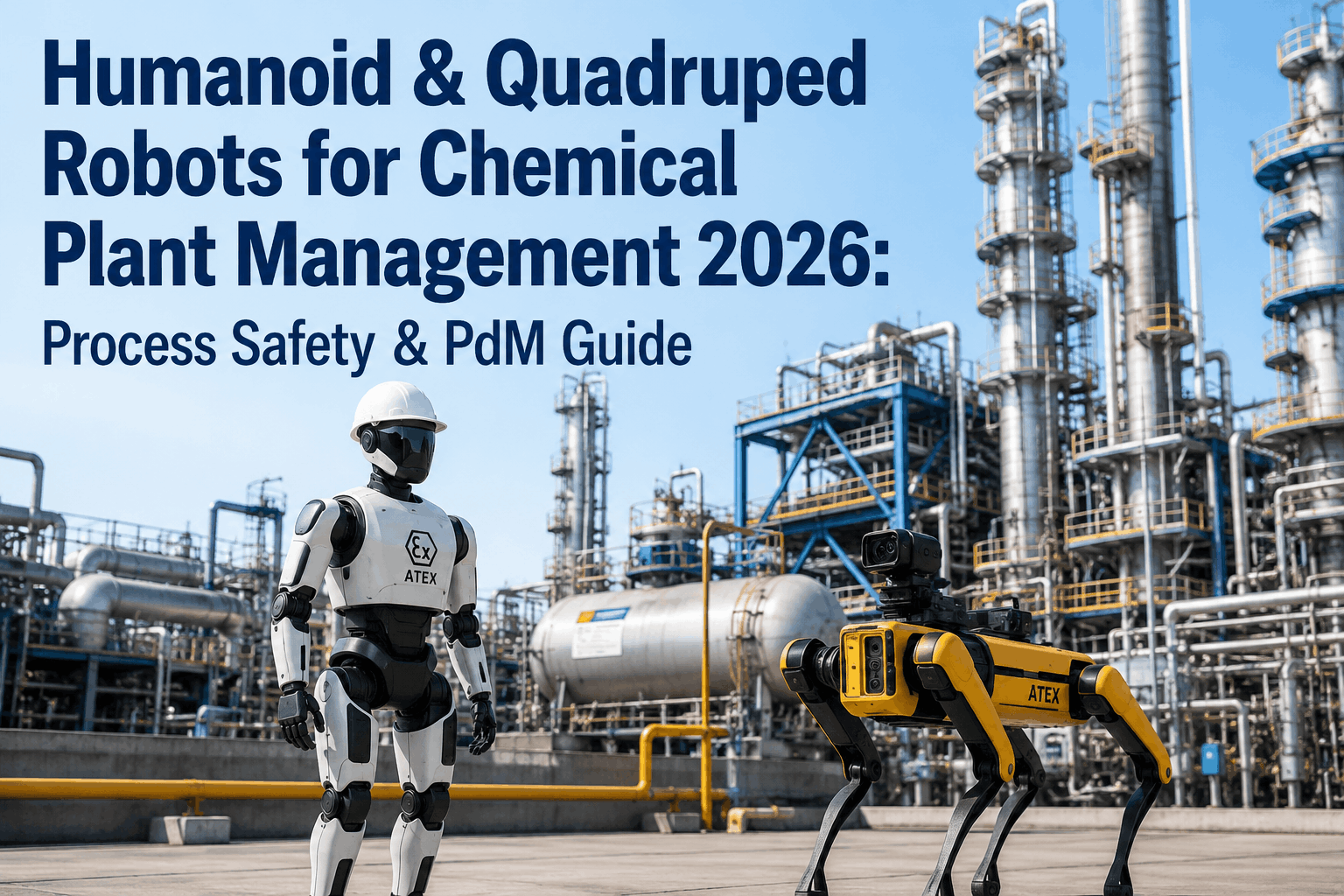
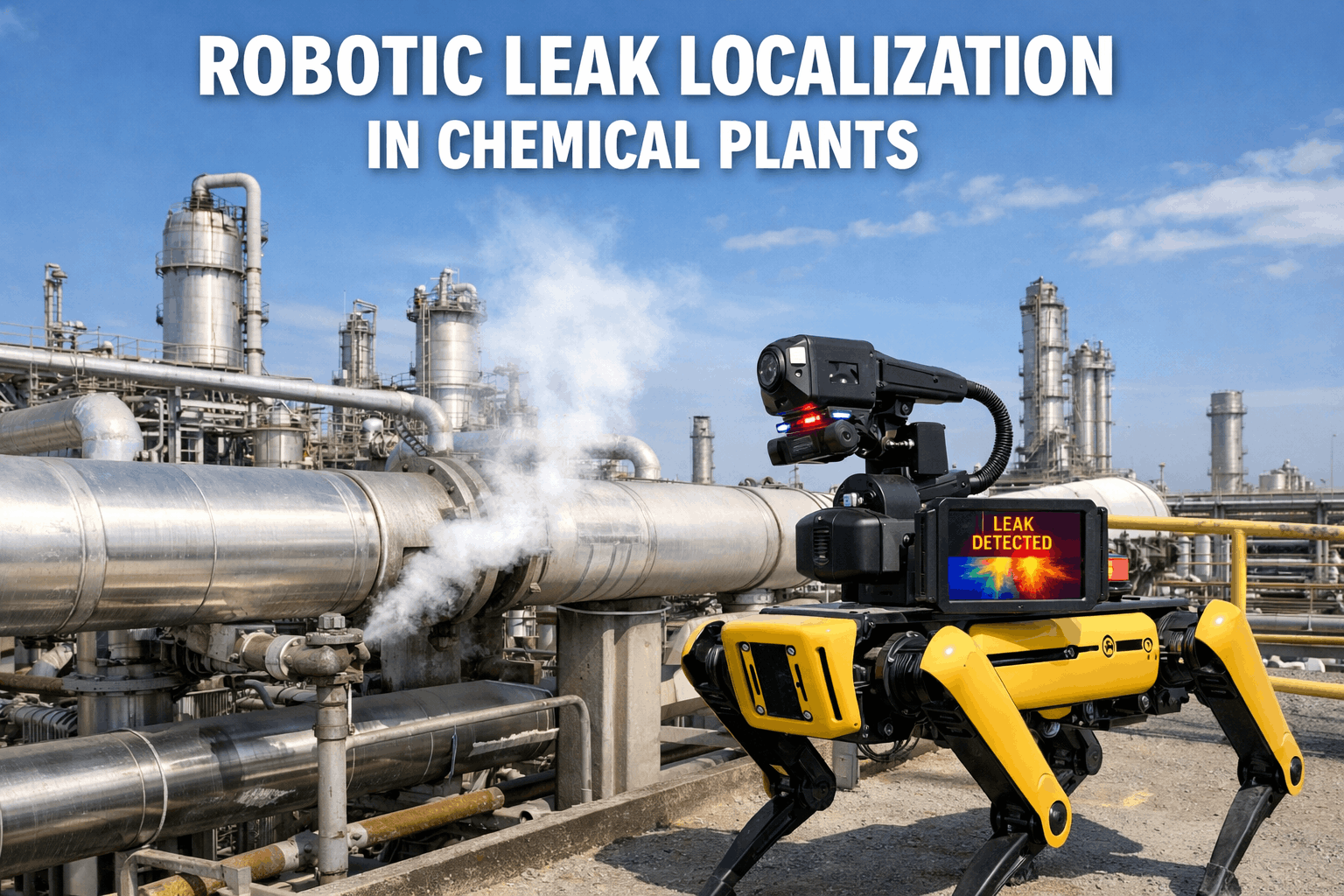
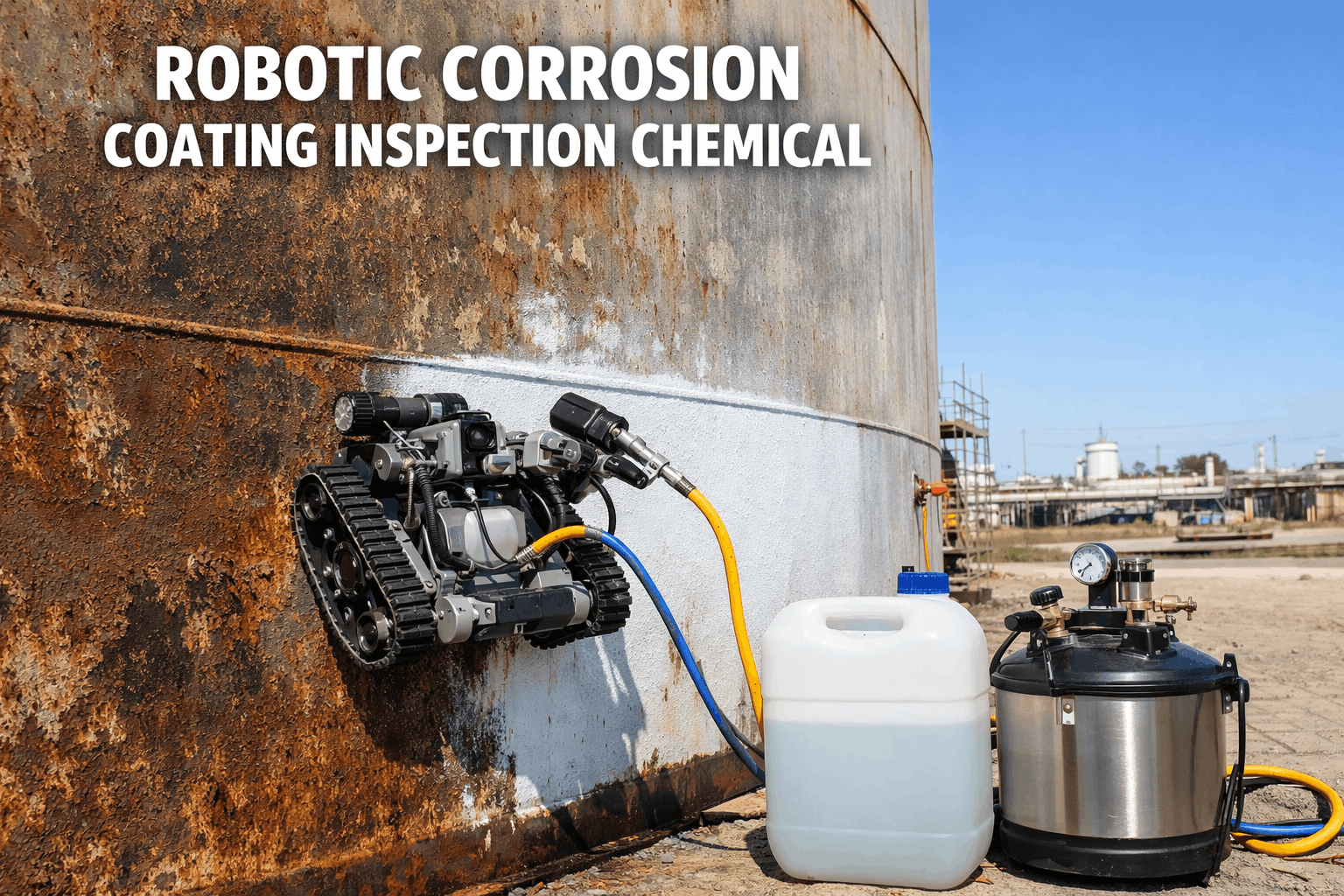
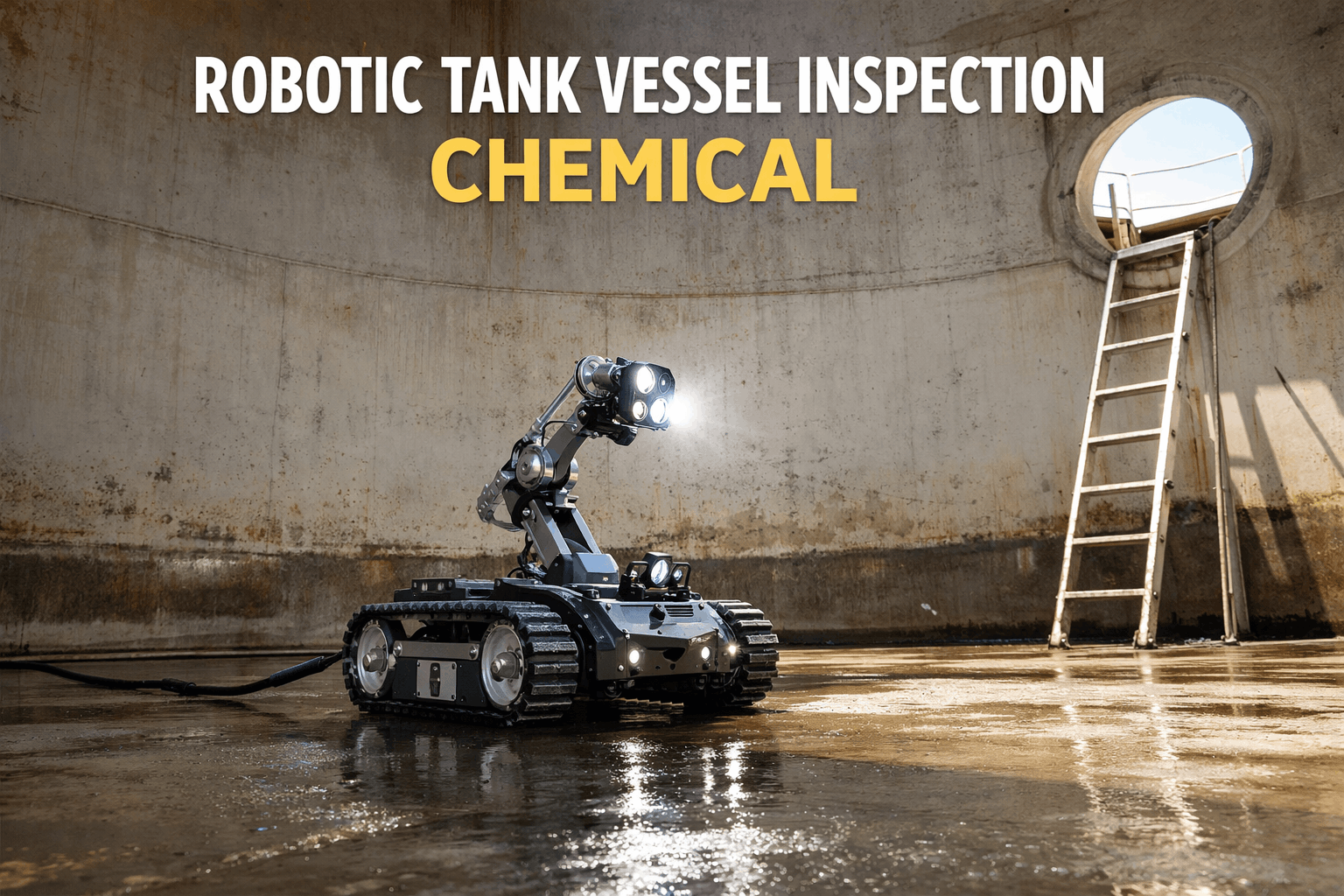
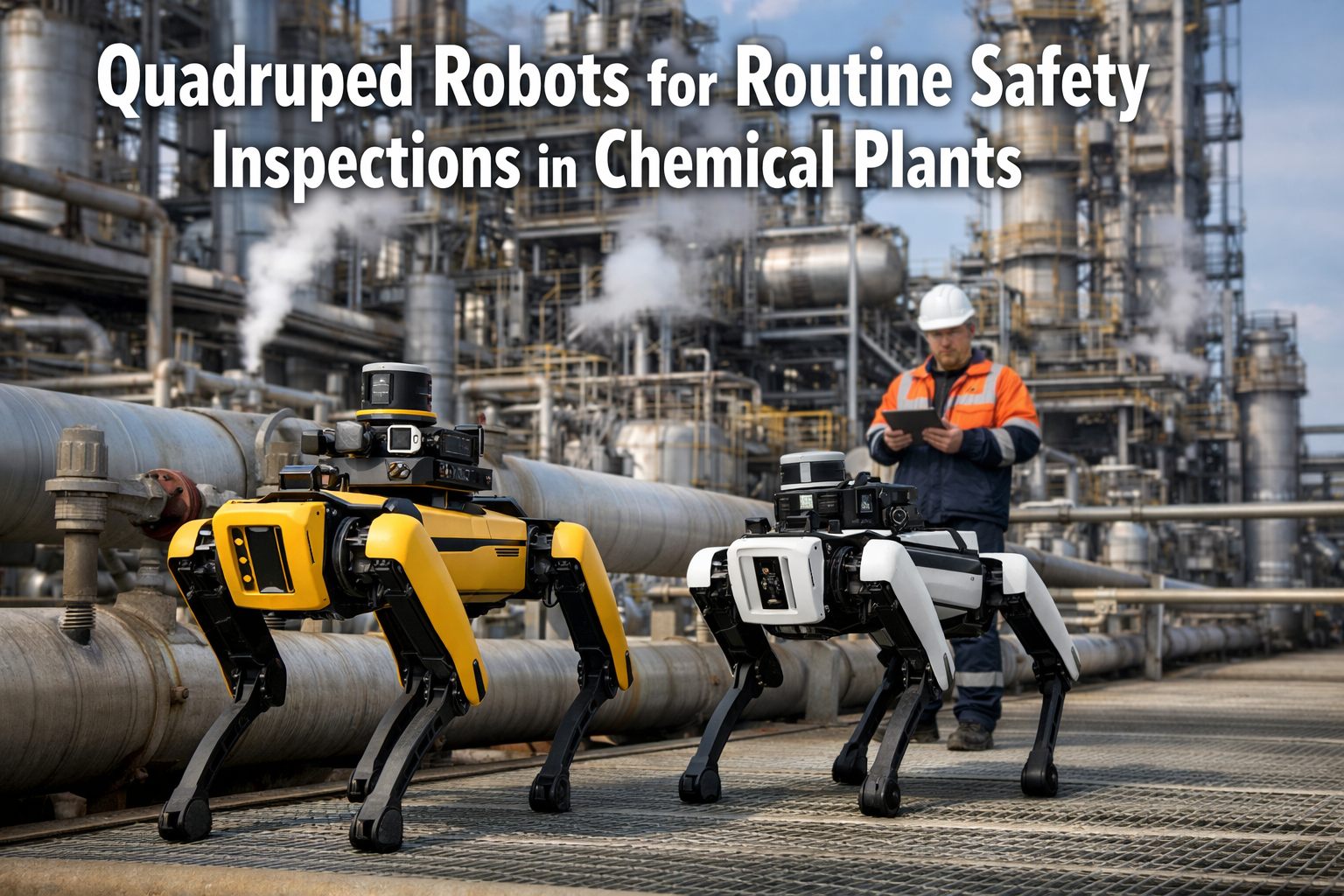
Chemical plants across the US and Canada are rapidly adopting quadruped (four-legged) inspection robots to automate hazardous-area monitoring — but deploying these assets inside ATEX/EX-classified zones without a rigorous compliance framework exposes operations to catastrophic liability. With OSHA's May 19, 2026 GHS Revision 7 deadline looming and TSCA PFAS amendments reshaping chemical handling obligations, the window to build compliant, audit-ready robot programs is closing fast. This guide breaks down the design constraints, certification pathways, and digital management practices that separate safe deployments from regulatory disasters.
Understanding ATEX Zone Classifications in Chemical Facilities
Before any robot enters a hazardous area, your team must establish which ATEX/NEC zone applies. In the US, the National Electrical Code (NEC) Article 500 defines Class/Division designations; the IEC 60079 series — adopted globally including Canada under CSA C22.1 — uses Zone classifications. Both frameworks converge on the same core principle: equipment inside the zone must be incapable of igniting the surrounding atmosphere under normal or fault conditions.
The Real Cost of Non-Compliant Robot Deployments
ATEX Robot Design Constraints: What the Standards Actually Require
Intrinsic Safety (Ex i) & Energy Limitation
All electrical circuits within the robot must be limited to energy levels below what can ignite the surrounding atmosphere. For Zone 1 gas environments, this typically caps stored energy at under 20 µJ and limits surface temperatures to T-class ratings (T1–T6, corresponding to 450°C down to 85°C). Battery packs must use thermal runaway suppression and be enclosed in certified Ex d (flameproof) or Ex e (increased safety) housings.
Enclosure Protection — IP & IK Ratings
ATEX-rated quadruped robots must meet a minimum IP65 rating (dust-tight, water jet resistant) for Zone 2 deployments; Zone 1 operations typically require IP67 or higher with secondary sealing on all joint actuator cavities. Leg mechanisms present a particular challenge — dynamic seals on revolute joints must maintain integrity through tens of thousands of cycles without creating spark-generating friction surfaces.
Material Compatibility & Static Discharge
Robot body materials must meet ATEX Group IIC requirements for hydrogen/acetylene environments — the most stringent gas group. Non-metallic components must demonstrate surface resistivity below 10⁹ Ω/sq to prevent electrostatic charge accumulation. Any payload sensors (gas detectors, thermal cameras) must carry independent Ex certification — it is not sufficient for only the robot platform to be certified while an attached device is not.
Communication Systems & RF Considerations
Wireless communication modules (Wi-Fi 6, 5G private networks, or LPWAN) must use intrinsically safe transceivers with RF power limited per IEC 60079-0 Table 1. The antenna assembly requires Ex certification independent of the main housing. Operators must also complete an RF ignition risk assessment per IEC/TS 60079-32-1 before commissioning wireless robots in gas-hazardous areas.
Fail-Safe Behavior & Emergency Stop Design
ATEX compliance requires that robot failure modes never increase ignition risk. This means: loss of communication triggers immediate controlled shutdown (not uncontrolled fall/flailing), battery discharge is capped at safe current levels under fault conditions, and the robot cannot enter a "hot restart" cycle within a classified zone. Emergency stop circuits must be SIL 2-rated per IEC 61511 for Zone 1 deployments in chemical PSM facilities.
Need to validate your current robot platform against these requirements? Schedule a free compliance gap assessment with iFactory's chemical industry specialists.
The Certification Pathway: From Prototype to Plant Floor
Hazardous Area Classification Survey
Commission a Zone classification drawing (per IEC 60079-10-1 for gases, -10-2 for dust) for every area the robot will traverse. This document forms the legal basis for your equipment selection and must be retained in your PSM mechanical integrity records.
Equipment Certification Verification
Obtain the EU/UKCA ATEX Declaration of Conformity (DoC) and the IECEx Certificate of Conformity for the robot platform. In North America, verify FM Approved or CSA Class I Div 1/2 certification from an NRTL. Every attached sensor and accessory requires independent certification documentation.
Process Hazard Analysis (PHA) Update
Under OSHA 1910.119 PSM, introducing any new piece of equipment to a covered process requires a PHA revalidation or What-If analysis. The robot's failure modes, energy sources, and interaction with process piping must all be analyzed and documented — failure to do so is a citable PSM violation.
Management of Change (MOC) Initiation
Every robot deployment, route change, firmware update, or sensor swap in a PSM-covered facility is a Management of Change event. An MOC package must document: purpose of change, technical basis, safety impacts, required training, and authorization signatures before the change goes live.
Access Control & Training Documentation
OSHA requires documented training for all personnel who operate or work near robots in PSM facilities. Establish role-based access controls: who can deploy, re-route, or retrieve a robot must be logged with timestamp. Annual refresher training records must be retained for the life of the PSM program.
Ongoing Inspection & Audit Trail Maintenance
ATEX equipment must be subject to periodic inspection per IEC 60079-17: initial inspection before commissioning, close inspection every 1–3 years, and sample inspection during each operation. All inspection records, anomalies, and corrective actions must be stored in an auditable, time-stamped system — this is where digital PSM platforms become indispensable.
How iFactory Makes ATEX Robot Compliance Manageable
Digital PSM & MOC Management
iFactory's Process Safety Management module automates the entire OSHA 1910.119 compliance workflow — from PHA documentation templates to MOC package routing and approval chains. Every robot configuration change generates an automatic MOC record with pre-populated risk fields, reviewer assignments, and digital signature capture. Audit inspectors get a single dashboard view of all open, pending, and closed MOC events.
AI-Powered Predictive Maintenance
iFactory's AI engine monitors robot joint actuators, battery thermal profiles, and seal integrity data — delivering 30-day early failure warnings at 95% accuracy. Catching a failing joint seal before it breaches in a Zone 1 environment isn't just a maintenance win — it's the difference between a work order and a process safety incident.
ATEX Certification Records & Access Logs
Centralize every ATEX DoC, IECEx certificate, FM approval, and CSA certification in a structured digital vault. Role-based access controls automatically log who accessed which zones, when robots were deployed, and what inspections were completed — creating the timestamped audit trail OSHA inspectors require.
MES & Batch Traceability Integration
When inspection robots identify equipment anomalies, iFactory's MES module automatically links the finding to the active production batch — providing full genealogy from raw materials to finished product. This is critical for TSCA PFAS traceability and Health Canada Bill S-5 reporting obligations.
Want to see iFactory's ATEX compliance modules in action? Book a 30-minute live demo — no obligation, no sales pressure.
The 2025–2026 Regulatory Pressure Driving Urgency
OSHA GHS Rev. 7 — May 19, 2026
All Safety Data Sheets must be re-authored to align with GHS Revision 7 hazard classifications. This directly affects ATEX zone maps — if chemical hazard classifications change, zone boundaries and required robot equipment categories may shift. Facilities running paper-based SDS systems face enormous re-classification workloads heading into the deadline.
TSCA PFAS Amendments
EPA's TSCA Section 8(a)(7) PFAS reporting rule requires manufacturers to document and report PFAS usage across their supply chains. For facilities using PFAS-containing process fluids, solvents, or coatings — common in semiconductor, specialty chemical, and pharma — robot inspection data must be traceable to specific batches and zones to meet reporting obligations.
Bill S-5 — Canadian Environmental Protection Act
Canada's reformed CEPA under Bill S-5 introduces a right-to-know framework for toxic substances and strengthens facility-level chemical tracking obligations. Chemical facilities in Ontario, Alberta, and BC must demonstrate systematic monitoring of hazardous zones — exactly the use case quadruped robots fulfill, provided the data is captured in a compliant traceability system.
OSHA PSM 1910.119 — Process Safety Management
Any facility holding Highly Hazardous Chemicals above threshold quantities must maintain a PSM program. Introducing inspection robots is a mechanical integrity and MOC event under PSM. 82% of chemical plants report reactive "firefighting" maintenance cultures — a pattern OSHA PSM auditors specifically target, and one that robot deployments without proper documentation can exacerbate.
Your 2026 Compliance Clock Is Running
With GHS Rev. 7, TSCA PFAS reporting, and Bill S-5 converging simultaneously, chemical facilities cannot afford to manage ATEX robot compliance on spreadsheets and paper files. iFactory consolidates your PSM documentation, MOC workflows, certification records, and audit trails into one platform — delivering 100% audit readiness without the manual overhead.
Operational Best Practices for Safe ATEX Robot Deployments
Pre-Mission Hot-Work Permit Integration
Treat every robot deployment in a Zone 1 area as a hot-work-adjacent activity. Even though a compliant robot contains no ignition sources under normal operation, the act of deploying it into a classified zone should trigger a permit-to-work authorization that integrates with your facility's isolation and gas monitoring procedures.
Continuous Gas Detection Handshake
Configure the robot's onboard gas detector to communicate real-time readings to your DCS/SCADA system. If the robot detects an unexpected flammable gas concentration above 20% LEL, it should automatically halt operations and trigger a facility alarm — before any human responder enters the area.
Docking Station Placement & Zone Boundary Compliance
Robot charging and docking stations are NOT ATEX-rated in most current commercial platforms. Charging stations must always be located in unclassified (safe) areas or in Ex-rated enclosures. Drawing a robot back to its dock across a zone boundary requires careful route engineering to ensure the non-rated dock never enters the classified zone perimeter.
Post-Maintenance Re-Certification Protocol
Any repair, component replacement, or firmware update to an ATEX-rated robot may void its certification until re-inspection. Establish a written protocol: only OEM-approved spare parts may be used, all maintenance is performed by trained technicians, and a close inspection per IEC 60079-17 is completed before the unit returns to service in a classified zone.
Incident Investigation & Root Cause Logging
Near-miss events involving robots in classified zones — unexpected shutdowns, unusual heat signatures, seal breaches — must be treated as PSM incident near-misses and investigated to root cause. iFactory's incident module automatically creates a linked PSM record, preserving the chain of evidence required for OSHA reporting and insurance documentation.
Annual ATEX Inspection Scheduling & Digital Recordkeeping
IEC 60079-17 mandates formal inspection cycles. Use iFactory's predictive maintenance scheduler to auto-generate ATEX inspection work orders at the correct intervals — combining time-based compliance triggers with condition-based data from the robot's own sensors to optimize inspection timing without ever missing a required check.
Quantified ROI: What a Compliant Robot Program Delivers
Industry Perspective
"The introduction of autonomous inspection platforms into hazardous-classified zones represents the most significant shift in chemical plant maintenance methodology in a generation. The technology is ready — but the compliance infrastructure at most facilities is not. Organizations that treat ATEX robot certification as an afterthought rather than a pre-commissioning requirement are creating regulatory and safety liabilities that far outweigh any efficiency gains from the robots themselves. The answer is a digital management system that makes compliance the automatic outcome of normal operations, not an annual scramble before inspection season."
Ready to build a proactive, audit-ready ATEX robot program? Get a free savings and compliance analysis from the iFactory team — tailored to your facility's specific zone classifications and regulatory obligations.
Frequently Asked Questions
Don't Let the 2026 Compliance Window Close Without a Plan
iFactory helps US and Canadian chemical facilities build audit-ready ATEX robot programs — combining digital PSM management, AI-powered predictive maintenance, and certified record-keeping into one platform built for the 2026 regulatory environment.