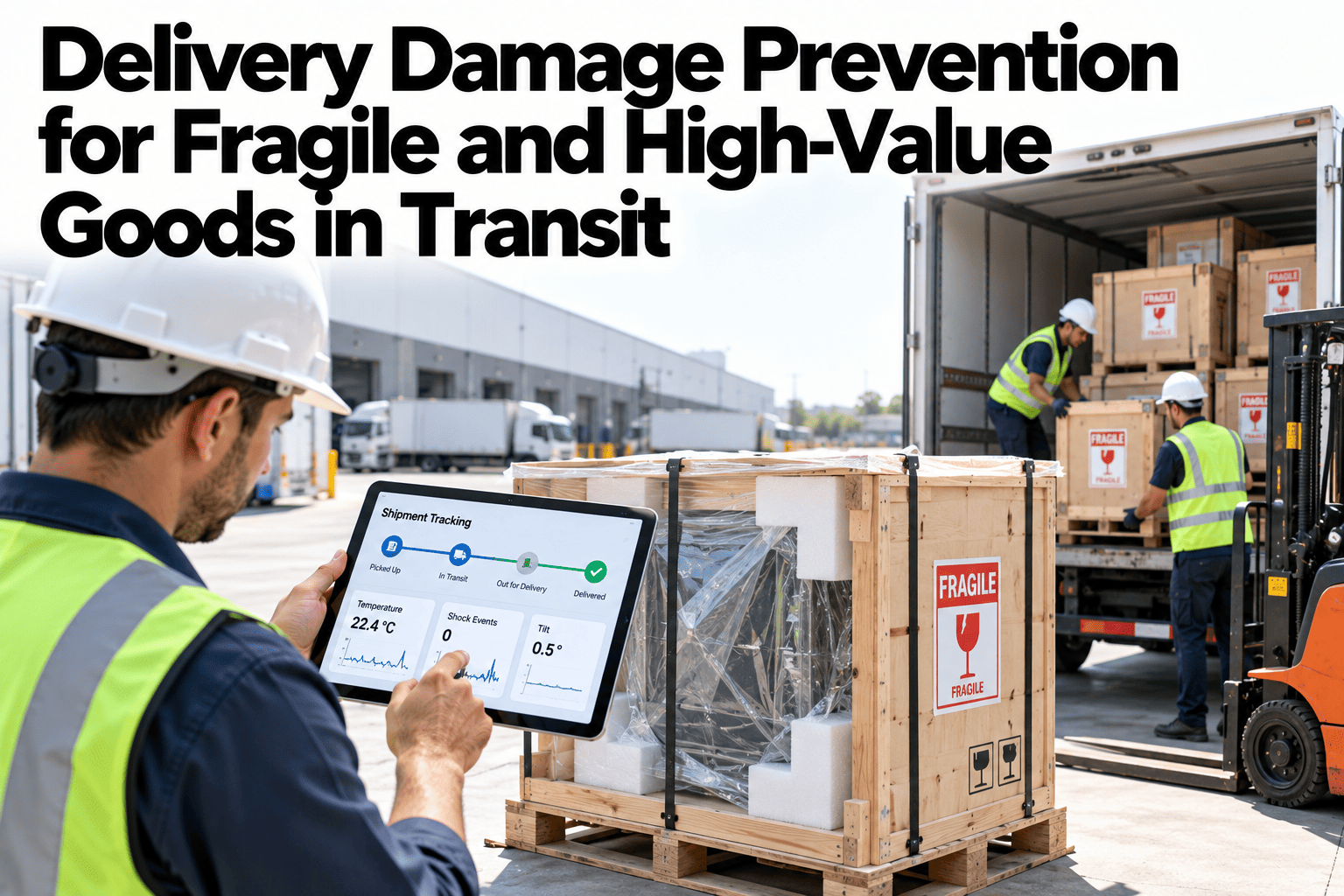
A fragile or high-value shipment rarely gets damaged at one obvious point. It gets damaged across a series of small handoffs, each one individually reasonable, where a crew that doesn't know the item is fragile treats it exactly like every other box on the pallet. Preventing that requires more than a "fragile" sticker, it requires a handling profile that actually changes behavior at every transfer point the shipment passes through, from the first packaging instruction to the final doorstep scan. Delivery operations leaders building that kind of program can review how handling profiles translate into transfer-point actions for their own network.
A Sticker Doesn't Change Behavior. A Handling Profile Does.
iFactory AI gives delivery teams a single view of handling profiles, packaging instructions, and scan records across every transfer point a shipment passes through.
Why Damage Accumulates Across Transfer Points, Not at One
A single rough handoff rarely destroys a product on its own. It is usually the combination of several handoffs, each slightly careless, that pushes a shipment past what its packaging was designed to absorb.
Handling Instructions Don't Travel With the Package
A fragile designation entered at origin often doesn't reach the crew loading the truck three transfers later, who has no way to know the box needs different treatment.
Orientation Gets Lost in Transit
A "this side up" label is easy to ignore during a fast cross-dock sort, and once a shipment is reoriented once, nobody downstream knows to correct it.
No Record of Who Handled It Where
Without a scan at each transfer point, a damage claim has no way to narrow down which leg of the journey actually caused the problem.
Matching Packaging Instructions to the Handling Profile
A handling profile only works if it drives a specific, different packaging and crew instruction, not just a label color.
| Profile | Packaging Instruction | Crew Instruction |
|---|---|---|
| Standard | Standard carton and cushioning per packaging spec | Normal stacking and handling rules apply |
| Fragile | Orientation arrows, "do not stack" marking, reinforced cushioning | Hand-carried where possible, no automated sort line |
| High-Value | Tamper-evident seal, discreet exterior with no value indication | Scanned and signed at every transfer, restricted handler list |
The packaging instruction and the crew instruction have to be issued together, since a reinforced carton handled by a crew unaware of the fragile designation still gets stacked and sorted like anything else.
Map Your Own Transfer Points and Damage History
Bring a recent damage claim to a 30-minute session and trace which transfer point in your network it most likely occurred at.
Where a Shipment Actually Changes Hands
Each transfer point is a place where handling instructions can be followed, ignored, or simply never seen, which is exactly why each one needs its own checkpoint.
What a Handling Scan Should Actually Capture
A scan that only confirms a package moved from one location to another misses the information that actually helps prevent or investigate damage.
An Illustrative Review: Damage Rate by Profile Adherence
The figures below are a labeled illustrative composite, not a reported customer result, showing how damage claims can trend when handling profiles are actually followed at every transfer point.
The programs that actually reduce damage are rarely the ones with the most detailed packaging specification. They're the ones where the handling profile is visible to the person actually touching the box at every single transfer, not just documented at origin. A reinforced carton and a perfect cushioning design still get damaged if the crew at the third handoff has no way to know the package needs different treatment than everything else on the belt.
Frequently Asked Questions
How many handling profiles should a delivery operation actually define?
Most operations do well with a small number of clearly distinct profiles, such as standard, fragile, and high-value, since too many profile types tend to blur together in practice and reduce how consistently crews can remember and apply them. Design a profile set that fits your actual product mix in a short session.
Can this work with carriers outside our own fleet?
Handling profile visibility depends on what scan and tracking data a given carrier actually exposes, so the level of transfer-point detail available for a third-party carrier leg will typically be less granular than for your own fleet. Ask the iFactory AI team about your specific carrier mix.
What happens when a scan is missed at a transfer point?
A missed scan is flagged as a gap in the handling record rather than silently treated as a normal transfer, which both alerts operations in near real time and preserves the information needed to investigate a later damage claim. See how missed scans are flagged in a walkthrough.
How do we decide which products need a high-value profile versus just fragile?
The high-value profile is generally reserved for items where theft or loss is a meaningful risk alongside damage, while fragile is about physical handling alone, and a product can carry both designations when both risks genuinely apply. Review profile criteria against your product catalog on a call.
Does better handling data actually reduce our damage claim costs?
Visibility into which transfer point a damage event occurred at supports faster claims processing and more targeted crew training, both of which tend to reduce cost over time, though the specific savings depend heavily on your current claim volume and root causes. Discuss your current damage claim patterns with the support team.
Make the Handling Instruction Visible at Every Handoff
iFactory AI keeps handling profiles, packaging instructions, and transfer scans in one visible record. Book a walkthrough built around your own delivery network.