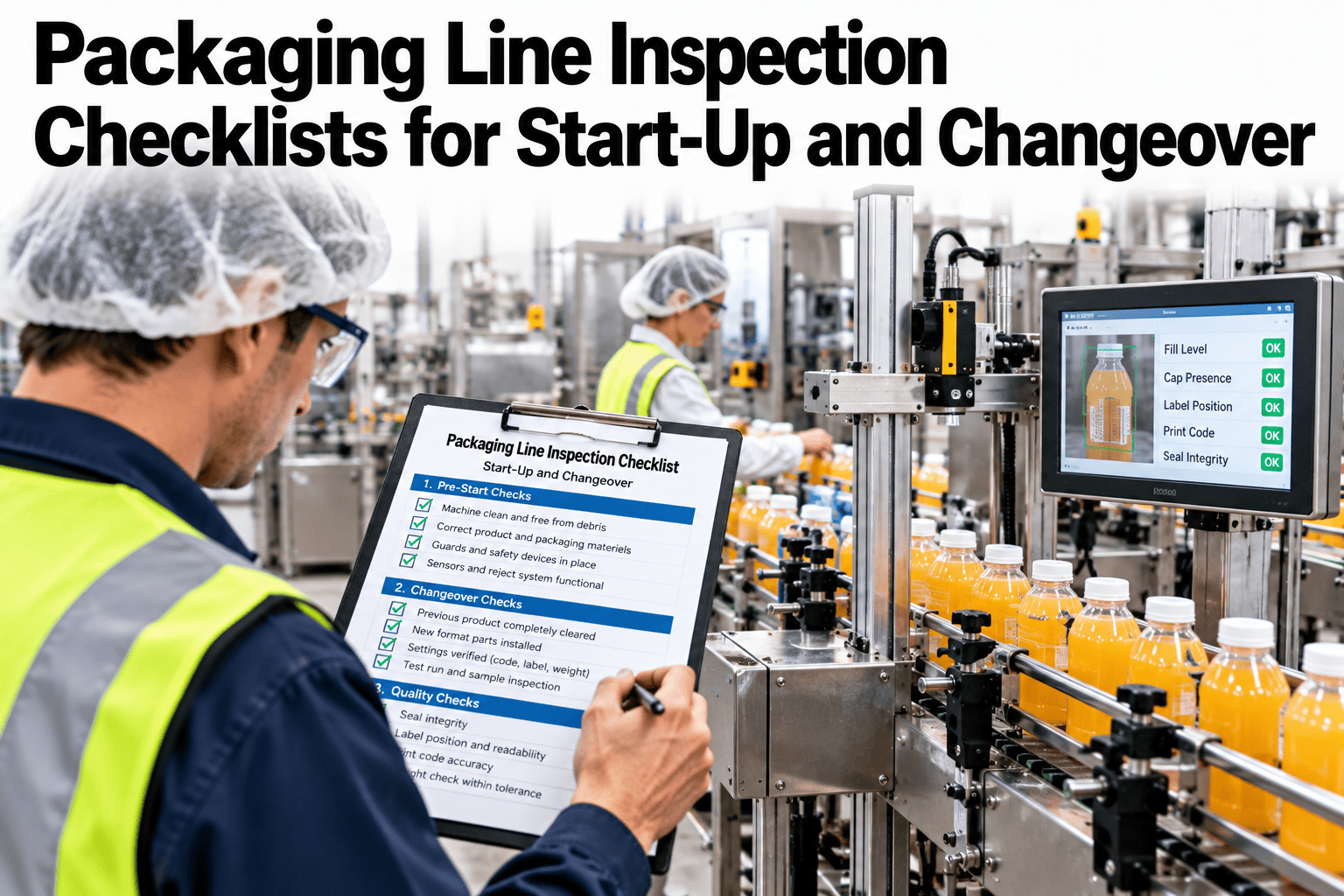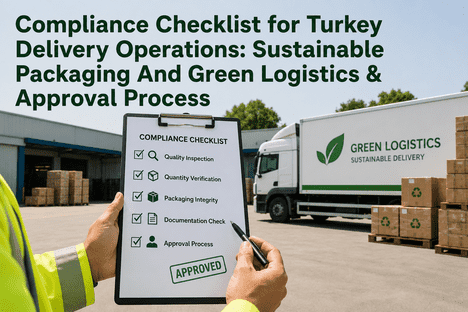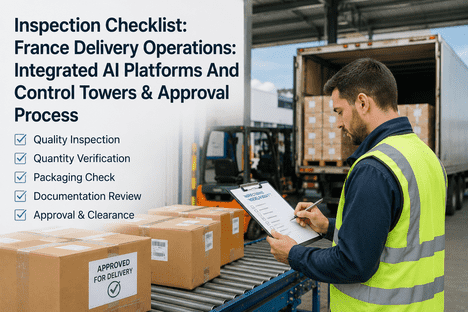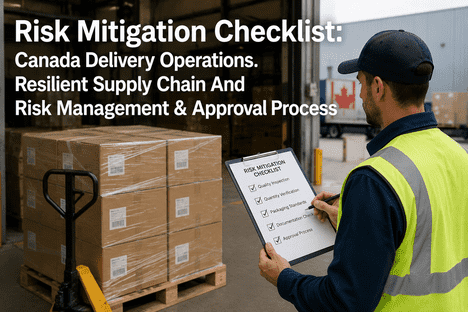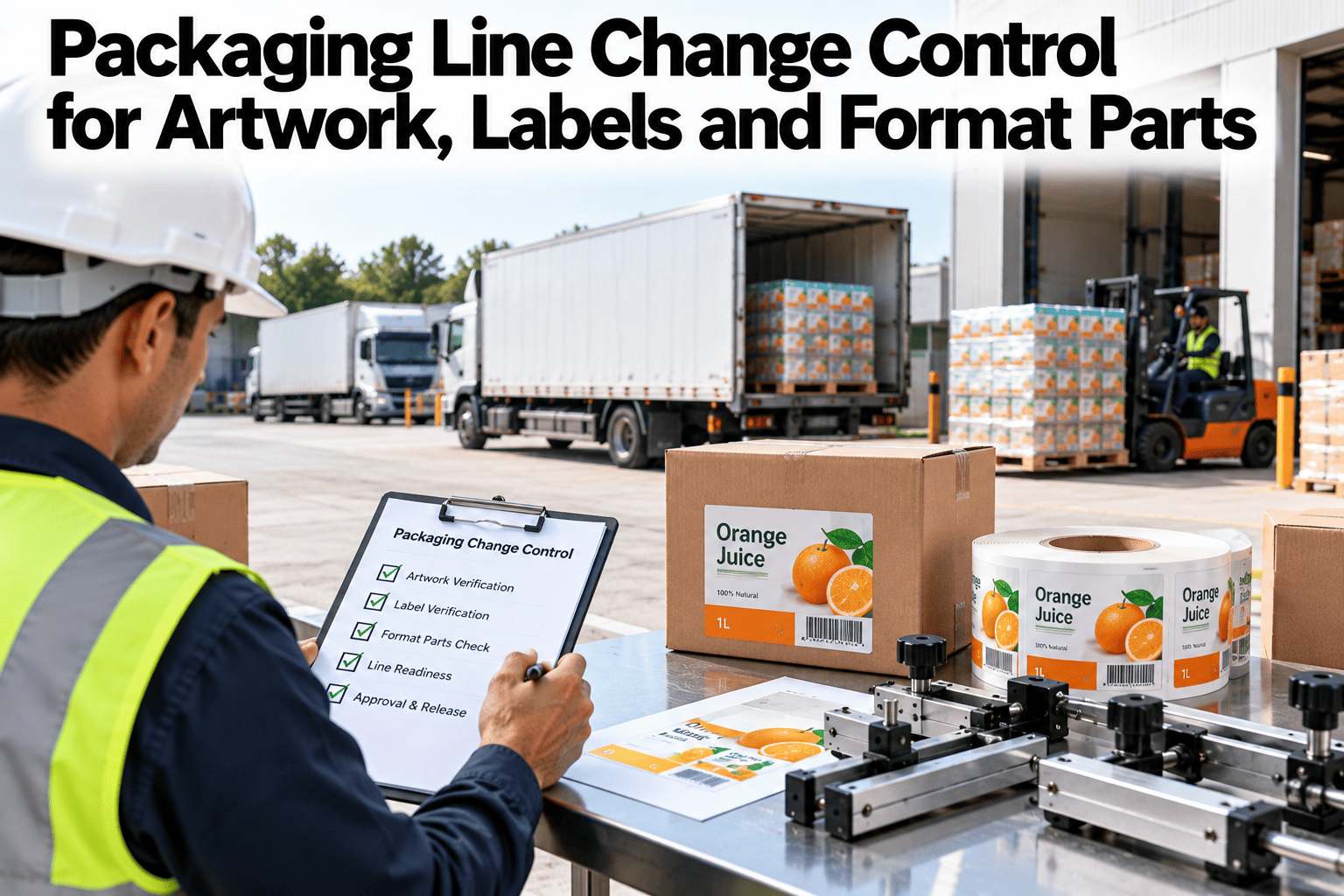
A line that starts a run with last month's label artwork instead of the approved revision rarely finds out until a case of finished product is already palletised, and by then the fix is a line stop, a rework crew, and an uncomfortable conversation with whoever owns the customer relationship. Artwork, label, and format part changes happen constantly across a packaging operation, and the line is the last point where a mismatch can still be caught cheaply before it becomes shipped product. Packaging teams who want tighter control over what actually loads on the line can walk through a change control review against their own SKU and line setup.
Make Sure the Right Artwork Loads Before the Line Ever Starts
iFactory AI verifies approved artwork, label revisions, and format parts against the active work order before line clearance, so a mismatch never reaches finished product.
Four Checks, One Line Clearance
Line clearance is often treated as a single sign-off, but it is really four distinct checks, and any one of them failing silently is enough to let a mismatch through.
Artwork version
Confirming the die, plate, or digital file loaded matches the current approved artwork revision for that SKU.
Label revision
Checking label stock and printed content against the active revision, especially after a regulatory or claim update.
Format parts
Verifying change parts, moulds, and tooling match the SKU's specification, not left over from the prior run.
First-off approval
A physical sample from the first units run is checked and signed off before the line continues at full speed.
These four checks also fail differently. Artwork and label mismatches are usually detectable the moment someone compares the loaded file or stock against the approved revision, which makes them catchable with a simple verification step. Format part mismatches are often less obvious, since a close but incorrect mould or guide can still run and produce output that looks acceptable until a dimensional check or a downstream fit issue reveals the problem.
Regulatory and claim-driven label changes carry a different urgency than a routine design refresh. A change triggered by an updated allergen statement or a legally required claim revision cannot sit in a queue waiting for a convenient changeover window, since running the prior revision past its cutover date can itself be a compliance issue, separate from any risk the mismatch poses to the specific batch produced.
First-off approval is frequently the first check sacrificed when a changeover is running behind schedule, precisely because it is the one check that requires the line to actually produce output before anyone can verify it. Skipping ahead to full-speed running without that pause saves a few minutes in the moment, but it removes the one check specifically designed to catch everything the first three checks might have missed.
Where Changeover Mismatches Originate
A composite root-cause breakdown across several packaging lines, grouped by the source of a changeover mismatch. Bar length shows an illustrative share of flagged mismatches traced to that source.
Outdated artwork and leftover format parts together account for more than half of flagged mismatches, and both share a common root cause: nothing at the line physically prevents the prior run's materials or tooling from being reused on the next one unless someone actively checks.
Work order mismatches at scheduling are the smallest category here but tend to cascade, since an incorrect work order propagates its wrong specification reference through every downstream check that relies on it. A line operator checking artwork against an already-wrong work order will confirm a match that is still incorrect relative to what the customer actually ordered, which is why work order accuracy at the scheduling stage is worth treating as a prerequisite rather than just one more item on the list.
Label stock from a prior revision often lingers physically near the line well after a new revision is approved, especially when packaging materials are purchased in bulk ahead of demand. Without a deliberate process to pull and segregate superseded stock the moment a new revision is approved, that old stock remains available to be grabbed during a rushed changeover.
See Where Your Own Changeovers Are Most at Risk
Book a 30-minute session and iFactory AI will map changeover mismatch history against your SKUs, lines, and format parts.
Why Document Control Alone Does Not Reach the Line
Most plants already have a document control system that manages artwork and label approval. The gap is usually not approval; it is confirming the approved version is what is physically loaded at the line. Teams can compare document control coverage against line-level verification for their own process.
The gap between these two questions tends to widen as a plant's SKU count grows. A small operation with a handful of SKUs can often rely on operator familiarity to bridge the gap informally, since the same small team runs every changeover and remembers what changed recently. That informal bridge breaks down quickly once a plant runs dozens or hundreds of SKUs across multiple shifts, where no single person's memory can reliably cover every active revision.
Building a Case for Line-Level Verification
Like most process investments, a line verification upgrade needs to connect to costs a plant already tracks closely to win budget approval.
Rework and scrap avoided
Catching a mismatch at clearance avoids the cost of reworking or scrapping an entire run of mislabelled product.
Customer relationship risk reduced
Fewer shipped mismatches means fewer uncomfortable customer conversations and less scorecard risk at renewal time.
A Composite Line: Mismatch Events Before and After Line-Level Verification
Twenty changeovers across a composite packaging line compared on flagged mismatch events before and after artwork and format part verification was added at the line. Each cell represents one changeover, illustrative data.
The improvement tracked closely with requiring a scan-based artwork and format part check as a mandatory step before the line could start, rather than relying on an operator's memory of what the last changeover briefing covered.
What a Clearance Record Actually Needs
A clearance that holds up to an audit needs specific, traceable evidence for each of the four checks, not a single sign-off at the bottom of a form.
| Check | Evidence Required | Typical Owner |
|---|---|---|
| Artwork version | Scan or system match against approved revision for the SKU | Line operator |
| Label revision | Label stock lot matched to current approved revision | Line operator or quality |
| Format parts | Tooling identifier confirmed against SKU specification | Line setter |
| First-off approval | Signed physical sample check before full-speed run | Quality |
Five Practices for Tighter Change Control
Plants that have reduced changeover mismatch rates significantly tend to apply a similar set of practices at the line.
Scan-based artwork confirmation
A barcode or system check against the work order catches an outdated file before the first unit is printed.
Format part identification tags
Physical tags or tooling IDs on change parts make a mismatch visually obvious during setup, not just on paper.
Mandatory first-off hold
A system-enforced hold that prevents full-speed running until first-off sign-off is logged, not just requested.
Obsolete stock segregation
Physically removing superseded label stock from the line area prevents it from being grabbed under time pressure.
Work order to specification linkage
Tying the active work order directly to the current approved specification removes manual lookup as a point of error.
Signals Worth Watching
A short list of readings tells a packaging manager where change control discipline is slipping.
Find Out Where Your Clearance Process Has Gaps
A short session with iFactory AI on your own changeover records shows exactly where mismatch risk is concentrated.
Where iFactory AI Fits
iFactory AI joins artwork approval, label revision, format part, and first-off data into one line clearance record that blocks a run start until every check clears.
Automated Version Verification
Artwork and label revisions are checked against the active work order automatically before a run can start.
Format Part Matching
Tooling identifiers are confirmed against SKU specifications, flagging a mismatch during setup rather than after the run.
Enforced First-Off Hold
A system-level hold prevents full-speed running until first-off approval is logged, removing reliance on manual discipline.
Audit-Ready Clearance Record
Every changeover's four checks are logged with evidence, giving a complete, traceable clearance record for audits.
Connecting Document Control, Line Teams, and Quality
Change control touches document control, line operations, and quality, and each team typically engages with a different part of the same process.
Document control owns approval and revision history, and needs confidence that the version they approved is actually what reaches the floor rather than a prior revision still circulating in a drawer somewhere. Line teams own the physical setup, and need a clear, fast way to confirm they have the right materials and tooling without slowing down a changeover that is already under schedule pressure. Quality owns first-off approval, and needs that check enforced consistently rather than treated as optional when a line is behind schedule. A shared clearance record lets each team see their own relevant piece of the process without relying on a verbal handoff at shift change.
This shared record also changes how a mismatch gets investigated after the fact. Instead of reconstructing what happened from memory days later, an audit-ready clearance log shows exactly which checks passed, which were overridden, and by whom, turning a vague "it must have been a changeover issue" into a specific, correctable finding.
Comparing Verification Approaches by Risk Level
Not every SKU carries the same mismatch risk. A tiered verification approach focuses the tightest controls where the consequences of an error are most serious.
| SKU Risk Level | Typical Driver | Recommended Verification Depth |
|---|---|---|
| Standard, stable SKU | Infrequent revisions, low complexity | Scan-based artwork and label check at clearance |
| Regulated or claim-sensitive SKU | Allergen statements, health claims, compliance deadlines | Full four-check verification with mandatory first-off hold |
| Frequently revised SKU | Seasonal or promotional artwork changes | Verification plus obsolete stock segregation enforcement |
Applying the same light-touch verification to every SKU under-protects the highest-risk ones, while applying the heaviest verification everywhere slows down changeovers on SKUs that do not need it. A tiered approach, informed by each SKU's actual revision frequency and regulatory sensitivity, tends to deliver the best balance between protection and changeover speed.
Frequently Asked Questions
Can line operators override a clearance check if there is a genuine emergency?
Most systems support a documented override path for genuine exceptions, but the override itself is logged with a reason and a named approver, so it remains visible in the audit trail rather than silently bypassing the check. This keeps the exception process usable for real emergencies without quietly becoming the default way to skip a check. Support can review override configuration options for your process.
Does this slow down changeovers compared to a manual checklist?
A scan-based check typically takes seconds and often runs faster than a manual checklist review, since the comparison against the approved specification happens automatically rather than requiring someone to look it up. Most lines see changeover time stay flat or improve slightly once the verification step replaces manual cross-checking.
Can this work with our existing document control and ERP systems?
Yes. Clearance verification is typically built to pull approved revision data from existing document control systems and work order data from ERP, rather than requiring a separate parallel system. A short walkthrough can show how this connects to your current systems.
What data do we need to get started?
Current approved artwork and label revision records, format part specifications by SKU, and work order data form the core. Most packaging operations already hold this data across document control and ERP systems that simply need to be connected to a line-level verification step.
How does this help during a customer audit?
An audit-ready clearance record shows exactly which checks were performed, what evidence was captured, and who signed off, for every changeover, which supports a far stronger audit response than a paper checklist that may or may not have been fully completed. Ask support how clearance records support customer and regulatory audits.
Stop Mismatches Before They Ever Reach the Line
iFactory AI verifies artwork, labels, and format parts against the approved specification before every run starts. Book a walkthrough on your own line setup.