Selecting warehouse delivery operations management software in 2026 is harder than it has ever been. Over 400 platforms compete in the category, entry-level pricing ranges from under $150 per month to enterprise platforms running six figures annually, and the gap between what vendors demonstrate in a slide deck and what their platform delivers in a live peak-season environment is wider than most buyers realize until implementation is already underway. The failures show up 8 to 18 months after signing and they are rarely about missing core features. They come from gaps the evaluation process never tested: integration depth that breaks under real ERP and WMS data flow, predictive analytics that look impressive in demo data but cannot adapt to facility-specific failure patterns, OSHA documentation that auto-generates correctly until an actual auditor asks for 5-year history, robot fleet integration that handles one vendor cleanly but fails on multi-vendor environments. The wrong choice locks a delivery facility into 3 to 5 years of workflow friction, missed SLAs, and integration debt that is expensive to unwind. This guide gives you the evaluation framework, the weighted scoring model, and the vendor questions that separate platforms which genuinely run warehouse delivery operations from those that only look good in demos. Book a Demo to see how iFactory AI scores against the criteria below — deployed in 6 to 8 weeks.
400+
Warehouse management products competing in the 2026 software category
8-18 mo
Window during which buyer post-mortems surface platform-selection failures
3-5 yr
Operational lock-in period when wrong delivery operations platform is selected
6-8 wks
iFactory deployment timeline from baseline audit to live operations
What Warehouse Delivery Operations Management Software Actually Needs to Deliver in 2026
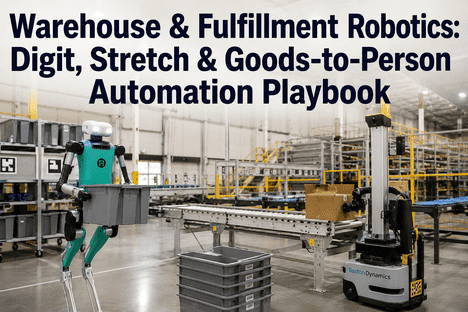
The category has evolved past traditional WMS. A 2026 warehouse delivery operations platform must orchestrate at least seven domains simultaneously: inventory and order fulfillment (the WMS core), equipment health and predictive maintenance (CMMS layer), AI-driven analytics for downtime cost prevention, SLA performance monitoring against carrier and marketplace contracts, OSHA compliance documentation aligned with 2026 enforcement, robot fleet integration across multi-vendor AMRs and quadrupeds, and shift-team continuity across 24/7 operations. Platforms that handle only the inventory layer leave 60 to 70% of warehouse delivery economics unmanaged exactly where AI analytics deliver the highest ROI.
iFactory's platform was built specifically for warehouse delivery operations where these seven domains must integrate. The AI-powered Shift Logbook provides shift continuity; predictive maintenance forecasts failures 4 to 12 weeks ahead; SLA exposure modeling protects B2B and marketplace contracts; OSHA-aligned documentation auto-generates from inspection events; multi-vendor robot fleet integration spans Spot, ANYmal, KION, ABB, FANUC, KUKA, Yaskawa, and Boston Dynamics platforms; and bidirectional integration with existing CMMS, WMS, and ERP via OPC-UA, MQTT, BACnet, Modbus, and REST APIs means deployment in 6 to 8 weeks without rip-and-replace.
Predictive Maintenance and Downtime Cost Analytics
AI surfaces failure signals 4 to 12 weeks ahead of breakdown. Real-time downtime cost quantification across throughput, SLA exposure, parts premium, overtime, and shipping upgrade categories — the cost drivers that determine warehouse delivery economics.
Deep CMMS, WMS, and ERP Integration
Native bidirectional integration via OPC-UA, MQTT, BACnet, Modbus, and REST APIs — not screen-scraping middleware. AI-generated work orders flow into existing CMMS; SLA exposure ties to WMS dispatch data; ROI captures hit ERP financial systems.
AI-Powered Shift Logbook
Continuous shift-by-shift context capture with AI-generated summaries and photo evidence. Solves the 24/7 warehouse delivery problem most WMS platforms ignore: how does the night shift inherit full operational state from the day shift in 60 seconds, not 60 minutes?
Multi-Vendor Robot Fleet Integration
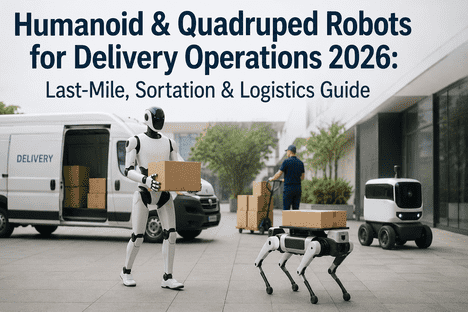
Direct integration with Boston Dynamics Spot, ANYbotics ANYmal, Unitree, KION, ABB, FANUC, KUKA, Yaskawa robot platforms. Quadruped inspection anomalies auto-generate CMMS work orders within 60 seconds — closing the loop most platforms leave open.
OSHA 2026 Audit-Ready Compliance Documentation
Forms 300/301/300A auto-population, digital forklift inspection logs, training matrix tracking, IoT environmental monitoring for National Emphasis Programs — eliminating the audit-prep scramble and $170K-per-willful-violation exposure facing warehouses in 2026.
SLA Exposure Modeling and Carrier Contract Protection
AI tracks B2B and marketplace SLA terms (on-time shipping, perfect order rate, pick accuracy) and quantifies penalty exposure per minute of asset degradation — protecting the $1M+ annual chargeback exposure that wrong platform choices leave unmanaged.
Weighted Scoring Framework: How to Evaluate Warehouse Delivery Operations Platforms
Equal-weighted feature checklists hide what really matters. A platform with 95% feature coverage and weak integration will lose to one with 80% coverage and seamless ERP connectivity. The framework below weights criteria by their actual business impact — based on 116+ WMS buyer surveys and published analyst data — so you can score vendors on what determines operational success, not demo polish.
| Evaluation Criterion (Weighted) |
What Vendors Show in Demos |
What Actually Determines Success |
| Integration Depth (25%) |
"We integrate with everything" + a logo wall of ERP, WMS, and CMMS brands. |
Native OPC-UA, MQTT, BACnet, Modbus, and REST API support. Bidirectional sync with live CMMS/WMS/ERP, not file imports. Multi-vendor robot platform support across ABB, FANUC, KUKA, Yaskawa, Boston Dynamics, KION. |
| Predictive Analytics Maturity (20%) |
Demo dashboards with seeded data showing perfect failure predictions. |
Documented predictive lead time on real facility data (4–12 weeks). Customer references describing prevented-failure events with cost-avoided dollar figures. Self-tuning models that adapt to facility-specific failure patterns. |
| SLA Exposure Modeling (15%) |
Generic on-time-shipping dashboards. |
AI tracks contract-specific SLA terms per customer. Penalty exposure quantified per minute of degradation. Predictive protection of carrier and marketplace contracts before SLA breach. |
| OSHA Compliance Automation (12%) |
"We support OSHA reporting." |
Forms 300/301/300A auto-populated from incident data. Digital inspection logs with mandatory field completion. NEP-aligned IoT monitoring for heat exposure, fall hazards, PIT compliance. |
| Shift-to-Shift Continuity (10%) |
Generic shift handover forms. |
AI-powered Shift Logbook with auto-summaries, photo evidence, and outstanding-event tracking. Solves the 24/7 warehouse delivery problem that 90% of platforms ignore. |
| Deployment Speed (10%) |
"Most customers go live in 90 days" (then 12–18 months in reality). |
Documented 6 to 8 week deployments with no rip-and-replace requirement. Reference customers confirming the timeline at facilities of similar scale. |
| Total Cost of Ownership (8%) |
License cost per user per month. |
Implementation cost, integration cost, training cost, ongoing customization cost, and switching cost over 5-year horizon. Hidden costs typically 3–5x license fee. |
95% of Buyer Failures Trace to Integration and Deployment Reality — Not Feature Coverage.
iFactory AI scores on what actually determines success: deep CMMS/WMS/ERP integration, documented 6 to 8 week deployment, predictive analytics on real facility data, AI-powered Shift Logbook continuity, and OSHA 2026 audit-ready documentation.
Book a Demo to score iFactory against the framework above for your operation.
How iFactory AI Deploys Across Warehouse Delivery Operations
iFactory follows a structured deployment process that delivers measurable operations impact within the first two weeks and full platform integration by week eight. Each stage has defined deliverables so buyers see the value before sign-off, not after.
Weeks 1–2
Baseline Audit and ROI Modeling
Historical downtime events, SLA chargeback data, and OSHA citation history ingested from existing CMMS, WMS, ERP, and HR systems. AI builds the true-cost downtime model and identifies highest-ROI deployment priorities. Digital Shift Logbook activated across all shifts immediately.
Weeks 3–4
IoT Sensor Activation and Live Dashboards
Wireless IoT sensors retrofit-mounted on highest-cost-impact assets. AI begins learning baseline behavior. Real-time dashboards activate for ROI tracking, SLA exposure, OSHA compliance, and equipment health. First AI-prevented event typically detected within this window.
Weeks 5–6
Predictive Models Active and Robot Fleet Integration
Failure prediction models active with 4–12 week lead time. SLA exposure modeling operational. Multi-vendor robot fleet integration completes — Spot, ANYmal, KION, ABB, FANUC, KUKA, Yaskawa platforms connected. Quadruped anomalies auto-generate CMMS work orders within 60 seconds.
Weeks 7–8
Full Compliance Reporting and Multi-Site Rollout
OSHA Forms 300/301/300A auto-population, NEP-aligned IoT monitoring, and audit export workflows live. CFO-ready ROI dashboards operational. Multi-site rollout templates configured for additional fulfillment hubs and distribution centers.
DOCUMENTED OUTCOMES: WHAT IFACTORY DELIVERS THAT MOST PLATFORMS CANNOT
Warehouse operators completing iFactory's 6 to 8 week deployment report the first AI-prevented failure within 60–90 days at $30K–$42K true cost avoided per hour — typically covering annual platform cost in the first quarter. By month 18, deployments report 10:1 to 30:1 ROI ratios, 35–65% unplanned downtime reduction, 75–90% audit preparation time reduction, and SLA chargeback exposure cut $2M+ annually.
10:1 - 30:1
ROI ratio achieved within 18 months of deployment
35-65%
Unplanned downtime reduction within first 12 months
75-90%
Audit preparation time reduction per OSHA cycle
Buyer Use Cases: Real Selection Decisions and Outcomes
The following outcomes are drawn from buyers who selected iFactory after evaluating against competing platforms. Each use case reflects 9 to 12 month post-deployment performance against the criteria that drove platform selection.
A national 3PL operating 18 distribution facilities evaluated 7 warehouse delivery operations platforms over 6 months. Three legacy WMS vendors and four mid-market platforms claimed comprehensive integration capability. iFactory was selected after the integration depth assessment: while competitors offered file-based imports and middleware adapters, iFactory demonstrated native bidirectional OPC-UA, MQTT, and REST API connectivity to the operator's existing SAP ECC ERP, Manhattan WMS, and IBM Maximo CMMS — completing live integration during the evaluation phase. Deployment completed in 7 weeks across the first 4 facilities. By month 12, the operator reported $4.2M in prevented downtime cost, $1.8M in SLA chargeback exposure eliminated, and 76% audit preparation time reduction across the network.
Book a Demo to see integration depth applied to your environment.
$6.0M
Combined downtime and SLA cost savings in first 12 months
7 wks
Deployment time across first 4 facilities
76%
Audit preparation time reduction network-wide
An e-commerce fulfillment operator was 60 days into final negotiations with a Tier-1 WMS vendor when the procurement team applied weighted scoring against iFactory's framework. The Tier-1 platform scored 92% on feature coverage but only 41% on integration depth and 24% on predictive analytics maturity against the operator's real failure data. The framework surfaced that the platform's $1.4M license cost would require an additional $1.1M in custom integration work and could not adapt its predictive models to the operator's specific seasonal failure patterns. Selection reversed; iFactory deployed in 6 weeks at one-third total cost. First-year results: 47% unplanned downtime reduction, $2.1M SLA exposure eliminated, and CFO sign-off as "the most defensible platform purchase in operations history."
Book a Demo to apply the buyer framework to your selection process.
$1.4M
Misallocated platform spend prevented through buyer framework
47%
First-year unplanned downtime reduction
1/3
Total cost vs originally-selected Tier-1 WMS platform
A contract logistics operator running mixed robot fleets — Boston Dynamics Spot quadrupeds, KION autonomous forklifts, ABB sortation arms, and FANUC palletizers — needed a platform that integrated all four vendors without vendor-specific lock-in. Competing platforms offered single-vendor integration depth (typically ABB OR KION, not both). iFactory's open multi-vendor architecture supported all four platforms via REST APIs and standard fleet management protocols. Quadruped inspection anomalies auto-generate CMMS work orders within 60 seconds; forklift fleet routing integrates with WMS dispatch data; sortation health feeds predictive analytics. Deployment completed in 8 weeks. First-year results: 65% inspection labor recovery, 41% unplanned downtime reduction, zero vendor lock-in concerns at the operator's board review.
Book a Demo to see multi-vendor architecture applied to your fleet.
4 vendors
Robot platforms integrated under single iFactory architecture
65%
Inspection labor recovery via quadruped + AI work order automation
8 wks
Full multi-vendor deployment time
Expert Perspective: The Vendor Questions That Expose Platform Gaps Before You Sign
Industry Review — Warehouse Operations Software Selection Perspective
"The vendor questions that catch platform gaps are not about features — they are about commitments the vendor cannot escape. Ask: 'Will you commit in the contract to a 6-week deployment date, with penalty clauses if you miss?' Ask: 'Can your reference customers describe a specific prevented-failure event with dollar value?' Ask: 'Will your team demonstrate live integration with our actual CMMS during the evaluation phase, not a sandbox environment?' Vendors confident in their platform commit to these tests. Vendors selling demos retreat into discovery phases, professional services scoping, and 'every implementation is different' qualifications. The buyers who avoid 18-month post-sign regret are the ones who run these tests before signing — not after."
Warehouse Operations Software Procurement Lead — Multi-Site Logistics Operator (provided via iFactory deployment reference)
This perspective aligns with what procurement leaders consistently report across iFactory deployments: the highest-quality selection decisions come from forcing vendors to demonstrate commitment, not just capability. iFactory routinely completes live CMMS/WMS/ERP integration during evaluation, references customers with documented prevented-failure events, and signs deployment-timeline contracts with penalty clauses. Book a Demo to put iFactory through your toughest vendor questions.
Weighted Scoring. Integration-First Evaluation. 6 to 8 Week Deployment Commitment.
iFactory AI scores on the criteria that determine warehouse delivery operations success — integration depth, predictive analytics maturity, SLA exposure modeling, OSHA compliance automation, shift continuity, and multi-vendor robot fleet support — backed by deployment-timeline commitments.
Conclusion: The Right Warehouse Delivery Operations Platform Is the One That Scores Highest on Integration, Not Features
The 2026 warehouse delivery operations software category contains over 400 competing platforms. The buyer failures that show up 8 to 18 months after signing are rarely about missing features — they come from integration debt, deployment timeline slippage, predictive analytics that cannot adapt to facility-specific patterns, OSHA documentation gaps that surface during real audits, and SLA exposure that the platform never tracked. Operators continuing to select platforms based on feature checklists and analyst rankings are accepting the same 3 to 5 year lock-in risk that produces the post-sign regret pattern documented across hundreds of buyer post-mortems.
iFactory's platform was built for the criteria that determine warehouse delivery operations success: deep bidirectional integration with existing CMMS, WMS, and ERP via OPC-UA, MQTT, BACnet, Modbus, and REST APIs; predictive analytics forecasting failures 4 to 12 weeks ahead on real facility data; AI-powered Shift Logbook continuity solving the 24/7 operations challenge most platforms ignore; multi-vendor robot fleet integration across Spot, ANYmal, KION, ABB, FANUC, KUKA, Yaskawa; OSHA 2026 audit-ready documentation with Forms 300/301/300A auto-population; and SLA exposure modeling that protects B2B and marketplace contracts. The 6 to 8 week deployment program means measurable value begins within weeks. Book a Demo to receive a buyer-framework scoring assessment specific to your warehouse delivery operation.
Frequently Asked Questions About Warehouse Delivery Operations Management Software Selection
How long should a realistic warehouse delivery operations platform deployment take?
Modern AI-driven platforms with strong integration architecture deploy in 6 to 8 weeks for single-site go-live. Vendors quoting 90-day timelines that stretch to 12–18 months in reality are typically running rip-and-replace projects masked as deployments. Always request contractual deployment-timeline commitments with reference customers who confirmed the timeline at similar scale.
What are the most common warehouse delivery software selection mistakes?
The top three: weighting feature coverage equally with integration depth (integration matters 2–3x more in practice); accepting demo-data predictive analytics without testing against actual facility failure history; and ignoring shift-to-shift continuity capability, which becomes critical in 24/7 warehouse delivery operations within the first 90 days of operation.
How does iFactory's pricing compare to traditional WMS platforms?
iFactory operates as an intelligence layer on top of existing CMMS, WMS, and ERP systems — meaning total cost of ownership is typically one-third to one-half of Tier-1 WMS replacement projects, with no rip-and-replace requirement. Single prevented downtime events typically cover annual platform cost in the first quarter.
What integrations and robot platforms does iFactory support?
CMMS, WMS, ERP, and HR systems via OPC-UA, MQTT, BACnet, Modbus, and REST APIs. Robot platforms: Boston Dynamics Spot, ANYbotics ANYmal, Unitree, KION autonomous forklifts, ABB, FANUC, KUKA, Yaskawa industrial robots. Packaging: Sealed Air, Pregis, Ranpak, Domino, Markem-Imaje, Videojet. Vision: Cognex, Honeywell, Datalogic, SICK. NVIDIA Omniverse and Isaac Sim integration for digital twin simulation.
How does the AI-powered Shift Logbook differentiate iFactory from competing platforms?
The Shift Logbook is iFactory's flagship capability for solving 24/7 warehouse delivery operations continuity. It auto-captures every shift event, equipment health change, work order completion, and outstanding exception with AI-generated summaries and photo evidence — ensuring night-shift teams inherit full operational state from day-shift teams in 60 seconds. Most competing platforms either ignore this domain or offer generic handover forms that depend on manual data entry.
Score iFactory AI Against the Buyer Framework in 6 to 8 Weeks.
Integration depth, predictive analytics, SLA protection, OSHA compliance, shift continuity, and multi-vendor robot support — backed by deployment-timeline commitments.
10:1 to 30:1 ROI within 18 months
6–8 week contractual deployment
1/3 total cost vs Tier-1 WMS replacement