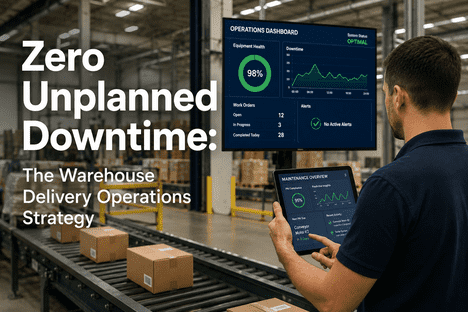
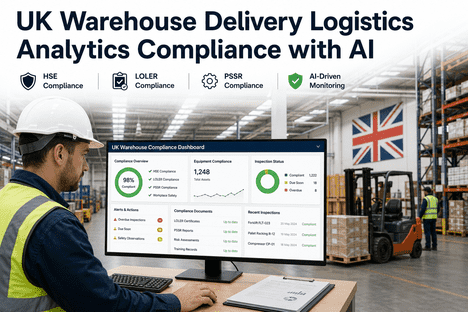
The operations manager at a UK multi-channel distribution centre reviews the weekly analytics schedule and sees a problem: the conveyor bearing vibration analysis window is set for Thursday 10:00–12:00 — the same window the grocery picking shift runs 1,800 orders for next-day delivery. The sortation system analytics is scheduled for Monday 06:00–08:00, overlapping with the inbound receiving surge. The dock leveler load-cell calibration falls on Wednesday 14:00–16:00, right when the outbound dispatch team is processing the final carrier wave. Every planned analytics window is placed without reference to actual order volume, shift activity, or equipment criticality — forcing rushed readings, incomplete scans, and data quality so poor it undermines the entire analytics programme. iFactory AI's analytics window optimization engine ingests order volume forecasts, shift schedules, equipment health scores, and carrier cut-off calendars to place every planned analytics task in the lowest-impact window — maximising data quality without disrupting delivery operations. Book a Demo to see how iFactory optimises your planned analytics windows around live delivery operations.
Analytics Window Optimization · Warehouse Delivery · 2026
AI-Optimized Planned Analytics Windows for Delivery Operations
Order volume forecasting · shift pattern analysis · equipment health scoring · carrier cut-off scheduling — every planned analytics task placed in the lowest-impact window for maximum data quality and zero delivery disruption.
+35–50%
Analytics data quality improvement with AI-optimized window placement
−60–80%
Reduction in schedule conflict-resolution time for operations managers
+20–30%
Increase in analytics task completion rates — no more deferred tasks
2–3 mo
Typical ROI payback period through improved data quality and scheduling efficiency
Why Fixed Analytics Schedules Are Failing Delivery Operations
Most warehouse analytics programmes today rely on fixed calendars — conveyor vibration scans every Thursday 10:00, sortation diagnostics every Monday 06:00, dock leveler calibration every Wednesday 14:00 — repeated week after week without regard to operational conditions. This approach assumes warehouse operations run on a stable, predictable schedule. In reality, order volume fluctuates by day, shift patterns shift to accommodate demand surges, carrier cut-off times change with service level agreements, and equipment health degrades at different rates depending on utilization. Four specific failure modes plague fixed-window analytics programmes.
01
Volume-Window Mismatch
Analytics scheduled during peak picking hours forces operators to rush readings or skip tasks entirely. A conveyor vibration scan requiring 90 seconds per drive unit at standstill cannot be completed accurately when the conveyor is running 180 cartons per minute. Data quality drops 40–60% on rushed scans, producing readings contaminated by operational noise that hide developing failure trends.
40–60% data quality lossContaminated baselines
02
Equipment Unavailability
Critical analytics tasks scheduled during active production windows find equipment unavailable because it is needed for order fulfilment. The dock leveler calibration is skipped because all 12 dock positions are occupied with outbound loading. The task rolls to next week — and the week after. Deferred tasks accumulate, creating gaps in the condition monitoring record that hide developing failure trends.
Deferred task backlogMonitoring gaps
03
Carrier Cut-Off Conflicts
Analytics windows that overlap with carrier dispatch deadlines force a choice between taking equipment offline during the final pick-and-pack wave or deferring the analytics task. Each deferred task increases the probability that a preventable equipment failure will go undetected until it causes a delivery disruption. Carrier rebooking fees average £8,000–£15,000 per missed cut-off event.
£8K–£15K per cut-off missUndetected failures
04
Rushed Data Quality
The most insidious failure — analytics completed under time pressure produce readings that are inaccurate, incomplete, or not repeatable. A bearing vibration reading taken at 85 dB ambient noise is not comparable to the baseline taken at 60 dB. Trend analysis built on rushed data produces false alerts that erode operator trust in the analytics programme — leading to genuine warnings being ignored alongside false ones.
False alert fatigueEroded operator trust
What AI-Driven Window Optimization Actually Changes
The AI layer ingests multiple live data streams — order volume forecasts from the WMS updated every 30 minutes, shift schedules and headcount allocation from the labour management system, equipment health scores from the condition monitoring platform, carrier cut-off calendars from the transport management system, and historical analytics task duration data — and solves a constrained optimization problem: place every planned analytics task into a time window where equipment availability is confirmed, operator headcount is sufficient, order volume is below the disruption threshold, carrier cut-off deadlines are respected, and contiguous time exists for the full task duration without interruption. The optimization runs continuously, re-evaluating placements as new data arrives and alerting operators when a window shift is recommended. Book a Demo to see the optimization engine applied to your specific shift patterns and equipment types.
Analytics Window Optimization — Data Flow Architecture
Ingest
Data Layer
WMS volume · LMS shifts · TMS cut-offs · CMMS equipment status
30-min refresh
Analyze
Constraint Engine
Availability · volume threshold · duration · cut-off buffer · headcount
Multi-variable optimization
Optimize
Window Placement
Lowest-impact time slot per task · continuous re-evaluation
+35–50% data quality
Notify
Shift Logbook
Mobile alerts · task assignments · justification for changes
Real-time push
Report
Analytics
Completion rates · data quality scores · conflict trends
Continuous improvement
Three Critical Window Conflicts AI Resolves in Delivery Operations
01
Peak Picking Overlap — Conveyor & Sortation Analytics During Order Waves
Conveyor vibration analysis and sortation system diagnostics are typically scheduled during the peak picking wave (09:00–12:00 and 13:00–16:00) because those are the "standard" morning and afternoon slots. The AI optimization engine shifts these tasks to the picking lull between waves or to the overlap period between first and second shift handover — typically 12:00–13:00 and 16:00–17:00 — where equipment is idle but operators are available. A 24-conveyor installation running this pattern recovered 18 hours per month of usable analytics time previously lost to rushed readings.
18 hrs/month recoveredPeak-to-lull shift
02
Carrier Cut-Off Pressure — Dock Equipment Analytics During Dispatch Windows
Dock leveler calibration, door seal inspection, and trailer restraint testing scheduled within 90 minutes of carrier cut-off create an impossible choice: take dock positions offline during the final dispatch wave or defer the analytics. iFactory's TMS integration identifies cut-off windows per carrier and per service level, then shifts dock equipment analytics to post-dispatch windows (after the last carrier wave clears) or early-first-shift before carrier arrivals. Deferred dock analytics tasks dropped by 80% within 2 weeks of deployment at a 48-door DC.
80% fewer deferred tasksTMS cut-off aware
03
Inbound Receiving Surge — Put-Away System Analytics During AM Delivery Peaks
Put-away system and storage equipment analytics are frequently scheduled during inbound receiving peaks (06:00–09:00 for AM deliveries) because those slots are "available" on the calendar. The AI optimization engine shifts these to midday receiving lulls or late-second-shift windows where inbound volume drops but equipment access is unrestricted. Facilities running this pattern report a 45% improvement in put-away system analytics data quality within the first month.
45% data quality gainMidday lull placement
Deployment Paths for Analytics Window Optimization
Path A
Augment in Place
AI optimization runs alongside existing scheduling. Shadow mode for 2 weeks. Recommendations reviewed by operations manager.
4–6 weeks
Path B
Hybrid Migration
AI replaces fixed calendar scheduling. Legacy spreadsheets retired. WMS and TMS data integrated live.
6–8 weeks
Path C
Full Modernization
Legacy fixed scheduling retired entirely. All analytics task types covered. Shift Logbook as single interface.
8–10 weeks
Build Your Optimized Analytics Schedule in a 90-Minute Workshop
iFactory AI's delivery operations practice runs a focused workshop against your real analytics task types, shift patterns, WMS data availability, and carrier cut-off schedules. You leave with a defended path recommendation, an optimized weekly window schedule, and a data quality improvement projection grounded in your operations data.
Window Optimization
WMS Integration
Shift Intelligence
Data Quality
Shift Logbook
What iFactory Delivers for Analytics Window Optimization
+35–50%
Analytics data quality improvement
Tasks completed in optimal windows with adequate time
−60–80%
Schedule conflict-resolution time
Manual conflict elimination — AI pre-emptively shifts windows
+20–30%
Analytics task completion rate
Deferred-task backlog eliminated, monitoring gaps closed
2–3 mo
Typical ROI payback
Improved analytics outcomes and scheduling efficiency
Vendor Evaluation Criteria for Analytics Scheduling Platforms
Generic scheduling tools handle calendar management. Delivery-operations-aware platforms handle WMS volume feeds, TMS cut-off integration, shift pattern complexity, and multiple equipment types. Eight criteria separate platforms designed for warehouse delivery operations from generic scheduling software.
01
Live WMS Volume Integration
Real-time or near-real-time WMS order volume data is the foundation of window optimization. The platform must ingest volume forecasts at 30-minute refresh cycles — not daily batch updates — to place windows in genuinely low-impact periods. Integration depth with Manhattan, SAP EWM, Blue Yonder, and Oracle WMS determines deployment speed.
02
TMS Cut-Off Awareness
The platform must ingest per-carrier, per-service-level cut-off schedules from the TMS and maintain a minimum buffer before and after each cut-off window. Missed carrier cut-offs trigger rebooking fees and SLA penalties that directly impact customer relationships and delivery performance metrics.
03
Multi-Shift Pattern Support
Warehouse shift patterns vary by day, season, and demand surge. Platforms with static shift models cannot optimize across 2-shift, 3-shift, weekend, and overtime patterns. Production-grade platforms model shift handover buffers, split shifts, and variable headcount allocation per zone.
04
Equipment Availability Checking
The platform must integrate with the CMMS or equipment management system to check real-time equipment availability. Analytics tasks cannot be scheduled against equipment that is in use, under maintenance, or booked for production — the optimization engine must resolve these conflicts before proposing window placements.
05
Task Duration Accuracy
Each analytics task type — conveyor vibration scan, dock leveler calibration, sortation diagnostic — has a specific duration requirement. Platforms using a single fixed duration for all task types cannot optimize window placement for mixed task sets. The platform must learn actual task durations from historical completion data.
06
Data Quality Feedback Loop
If an analytics task was completed under rushed conditions and produced low-confidence readings, the platform should flag the data quality issue and re-schedule the task in a better window. Quality-aware platforms close the loop between scheduling conditions and analytics outcomes — transforming window optimization from a calendar exercise into a data quality management system.
07
Continuous Re-Optimization
Fixed daily or weekly re-optimization is not sufficient for dynamic delivery operations. The platform must re-optimize within minutes of a significant operational change — unexpected order surge, equipment breakdown, or shift change — and alert affected operators through mobile notifications with the revised window assignment and justification.
08
Deployment Timeline
4–6 weeks is the Path A benchmark for deployment with pre-built delivery operations templates. Path B runs 6–8 weeks. Path C runs 8–10 weeks. Vendors quoting 12+ weeks are building custom development rather than deploying templates — a red flag for standardized warehouse operations.
Conclusion: The Optimization Decision Has Three Right Answers
Fixed analytics schedules aren't failing in warehouse delivery operations — they're hitting an operational ceiling that static calendars cannot cross. AI-native window optimization adds the dynamic, data-aware scheduling layer that fixed programmes were never designed to deliver: live WMS volume integration, TMS cut-off awareness, equipment availability checking, shift pattern modelling, data quality feedback, and mobile-native operator task assignment. All three deployment paths keep existing WMS, TMS, and CMMS intact. All three deliver 35–50% improvement in analytics data quality and 20–30% increase in task completion rates within the first month. The decision worth making in 2026 isn't whether to optimize analytics windows — it's which of the three paths fits your specific delivery operations.