The transition from manual sampling to 100% automated inspection represents the most significant shift in food manufacturing since the adoption of HACCP. Traditional food safety relies on "point-in-time" testing, which inherently leaves large batches of product unverified. AI food safety monitoring closes this gap by providing continuous, sub-second inspection of every unit produced. By leveraging AI-driven platforms like iFactory (Book a Demo), manufacturers can deploy computer vision, predictive risk modeling, and real-time contamination prevention to ensure that only compliant, safe products reach the shelf.
Is Your Facility Ready for 100% Automated Safety Inspection?
See how iFactory uses computer vision and AI to detect foreign bodies, verify labels, and prevent allergen cross-contamination in real-time.
The Three Pillars of AI Food Safety: Detect, Predict, and Prevent
Implementing an enterprise-grade AI food safety framework requires a move away from reactive compliance. iFactory’s platform is built on three core technical pillars: Visual Detection (identifying physical hazards), Predictive Risk (forecasting micro-biological threats), and Process Prevention (automated line-stop logic). Unlike traditional sensors that detect a breach after it happens, AI models analyze thousands of data points—from humidity and temperature to machine vibration and operator behavior—to identify the "pre-incident" signatures of contamination.
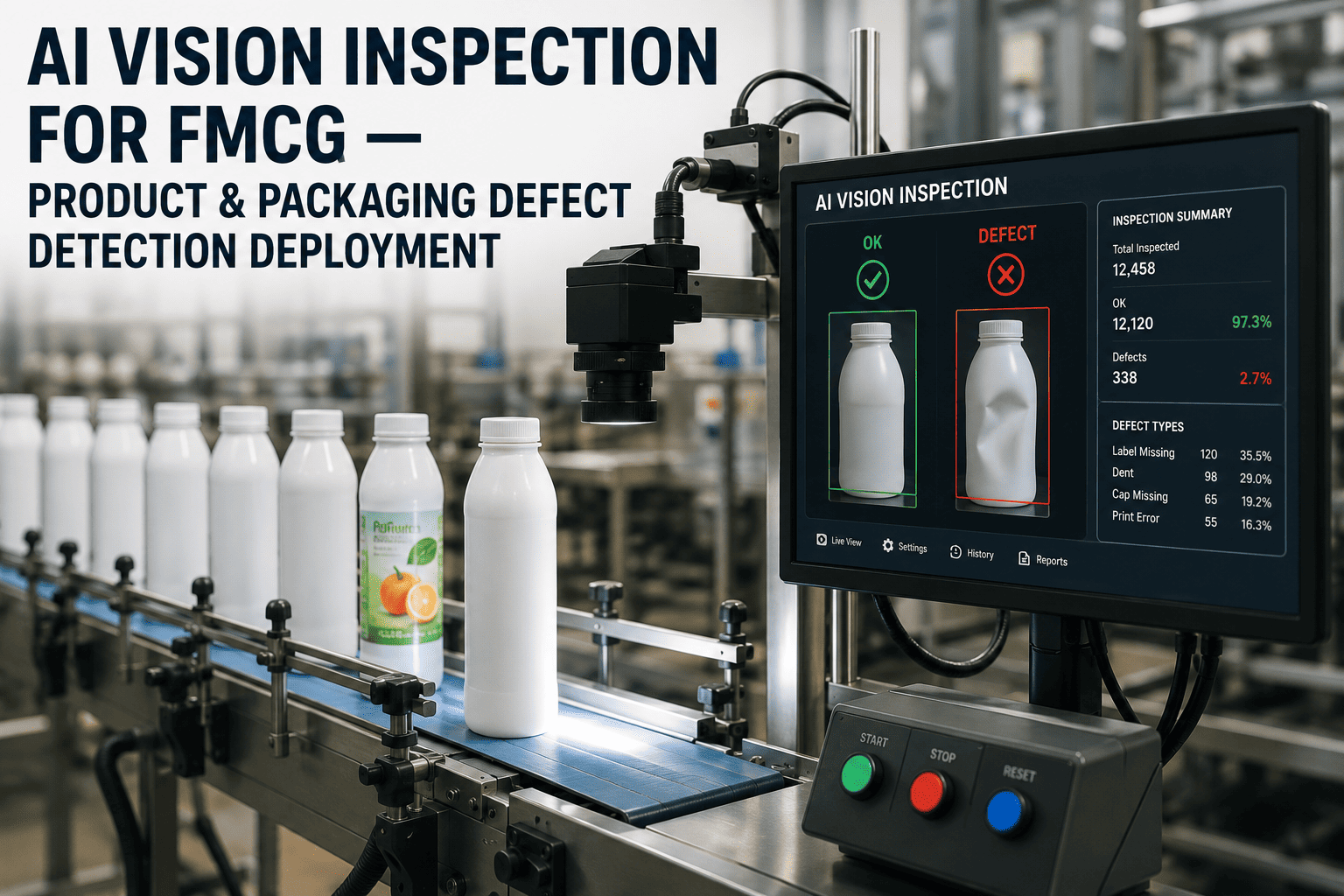
For example, in high-speed bottling or packaging lines, AI computer vision can identify a hairline fracture in a container or a misaligned seal that would be invisible to the human eye or a standard photo-eye sensor. By integrating these models directly into the PLC rejection systems, plants can achieve a "Zero-Defect" production flow. Many facilities Book a Demo once they realize that AI inspection is not just a safety tool, but a primary driver of yield and brand protection.
Computer Vision Inspection
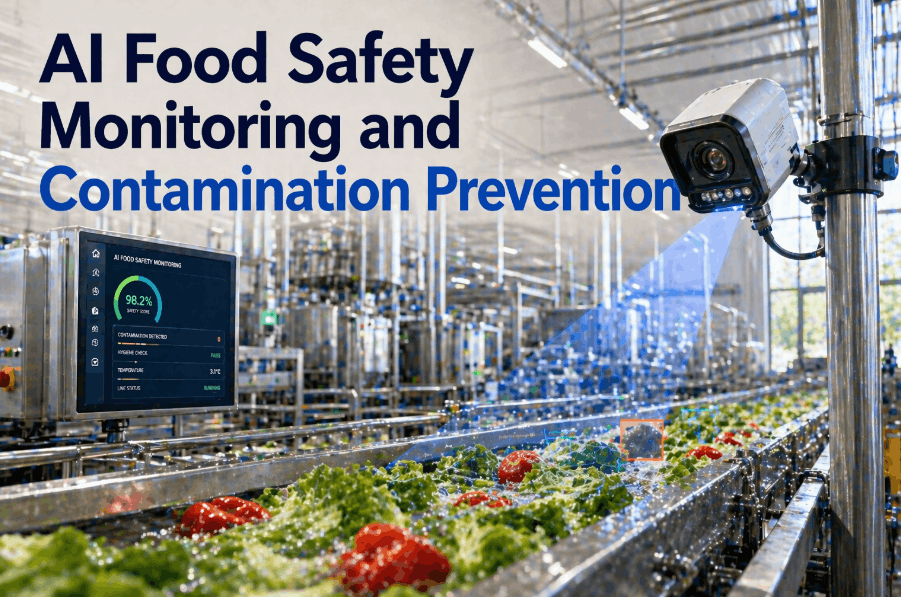
Deploy high-speed AI cameras to detect foreign bodies, packaging defects, and fill-level inaccuracies. iFactory processes 1,000+ units per minute with sub-millimeter precision, far exceeding human visual capabilities.
Predictive Pathogen Modeling
Correlate environmental data with production schedules to predict pathogen growth risks (Listeria/Salmonella). The AI recommends sanitation frequency based on live risk scores rather than static timers.
Allergen Verification AI
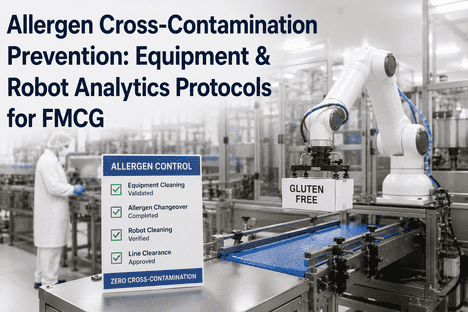
Automate the "Allergen Clean" validation process. AI verifies that the correct labels are applied and that no cross-contact risks exist during changeovers, fulfilling critical FSMA and BRCGS requirements.
Real-Time Compliance Vault
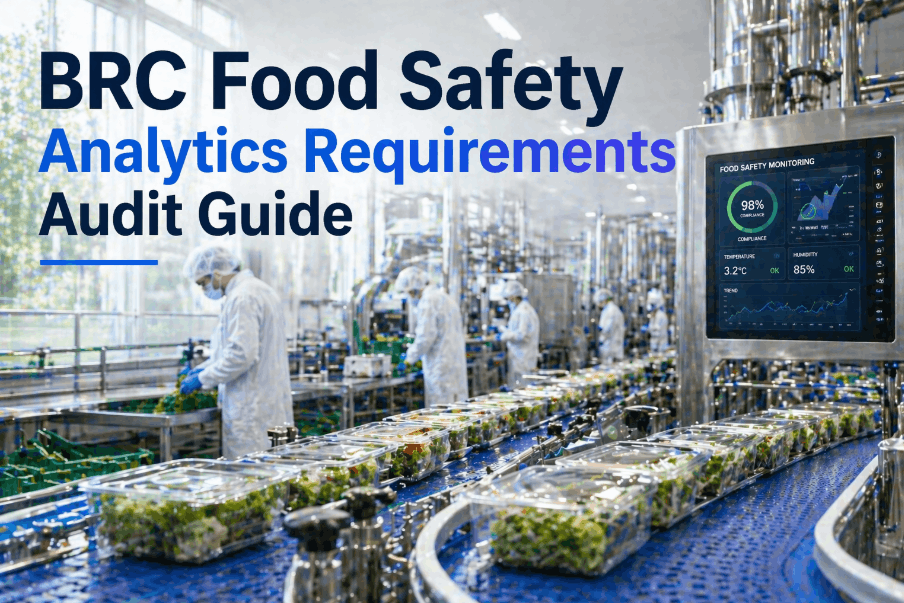
Every AI detection and rejection event is logged into an immutable digital vault. Surface proof of 100% inspection during unannounced audits, effectively making "Sampling Plans" a thing of the past.
Beyond Metal Detection: AI-Driven Foreign Body Identification
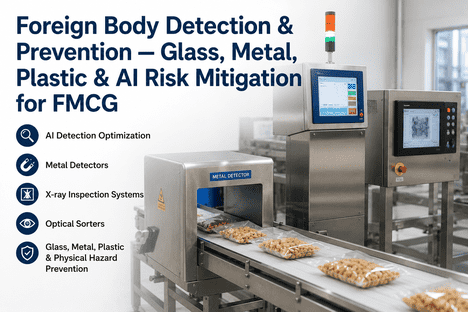
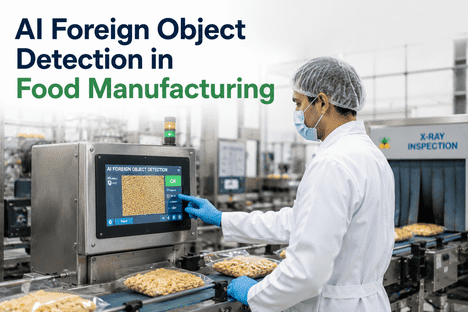
While metal detectors and X-rays have been industry standards for decades, they struggle with low-density contaminants like plastic, wood, or hair. iFactory’s AI Vision Engine uses deep learning to identify anomalous textures and shapes in the product stream that traditional hardware ignores. By training on "Clean Product" baselines, the AI can detect a piece of clear plastic or a fragment of wood by analyzing light refraction and edge-detection patterns in real-time.
This technical leap is essential for plants dealing with complex raw material streams or those seeking Grade AA+ BRCGS status. The system integrates directly with existing rejection arms, ensuring that contaminated units are removed without stopping the entire line. This minimizes waste while providing the highest possible level of consumer safety. Book a Demo to see AI vision detection in action.
Preventing Mislabeling Recalls with AI Optical Character Recognition (OCR)
Mislabeling and undeclared allergens remain the #1 cause of food recalls in the United States. Manual label verification is prone to fatigue-related errors, especially in plants with hundreds of SKUs. iFactory’s OCR Analytics verifies every label as it is applied, checking the SKU code, allergen declarations, and best-before dates against the master production order. If a label mismatch is detected, the line is automatically paused before a single non-compliant unit leaves the facility.
This level of automated oversight is a requirement for "Best-in-Class" manufacturers. The system also tracks the "Allergen Changeover" process, ensuring that sanitation teams follow the validated cleaning protocols for the specific allergens present. iFactory provides the "Green-Light" signal for production only when both the cleaning logs and the visual label check are verified by the AI. Book a Demo to explore AI label verification.
| Food Safety Challenge | Legacy Method | AI-Driven Solution | Technical Improvement | Recall Risk Reduction |
|---|---|---|---|---|
| Foreign Bodies | X-ray / Metal Detectors | Vision AI + Edge Detection | Detects plastic, wood, glass | -85% Risk |
| Mislabeling | Operator Visual Check | 100% OCR Label Audit | Sub-second SKU verification | -99% Risk |
| Pathogen Risk | Environmental Swabbing | Predictive Risk Modeling | Early-warning trend alerts | -70% Risk |
Stop Contamination Events Before They Reach the Consumer
iFactory replaces manual sampling with 100% AI inspection. Centralize your safety monitoring, hazard detection, and label verification into one autonomous system.
Quantifying the ROI of AI: Safety as a Revenue Shield
Food safety is often viewed as a "defensive" cost, but in the era of social media and rapid recalls, it is a primary revenue shield. A single contamination event can result in a $10M+ recall and a permanent 15% drop in market share. AI-driven monitoring provides a 10x ROI by eliminating these high-impact tail risks while simultaneously reducing the labor costs associated with manual inspection and sampling. iFactory transforms safety data into operational intelligence.
The AI Food Safety Journey: From Data Silos to Autonomous Inspection
Transitioning to AI-driven food safety is a phased process that begins with digitizing existing inspection points and concludes with fully autonomous line-stop logic. iFactory provides the technical bridge between your current hardware and the AI-driven future. By starting with "Shadow-Mode" monitoring, plants can validate AI models against human inspectors before granting the system control over the rejection arms. This ensures a smooth, risk-managed transition to 100% digital safety oversight.
AI Food Safety Monitoring — Frequently Asked Questions
Can AI cameras detect low-density foreign bodies like plastic and wood?
Yes. Unlike X-rays that rely on density, iFactory’s AI vision models analyze light scattering, texture, and edge patterns. This allows the system to detect contaminants that are invisible to traditional hardware, such as clear plastic film, wooden splinters from pallets, or hair nets.
How does the system handle "False Positives" in rejection?
iFactory uses deep learning to distinguish between a safety hazard and a benign process variation (e.g., a natural fold in a leafy green or a water droplet). This dramatically reduces false-positive line stops compared to traditional sensors, increasing both safety and line efficiency.
Is AI label verification compliant with FDA and BRCGS requirements?
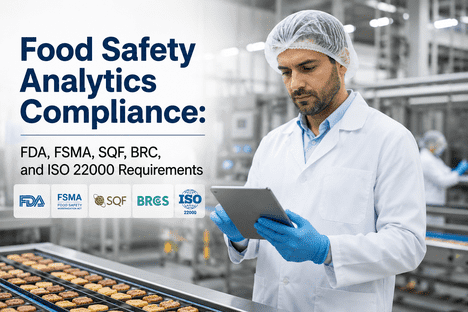
Absolutely. In fact, auditors often prefer AI-driven label verification because it provides a 100% audit trail of every unit produced. iFactory creates time-stamped digital records of every label check, meeting the "Process Verification" requirements of FSMA and Global Food Safety Standards.
How long does it take to "train" the AI for a new product SKU?
iFactory uses Transfer Learning, allowing us to train models for new SKUs in a matter of minutes. By leveraging our massive database of "Clean Food" images, the system can quickly learn the acceptable range of variation for your specific product and packaging types.
Does the AI replace the need for physical swabbing?
AI does not replace swabbing, but it optimizes it. By predicting when and where pathogen risks are highest (Predictive Risk Modeling), iFactory tells your quality team *exactly* where to swab for the most effective environmental monitoring, rather than relying on a generic schedule.
Transform Your Food Safety Culture with AI
iFactory delivers 100% unit-level inspection, real-time hazard detection, and predictive risk modeling purpose-built for the modern food manufacturer.