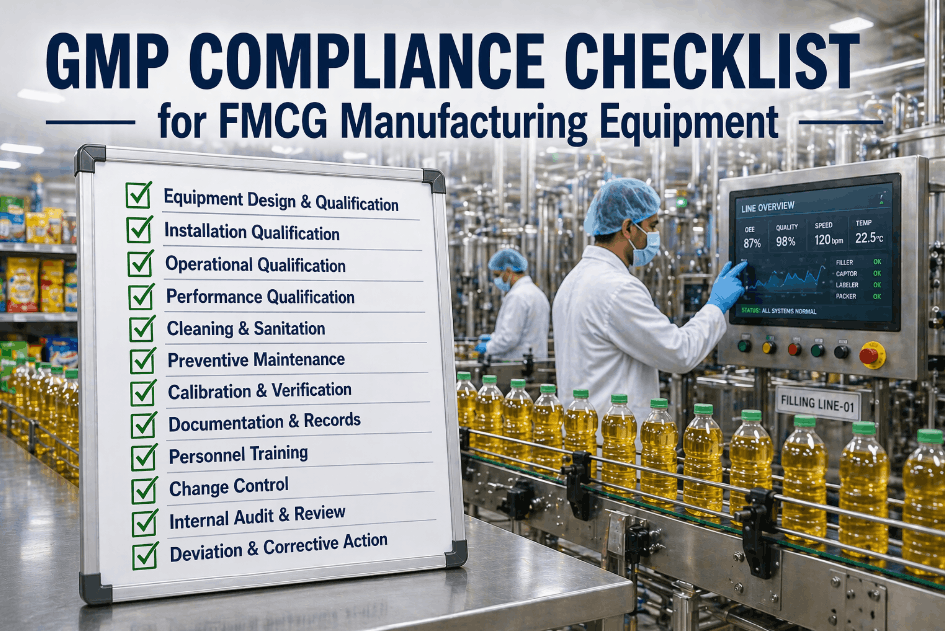
GMP Compliance Checklist for FMCG Manufacturing Equipment

By Josh Turley on April 22, 2026

gmp-compliance-checklist-for-fmcg-manufacturing-equipment

Good Manufacturing Practices (GMP) compliance is the foundation of safe, consistent, and audit-ready FMCG production. Whether managing food processing lines, packaging stations, or cold-chain storage, every equipment asset must meet documented hygiene, calibration, and operational standards before each production run. A single compliance gap — an uncalibrated filler, an uninspected conveyor, or a missing sanitation log — can trigger a regulatory hold, a product recall, or a complete facility shutdown. Book a Demo to see how digital compliance platforms help FMCG manufacturers close GMP gaps before auditors do.

GMP COMPLIANCE FMCG MANUFACTURING FOOD SAFETY

Centralize Your GMP Equipment Compliance Across Every Production Line

Track sanitation cycles, calibration schedules, preventive maintenance logs, and equipment qualification records — all in one timestamped, audit-ready platform built for FMCG environments.

Why GMP Equipment Compliance Is Non-Negotiable in FMCG

Regulatory Exposure & FDA / FSMA Requirements

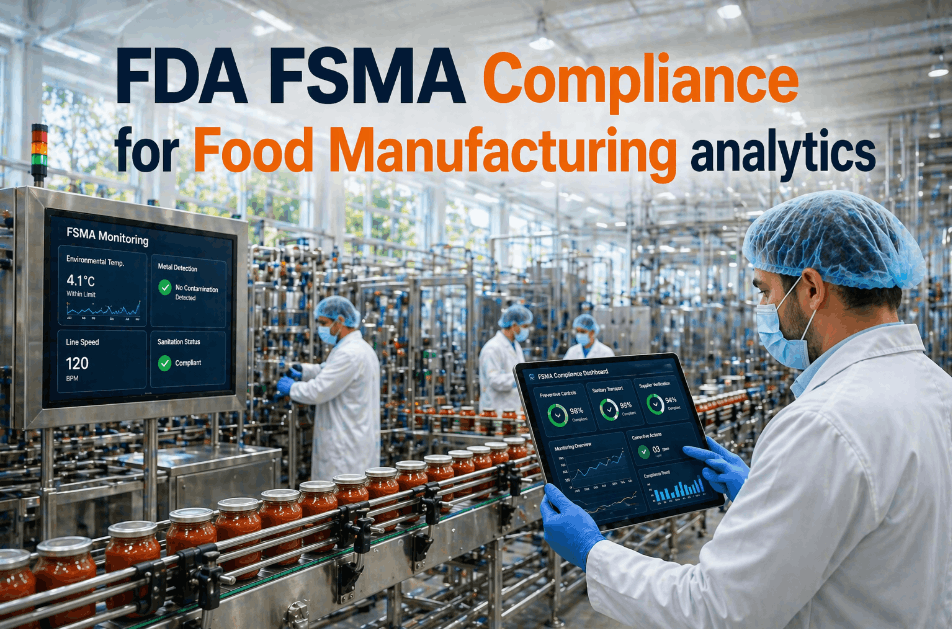
FMCG facilities operating under FDA 21 CFR Part 110/117 or equivalent national food safety regulations must maintain verifiable equipment maintenance and sanitation records. Non-compliant equipment documentation during a routine inspection can trigger warning letters, import alerts, or consent decrees that disrupt production for months. Book a Demo to see how digital logs satisfy regulatory inspection requirements automatically.

Contamination Risk from Poorly Maintained Equipment

Inadequately cleaned processing equipment, worn seals, and uncalibrated dosing systems are among the leading root causes of microbial and chemical contamination events in food manufacturing. Proactive GMP compliance protocols reduce contamination probability at the source — before product is packaged and distributed.

1. Equipment Design & Installation Qualification
2. Cleaning & Sanitation Equipment Compliance
3. Calibration & Measurement Equipment
4. Preventive Maintenance & Equipment Condition
5. Packaging Equipment GMP Compliance
6. Cold Chain & Temperature-Controlled Equipment
7. Pest Control & Facility Hygiene Equipment
8. GMP Documentation & Audit Readiness
REAL-TIME ANALYTICS AUDIT-READY RECORDS

Ready to Close GMP Equipment Compliance Gaps Across Your FMCG Facility?

Standardize equipment inspections, automate calibration alerts, and generate FDA/FSMA-compliant documentation across every production line in your manufacturing portfolio.

Benefits of Digital GMP Equipment Compliance Management

FDA & FSMA Audit Readiness

Timestamped digital records provide instant, verifiable proof of equipment maintenance, sanitation, and calibration compliance required during FDA 21 CFR inspections and FSMA Preventive Controls audits.

Automated Calibration & Maintenance Alerts

Platform-driven reminders notify QA and maintenance teams before calibration due dates, PM windows, or sanitation cycles are missed — eliminating reactive compliance scrambles during audits or production runs.

Centralized Multi-Line Equipment Dashboard

Monitor GMP compliance scores across every processing line, packaging station, and cold room from a single dashboard, giving quality managers the visibility to prioritize corrective actions intelligently.

Mobile-First Field Inspections

QA technicians and maintenance staff complete equipment checks via smartphone, capturing photos, readings, and signatures on the floor — replacing paper logs and eliminating transcription delays entirely.

CAPA & Non-Conformance Escalation

Failed inspection items auto-generate prioritized CAPA work orders and notify QA supervisors immediately, ensuring no critical equipment deficiency goes unresolved before the next production window or external audit.

Immutable Audit-Trail Asset History

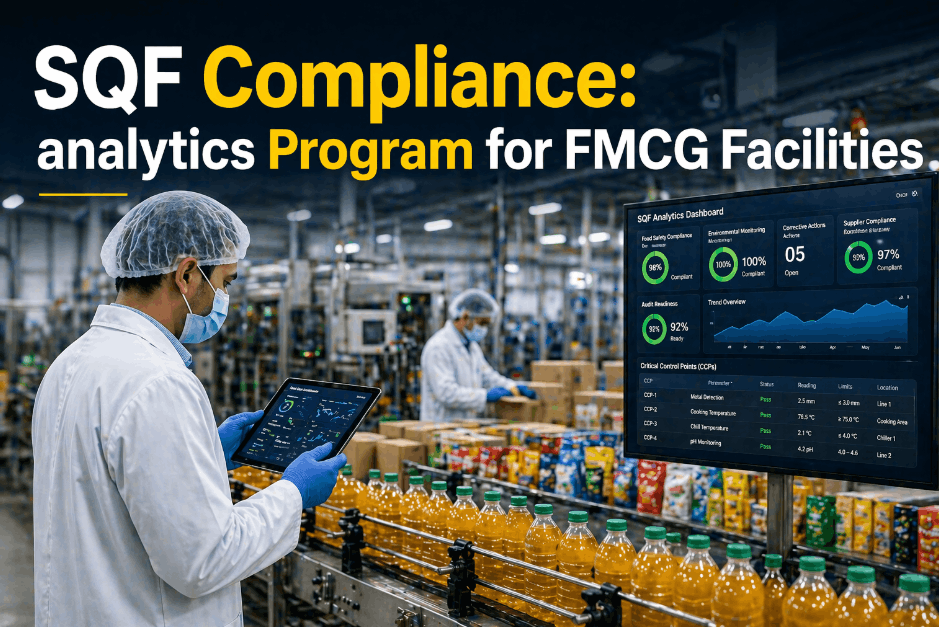
Every sanitation record, calibration certificate, and PM completion is stored in a searchable, tamper-evident history that satisfies FDA, BRC, SQF, and FSSC 22000 auditor requirements with instant retrieval.
GMP Compliance Checklist for FMCG Equipment — FAQs

1. What does GMP compliance require for food processing equipment in FMCG?
GMP compliance under FDA 21 CFR Part 117 (FSMA) requires that all food processing equipment be of appropriate design and construction to facilitate cleaning and maintenance, be maintained in a sanitary condition, and not contribute to food safety hazards. Equipment must be maintained under a documented preventive maintenance program, and all maintenance, cleaning, and calibration activities must be recorded and retained for a minimum of two years — or the shelf life of the product, whichever is longer.
2. How often should critical FMCG production equipment be calibrated?
Calibration frequency for critical instruments must be established during equipment qualification based on the instrument type, usage intensity, and regulatory requirements of the product category. At minimum, CCP-linked instruments such as thermometers, metal detectors, and checkweighers should be calibrated before each production run (in-process verification) and formally re-certified by an accredited calibration service at intervals not exceeding 12 months — or as specified by the equipment manufacturer or food safety standard being certified against (BRC, SQF, FSSC 22000).
3. What records are required for GMP equipment compliance during an FDA inspection?
FDA inspectors reviewing GMP equipment compliance typically request Equipment Master Files (installation records, qualification protocols, maintenance SOPs), calibration certificates with traceability to national standards, Master Sanitation Schedule and completed cleaning logs, corrective maintenance records with root cause analysis, change control records for equipment modifications, and CAPA closure documentation for any previously identified equipment non-conformances. Digital records are accepted and preferred provided they are timestamped, access-controlled, and backed up.
4. What is the difference between IQ, OQ, and PQ in GMP equipment qualification?
Installation Qualification (IQ) verifies that equipment is installed correctly per design specifications. Operational Qualification (OQ) confirms that equipment operates within defined parameters across its intended operating range under controlled conditions. Performance Qualification (PQ) demonstrates that equipment consistently produces product meeting quality and safety specifications under actual production conditions. All three protocols must be documented and approved before equipment is released for GMP-compliant commercial production.
5. Can digital systems replace paper-based GMP equipment logs?
Yes. FDA 21 CFR Part 11 establishes the requirements under which electronic records and electronic signatures may be used in place of paper records for GMP compliance purposes. Qualifying digital platforms must provide audit trails, access controls, data integrity protections, and the ability to generate human-readable copies of all records. Most BRC, SQF, and FSSC 22000 certification bodies also accept digital records under equivalent provisions, provided the system's validation documentation is available for review during audits.
6. What are the most common GMP equipment failures identified during FMCG audits?
The most frequently cited equipment-related GMP deficiencies during FMCG audits include: overdue or undocumented calibrations for CCP instruments, missing or incomplete sanitation cycle records, use of non-food-grade lubricants in product-contact zones, inadequate cleaning validation for CIP systems, and failure to document corrective actions for known equipment deficiencies from prior inspection cycles. Facilities that use digital compliance platforms consistently demonstrate significantly lower deficiency rates by preventing these gaps before auditors identify them.
GET STARTED TRANSFORM YOUR GMP PROGRAM

Digitize Your FMCG GMP Equipment Compliance Program Today

Join food manufacturers and FMCG operators automating GMP equipment inspections, tracking calibration compliance in real time, and passing FDA and food safety audits with complete, verifiable documentation.


Share This Story, Choose Your Platform!