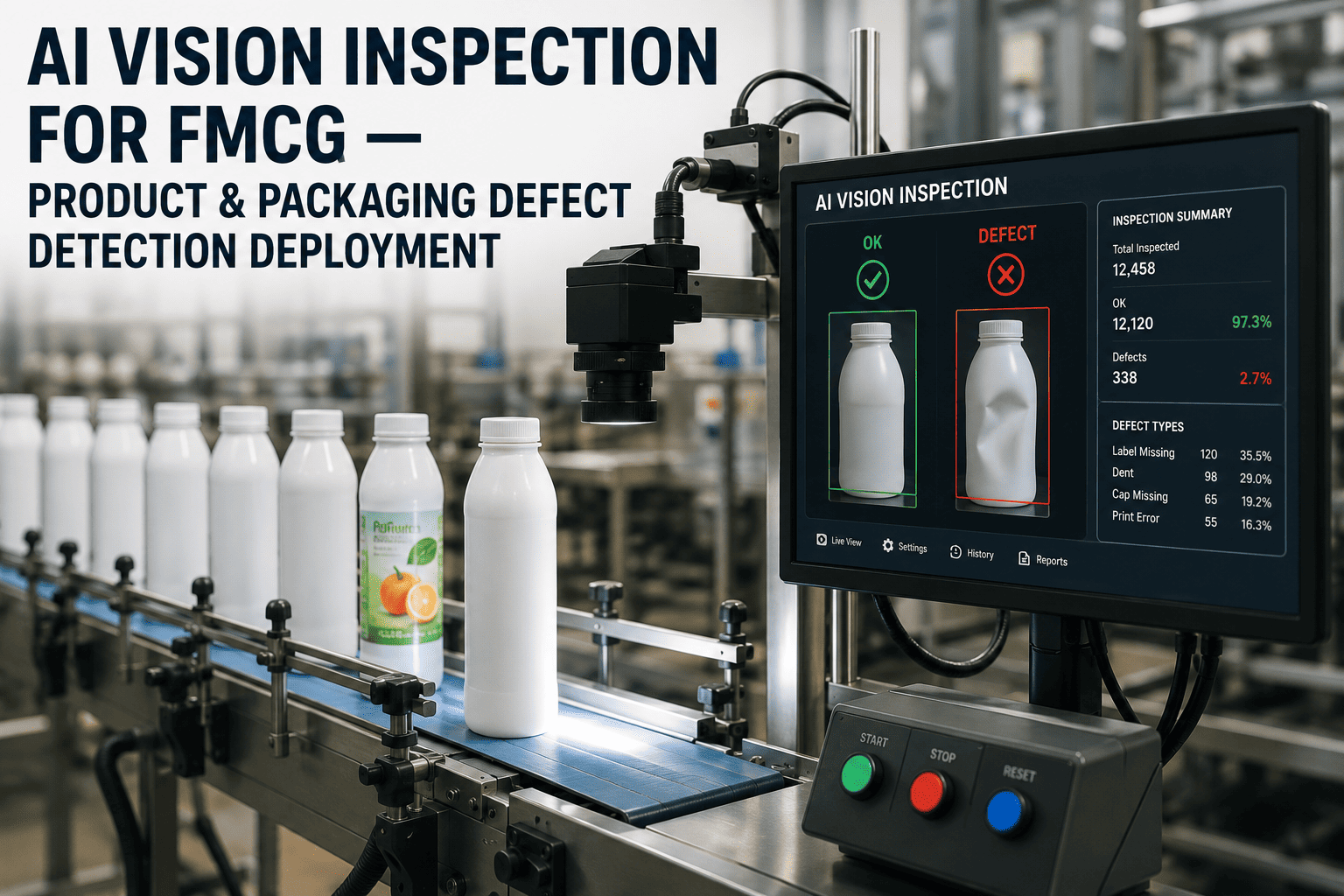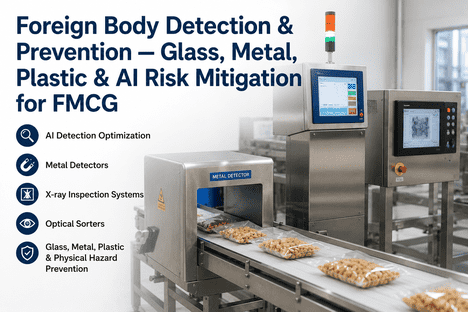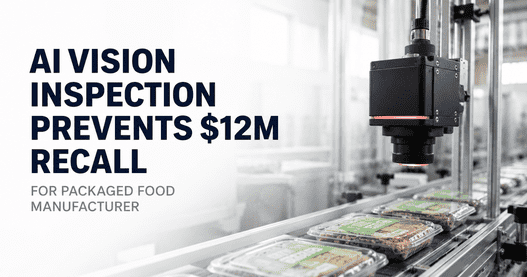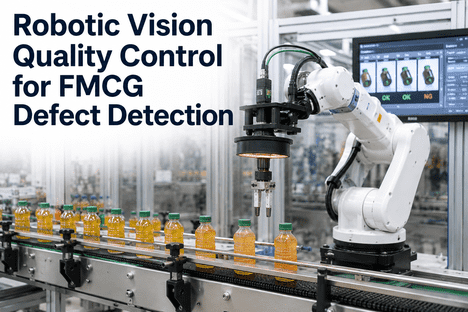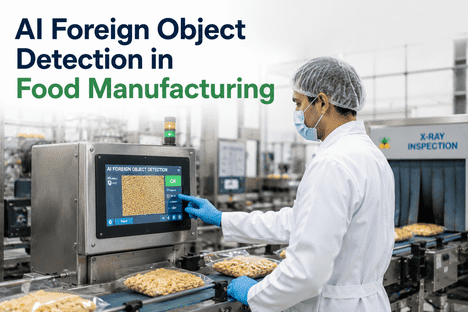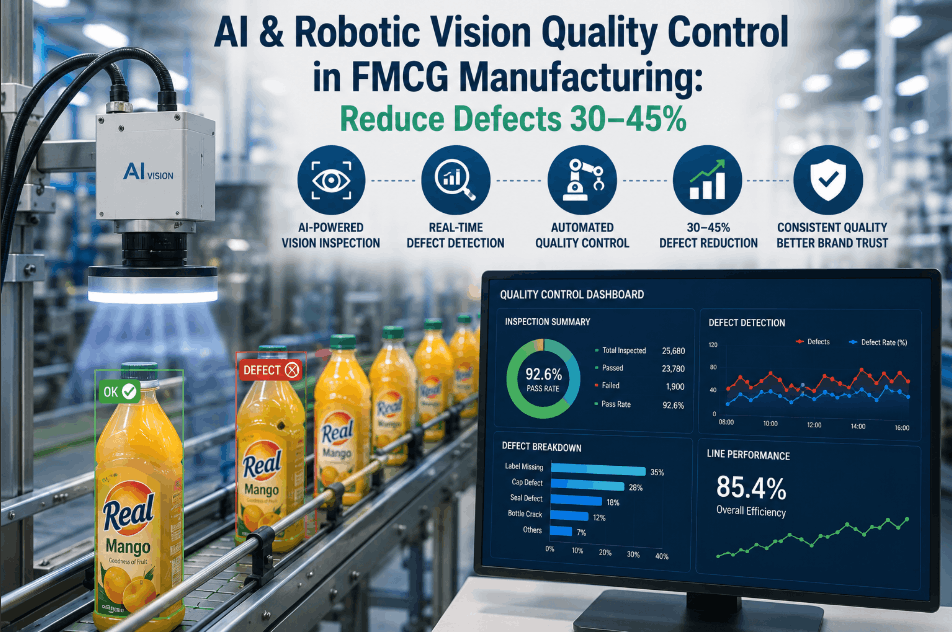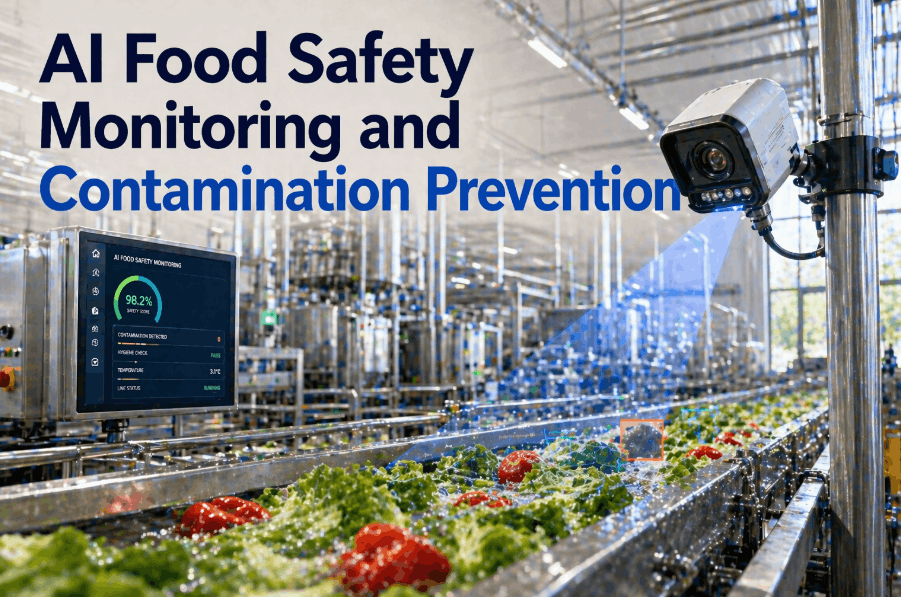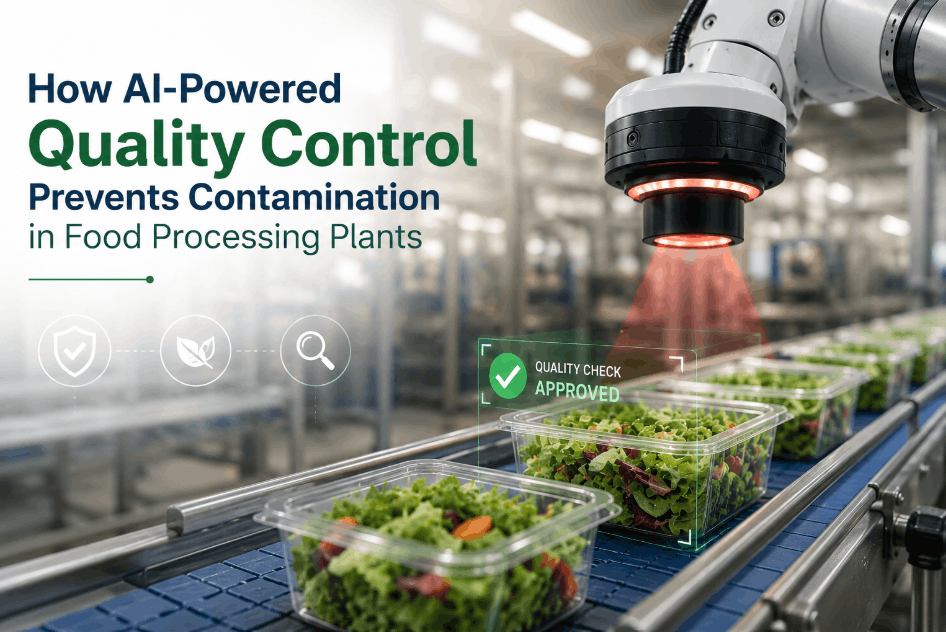
Food contamination events cost the global food industry over $10 billion annually in recalls, regulatory fines, and brand damage — yet most processing plants still rely on manual visual inspection methods that miss up to 30% of defects. AI-powered quality control is rapidly replacing legacy inspection processes, delivering 99.5%+ defect detection accuracy at full line speed. Book a Demo to discover how iFactory's AI Vision Inspection Integration is setting a new benchmark for food safety and contamination prevention.
See AI Quality Control in Action for Your Food Plant
iFactory's AI vision systems deliver 99.5%+ contamination detection accuracy — at full production speed, without slowing your line.
Why Manual Inspection Fails Modern Food Processing Quality Standards
Manual visual inspection — the backbone of quality control in food manufacturing for decades — is fundamentally unscalable in today's high-throughput processing environment. A human inspector evaluating product moving at 600 units per minute operates under extreme cognitive load, with fatigue setting in within hours. Industry data consistently shows that human inspection accuracy ranges between 70–80% under optimal conditions, dropping further during night shifts, line speed increases, and extended production runs.
The consequences are severe. Foreign object contamination — glass shards, metal fragments, bone splinters, and plastic pieces — that escape manual inspection reach retail shelves, triggering FDA Class I recalls, consumer injury claims, and permanent reputational damage. For food processors targeting SQF Level 3, FSSC 22000, or BRC Global Standard certification, demonstrating robust contamination prevention is no longer optional. Automated quality inspection powered by AI computer vision is now the clear industrial standard.
How AI Vision Systems Detect Food Contamination in Real Time
AI-powered quality control for food processing combines high-resolution industrial cameras, deep learning object detection models, and real-time rejection systems into a single integrated inspection gate. Unlike static threshold-based machine vision, AI models are trained on thousands of defect images specific to each product type — enabling the system to recognize contamination in all its varied forms, including partially obscured foreign objects, subtle color deviations indicating microbial growth, and structural defects invisible to the human eye.
iFactory's AI Vision Inspection Integration deploys multi-spectrum imaging — combining visible light, near-infrared, and X-ray data layers — to build a complete contamination profile of every product unit passing through the inspection zone. The platform processes inspection data in under 40 milliseconds per unit, triggering pneumatic rejection arms for any non-conforming product without halting line throughput. This continuous, non-destructive inspection replaces both manual inspection stations and standalone X-ray systems with a unified, AI-governed quality gate. Book a Demo to see the detection dashboard live.
Foreign Object Detection
AI models trained on metal, glass, bone, plastic, and rubber contaminants detect foreign objects as small as 0.8mm at full production speed — exceeding HACCP CCP detection thresholds across all product formats.
Surface Defect Classification
Computer vision algorithms classify surface defects — mold spots, bruising, tears, and color anomalies — with product-specific severity scoring, reducing false rejection rates that plague conventional threshold systems.
Fill Level & Weight Inspection
Vision-based fill level monitoring combined with inline checkweigher data flags underfilled and overfilled units in real time — ensuring compliance with net content regulations and reducing costly giveaway.
Label & Date Code Verification
OCR-powered label inspection verifies best-before dates, allergen declarations, and barcode readability at 1,200+ units per minute — preventing mislabeled product from reaching distribution channels.
Seal Integrity Inspection
High-resolution imaging detects seal fold defects, contaminated seals, and incomplete closures that compromise product safety and shelf life — critical for MAP and vacuum-packed perishable products.
Microbial Contamination Signals
Near-infrared spectroscopy layers within the AI inspection platform detect early-stage surface spoilage signals invisible to conventional cameras, flagging product for quarantine before it contaminates downstream batches.
Automated SPC in Food Manufacturing: Turning Inspection Data into Process Control
AI quality control does not end at defect rejection — the most powerful benefit is the continuous Statistical Process Control (SPC) intelligence generated by every inspection event. When a food processing plant inspects 50,000 units per hour, each reject event contains critical process intelligence: Where in the line did this defect originate? Is the defect rate trending upward? Which shift, SKU, or raw material batch correlates with higher defect frequency?
iFactory's automated SPC engine aggregates inspection data across all product types and production lines, calculating control limits in real time and triggering process alerts when reject rates cross UCL thresholds — before a minor process deviation becomes a full batch contamination event. This shift from reactive quality management to proactive statistical process control is the foundation of a zero-defect food manufacturing culture. Book a Demo to explore how SPC automation works within iFactory's quality platform.
Real-Time Defect Data Collection
Every AI inspection event — pass or reject — is timestamped and recorded with defect type, severity, line position, product SKU, and production batch. This creates a continuous, high-resolution quality dataset that no manual system can replicate.
Dynamic Control Limit Calculation
SPC control limits (UCL, LCL, CL) are calculated dynamically based on rolling production windows rather than static historical averages — ensuring control charts remain sensitive to real-time process shifts caused by raw material changes, equipment wear, or operator variations.
Automated Process Deviation Alerts
When reject rate trends cross warning limits, iFactory automatically alerts line supervisors and quality managers — providing root cause analysis suggestions based on correlated process variables like temperature, fill speed, and seal bar pressure.
Audit-Ready Compliance Reporting
All SPC data, defect images, and control chart records are auto-compiled into audit-ready quality reports aligned with FSSC 22000, SQF, and BRC documentation requirements — replacing manual log-keeping with automated, tamper-proof quality records. Book a Demo to see the compliance reporting dashboard.
AI Quality Inspection vs. Manual Inspection: A Direct Performance Comparison
Food processors evaluating AI quality control investments consistently ask the same question: what is the quantifiable performance gap between AI vision inspection and trained human inspectors? The table below synthesizes performance data from food processing plants operating both inspection methodologies — providing a direct, honest comparison across the dimensions that matter most to plant quality managers.
| Inspection Dimension | Manual Inspection | AI Vision Inspection (iFactory) |
|---|---|---|
| Foreign Object Detection Rate | 70–80% (optimal conditions) | 99.5%+ at full line speed |
| Inspection Speed | 100–200 units/min (fatigue limited) | 1,200+ units/min continuous |
| Night Shift Performance | -25% accuracy due to fatigue | Identical 24/7 performance |
| Defect Classification Consistency | High variability between inspectors | 100% standardized criteria |
| Data & Audit Trail | Manual paper logs, incomplete | Automated timestamped records |
| False Rejection Rate | 8–12% product over-rejection | Under 1.5% with AI tuning |
| ROI Payback Period | N/A (ongoing labor cost) | Typically 6–10 months |
Meeting HACCP, FSSC 22000, and FDA Contamination Prevention Requirements with AI
Regulatory compliance frameworks for food contamination prevention — including HACCP CCP monitoring, FSSC 22000 Clause 8.5, and FDA FSMA Preventive Controls — all require documented evidence that your detection systems are capable of consistently identifying the hazards they are designed to control. Paper-based inspection logs and manual CCP checks no longer satisfy the evidentiary standards that third-party auditors and FDA inspectors demand in today's food safety regulatory environment.
iFactory's AI quality control platform generates fully automated, tamper-proof compliance records for every inspection cycle. Detection system validation reports — including statistical capability studies (Ppk/Cpk) for each contaminant type — are generated automatically and stored in searchable, audit-ready format. When your SQF auditor requests evidence of foreign object detection capability for your metal detection CCP, the complete validation history is available in under 15 seconds.
HACCP CCP Documentation
Automated monitoring records for all Critical Control Points, including detection system performance logs, corrective action records, and verification activity summaries — aligned with Codex Alimentarius HACCP documentation standards.
FSSC 22000 / SQF Ready
iFactory's inspection workflows generate GFSI-aligned equipment performance evidence, including capability studies, calibration records, and defect trend analysis — making your FSSC 22000 or SQF re-certification audit preparation a matter of minutes.
FDA FSMA Preventive Controls
Full traceability of every inspection event tied to lot codes and production timestamps — providing the supply chain documentation that FDA investigators require during FSMA-triggered facility inspections and recall investigations.
The Financial Case for AI Food Quality Control: Recall Prevention and Cost Avoidance
Food processing operations often underestimate the true financial impact of a contamination escape event. The direct recall cost — logistics, product destruction, and FDA compliance activities — typically ranges from $500,000 to $10 million per event. But the indirect costs — brand equity damage, retailer delistings, and lost market share — frequently dwarf the direct financial exposure. A single high-profile contamination event can permanently alter a brand's market position.
| Cost Category | Without AI Inspection | With iFactory AI | Annual Saving |
|---|---|---|---|
| Contamination Recall Risk | $500K–$10M per event | Near-zero escape rate | $500K–$10M avoided |
| Manual Inspection Labor | $180,000/yr per line | $22,000/yr monitoring | $158,000/line |
| False Rejection Product Waste | 8–12% over-rejection | Under 1.5% rejection | $95,000+/yr |
| Audit Preparation Time | 40+ hours per audit | Under 1 hour | $18,000/yr |
| Production Downtime (Quality Holds) | 14–20 hrs/month | Under 2 hrs/month | $210,000+/yr |
For a mid-size food processing operation with 3 production lines, iFactory customers report total annual cost avoidance exceeding $1.2 million, with full ROI achieved in 6–10 months of deployment.
Deploying AI Quality Control in a Live Food Processing Environment: What to Expect
One of the most common concerns food plant managers raise about AI inspection technology is disruption to live production. Modern AI vision deployment methodologies are engineered around this constraint — with most inspection systems fully commissioned during scheduled sanitation windows, without requiring production line modification or extended downtime.
Camera & Sensor Installation
High-resolution camera arrays, lighting systems, and rejection hardware installed during scheduled CIP or changeover windows. No production halt required. Network integration with existing PLC/SCADA completed in parallel.
AI Model Training & Calibration
Machine learning models trained on your specific product profiles, packaging formats, and known defect types. Detection thresholds calibrated to minimize false rejections while maintaining HACCP-compliant detection sensitivity.
Live Inspection & SPC Activation
Full AI inspection goes live across all product SKUs. SPC control charts activate automatically. Quality team begins receiving real-time defect trend alerts and process deviation notifications.
Compliance Integration & Optimization
Compliance documentation workflows activated. First SQF/FSSC 22000 audit cycle completed using AI-generated records. Detection model continuously refined using production data — improving accuracy month over month.
Frequently Asked Questions: AI Quality Control for Food Processing
What contaminant types can AI vision systems reliably detect?
iFactory's AI inspection platform reliably detects metal, glass, hard plastic, rubber, bone, and shell fragments using multi-spectrum imaging. The AI models are trained specifically on contaminant types relevant to your product and process, enabling consistent detection at sub-millimeter sizes that standard X-ray thresholds miss.
How does the AI handle different product shapes, colors, and packaging formats?
The AI models are product-aware. During the training phase, the system learns the normal visual profile of each SKU — including natural color variation, shape tolerances, and packaging format. This prevents normal product variation from triggering false rejections, while remaining sensitive to genuine defects and contaminants.
Can iFactory's AI inspection integrate with our existing X-ray or metal detection equipment?
Yes. iFactory's platform integrates with leading X-ray and metal detection hardware via REST API and industrial protocols. Rather than replacing existing detection investments, iFactory adds an AI intelligence layer that correlates multi-sensor data — improving overall system detection capability and generating unified compliance records across all detection technologies.
How are AI detection models validated for HACCP compliance?
iFactory conducts formal detection capability studies (statistical Ppk/Cpk analysis) for each contaminant type and product SKU, using certified test pieces. These validation studies — with full statistical documentation — are automatically stored in the compliance record system and are available for auditor review at any time.
What happens when the AI system identifies a process trend rather than a single defect?
iFactory's SPC engine monitors defect rate trends continuously. When a statistically significant trend is detected — for example, a rising rate of seal defects correlated with a specific sealing head — the platform automatically alerts the maintenance team with a condition-triggered work order, preventing a process deviation from becoming a batch contamination event.
Your 99.5% Defect Detection Rate Starts Here
iFactory's AI Vision Inspection platform is protecting food processing operations at leading brands and co-manufacturers. See a live walkthrough of the inspection dashboard configured for your product types — no obligation.