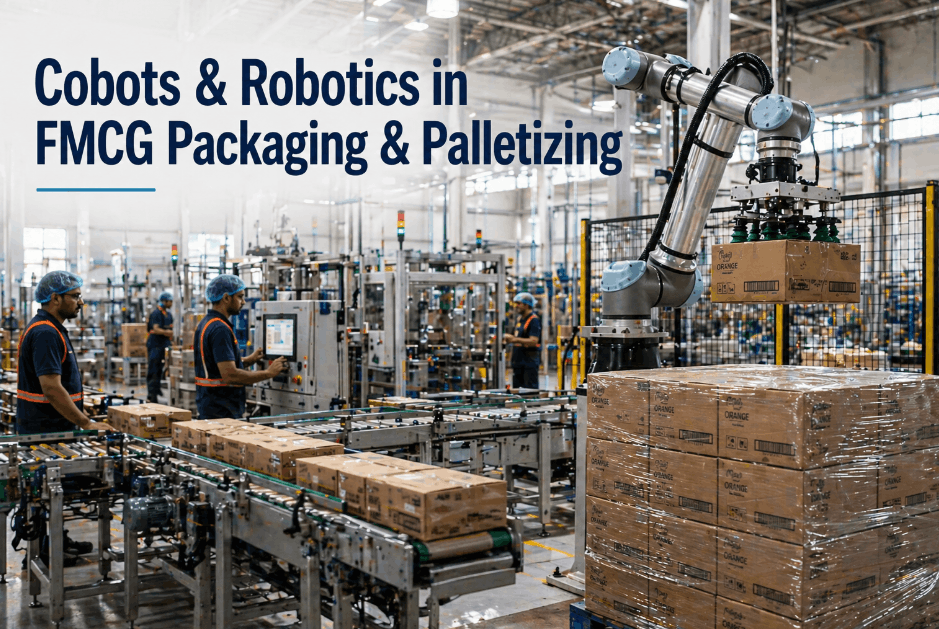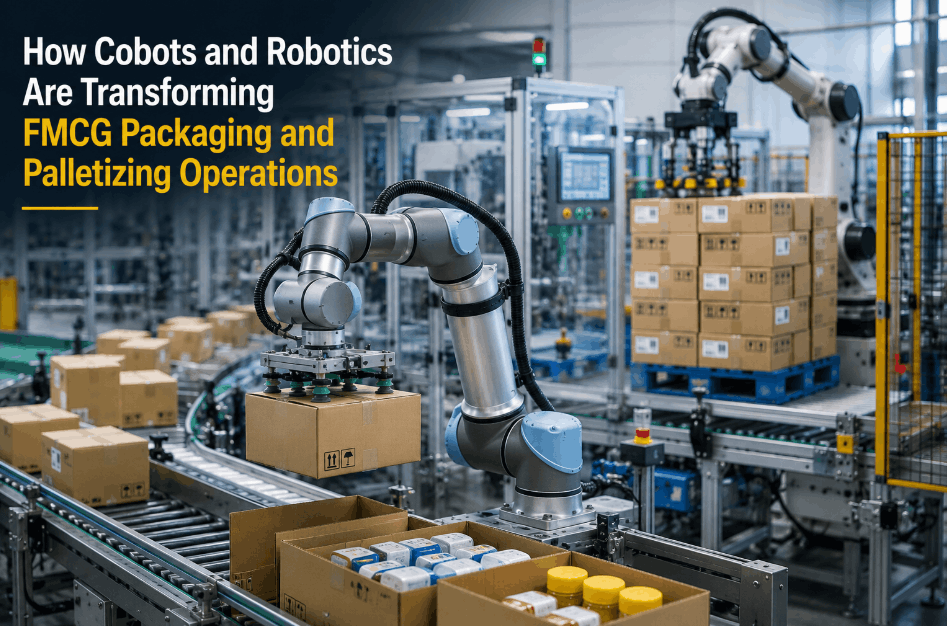
Cobots and robotics are fundamentally transforming FMCG packaging and palletizing operations — delivering flexibility, throughput, and labor resilience that traditional fixed automation could never economically achieve. Collaborative robots now work alongside human operators on case packing, pick-and-place, end-of-line palletizing, and SKU changeover tasks, improving OEE by 15–25% with minimal integration time and significantly lower capital expenditure than industrial robot installations. For FMCG manufacturers facing rising labor costs, SKU proliferation, and shorter production runs, cobot-based automation has become the highest-ROI capacity investment available. Plants that book a demo with iFactory consistently see cobot deployments reach payback inside 14 months.
Track, Optimize, and Scale Robotic FMCG Operations With Full Visibility
iFactory's robotics analytics platform integrates cobot performance, palletizing throughput, and changeover efficiency into a single operational view.
Why Cobots Are Replacing Manual Labor on FMCG Packaging Lines
The economics of cobot automation in FMCG have shifted dramatically over the past five years. Where traditional industrial robotic palletizers required 6-figure capital investment, dedicated safety cells, and weeks of integration downtime, modern collaborative robots arrive on the plant floor with pre-engineered end-effectors, built-in safety systems, and deployment timelines measured in days. Cobot-based packaging automation now delivers economic viability on production runs as short as 50,000 units — bringing flexible automation within reach of mid-volume FMCG manufacturers for the first time. Teams that book a demo with iFactory typically identify three to five immediate cobot deployment opportunities during the initial site walkthrough.
Case Packing
Cobots pick primary packs from infeed conveyors and load them into shippers at 30–60 cycles per minute — eliminating one of the most chronically understaffed FMCG line roles.
Palletizing
Robotic palletizing handles mixed-SKU and single-SKU pallet builds with consistent stack quality, eliminating the back-injury risk of manual end-of-line stacking.
Pick and Place
Vision-guided pick-and-place cobots handle high-mix product variants from random orientations — adapting to SKU changes with minimal mechanical reconfiguration.
Changeover Assist
Cobots accelerate SKU changeovers by handling repetitive part swaps, format setups, and cleaning prep tasks — reducing changeover time by 20–35%.
How Robotic Palletizing Transforms FMCG End-of-Line Operations
End-of-line palletizing is the single highest-impact deployment target for FMCG robotics — combining clear ROI economics, well-understood safety considerations, and immediate ergonomic benefit for the workforce. A modern robotic palletizer handles 20–25 cases per minute on a standard FMCG line, builds consistently structured pallets that survive transit better than manually-stacked equivalents, and frees two to four operator positions per shift for higher-value tasks. Manufacturers that book a demo with iFactory routinely discover that their existing manual palletizing positions are the largest single source of repetitive strain injury claims on the entire site.
Case Arrival
Cases arrive from the case packer at 20–30 per minute, presented to the robotic palletizer cell at a defined infeed station.
Robotic Pick
Cobot palletizer picks each case with a vacuum or mechanical end-effector, oriented per the active SKU pallet pattern.
Pattern Build
Cases placed in pre-programmed pallet pattern with interlocking layers and slip-sheet insertion as required by the retailer.
Stretch Wrap
Completed pallet exits to stretch wrapper; empty pallet auto-feeds for next build. Full sequence runs without operator intervention.
The Five Cobot Deployment Patterns Delivering the Fastest ROI in FMCG
Not every robotic deployment delivers equal ROI. The five deployment patterns below consistently produce 12–18 month payback periods in mid-volume FMCG operations and represent the highest-confidence entry points for plants beginning their robotics journey. Each pattern is characterized by clear task boundaries, well-understood safety requirements, and direct labor displacement that justifies the capital case without requiring complex secondary benefit modeling.
Robotic Case Packing
Cobots load primary packs into shippers at 30–60 cycles per minute — the most chronically understaffed station on most FMCG lines. Payback typically lands inside 14 months on two-shift operations, driven by labor reallocation and consistent throughput.
End-of-Line Palletizing
Robotic palletizing eliminates the most physically demanding role on the line, delivering consistent stack quality and removing the leading cause of warehouse-floor injury claims. Typical payback of 12–18 months on a two-shift operation.
Vision-Guided Pick and Place
Cobots equipped with 2D or 3D vision handle randomly-oriented product from infeed conveyors into trays, blisters, or shipping containers. Particularly valuable on high-mix lines where mechanical orientation feeders cannot economically handle SKU variety.
Mobile Robot Material Movement
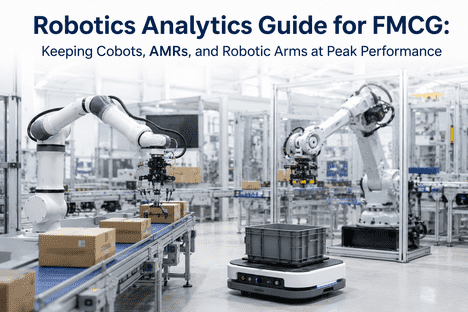
Autonomous mobile robots (AMRs) move full pallets, empty packaging, and waste between production cells and warehouse zones — eliminating manual forklift movements and the safety incidents associated with pedestrian-vehicle interactions.
Cobot-Assisted Changeover
Cobots accelerate format part changes, cleaning prep, and SKU transitions — cutting changeover time by 20–35%. In high-mix FMCG environments, the OEE recovery from changeover compression alone justifies the deployment.
Industrial Robots vs Cobots vs AMRs: Which Fits Which FMCG Application
Modern FMCG robotics is not a single technology — it is a portfolio of complementary platforms, each suited to specific application characteristics. Selecting the wrong platform for the application is the most common cause of failed robotics deployments in consumer goods manufacturing. The comparison below maps platform type to typical FMCG use case and operational profile. Plants that book a demo with iFactory receive a platform-fit assessment for every identified opportunity on the site.
| Platform Type | Speed | Safety Footprint | Best FMCG Application |
|---|---|---|---|
| Industrial Robot | Very High (60+ cpm) | Full safety cell required | High-volume palletizing, dedicated case packing on single-SKU lines |
| Collaborative Robot | Moderate (20–40 cpm) | Sensor-based safety; works alongside operators | Mixed-SKU case packing, pick and place, changeover assist |
| Delta / SCARA | Very High (100+ cpm) | Light cell or vision-guarded | High-speed pick and place of small primary packs |
| AMR (Autonomous Mobile) | Continuous flow | Onboard safety sensing | Pallet and material movement between cells and warehouse |
| Robotic Palletizer Cell | 20–30 cases per minute | Light curtains or cobot-class safety | End-of-line palletizing across mixed and single SKU programs |
Make Every Robot on Your Line Measurable, Optimizable, and Accountable
iFactory's analytics platform tracks cobot cycles, palletizer throughput, downtime causes, and changeover impact in one unified view.
Cobot Analytics: Why Robot Performance Visibility Is Now Essential
A cobot operating without performance analytics is a productivity asset with no accountability. As FMCG plants deploy multiple cobots across packaging, palletizing, and material handling, the ability to track cycles completed, idle time, error rates, and OEE contribution per robot becomes critical to sustaining the original business case. Robotics analytics platforms now capture this data automatically — feeding the same OEE and downtime dashboards used for the rest of the production line. Teams that book a demo with iFactory get full cobot performance visibility from day one of deployment.
Cycle Count
Cobots cycles completed per shift, normalized against rated cycle time. Exposes throughput drift, mechanical wear, and software performance regressions.
Idle Time
Time the cobot is operational but not cycling — typically caused by upstream starvation or downstream blocking. Drives root cause focus on adjacent line stations.
Error Rate
Failed picks, mis-orientations, and safety stops per thousand cycles. Direct indicator of end-effector wear, vision calibration drift, and infeed presentation quality.
OEE Contribution
Each cobot's impact on overall line OEE, attributed back to availability, performance, and quality components. Closes the loop on robotics ROI tracking.
Cobots and Robotics in FMCG: Frequently Asked Questions
What is the typical ROI timeline for a cobot deployment in FMCG?
Most cobot deployments in FMCG packaging and palletizing reach full payback within 12–18 months on two-shift operations. End-of-line palletizing and case packing consistently deliver the fastest ROI, driven by direct labor reallocation and consistent throughput.
Do cobots require safety fencing in FMCG environments?
Most modern cobots operate without fixed safety fencing, using force-limiting, speed-limiting, and sensor-based safety systems to enable collaborative operation alongside human workers. Specific application risk assessments determine whether additional guarding is required for a given task.
How long does cobot deployment typically take from order to production?
Typical cobot deployments in FMCG environments run 8–16 weeks from order placement to full production handover, including end-effector design, programming, safety validation, and operator training. Pre-engineered palletizing and case packing cells can deploy faster.
Can cobots handle high-mix SKU environments with frequent changeovers?
Yes — flexibility is the primary advantage of cobots over fixed automation. Vision-guided cobots adapt to new SKUs through software recipe changes rather than mechanical reconfiguration, making them well-suited to FMCG operations with high product variety.
How do cobots integrate with existing FMCG analytics platforms?
Modern cobots expose cycle data, error logs, and state information through standard industrial protocols. iFactory ingests this data directly into the unified analytics layer — giving robotics the same OEE and downtime visibility as the rest of the production line.
Ready to Deploy Cobots Across Packaging, Palletizing, and Changeover?
iFactory's robotics analytics platform makes every cobot, palletizer, and AMR fully visible — turning robotic capacity into measurable, optimizable OEE contribution.