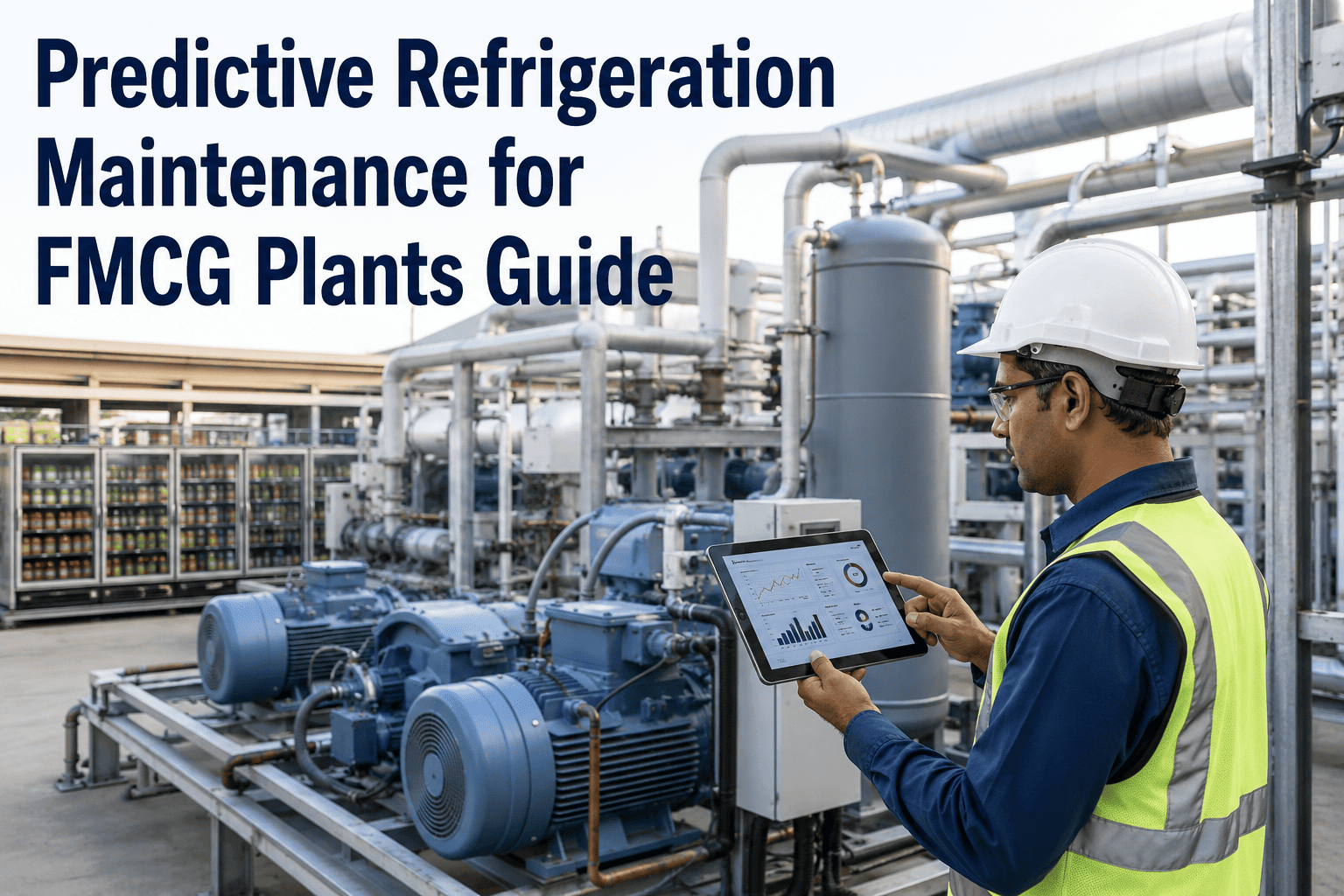
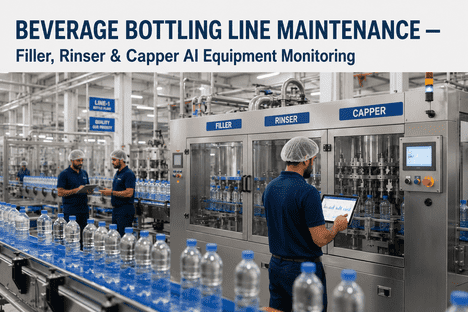
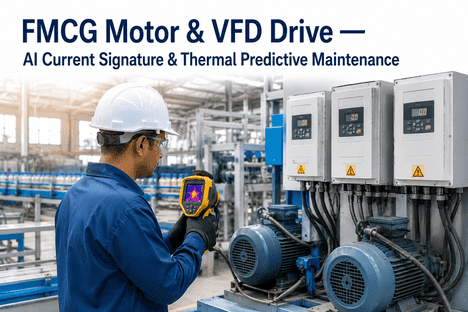
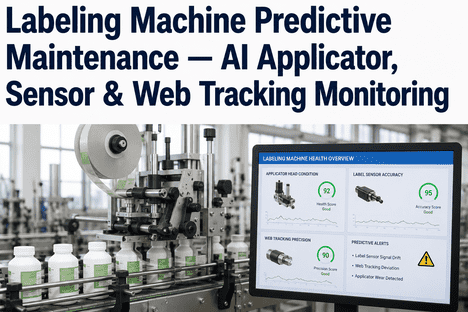
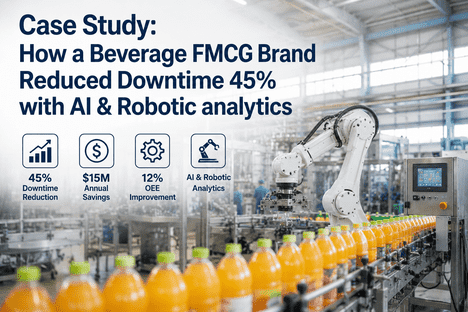
When a mid-size beverage manufacturing plant in Western India faced mounting pressure from unplanned equipment failures, production shortfalls, and a maintenance backlog stretching into weekends, the operations leadership team made a decisive call: move from reactive firefighting to AI-driven predictive maintenance. What followed over the next 18 months became one of the clearest proof points in FMCG manufacturing that artificial intelligence is not a future technology — it is a current competitive advantage. This is the full story of how they did it, what it cost, and what they gained.
45% Downtime Reduction.
$2.3M Saved Annually.
How one beverage plant transformed its maintenance operations using AI predictive analytics and changed the way its entire production floor is managed.
A Plant Running on Instinct, Not Intelligence
Before the AI implementation, the plant's maintenance team operated on a combination of calendar-based schedules and gut instinct. Experienced technicians knew from sound and feel when something was "off" — but this informal knowledge couldn't scale, couldn't be tracked, and couldn't predict failures far enough in advance to prevent costly stoppages. The filling line alone averaged 4.2 unplanned stops per month, each lasting between 2 and 6 hours.
Is your beverage plant still losing hours to unplanned breakdowns?
This case study is not an exception — it is a repeatable result. Plants across FMCG that deploy AI predictive maintenance consistently report 35–50% downtime reductions within their first year. The technology is proven, the ROI is clear, and implementation is faster than you think. The only variable left is your decision to start.
Why AI Maintenance — And Why Now
The plant's engineering director had reviewed predictive maintenance ROI data from comparable beverage operations in Europe and Southeast Asia. The numbers were consistent: plants that deployed sensor-based AI monitoring reduced unplanned downtime by 30–55% within 18 months. The business case was clear. The harder question was implementation — how do you retrofit a working production facility with sensors and AI without disrupting output? Sign up to see how iFactory handles phased deployment.
The team chose a phased approach, beginning with the two most failure-prone assets on the primary filling line: the rotary filler motor and the capper head assembly. These two components alone were responsible for 61% of all unplanned downtime events in the previous 12 months.
18 Months to Full Transformation
Full asset criticality mapping across 3 production lines. Vibration, temperature, and current sensors installed on 14 priority assets. Baseline OEE recorded at 61%.
Historical failure data ingested. AI models trained on 14 months of maintenance logs. Integration with existing CMMS completed. First anomaly alerts issued in Month 4.
Three major failures predicted and prevented. The rotary filler motor was flagged 11 days before what would have been a catastrophic bearing failure. Downtime for that quarter dropped 28%. Team confidence in AI alerts reached 89%. Book a demo to see how iFactory's alert system works.
Sensor coverage expanded to all 3 lines, 31 assets total. Maintenance scheduling fully shifted to condition-based triggers. Labor redeployment reduced overtime costs by 34%.
OEE stabilized at 83%. Unplanned stops on the filling line reduced to 0.8 per month (from 4.2). Annual savings verified at $2.3M by independent audit. Sign up to start your own 18-month transformation.
What the Data Showed After 18 Months
We used to start every Monday morning not knowing what would break by Friday. Now we plan our interventions two weeks in advance with confidence. The AI doesn't just tell us something will fail — it tells us when and why. That changed everything about how we manage this plant.
What Other FMCG Plants Can Learn From This
This beverage plant's journey is repeatable. The conditions that drove their success — high-speed lines, failure-sensitive output, motivated operations leadership, and a willingness to trust data over habit — exist in hundreds of FMCG plants across Asia and globally. The three most transferable lessons from this case study are clear. Book a demo to map these lessons to your specific plant context.
Start With Your Top 2–3 Failure Culprits
Rather than deploying sensors on every asset at once, this plant started with the two components responsible for the majority of their downtime events. This created fast, visible wins that built internal support for the broader rollout.
Historical Data Is Your First Asset
The AI models trained faster and delivered higher accuracy because the plant had 14 months of structured maintenance logs. If your records are incomplete, start documenting now — it directly shortens your time to ROI.
Technician Buy-In Is Not Optional
The single biggest risk in any AI maintenance rollout is team resistance. This plant's engineering director ran monthly "alert review" sessions where technicians validated AI predictions against their own observations. This built trust and improved model accuracy simultaneously.
Your plant has the same potential — $2.3M in savings is not a one-off.
Every month of delayed implementation is a month of avoidable downtime, over-replaced parts, and emergency repair costs. The beverage plant in this case study saved $2.3M annually after 18 months. Mid-size FMCG plants with 2–4 production lines are the ideal fit for AI maintenance transformation — and results like these are within reach for your operations too.